For four hours in July, some of the biggest players in finance put Wall Street’s long-running blockchain experiment to work across an ordinary trading day.
After years of tests with digital versions of securities, cash and trading networks, the focus has shifted to whether these technologies could work together. This time, nearly 40 firms were testing how tokenized assets could move through the institutions that keep modern markets moving.
Over blockchain networks, JPMorgan Chase & Co., Goldman Sachs Group Inc., Invesco Ltd. and Citadel Securities LLC traded stocks and Treasuries, posted collateral, met margin calls and transferred assets. Overseeing it all was the Depository Trust & Clearing Corp., which monitored the exercise from “war rooms” in New York and New Jersey as the firms completed dozens of transactions across various use cases.
The broader aim was to test whether tokenized versions of familiar assets can move through new blockchain systems without sacrificing the settlement, custody and risk controls of traditional markets.
“We tried to replicate the activities that occur in the market on a day to day,” said Nadine Chakar, DTCC’s global head of digital assets. “You don’t want tokenization to be done in isolation. You want it to be part of the daily workflow.”

See more: Wall Street Is Buying Crypto's Plumbing, Not Its Ideology
That is the bet behind much of Wall Street’s tokenization push: not just longer operating hours as markets move toward 24/7 trading, but whether assets can move more freely across institutions, reducing trapped liquidity and some of the handoffs involved in moving collateral.
The July pilot was an attempt to test that proposition under something closer to real market conditions, bringing together exchanges, clearinghouses, banks and asset managers rather than limiting transactions to bilateral trades. Transactions included collateral pledges, margin calls, repo trades, delivery-versus-payment and transfers between blockchains using digital versions of stocks, exchange-traded funds and Treasuries on DTCC’s private network built using Besu and the Canton Network.
DTCC said it plans to move the service from limited tests toward ongoing use in October, adding another blockchain network, expanding support for Treasury corporate actions — coupon payment and Treasury maturity dates — and opening it to eligible participants beyond the July group.
DTCC’s role in the test was key because it maintains the official record for trillions of dollars of securities. If tokenized trades still have to be reconciled back to that traditional record at the DTCC, some of the promised efficiency disappears.
DTCC declined to provide transaction values or client-specific details. Chakar said “the purpose of the day was to simulate a representative snapshot of the market by including exchanges, clearing houses, buy-side and sell-side participants.”
Major hurdles remain, Chakar said, including adoption, regulatory alignment and integration with existing systems.
DTCC says Wall Street’s current tokenization push is different from previous attempts to deploy blockchain to financial markets because institutional demand has grown. The agency pointed to an industry working group that has nearly doubled in a few months to more than 100 members. Whether that matters commercially is a different question, said Vivian Fang, a finance professor at Indiana University.
“Many enterprise blockchain pilots over the past decade failed not because the technology didn’t work, but because they lacked the conditions needed for commercial adoption,” she said. “The ultimate test will be whether market participants meaningfully adopt tokenized securities and whether the platform delivers measurable economic value.”
Collateral Movement
Collateral offered one of the clearest tests of whether tokenization has economic value. In one transaction, DTCC tokenized an equity it held and deployed it as margin at CME Group Inc. within minutes. Tokenized collateral can settle almost instantly, potentially reducing trapped liquidity and allowing firms to put assets to work more efficiently, Chakar said.
JPMorgan, participating as a DTCC clearing member, separately converted securities collateral into digital tokens and used them to fund a margin call. The bank also tested tokenized equity collateral, including Invesco’s Nasdaq 100 ETF, ticker QQQ.
“Tokenization could reduce friction, improve collateral mobility and enable assets to be deployed more efficiently in support of margin requirements,” said Danny Hand, digital assets lead for prime financial services at JPMorgan.
There is a catch. JPMorgan can create tokenized collateral, but clearinghouses still have to accept it, custodians have to handle it and risk systems have to account for it. Broader adoption will depend in part on central counterparties recognizing tokenized collateral after DTCC expands the service.
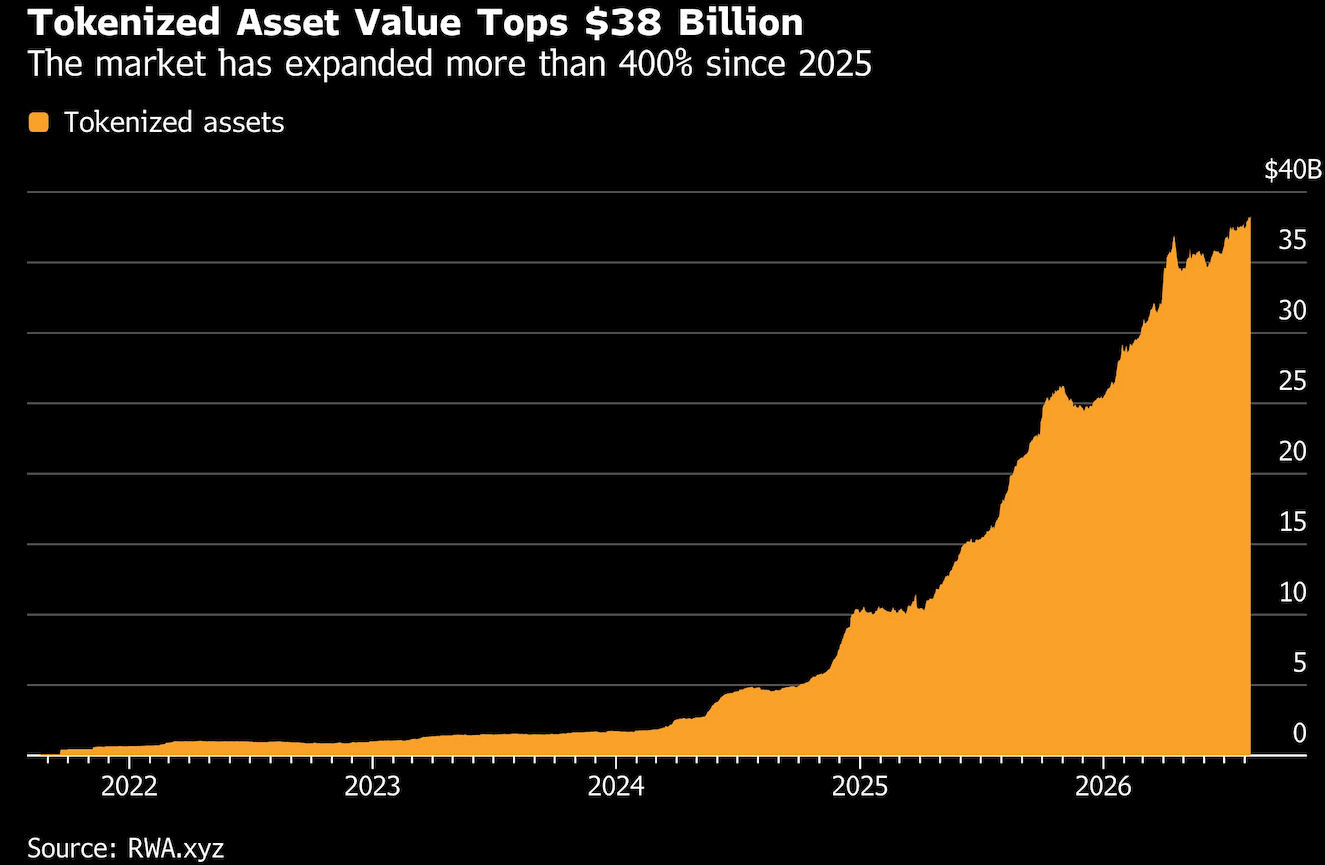
That helps explain why early adoption may cluster around a handful of uses. Citigroup Inc. has projected tokenized assets could reach $5.5 trillion by 2030, rising to $8.2 trillion in a bullish scenario. Bank of America Corp. Global Research analysts expect early adoption to focus on collateral mobility, on-chain cash management and settlement of standardized financial instruments, with stocks and credit developing more gradually.
Legal clarity remains another obstacle, according to Noelle Acheson, author of the “Crypto Is Macro Now” newsletter. But DTCC is “in the relatively unique position of being able to move the industry forward by setting standards and working with global partners,” she noted. “That said, the transformation is likely to take about a decade.”
Even if those uses take hold, another problem remains: firms are building on blockchain networks that do not automatically communicate. Moving an asset between them still requires both systems to agree on what moved and who owns it.
The July transactions also tested whether separately built systems could work together. Digital Asset Holdings LLC’s Canton Network underpinned several of those trades.
“It was a real functioning secondary market set of activities that was enabled by market participants,” said Kelly Mathieson, the company’s chief business development officer.
For all the activity in July, the exercise was carefully choreographed. Participants spent months testing together in an intentionally narrow window and a relatively small amount of assets were converted into an onchain form. October begins the harder phase: whether the system gets used by a larger group during the course of everyday business.
“It was a massive step for the market and for the overall state of readiness for all participants come October,” Chakar said. “There’s nobody questioning anymore whether the technology works.”
A message from Advisor Perspectives and VettaFi: Discover something new! Click here to register for our upcoming webcasts.
Bloomberg News provided this article. For more articles like this please visit
bloomberg.com.
More Fintech Topics >