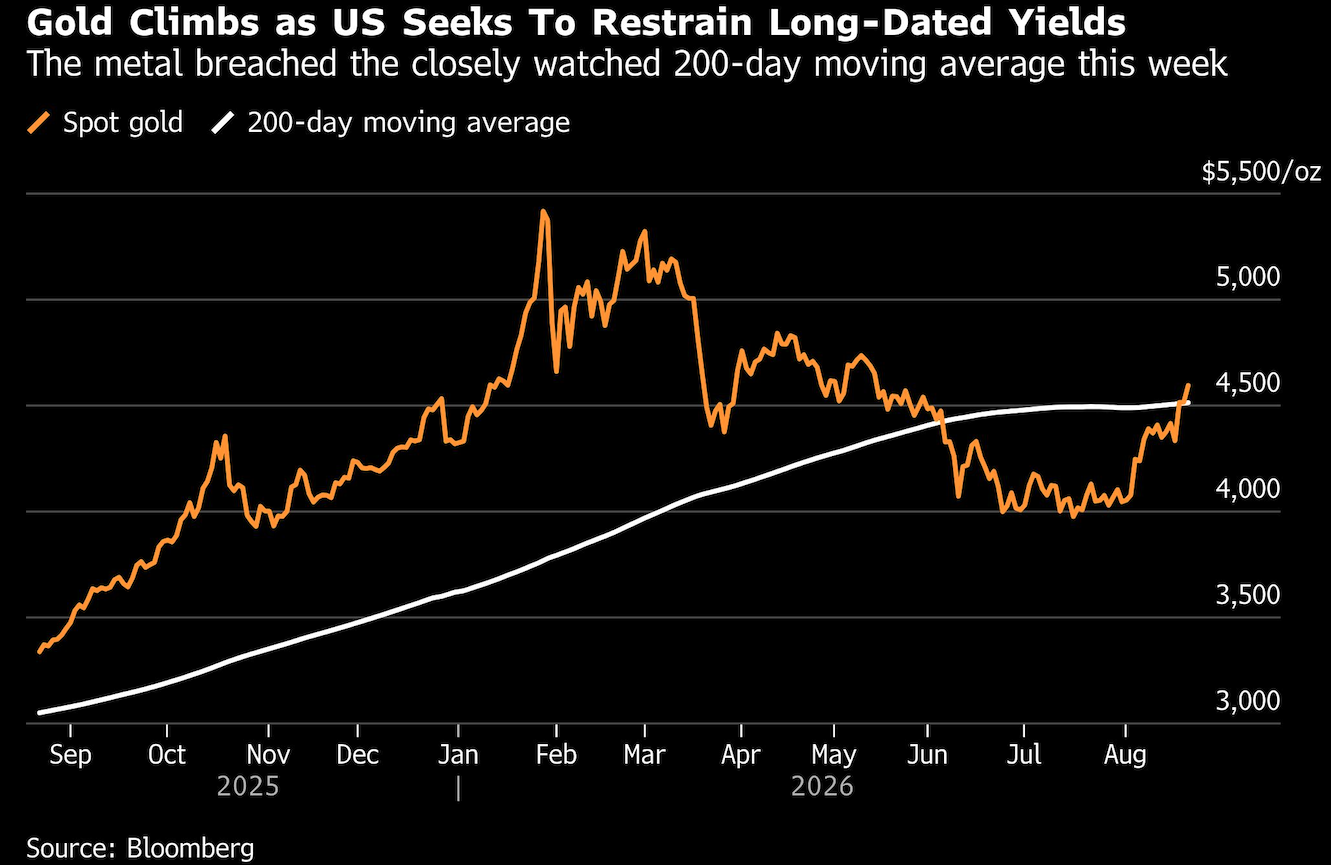
Gold climbed to the highest in three months as the US Treasury’s bold intervention to try to stem a damaging increase in borrowing costs revived investor fears about its fiscal burden.
Bullion rose to trade at its highest level since mid-May on Friday, poised to end the week about 5% higher. Prices have climbed since the US Treasury announced an unexpected ramp-up in buybacks of long-dated government debt on Wednesday, driving yields and the dollar lower.
The efforts to control borrowing costs through direct intervention revived concerns among investors and analysts that US policy could weaken faith in the dollar and push investors toward alternatives, a theme that helped power gold’s stellar 65% rally in 2025.
The Treasury’s move “is are very important signal for gold,” UBS Group AG chief strategist Bhanu Baweja said in an interview on Bloomberg TV. Bullion will be the main beneficiary of the US effort to suppress its borrowing costs, he said, while “the dollar will pay the price.”
It’s a marked rebound in sentiment for bullion. The metal has mostly ground lower from its highs at the start of the year, as the new Federal Reserve Chairman Kevin Warsh asserted his independence and the Iran war raised the prospect of Fed rate hikes. It’s still down by about a $1,000 an ounce from its peak in late-January.

See more: Gold’s Renewed Momentum Puts New Shine on IAUI
A weaker dollar is a tailwind for commodities priced in the currency, and particularly for bullion. A gauge of the greenback extended losses to hit a three-month low on Friday, after plunging earlier in the week.
On Thursday, Treasury Secretary Scott Bessent went further than Wednesday’s surprise announcement, and said he’s prepared to expand buybacks of costlier debt, and flagged that the administration would soon unveil a fiscal initiative to address the highest borrowing costs in years.
Lower yields usually give gold a lift, reducing the opportunity cost of holding the non-interest-bearing metal. But even as 30-year Treasuries erased most of their gains from the wake of the buyback announcement, gold continued to power higher.
“What is interesting is that gold has held up even as long-end Treasury yields remain elevated,” said Charu Chanana, chief investment strategist at Saxo Markets. “That suggests the rally is increasingly about dollar weakness and US fiscal or monetary credibility, rather than simply a lower-yields story.”
Debasement Trade
Chief among the narratives that supported gold’s surge through 2025 was the so-called “debasement trade.” According to the thesis, heavily indebted countries like Japan, France and the US emerged from the Covid pandemic with little apparent appetite for fiscal discipline. The only path to solvency was seen as inflation and a weakening currency — a trend that should profit precious metals.
“The debasement trade is back as both a trade and a theme”, Nicky Shiels, metals strategist at MKS Pamp, said in a note this week. “The only way out is currency dilution. There’s simply no bid/liquidity at current yields if the authorities aren’t the ones propping it up.”
Bullion-backed exchange traded funds — one of the most popular ways for retail and institutional investors to get exposure to gold — have seen months of steady outflows since the outbreak of the war, but that pattern has now decisively shifted. Funds tracked by Bloomberg added 18 tons of gold to holdings on Thursday, the largest one-day increase since September 2025, and on track for a fifth consecutive week of inflows.
Still, bullion’s rally of around 13% so far this month could be tempered by the rebound in energy prices that keeps inflation risks and rate-hike bets on the table. Oil is set for a sharp weekly gain after US President Donald Trump’s threat to crush the Iranian economy further dimmed prospects of a near-term deal to reopen the Strait of Hormuz. The White House says it will release details of the plan on Monday.
Spot gold rose 1.5% to $4,582.33 an ounce at 2:04 p.m. in London. Silver advanced 1.9% to $69.40 an ounce. Platinum and palladium also rose. The Bloomberg Dollar Spot Index, a gauge of the US currency, was 0.2% lower, on track for a weekly loss.
A message from Advisor Perspectives and VettaFi: Discover something new! Click here to register for our upcoming webcasts.
Bloomberg News provided this article. For more articles like this please visit
bloomberg.com.
Read more articles by Jack Ryan, Yihui Xie