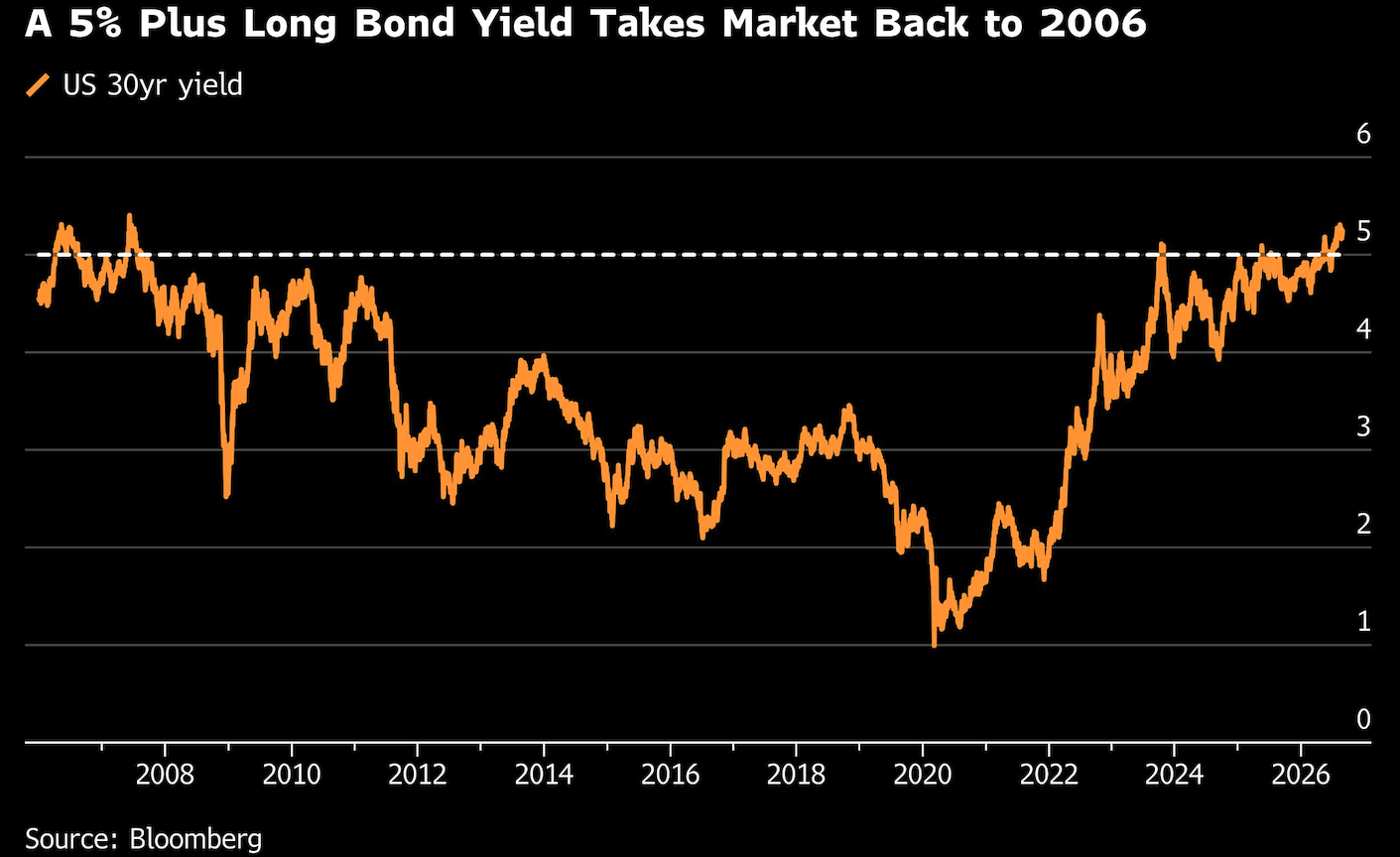
Not since 2006 have yields on the longest-maturity Treasuries been this high for this long, with a gaping budget deficit, another wave of corporate issuance and a potentially decisive Federal Reserve meeting set to keep investors wary of US debt in coming weeks.
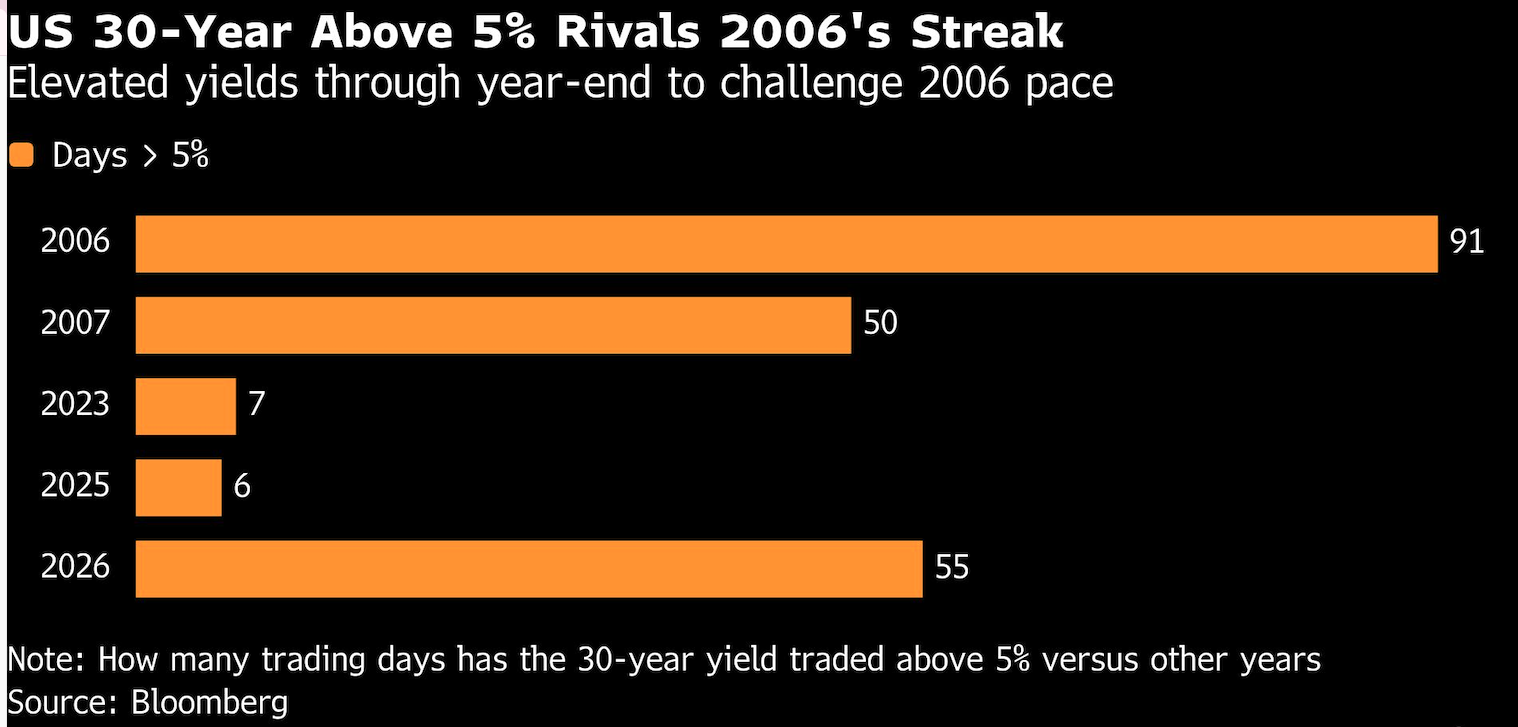
The yield on the 30-year bond hit 5.34% in mid-August, its most elevated since 2007 and just 10 basis points away from the highest level in 22 years. As of Monday, the yield has settled above 5% on 55 days since the start of January, the most in any year since 2006, data compiled by Bloomberg show. It was at 5.28% on Tuesday.
Long-dated bonds are starting the month on a weak note, pressured by persistent inflation concerns as oil prices rise and ongoing fiscal challenges. Germany’s 30-year yields touched the highest since 2011 on Tuesday, and the equivalent UK rate rose to a level last seen in 1998. Australian peers set a fresh record high on Tuesday, in data going back to 2016, while the yield on a Bloomberg index of global sovereign bonds climbed the highest in almost two decades.

Fresh hostilities between the US and Iran have raised concerns about prolonged disruptions to energy flows through the Strait of Hormuz, sending oil prices higher. Brent crude climbed above $92 a barrel on Tuesday as several current and former officials have said they expect the Middle East conflict to drag on for months.
See more: U.S. Corporate Issuers Can Digest Higher Refinancing Costs
At the same time, investors say the US budget worries that have weighed on government bonds won’t dissipate anytime soon. And while Treasury Secretary Scott Bessent shocked markets last month by announcing expanded buybacks of older bonds in an effort to keep yields contained, his move will be countered by an expected $215 billion in corporate debt issuance in September. That follows record levels in August amid the AI revolution.
Long-end yields are seen staying elevated “until entitlement reform changes the deficit picture,” said John Briggs, head of US rates strategy at Natixis North America. “Buybacks are a drop in the bucket.”
September’s Fed meeting will test Chairman Kevin Warsh’s determination to raise interest rates in the face of stubborn inflation, which has been lifted by a resilient economy and war-driven energy prices. The selloff in longer-maturity debt is expected to gain momentum if the central bank hesitates in acting.
Traders are pricing in some 17 basis points of tightening at the Fed’s Sept. 15-16 meeting, or odds near 70%, following Warsh’s hawkish speech at Jackson Hole last week.
US August employment numbers due Friday and inflation data slated for release on Sept. 11 will offer a further snapshot of how price pressures are building in the economy.
Because longer-dated bonds are more vulnerable to inflation concerns, signs that the Fed is holding steady even as consumer price growth accelerates would give investors more reason to avoid the beleaguered 30-year maturity.
“If you want to get the long end down, you tighten rates,” said Gregory Faranello, head of US rates trading and strategy for AmeriVet Securities. He said he expects the Fed to raise interest rates and is bullish on 10-year Treasuries and shorter-dated tenors.
Others, however, have been betting on more weakness. Treasury options trading on Monday saw traders targeting much higher levels for 30-year yields, with one trade wagering they will jump to around 5.7% ahead of the contract’s Nov. 20 expiry date.
Further complicating the picture is the niche position the 30-year bond occupies in the $31 trillion Treasury market. Demand for longer-dated Treasuries mainly comes from investors such as insurers and pension funds who seek to offset liabilities that extend across decades. Conversely, bond managers who prefer having less interest-rate sensitivity, or duration, in their portfolios tend to limit their long-end exposure.
“Despite Treasury buybacks and other recent policy actions, investors remain reluctant to add duration,” Bank of America rate strategists Meghan Swiber and Eleanor Xiao wrote in a note published Monday. “A shrinking official-sector bid leaves the market increasingly dependent on price-sensitive private demand to clear ongoing Treasury supply.”
What Bloomberg’s Strategists Say...
“The Treasury yield curve is bound to steepen again in the medium term, as traders overshoot expectations for higher interest rates while a subdued term premium underestimates fiscal headwinds on the horizon.”
— Brendan Fagan, MLIV strategist
Some investors question how much further the long bond may fall, after yields have risen by around 65 basis points from their lows of the year. Briggs, of Natixis, has become “more neutral” at current levels after being bearish on the long end all year.
The 30-year yield “still leaks higher, but you have come a long way in term premium and real yields, you don’t have to go up at a high speed forever,” he said.
Priya Misra, a portfolio manager at JPMorgan Asset Management, said the Treasury’s buybacks may help bolster demand for the long bond, but “may well be dwarfed by the onslaught of supply from the AI buildout.”
“We may be getting close to the peak in long-end yields, but there is uncertainty given all the cross currents at play,” she said.
A message from Advisor Perspectives and VettaFi: Discover something new! Click here to register for our upcoming webcasts.
Bloomberg News provided this article. For more articles like this please visit
bloomberg.com.
Read more articles by Michael Mackenzie