We’re Asking the Wrong Question About the Great Wealth Transfer
Membership required
Membership is now required to use this feature. To learn more:
View Membership Benefits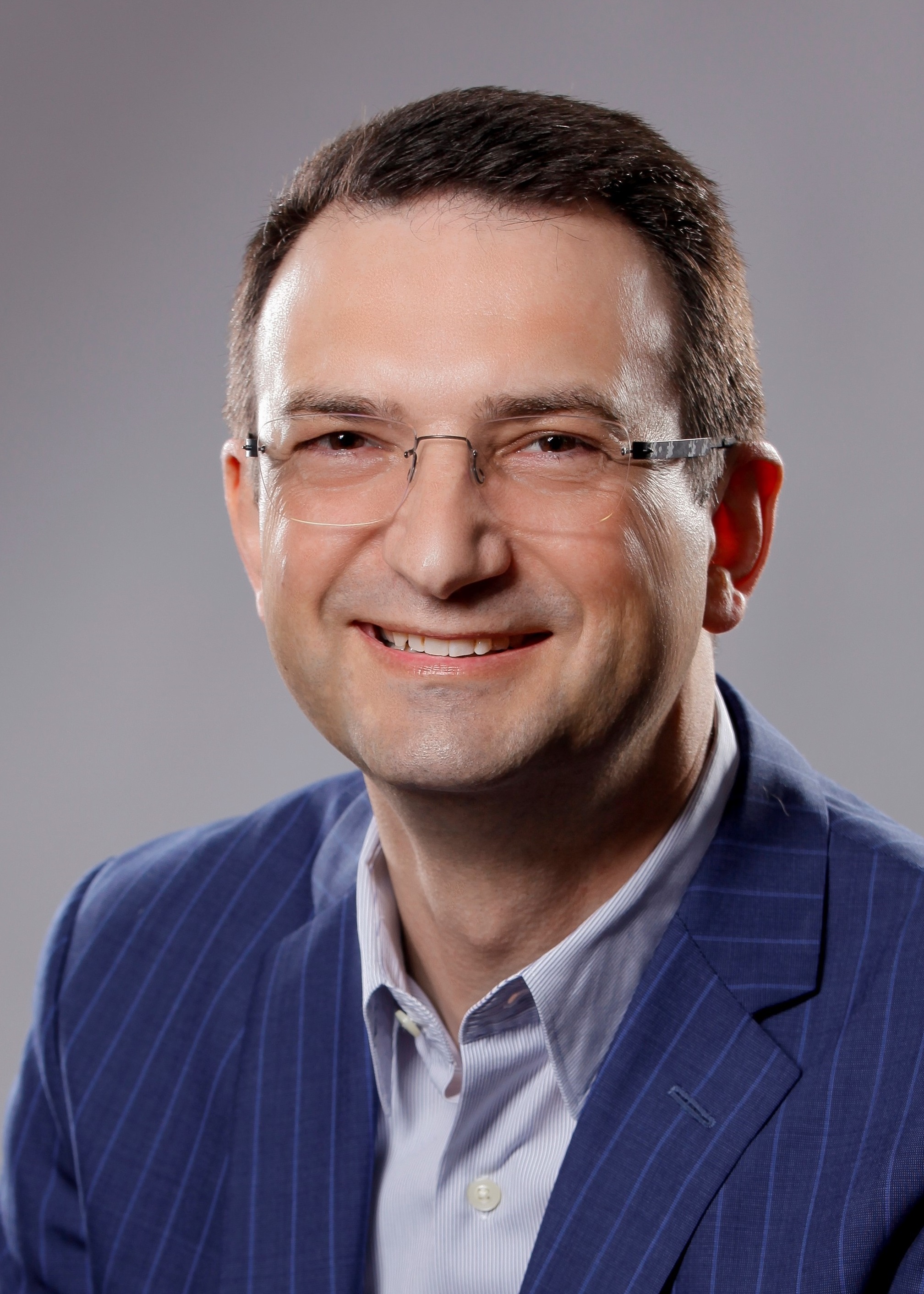 Advisor Perspectives welcomes guest contributions. The views presented here do not necessarily represent those of Advisor Perspectives.
Whenever I talk to other financial advisors about the Great Wealth Transfer, the conversation tends to turn quickly to us.
How do we retain the assets when our clients die? How do we build relationships with their children? How do we keep clients’ heirs from moving their money to another advisor?
With an estimated $124 trillion expected to transfer through 2048, including about $105 trillion to heirs, those are understandable business questions. But I wonder whether we are starting with the wrong questions.
What will the Great Wealth Transfer actually mean for the people receiving the wealth, and how do we help them deal with it?
A Family Scenario
Consider a fairly ordinary family.
A married woman has divorced parents. Her father dies first. She inherits a traditional IRA and a Roth IRA from him. Years later, her mother dies, leaving her another traditional IRA and another Roth IRA.
Fortunately, the woman’s parents had done some financial housekeeping and rolled their old 401(k)s into their IRAs. Otherwise, the daughter could have inherited even more retirement accounts.
She already has a traditional IRA and Roth IRA of her own. That means she now has six IRAs to incorporate into her financial life, each with different distribution and tax rules and beneficiary designations to maintain.
Distributions from her inherited traditional IRAs are substantial enough to transform the married couple’s joint income tax planning. The inherited Roth IRAs follow different rules. The inherited accounts are generally subject to 10-year distribution periods. Decisions about distributions now interact with the couple’s income, retirement planning, and tax situation.
And she may not be finished inheriting because her husband’s parents are still alive.
Additional Complications
The IRAs aren't the whole inheritance. The woman also inherited her father’s home and a rental property. Later, she inherited her mother’s home.
However, the work did not begin when her father died.
During his multiyear health decline, the daughter served as the successor trustee and agent under his power of attorney. In addition to being his medical proxy, she gradually took responsibility for financial matters he could no longer handle himself.
That complexity didn't disappear when her father died. It transferred to her, transforming her financial life, tax planning, and estate planning.
And by today’s standards, this is a fairly simple scenario.
Families Have Changed — So Have the Assets They Inherit
The Great Wealth Transfer is usually described with one enormous number. But aggregate dollars tell us surprisingly little about how wealth will actually reach individual families.
Family structures have changed considerably during the lifetimes of today’s heirs. Divorce rates rose sharply during the 1960s and 1970s before peaking around 1980. Families are smaller today, and childlessness is more common than it was for earlier generations. Census Bureau data show that 18.8% of women ages 40 to 44 were childless in 2024, compared with about 10% in 1976.
The assets heirs receive have changed too. The shift away from traditional pensions and toward defined-contribution retirement saving means more wealth is accumulating in 401(k)s, IRAs, and Roth IRAs. Federal Reserve data show that 61% of American adults now hold tax-advantaged retirement accounts such as 401(k)s or IRAs, compared with 29% who have defined-benefit pensions. Among adults ages 25 to 54, only 20% have defined-benefit pensions.
Of course, those retirement assets don't simply arrive like cash in a bank account. They can bring beneficiary rules, distribution requirements, tax consequences, and deadlines that continue for years after the owner's death.
Modern Day Considerations
Longevity adds another dimension. Wealth itself is associated with longevity. Research published in JAMA Health Forum found significantly lower mortality among people with greater net worth, even when comparing siblings and twins. That matters to advisors because the households involved in the Great Wealth Transfer are disproportionately wealthy.
An inheritance that might once have arrived when an heir was 40 or 50 may arrive when that person is 60 or 70, and their own retirement, tax planning, and estate planning are well underway.
Divorce can multiply the number of inheritance events. Instead of inheriting once after the death of a surviving parent, an adult child may settle two estates and receive two sets of retirement accounts years apart.
Smaller families and childlessness can add still more sources. An adult may eventually inherit not only from their parents but also from a childless aunt, uncle, or sibling. And for a married couple, each spouse may bring their own potential inheritances into the household.
From an heir's perspective, these demographic trends can point in the same direction: more sources of inheritance, more accounts, more estate settlements, and more decisions arriving at different times.
The Great Wealth Transfer may therefore be more than a transfer of wealth. It may be a succession of transfers, layered onto an heir's existing financial life over many years. Each new inheritance can change the tax planning, investment planning, retirement planning, and estate planning that was already in place.
Look at the Transfer From the Other Direction
Estate planning traditionally starts with questions for the owner: Who gets your assets? Who should serve as trustee? Are your beneficiary designations correct? What happens if you become incapacitated?
Those questions remain essential.
But perhaps financial planners should also be asking clients about the other side of the transfer: From whom might you inherit? What kinds of assets might be involved? Could inheritances arrive at several different times? Do they understand how inherited retirement-account distributions might interact with earnings, Roth conversions, Medicare premiums, retirement, or other tax planning? If the client becomes trustee or agent for an aging parent first, are they prepared for that responsibility?
Obviously, we shouldn't build a financial plan around an inheritance that may never arrive. Parents can spend their assets, change their estate plans, or require expensive long-term care.
But ignoring a reasonably foreseeable inheritance isn't particularly realistic either.
Maybe the Value Proposition Has Changed
There is nothing wrong with advisors thinking about the business consequences of the Great Wealth Transfer. Assets will leave firms. Heirs will choose different advisors. Practices have legitimate reasons to think about generational continuity.
But if we expect to retain the value being transferred, perhaps we should also ask whether we are adapting the value we provide in exchange.
For many heirs, the needs may extend well beyond investment management. They may be accumulating inheritances from several people, at different times, while managing inherited IRAs with different distribution requirements, taxable income they did not have before, properties they did not previously own, beneficiary designations that multiply with each new account, and estate plans that need to change as their own wealth changes. Some will have spent years before an inheritance managing a parent's financial affairs through a period of declining health.
The value proposition may increasingly be complexity management. That means helping heirs integrate successive inheritances into financial lives that were already well underway.
That changes the Great Wealth Transfer conversation. The question isn't simply, “How do we retain the assets?” It is also, “What will heirs need from us that makes staying with us worthwhile to them?”
We have spent a great deal of time estimating the value that will transfer from one generation to the next. However, if advisors expect to maintain the value received, we should be equally interested in whether the value we provide in exchange is evolving with it.
Jean-Luc Bourdon is a CPA and the founder of Lucent Wealth Planning.
Original text, structure, organization, and editorial revisions created by the human author. The author used AI as a drafting tool, but exercised creative control by rewriting, restructuring, and contributing original analysis, tone, and expression. Disclosure in accordance with U.S. Copyright Office guidance on AI-assisted works.
A message from Advisor Perspectives and VettaFi: Discover something new! Click here to register for our upcoming webcasts.
Membership required
Membership is now required to use this feature. To learn more:
View Membership BenefitsSponsored Content
Upcoming Virtual Events View All