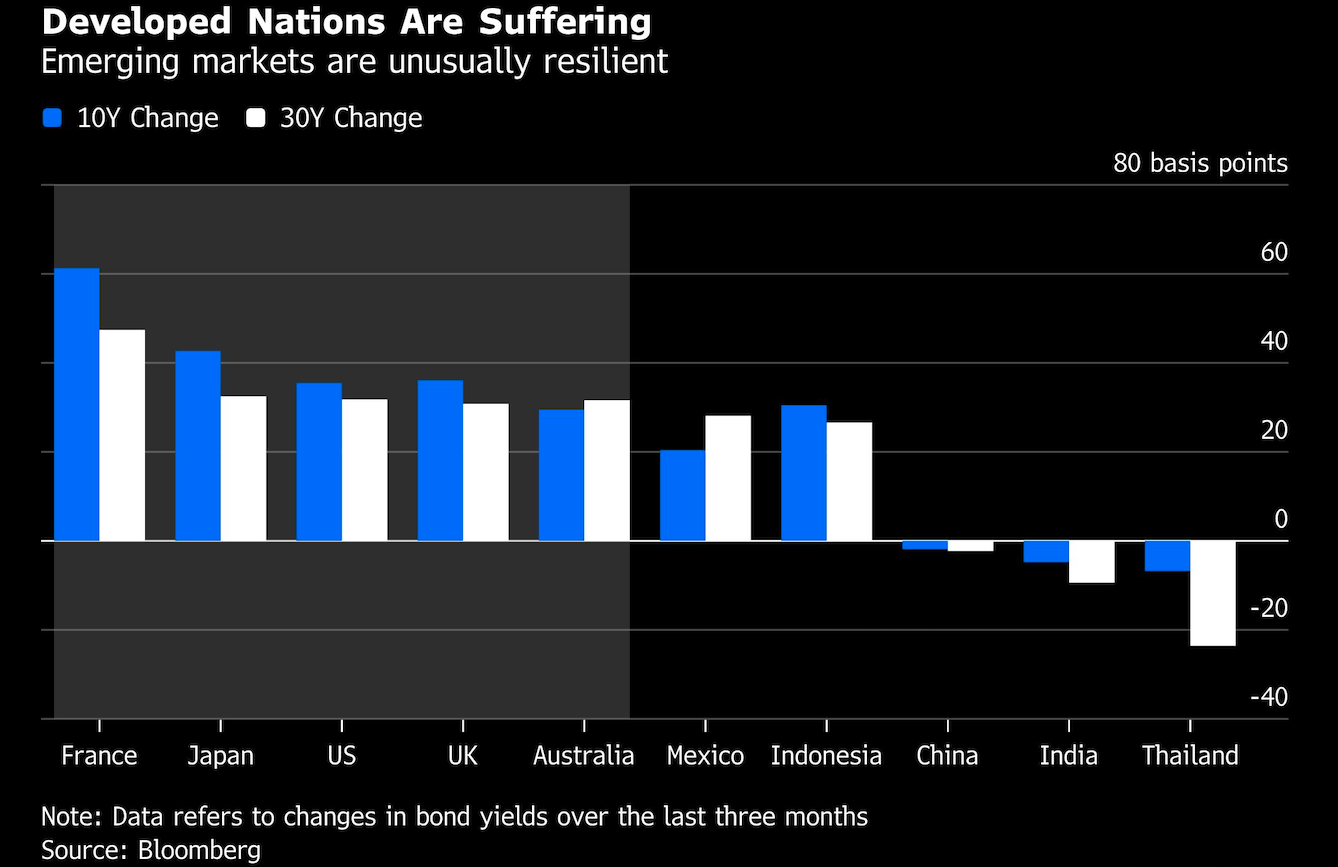
Global bond yields have climbed to the highest levels in almost two decades, pushing up mortgage repayments and corporate financing costs. But one corner has remained unusually resilient: emerging markets.
Much of the recent selloff is concentrated on long-dated sovereign debt issued by developed nations. Traders are hedging against further losses in Treasuries, while Japan’s 30-year yield hit a record high. In Europe, the premium that France pays to borrow over Germany is near the most costly since the continent’s sovereign debt crisis in 2012.
The tantrum has yet to be seen in emerging markets. In fact, higher-yielding sovereigns have lower funding costs now than at the onset of the Iran war. There are even some notable outliers: Over the last three months, bond yields in China, India and Thailand actually fell. So what’s driving the divergence?
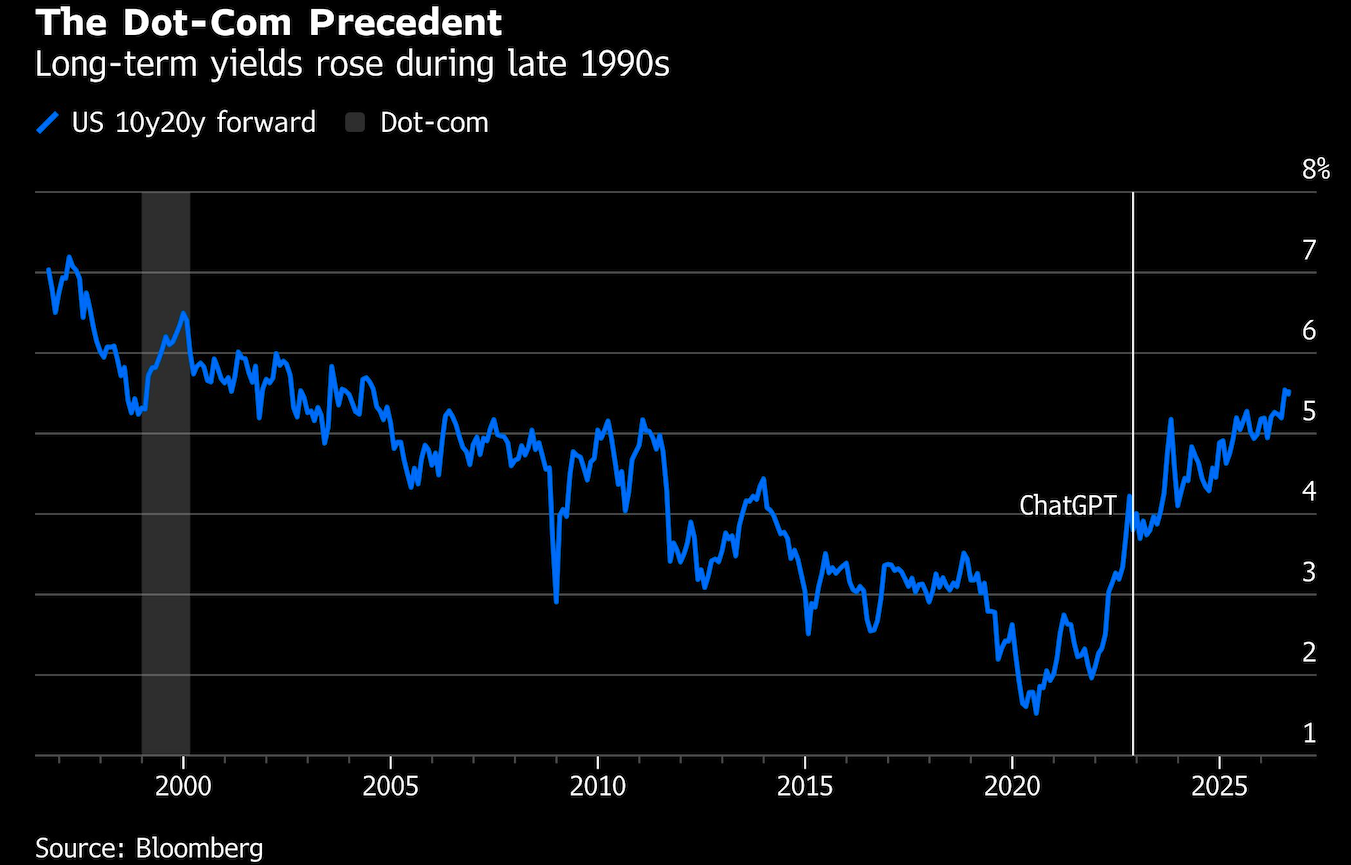
First, the artificial intelligence-led investment cycle may be structurally pushing up interest rates in a select group of economies. During the late 1990s, a sharp rise in the US long-term yield broadly coincided with the dot-com boom, before reversing after the bubble burst, according to Sergi Lanau at Oxford Economics.
This time around, most of the AI-induced productivity gains will be captured by developed nations, thanks to their deep pools of skilled labor and capital needed for the infrastructure built-out. Emerging markets, unfortunately, are likely to be left behind, except for a few manufacturing powerhouses such as China and South Africa. As a result, the sharp rise in the bond yields of the world’s richest nations could be partially viewed as investors baking in the potential for higher economic growth.
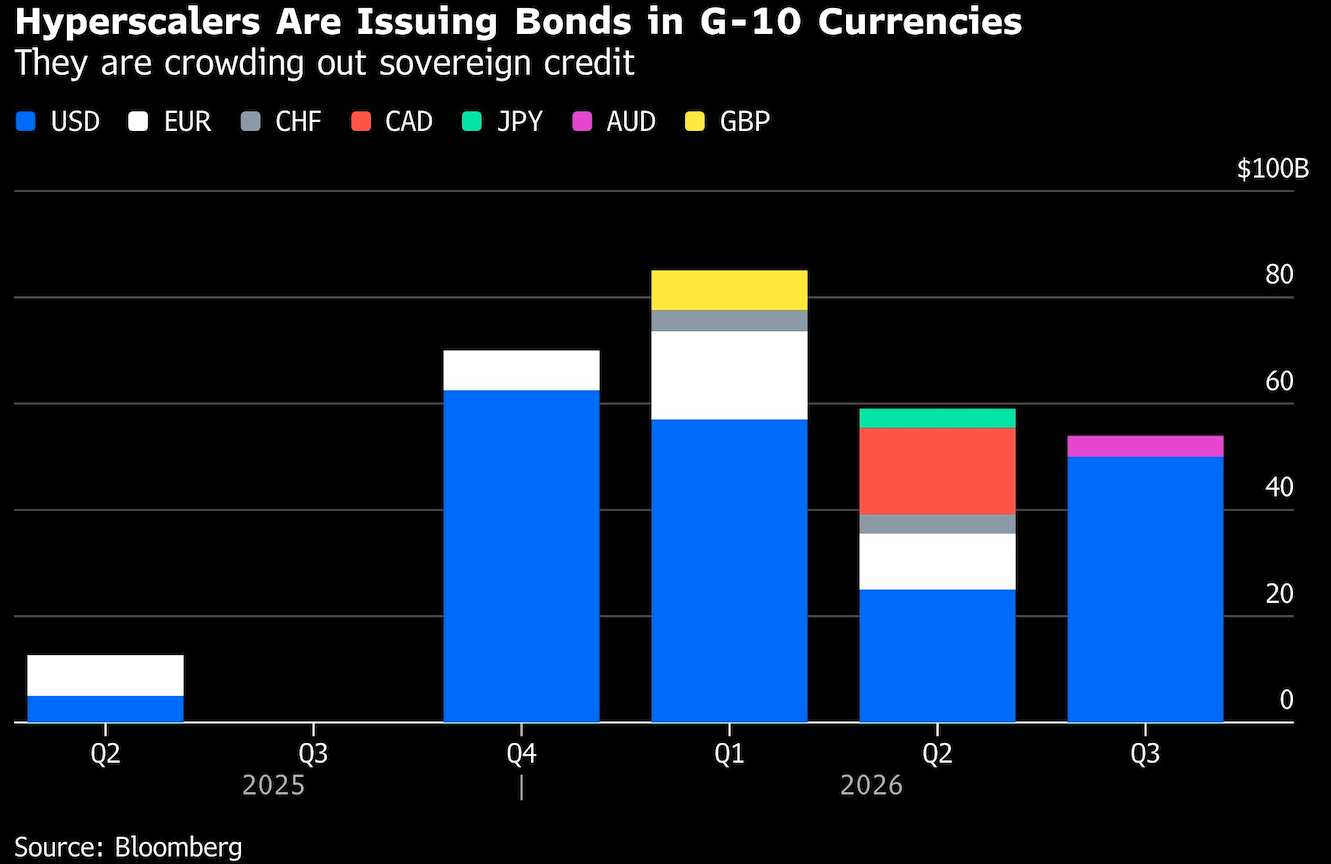
There’s also the reverse “crowding out” theory, which posits that the hyperscalers’ debt binge is leaving little room for governments to tap financial markets. This phenomenon is most pronounced in the US, but Big Tech has started issuing bonds denominated in other Group-of-10 currencies as well. They are unlikely to opt for the offshore yuan or the Korean won, for example, because of geopolitical and liquidity concerns in emerging markets.
No doubt, China is a formidable AI superpower. But a domestic savings glut — household deposits hit 173 trillion yuan ($25.6 trillion) in July — ensures ample liquidity supply. There’s no crowding out.
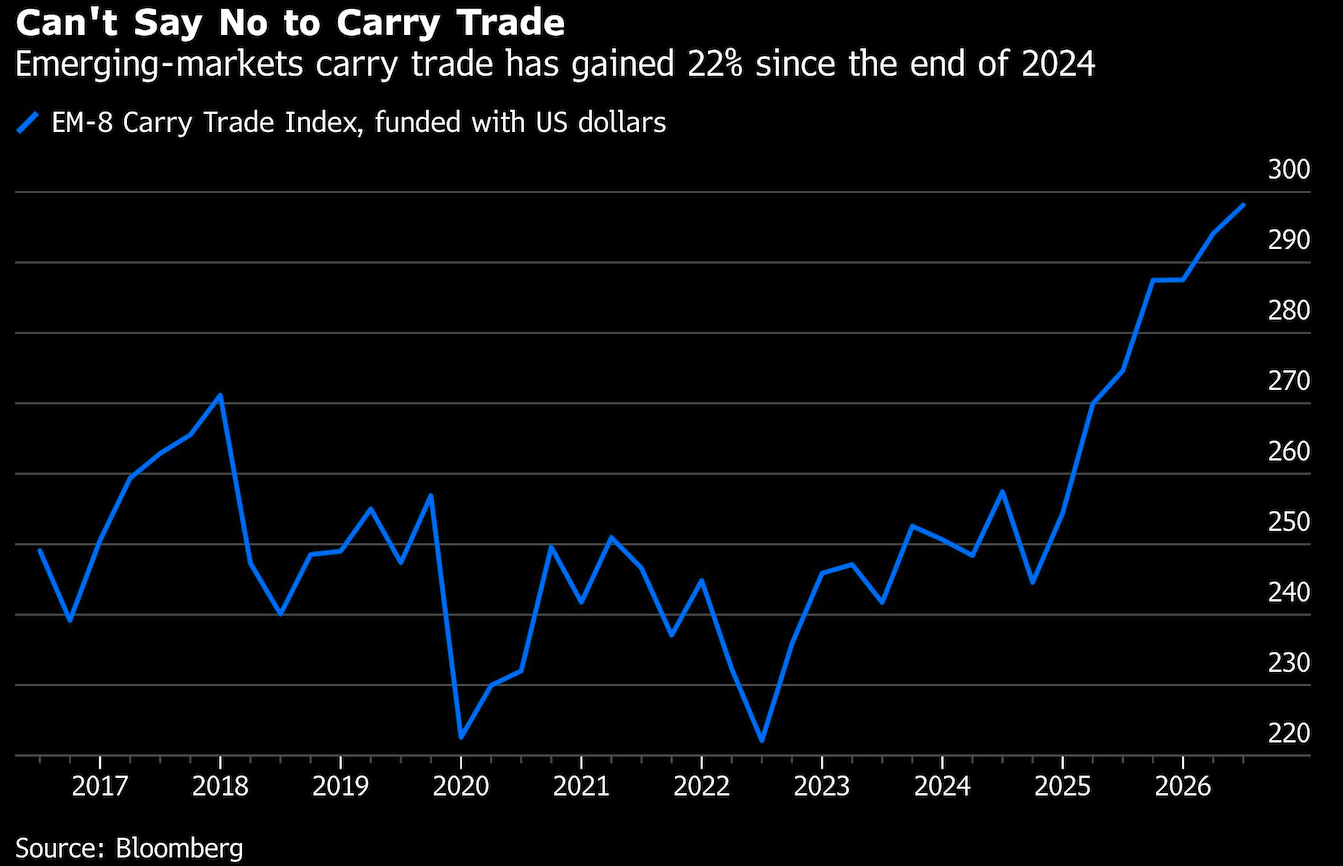
Second, the carry trade, in which investors borrow cheaply in currencies like the yen and put the money in higher-yielding emerging-markets assets, is simply too juicy to pass. The strategy has returned about 22% since the end of 2024, notching positive capital gains for seven consecutive quarters.
Third, precarious fiscal sustainability is finally starting to be priced in advanced economies’ sovereign credit. France is now Europe’s focal point for market concerns ahead of tricky budget negotiations this autumn. Japan’s long-term borrowing costs are soaring as the government plans a budget comparable to spending during the Covid-19 pandemic. In the US, the federal government’s $40 trillion debt is a headache for Treasury Secretary Scott Bessent, who has to service it at much higher rates.
Ironically, fiscal irresponsibility is becoming less of an issue in emerging markets. Governments have been lectured — and penalized — enough times that some are willing to undergo politically difficult measures to stabilize debt. Case in point, Argentina is the biggest contributor to the asset class’s outperformance this year. Its sovereign credit has rallied sharply after multiple upgrades from ratings agencies, a win for President Javier Milei, who has refrained from a spree of international bond sales.
This divergence of fortunes is truly remarkable. For decades, emerging countries have been associated with poor creditworthiness, and given negative designations such as the “Fragile Five.” But the bond market’s focus has shifted to their more mature — and presumably more responsible — counterparts. The message for these democratically elected governments is to start repairing their finances.
The public bond market is a fair disciplinarian. The countries that have lectured are now being taught a lesson. Eventually, fiscal irresponsibility catches up to everyone.