Stock investors are caught between the pull of strong earnings and mounting macroeconomic risks, with key events carrying binary outcomes that argue for some protection.
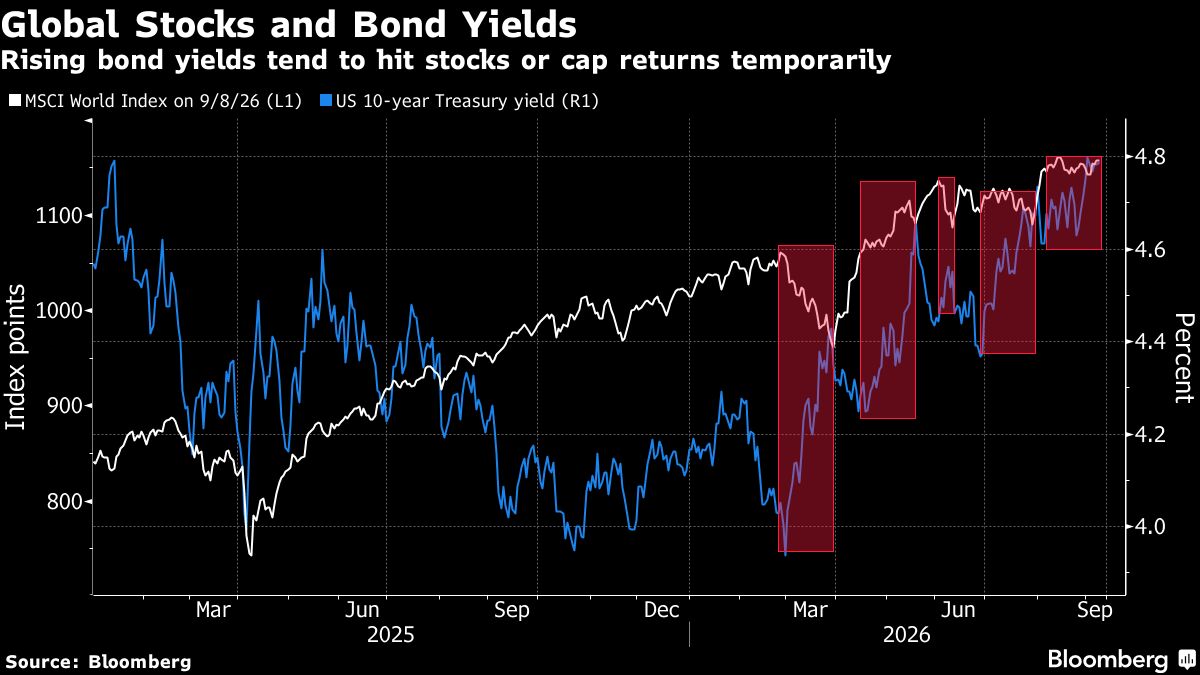
Markets in the US and Europe have traded sideways for a month as the boost from the earnings season shows fatigue. Equities are not only facing the possibility of interest-rate hikes by the Federal Reserve, but also an escalation in the Middle East and US midterm elections that remain too close to call.
“Micro is getting more encouraging, while the macro is getting harder,” said Richard Privorotsky, head of European one-delta trading at Goldman Sachs Group Inc. Artificial intelligence is advancing rapidly, and tech results should offer plenty of positives for the sector, he said. Still “energy is objectively problematic and inflation/rates are back in play.”
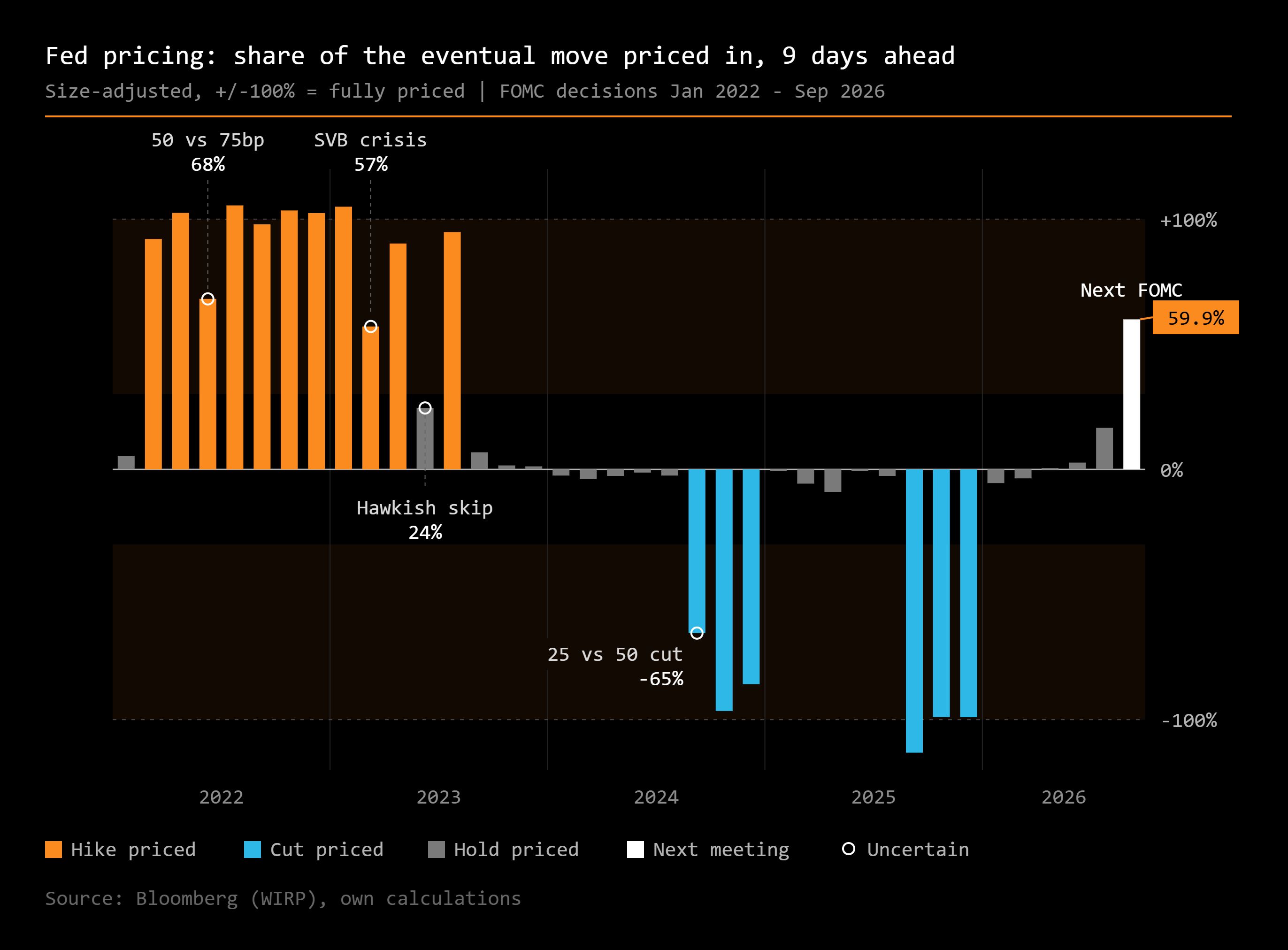
Last week’s jobs data showed the US economy was still running strong, while Brent is close to $100 a barrel. Fed officials have made it clear that Friday’s inflation print will be key for rates. While the bond market sees a 60% chance of a hike next week, such a move isn’t fully priced in until December. In fact, Fed funds futures signal the most uncertainty in years.
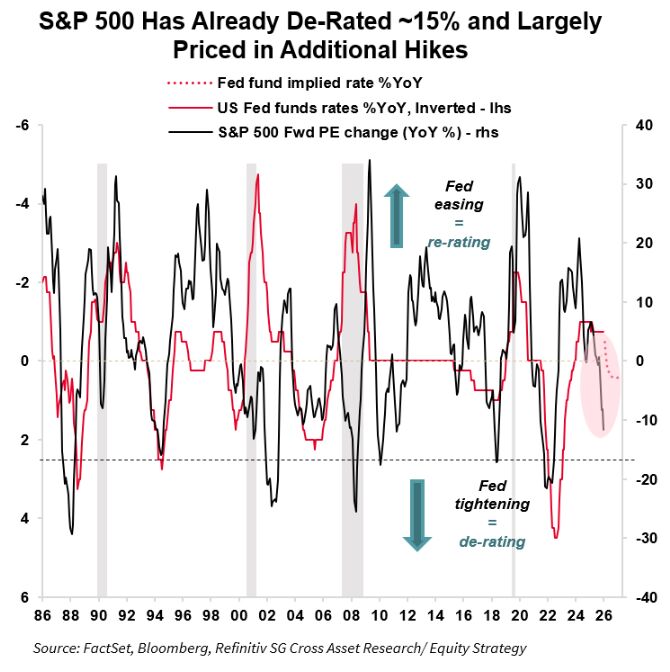
History shows that a setback from a hike could be short-lived. “Equities dislike the restart of Fed tightening, with the S&P 500 typically weakening over the next one to three months,” said Societe Generale strategist Manish Kabra. “Yet six months later, the market has often recovered to fresh highs. Until the curve inverts, history argues for buying the hike, not fearing it.”
The main exception was in 2022, when the yield curve inverted. Inversions often precede recessions and typically foreshadow equity drawdowns of about 20%. Without a yield-curve inversion, Kabra recommends investors keep buying US stocks, especially now that the benchmark’s price-to-earnings ratio has already de-rated nearly 15%.
Rate hikes aren’t the only worry on investors’ minds. US midterms are less than two months away and look particularly difficult to hedge. Stocks tend to be weaker in the run-up to elections, only to rally afterward. This time, the bigger challenge may emerge further down the road if the Trump administration finds it harder to push through policies.
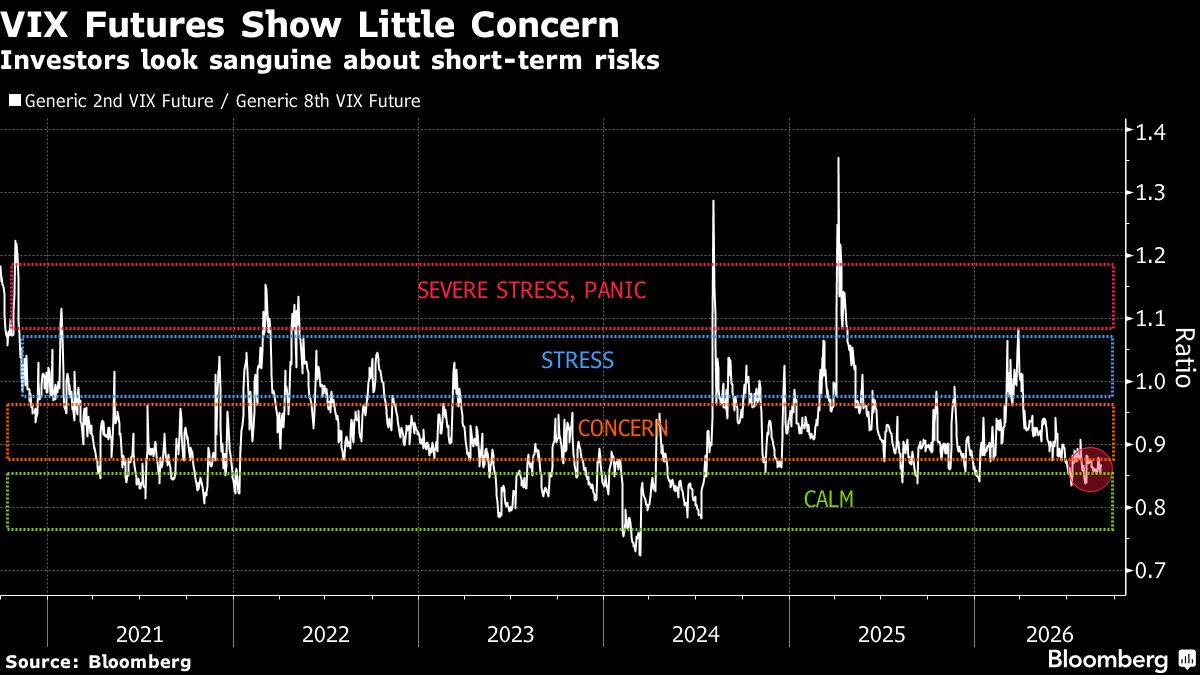
“US midterms are more likely to amplify dispersion than vol,” wrote Bank of America Corp. derivatives strategists including Lars Naeckter and Riddhi Prasad, pointing to the sub-1% post-election move implied by the risk curve. “Today’s easing equity market leverage and low correlation backdrop suggest the election may prove more rotation - than volinducing.”
The strategists said investors should avoid overpaying for protection at the index level, favoring lower-cost hedges such as S&P 500 down-and-out puts and VIX calendar call spread collars. For more targeted protection, event volatility in regional banks and small caps appears underpriced compared with the 2024 election, making instruments such as the Russell 2000 ETF (IWM) November puts worth considering.
The biggest challenge for markets would be a Democratic sweep. BofA’s Michael Hartnett expects a big flight from risk in such a scenario, including a slump of more than 10% in stocks, a weaker dollar and stronger bonds. The best hedge against such an outcome is to short financials and the greenback.
By contrast, a surprise Republican sweep would likely trigger big risk-on moves, including a “green light for AI bubble” and a stronger dollar. A scenario of “GOP Senate, DEM House” would see a modest risk-on response, where “gridlock equals Goldilocks,” Hartnett said.
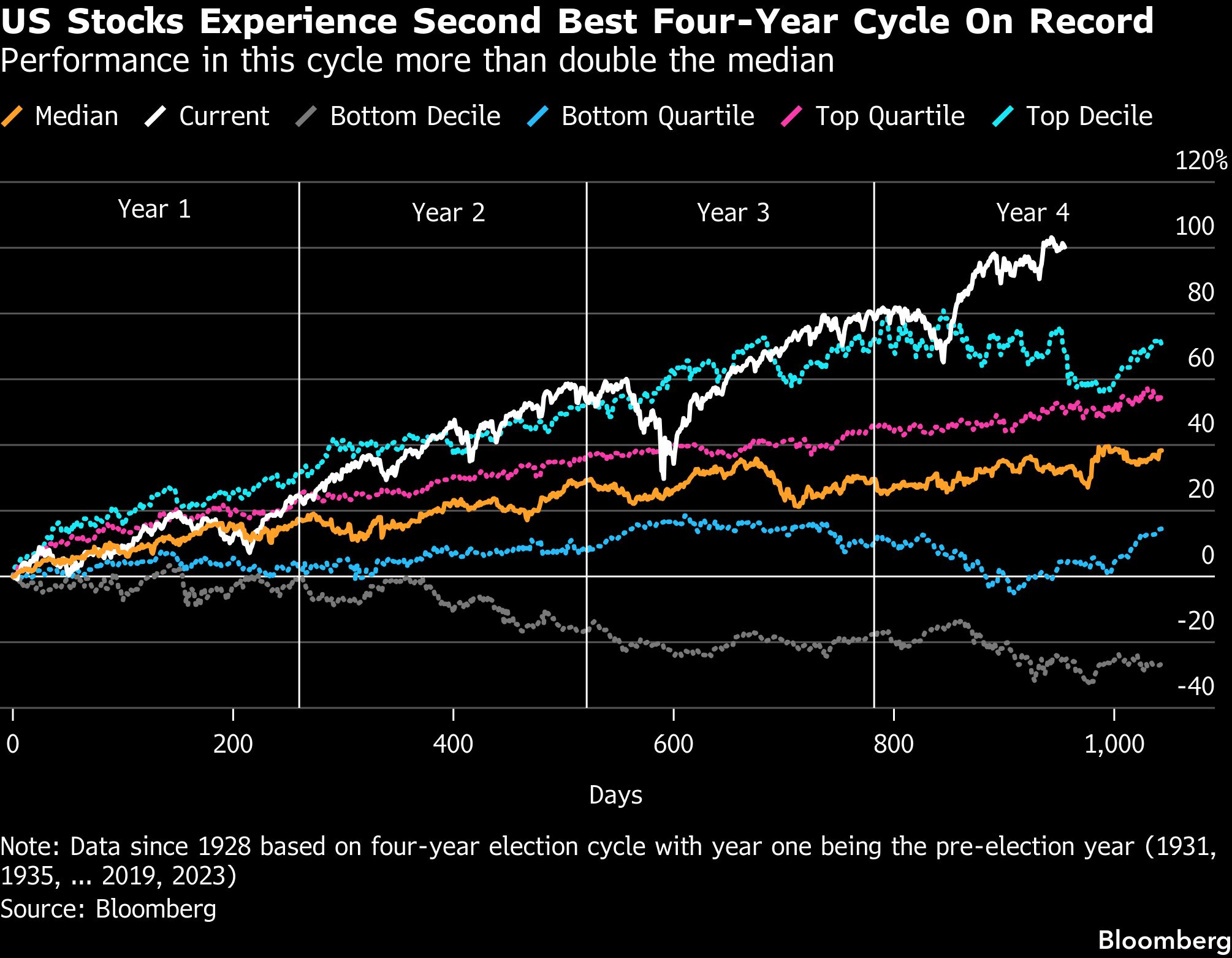
History suggests investors have a lot to lose. The chart below tracks the current bull run against previous four-year election cycles, with Year 1 marking the year before a presidential vote, meaning we’re now in Year 4. The S&P 500’s roughly 100% gain since end-2022 is the second-strongest cycle on record, running at almost three times the median path.
The only precedent that ran hotter was during the early dot-com cycle, which absorbed a near-20% drawdown late in its fourth year and still powered on. That means the current market has an unusually long way to fall if the narrative cracks, whether through waning faith in AI capex, an escalation in the Middle East or a repricing of rates.