Apple Inc.’s $570 billion summer surge is saddling new Chief Executive Officer John Ternus with high expectations heading into the company’s most anticipated event in years: the unveiling of the foldable iPhone on Wednesday.
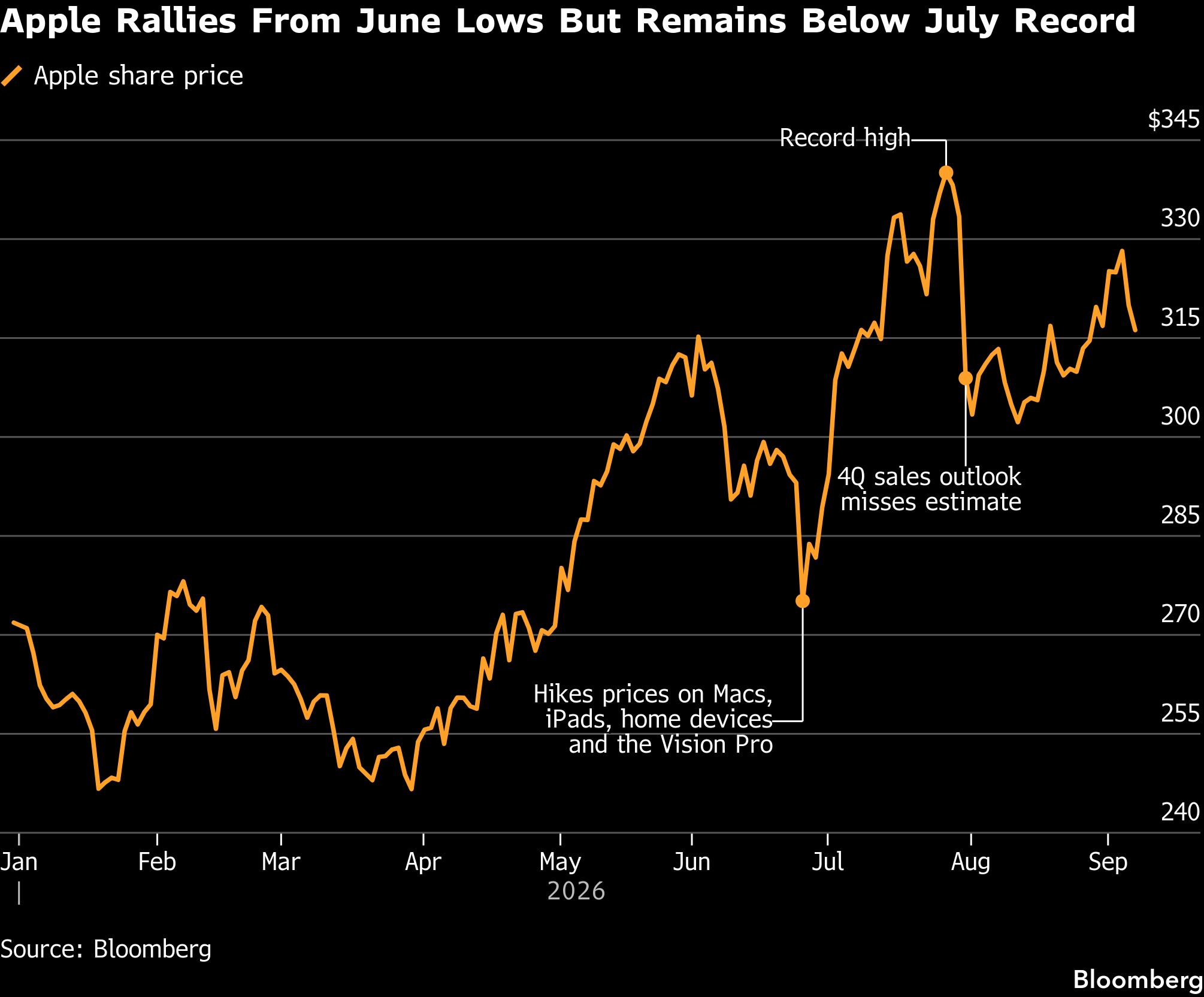
The stock has rallied 15% since June 25, when the company announced it was raising prices on many of its products, sending the shares to their worst day in more than a year. Since then, a significant chunk of the gains have been driven by excitement about the new lineup of devices, particularly the foldable phone. However, the stock remains down about 7% from its all-time high set on July 28, and it slid 0.2% in Wednesday morning trading.

Apple is still considered an AI laggard, a long-term fundamental issue for investors. But in the immediate future, the stock’s fortunes will likely hinge on the reception of the new iPhones, the company’s ability to navigate soaring memory costs and the performance of Ternus, who took over from former CEO Tim Cook on Sept. 1.
See more: Access Is Valuable. But It Isn't the Same as Care.
The Apple product launch is scheduled to kick off at 10:00 a.m. Pacific time at Apple’s headquarters in Cupertino, California.
“These events are important every year, but this one has an even greater level of importance,” said Jed Ellerbroek, portfolio manager at Argent Capital Management, which owns Apple shares. “We are embarking on what I think many hope and expect to be a pretty darn good sales cycle here. They need to deliver on that.”
Apple’s revenue is expected to rise 15% in fiscal 2026, which ends in September. That would be the fastest pace of growth since 2021, when stay-at-home measures during the pandemic sent device sales soaring.
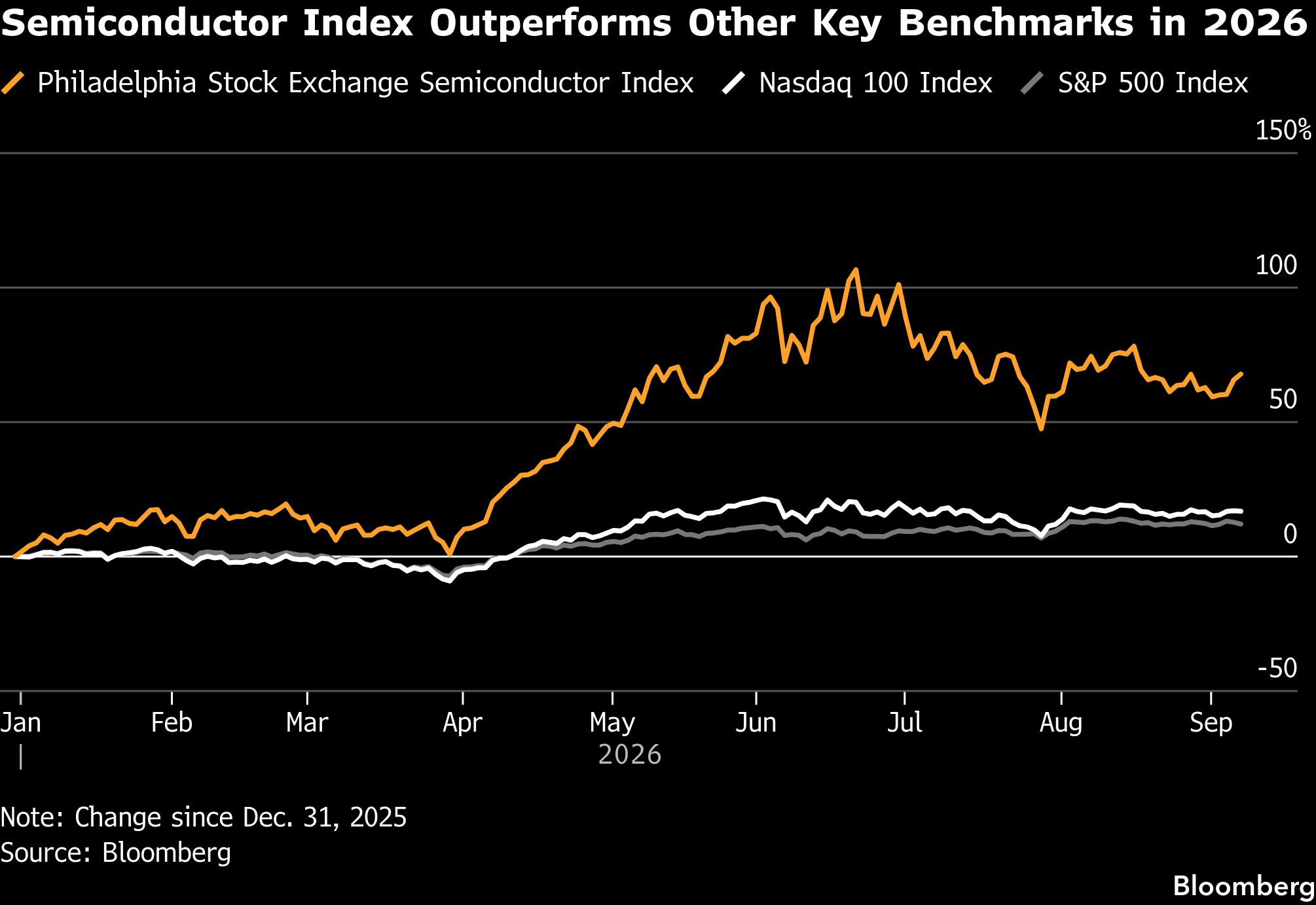
The stock has also benefited from the company’s reputation as a haven from heavy AI spending, which is weighing on Big Tech peers like Alphabet Inc. and Microsoft Corp. that have committed hundreds of billions of dollars to develop the technology. In a year when Wall Street is growing increasingly uneasy about when those capital expenditures will pay off in a big way, Apple is the second-best performer among the Magnificent Seven tech giants.
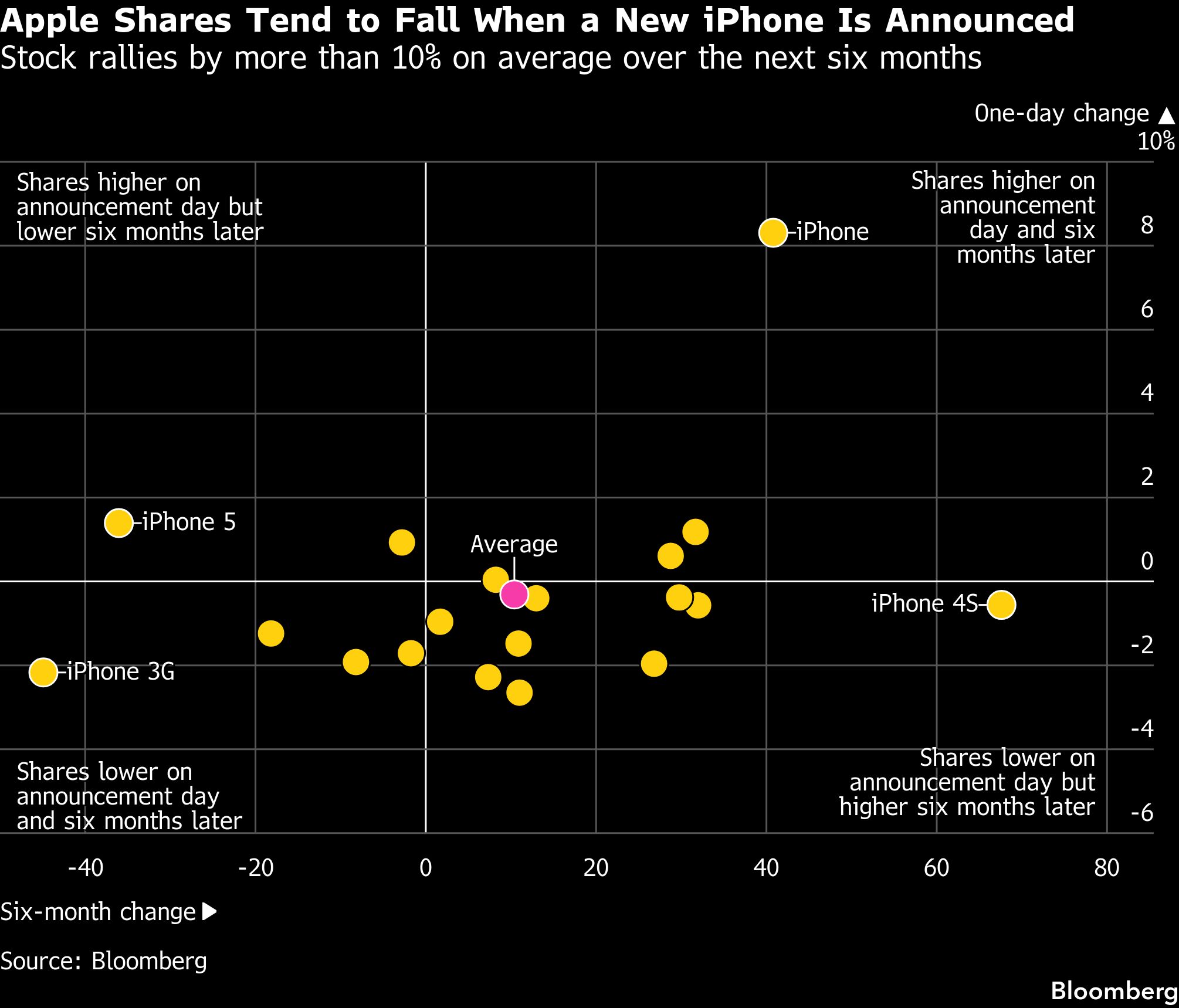
The problem, however, is Apple investors are famously hard to impress on the day of iPhone events. The stock has fallen on five of the past eight days when new versions of the devices were unveiled. The good news? It averages a gain of 10% in the six months following iPhone debuts, according to data compiled by Bloomberg going back to 2007.
The foldable iPhone is projected to have a starting price of $2,300 to $2,500, according to Morgan Stanley analysts led by Erik Woodring. They estimate shipments will total about 6.5 million units in Apple’s fiscal first quarter, which ends in December, translating into sales of roughly $14 billion, or about 16% of total iPhone revenue expected in the quarter.
Beyond the foldable iPhone, Apple also is expected to unveil new iPhone Pro and Pro Max models, AirPods and watches. The big question will be whether the company can raise prices to keep up with soaring memory costs and maintain profit margins without scaring off customers.
“Pricing remains the key unknown, and in our view, the variable most likely to drive the reaction in shares,” JPMorgan analyst Samik Chatterjee wrote in note to clients last week. “Investors are looking for price increases that will help the company find the right balance between limiting price elasticity impact on volumes and limiting further moderation of gross margins.”
Apple’s ability to protect profitability is critical for a stock that has grown increasingly expensive. At 33 times earnings expected over the next 12 months, the shares are well above their 10-year average multiple of 23, not far from the highest level in nearly two decades, and among the 60 most pricey members of the S&P 500, according to data compiled by Bloomberg. Its valuation is well above the S&P 500 at 19 times forward earnings and the tech-heavy Nasdaq 100 Index at 21 times.
“It’s not cheap, but I do think there’s long-term value in the shares,” said Gerald Sparrow, chief investment officer of the Sparrow Growth Fund, which owns Apple shares. “Investors want to see growth.”
What’s more, the pace of earnings growth is slowing. After consecutive quarters of double-digit percentage increases, Apple’s net income expansion is expected to slow to just 6% in its fiscal fourth quarter, which ends Sept. 30, and 1% in its fiscal first quarter, according to the average of analyst estimates compiled by Bloomberg.
The one major area Apple investors are concerned about that isn’t expected to get much attention on Wednesday is artificial intelligence. While the company has been rewarded for not following rivals like Microsoft in spending heavily on AI, its reliance on partnerships like the one it has with Google raises other concerns that will start to matter before long, according to Argent’s Ellerbroek.
“I want more from them in terms of their own capabilities,” he said. “I respect the company so much, I think their competitive position is so great, but there are some under the surface, not in the financials signs that all is not perfectly well at Apple right now.”
Tech Chart of the Day
Top Tech Stories
- Alphabet Inc.’s Google is planning its biggest investment in Europe, an artificial intelligence infrastructure build out worth at least €13 billion ($15.1 billion) in Finland.
- Amazon.com Inc. kicked off the sale of its debut sterling bonds in a four-part deal, as hyperscalers continue to turn to global debt markets to fuel the artificial intelligence arms race.
- Alphabet and Blackstone Inc.’s new cloud venture has hit delays for major data-center locations that were supposed to run Google’s chips, underscoring the obstacles standing in the way of Big Tech’s AI ambitions.
- US security agencies accused China’s top AI companies including DeepSeek and Kimi maker Moonshot AI of systematically extracting proprietary knowledge from American firms and warned Silicon Valley developers to protect their work.
A message from Advisor Perspectives and VettaFi: Discover something new! Click here to register for our upcoming webcasts.
Bloomberg News provided this article. For more articles like this please visit
bloomberg.com.
Read more articles by Jeran Wittenstein