The next earnings season is set to be robust across the board, as the benefits of artificial intelligence spending start to flow across the economy.
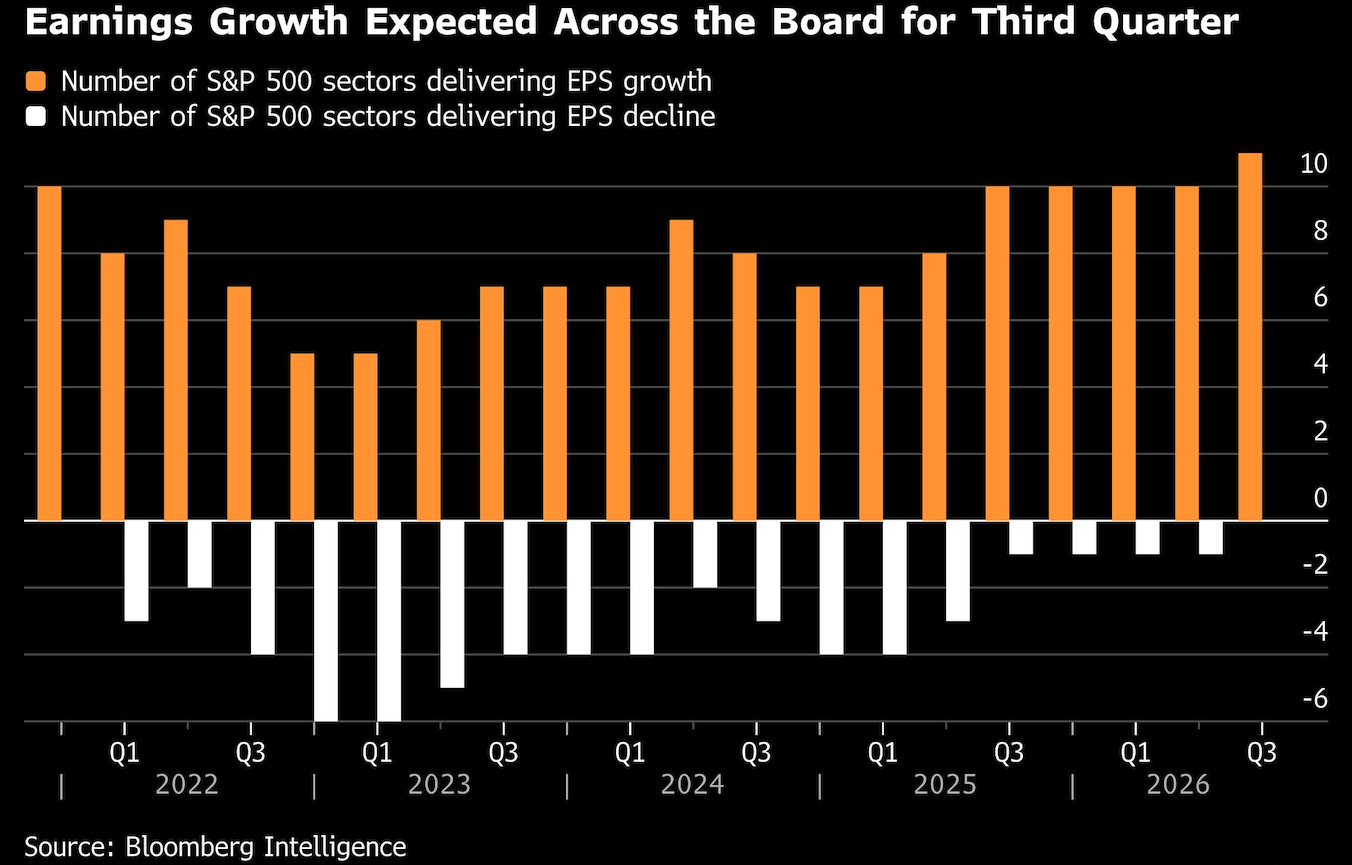
Every single sector in the S&P 500 is expected to deliver earnings growth for the third quarter, the first time since 2021, when corporate America emerged from the pandemic slump, Bloomberg Intelligence data shows.
“Things have started to broaden out — even last quarter, we have seen pretty sizable beats from non-AI companies as well,” Ohsung Kwon, chief equity strategist at Wells Fargo, said in an interview. “We are starting to see broader strength in earnings.”

Industrial firms that make products like vacuum pumps, cooling systems and specialty paint coatings have seen revenue surge as data center construction continues to stoke demand for their products. Consumer firms are getting a boost from the AI buildout, which is creating jobs and demand for housing, while rising stock portfolios are encouraging people to splurge on shopping, travel and dining out.
“The overwhelming theme, which has been driving the broadening as well, has to do with the scale of AI-related capital spending,” said Venu Krishna, head of US equity strategy at Barclays. “That dollar amount is so high that what the hyperscalers are spending in terms of AI capex is effectively the revenue for a whole bunch of other industries, whether it’s storage, whether it’s hardware, whether it’s parts of industrials, parts of energy, parts of utilities.”
See more: Missiles, Markets, & Momentum: Why the Market Outlasts the Headlines
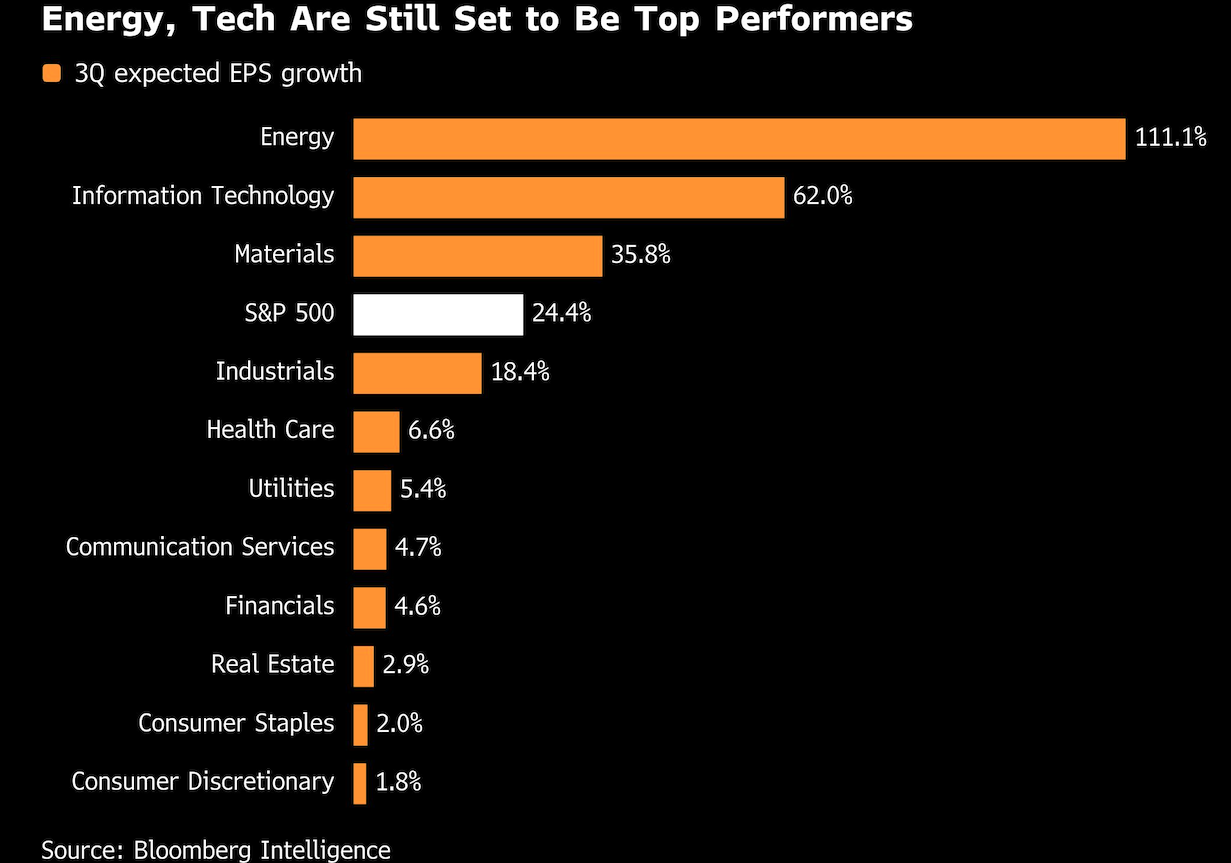
The big winners of the last few quarters — Big Tech and oil — are still expected to stand out with earnings growth far ahead of other sectors at 62% and 111%, respectively. The rest of the benchmark is also seen expanding as a wider range of companies benefit from growing AI use.
“When rates go up, one of the first casualties is construction jobs, but we haven’t seen that because the data center growth has been so dramatic that most of the labor has been reallocated,” Krishna said.
Aramark boosted its outlook for the second time this year after signing new deals with data center operators to provide catering, cleaning and transportation services at their campuses, which are expected to bring in between $400 million and $500 million in additional revenue over the next two years.
Consumer firms are also starting to capitalize on the implementation of AI in their own operations. Investments in AI-powered shopping tools, customer service and distribution can make baby clothes company Carter’s Inc. more efficient and help drive margin expansion, according to BI’s Mary Ross Gilbert.
The healthcare benchmark is set to return to earnings growth this quarter, while banks should deliver double-digit growth. Companies in these sectors are among the most willing to quantify AI-related gains, including cost reduction or improved productivity, according to research led by Barclays’ Krishna.
Financial services firms are also set to profit from potential blockbuster initial public offerings of AI firms, and regional banks should benefit as more wealth flows through communities that are home to data centers, Kwon said.
Though sectors like consumer staples, real estate and industrials are set for solid growth over the next few quarters, some tougher spots remain.
Among financials, the insurance industry is poised for an earnings decline in the third quarter as pricing weakens and loss costs rise. The media and advertising sector, part of communication services, is held back by tighter marketing budgets and customers turning to AI to make their own campaigns.
The AI spending boom brings some risk being tethered so closely to one sector, Kwon said, adding that he turned more cautious on equities a few weeks ago because of concerns about continued AI-related capital expenditures.
Potential challenges include rising interest rates and growing pressure on credit markets, according to Krishna.
Growing public backlash in some communities where data centers are being built, as well as recent calls from top AI leaders to potentially slow development of powerful frontier models over safety concerns, could add more uncertainty.
“Data center moratoriums, especially heading into the midterms, I think that’s a big risk as well, especially on sentiment,” Kwon said, adding that any delays in data center construction would be a downside for AI and tech stocks. “The AI trade is really a bottleneck trade right now, and any delays would alleviate that bottleneck at least a little bit.”
A message from Advisor Perspectives and VettaFi: Discover something new! Click here to register for our upcoming webcasts.
Bloomberg News provided this article. For more articles like this please visit
bloomberg.com.
Read more articles by Ann Gehan, Chloé Meley