Better clarity about the Federal Reserve’s resolve to fight inflation is giving investors reason to be bullish, and yet risks associated with oil prices and artificial intelligence keep them from fully committing.
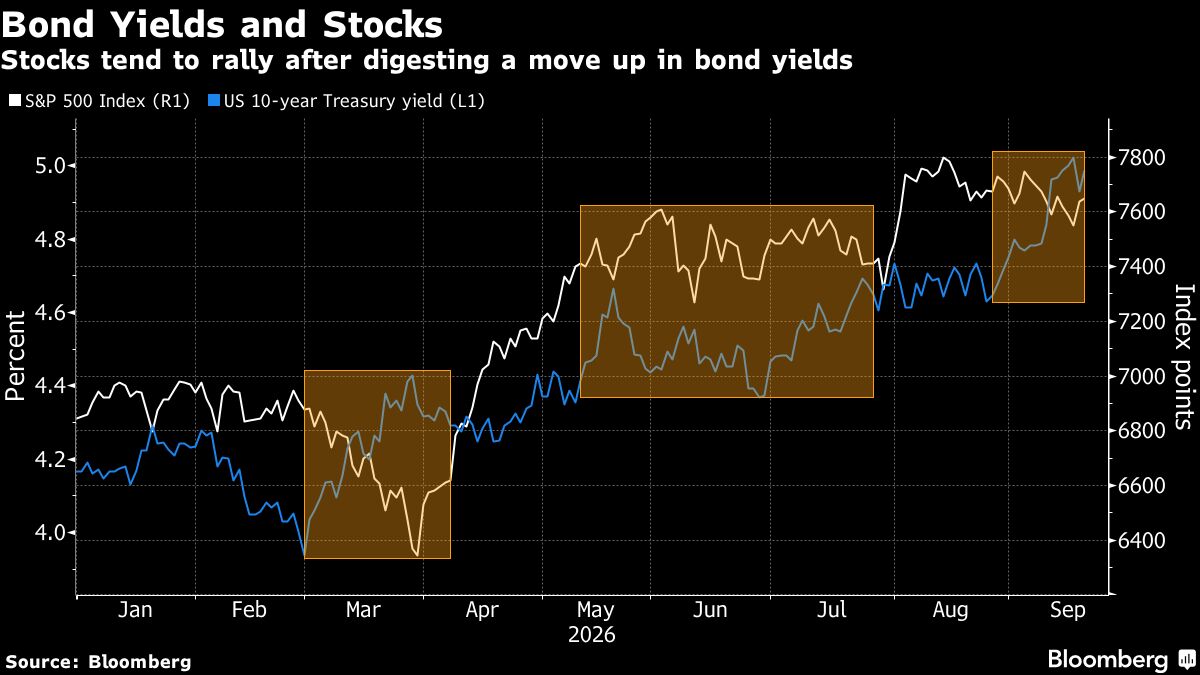
The Fed last week succeeded in restoring its credibility, showing that it’s not falling behind the curve with a hawkish message that still stopped short of signaling an aggressive hiking cycle. While that was at first enough to soothe markets, nerves remained evident Friday as the 10-year Treasury yield again tested 5% and the S&P 500 fluctuated between gains and losses. While oil prices have pulled back, Brent crude is still trading above $100 a barrel.
“It is difficult to see rates and equities fully stabilizing until energy-related inflation pressures ease,” said Barclays Plc strategists led by Emmanuel Cau. “Nevertheless, the positive development is that Fed independence and credibility have been reaffirmed, providing clarity on its reaction function.”
The Fed decision can be seen as a clearing event. Investors’ cautious turn heading into the policy meeting showed they were far from complacent, with clear signs they had reduced exposure while adding hedges. Friday’s massive quarterly expiry also went a long way toward resetting options positioning.
“With earnings growth robust, credit spreads contained and the VIX subdued, US equity fundamentals remain supportive, leaving us constructive on the S&P 500 beyond near-term volatility,” said Societe Generale SA strategist Manish Kabra. The yield curve remains a key signal and as long as inversion is avoided, Kabra expects the benchmark to hit 8,000 by year-end, despite some volatility.
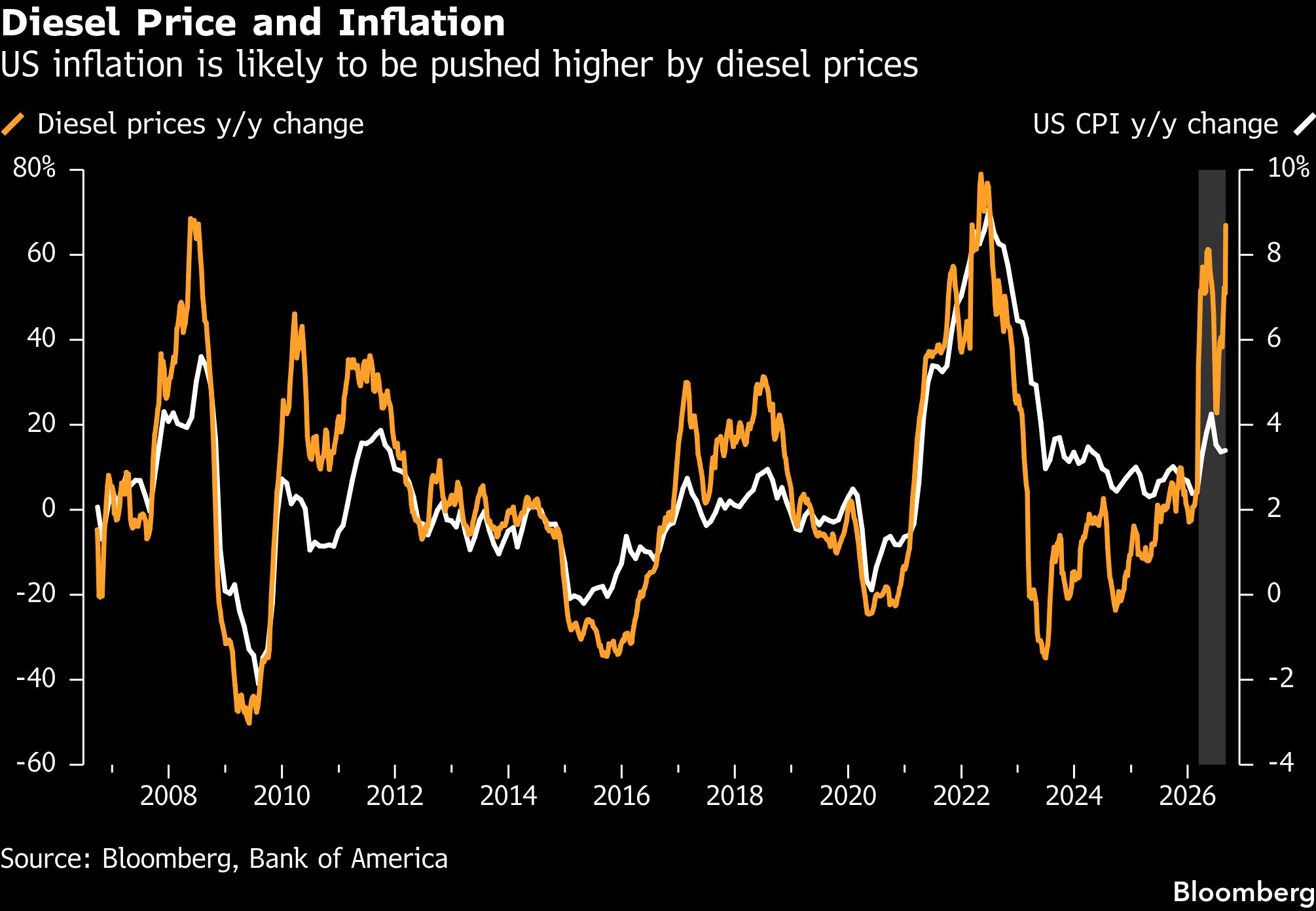
While the prospect of a year-end rally is well alive, getting there may not be easy. Diesel prices are pointing to higher inflation ahead, and unless the war in Iran is resolved swiftly enough to bring oil prices down significantly, the central bank may have little choice but to turn even more hawkish.
Another three rate hikes are priced in by the end of July, according to the swap market. All eyes will be on a potential bond shock, with 10-year yields above 5% making Treasuries increasingly attractive. Yet as long as economic and earnings growth remain resilient, investors may be reluctant to shift from equities and rather continue broadenening their exposure.
Bank of America Corp. strategists led by Jared Woodard have become more cautious, saying positioning is still too bullish given next year’s expected moderation in earnings. They said the 10%-15% growth seen for 2027 implies an ISM manufacturing reading above 53 for a sustained period of time. It’s “not yet time for defensives, but quality, value, and yield look prudent,” they said.
The market has become more skeptical about AI spending and the future returns on those investments. This has cast some doubt on the earnings outlook for the entire chain of AI beneficiaries. Meanwhile, there’s been a rotation within the technology sector, with software coming back stronger, while semiconductors have largely stalled in the past two months and turned increasingly volatile.
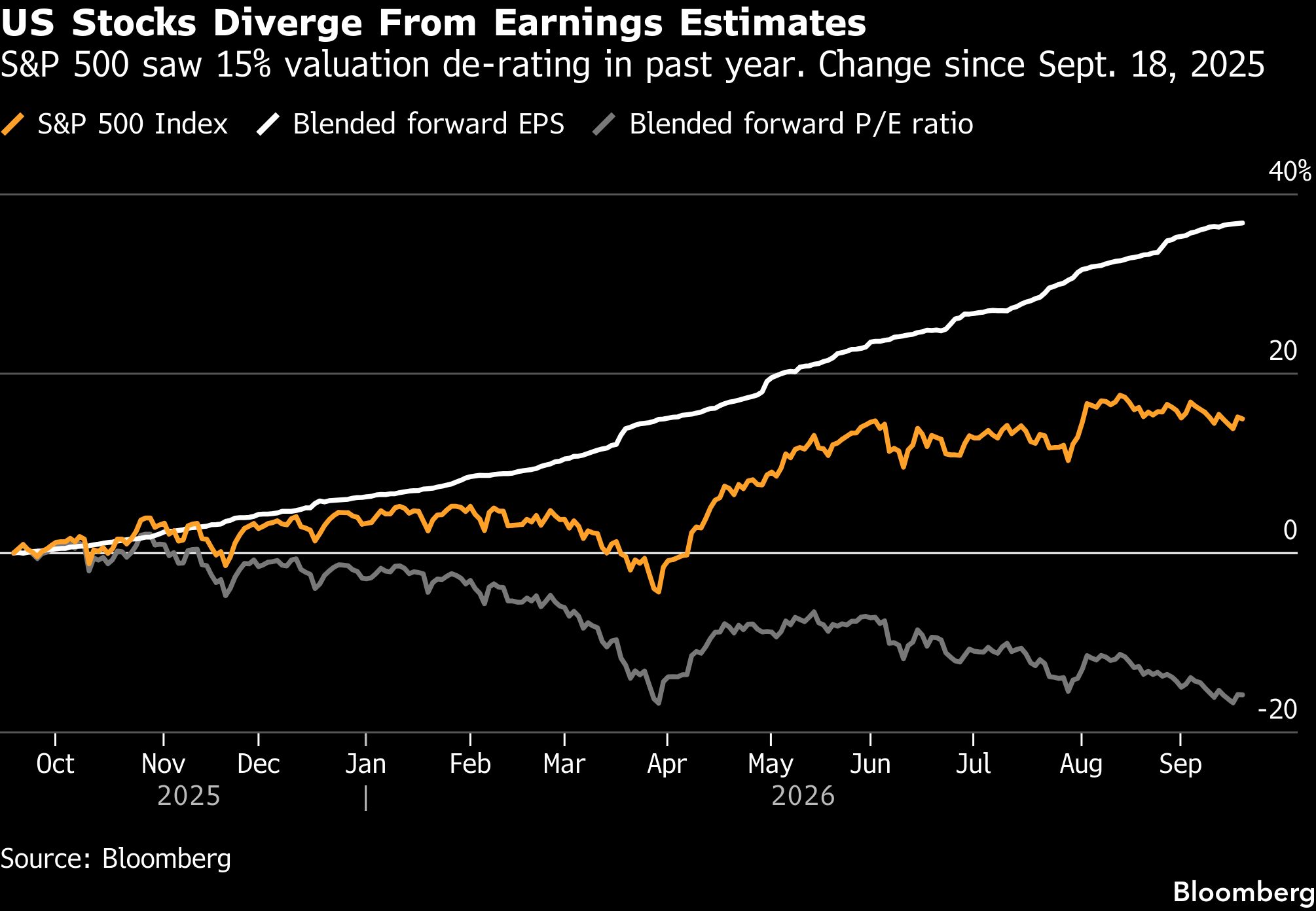
Valuations have come down sharply in the S&P 500 and the benchmark now trades just above its long-term average. While the de-rating has more to do with surging earnings estimates, the recent pullback shows investors are not prepared to pay up for growth, whether at the index or sector level.
If caution remains in the near term, an expectation-beating earnings season in a few weeks time has the potential to revive sentiment and risk taking.
“The resilience suggests investors are distinguishing between higher rates driven by persistent inflation and a fundamentally deteriorating growth outlook,” said Daniela Hathorn, senior market analyst at Capital.com. “For now, the latter has not become the dominant concern.”