Wall Street has spent weeks trying to make peace with the great bond selloff. Friday offered some short-lived relief — along with a warning about the damage from stubbornly high yields across investment strategies of all stripes.
A surprisingly weak jobs report gave markets a brief reprieve Friday, sending stocks higher and Treasury yields lower as traders pared bets on another Federal Reserve hike. The bond rally didn’t last long. That leaves investors confronting a less dramatic but potentially more consequential question in the era of 5% yields: what if borrowing costs refuse to come down?
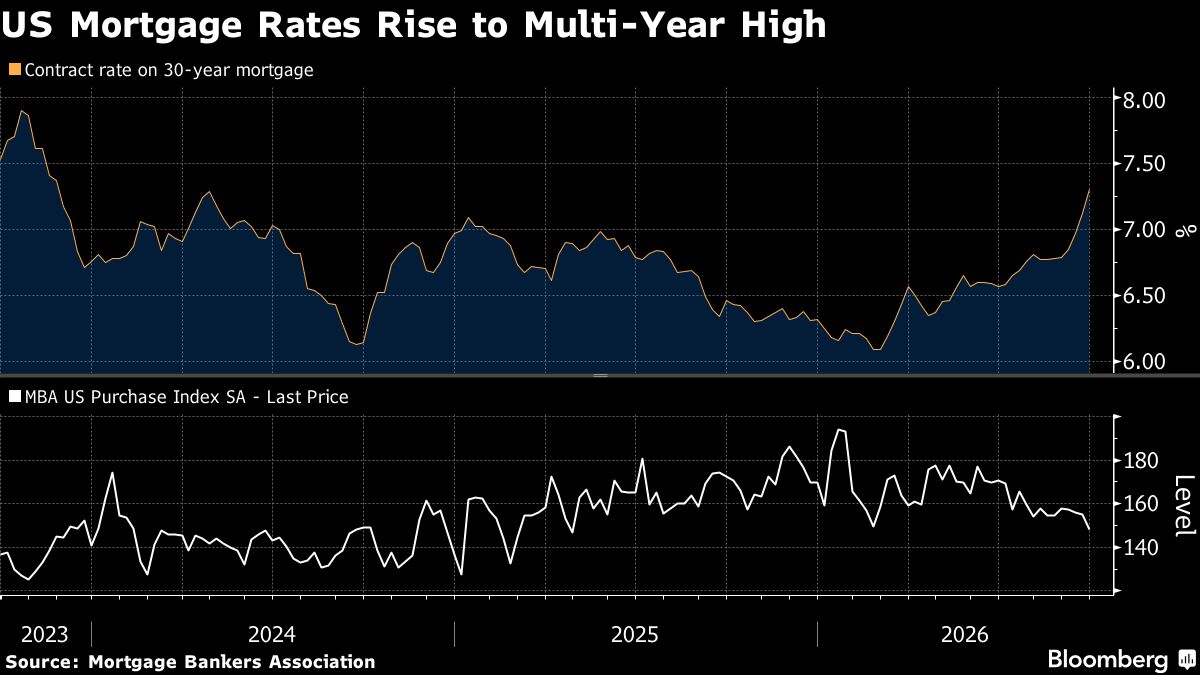
There is already plenty of evidence of what that looks like. Housing remains stuck, consumer credit has become more punishing and weaker borrowers are paying dearly for access to money. You would hardly know it from the headline stock indexes, though. Strong earnings and a torrent of AI spending have kept them near records.
See more: 4 Practical Uses of TIPS in the Portfolio
“There’s a giant dichotomy between Main Street and AI/capex,” said Brad Conger, chief investment officer at Hirtle & Co.
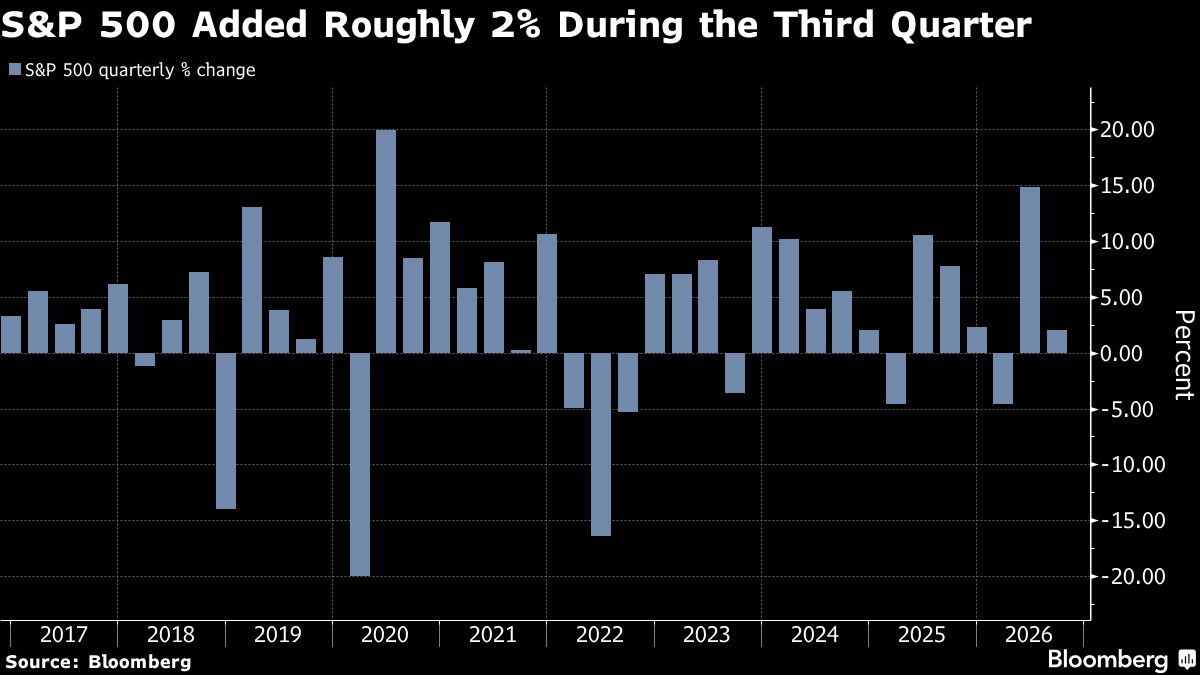
The market underneath the indexes looks more like the economy Conger describes. Equity breadth has thinned, while banks, industrials and utilities have softened even as AI megacaps continue to carry much of the load. The 10-year Treasury yield was around 5.27% late Friday. Despite Friday’s gains, the S&P 500 clocked a 0.3% loss, while the tech-dominated Nasdaq 100 gained 0.7%.
“I don’t think there’s an inflection point where everything trips, but we’re in the zone where certain sectors are feeling the pain,” he said, pointing to housing, autos, consumer lending and credit cards.

Nancy Tengler at Laffer Tengler Investments is relatively sanguine.
“Sometimes yields rise for the right reason,” she said. If companies can borrow at 5% and generate returns of 15% to 20%, “they should do so all day long.” She has been adding Nvidia Corp., Micron Technology Inc. and Meta Platforms Inc., along with GE Vernova Inc., Eaton Corp. and Quanta Services Inc.
Money is on the move. Bond ETFs captured 42% of all ETF flows in September, their biggest share in more than a year, according to Bloomberg Intelligence. At BMO Wealth Management, Carol Schleif recently cut a sizable underweight in investment-grade credit in half while remaining overweight higher-quality US growth stocks.
Michael Alfaro, who runs Gallo Partners, an energy and industrials hedge fund, said investors are looking past today’s high rates and toward the possibility that softer jobs data and easing energy pressure take the heat out of inflation. That helps explain why equities can rise while borrowing costs remain punishing. Alfaro also points to the other side of the K-shaped economy: an enormous private-sector spending boom in data centers that has shown little sign of slowing. Alfaro remains constructive on select AI- and aerospace-linked companies.
While stock investors tend to care most about how quickly yields rise, the economy ultimately has to deal with where they settle.
The ripple effects could take some time.
Most US homeowners have fixed-rate mortgages carrying an average rate of about 4%, according to Max Gokhman at Franklin Templeton Investment Solutions, which insulates existing borrowers from the jump in new mortgage rates. Corporate balance sheets have some runway too: only about 13% of US nonfinancial corporate debt, or roughly $570 billion, matures in 2027.
“So the higher yields will bite hard only if they persist for a very extended period there,” said Gokhman, who touts duration trades and is less enthusiastic on credit.
Even the expected wave of AI borrowing may be unusually resistant to higher rates. Gokhman expects around $300 billion of issuance from hyperscalers and other AI-adjacent companies, but said many are investment grade, well capitalized and less sensitive to price as they race to build capacity.
The real issue, then, is how long rates stay this high.
“5% isn’t the straw that breaks the camel’s back, but it’s another heavy sack on its tired humps, and if some of the weights aren’t lifted then its collapse is only a matter of time,” Gokhman said. “We’re seeing the economy’s strain with the latest payrolls data and sentiment already.”
The more dangerous setup would be one in which inflation keeps yields high even as growth starts to weaken. Gokhman points in particular to the risk that the Iran war keeps energy prices elevated — which is why he and his team have been adding commodities across their portfolios to hedge for that possibility.
“Then both equities and fixed income could falter in an episode similar to 2022, while commodities become the sole safe haven,” he said.
A message from Advisor Perspectives and VettaFi: Discover something new! Click here to register for our upcoming webcasts.
Bloomberg News provided this article. For more articles like this please visit
bloomberg.com.
Read more articles by Vildana Hajric