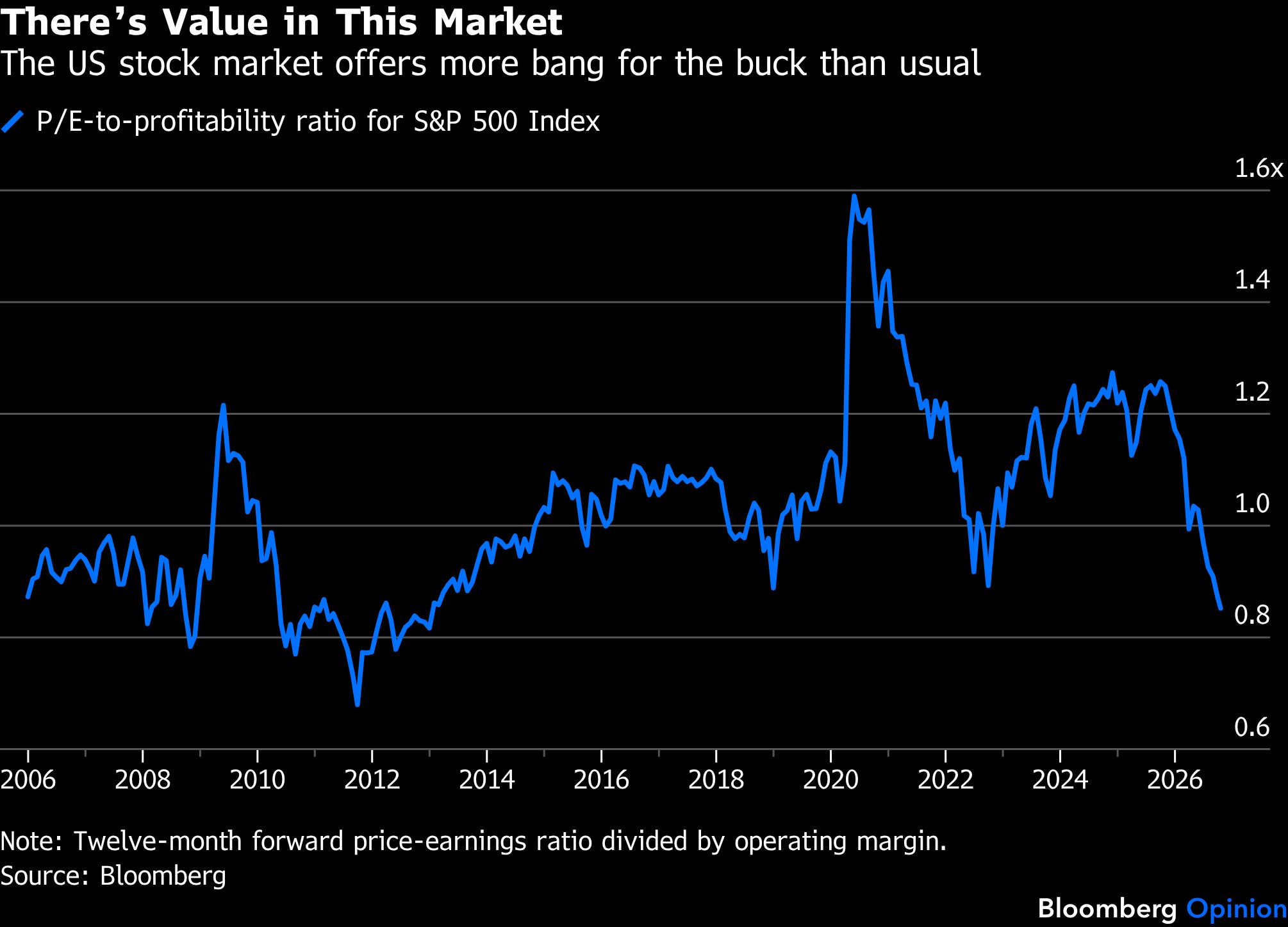
This must be one of the most hated US bull markets ever. It’s easily the most distrusted rally in the several decades that I’ve been following markets. I can’t remember when so many people were so skeptical of a rising market and so sure that it will soon end in tears.
I keep hearing that this stock market is a bubble. I laid out data in previous columns that cast doubt on the bubble hypothesis — basically that, to the contrary, this is an unusually high-quality market trading at modestly above-average valuations. But what makes me most skeptical isn’t the hard numbers. It’s that the animal spirits that normally accompany and propel bubbles are in short supply.

This market is often compared to the last great bubble, the internet craze of the late 1990s. (I consider the housing bubble that followed to be a fainter echo, even though the bust was more devastating.) But the mood is entirely different now.
See more: Can the Bull Market Continue?
For those who didn’t experience dot-com mania three decades ago, it was a wild, heady and amazing time. There was peace, widespread prosperity and fiscal surpluses. People had more bandwidth to play the market, and they did. Everyone was a stock-picking genius with a hot tip. You couldn’t go anywhere without hearing about the latest obscure must-own company.
Internet-related jobs were everywhere. I was in graduate school at the time and received numerous cold calls to join startups, as did many others I knew, despite the fact that we didn’t have a clue about the internet aside from email, basic search and that Al Gore didn’t invent it. Many of these startups had little more than an idea, an internet connection and a borrowed garage, yet they were flush with cash.
There were few voices urging: “Hang on a minute, folks. Let’s slow down and think this through.” Those who did are legendary.
Oh, how the vibes have changed. Most of what I hear now are reservations and warnings and doomsplaining. That’s not without reason — the backdrop is certainly less hospitable. Regional wars have proliferated and threaten the global economy. The spoils of artificial intelligence are closely guarded, further widening inequality. Government deficits are out of control and fueling inflation with little hope that a bitterly divided Congress can turn things around.
Unlike the cheers that greeted the internet, the AI boom feels to many people more like a threat than progress. A prevailing narrative, echoed by some of AI’s leading lights, is that it will sideline workers if it doesn’t kill everyone first. College graduates are already struggling to find jobs despite a roaring economy, in part because AI is encroaching on entry-level white-collar work.
AI also has a bigger footprint in the market than internet stocks did. Dot-com startups were generally smaller than today’s AI behemoths. Three of the five biggest US stocks by market value in 1999, General Electric, Walmart and ExxonMobil, were old-economy businesses. AI-related companies, by contrast, dominate the leaderboard and account for 40% to 60% of the market’s value, depending on how wide one draws the AI circle.
And that understates the market’s reliance on AI. The number of stocks contributing to the S&P 500 Index’s revenue growth is expected to shrink significantly in the coming years. Most of them are AI companies. Even now, AI-related businesses accounted for nearly 70% of the index’s earnings growth in the third quarter, according to estimates by Citadel Securities. If AI stalls, the market will lose its lift.
Add in the fact that the US has enjoyed an astonishing, nearly uninterrupted two-decade-long bull market, and it does raise the question: How long can this go on?
It’s all weighing on investors. In the late 1990s, bulls routinely outnumbered bears by more than 20 percentage points looking at rolling three-month averages, according to surveys by the American Association of Individual Investors. Now the balance has flipped, with bears outweighing bulls by 8 percentage points on the same measure.
There’s not a lot of love for the market, which may explain why a growing number of companies are withdrawing or postponing initial public offerings. That includes Anthropic PBC and OpenAI’s delayed debuts.
I’m an AI optimist. I believe that the benefits will vastly outweigh the costs over time and that AI will enhance work and create jobs. I’m also confident it will make companies more profitable and shareholders richer, just as the internet did.
But it won’t be a smooth ride. The AI buildout is lifting corporate earnings at an unsustainable pace. Profit growth will almost certainly cool. It will start with a market pullback to signal a downshift. Year-over-year earnings growth will dip into high single digits and slow further before turning negative for a stretch. Pockets of excessive speculation and inevitable fraud will be exposed and regretted. Absent a crisis, however, there’s no reason to expect worse than a garden-variety bear market.
For now, there’s no sign of a slowdown despite some recent turbulence. The market has held up, and earnings growth is still strong, with S&P 500 profits up a blazing 25% from a year ago.
When the market does soften eventually, the bubble warriors will declare that the long-awaited burst is underway, just as they have numerous times during market dips over the past two decades. It will be yet another reminder that it’s hard to call a bubble in real time. You can be sure, though, that the more people see a bubble, the less likely there is to be one.
A message from Advisor Perspectives and VettaFi: Discover something new! Click here to register for our upcoming webcasts.
Bloomberg News provided this article. For more articles like this please visit
bloomberg.com.
Read more articles by Nir Kaissar