Wealth Taxes Are Driving Money Out of China and California
Membership required
Membership is now required to use this feature. To learn more:
View Membership Benefits
Next Thursday, October 22, is a big day for China’s wealthiest families. It’s the deadline Beijing gave them to declare and pay years of back taxes on money held in offshore trusts without a penalty.
I’ve said many times that government policies are a precursor to change. This particular policy—clamping down on wealth—is playing out in real time, and one of the first places it’s showing up is the luxury market.
Beijing Widens the Net
On July 24, China’s Ministry of Finance and State Taxation Administration announced that putting assets into an offshore trust, and earning income through one, are taxable events. The rate is 20%, and it applies not just when assets go in but also when they earn income and when the trust is wound down.
See more: The Case for Global Income
Families have 90 days to settle up on income earned before the year.
Why now? Simply put, local governments in China are short on cash. Land sales, once a major source of revenue, have collapsed along with the property market. Beijing needs money, and the country’s rich have kept a lot of theirs out of reach for years.
Consider that China has no inheritance tax, no gift tax and no real estate tax. Analysts at Barclays and Bank of America expect the net to widen from here, to offset interest income, property gains and overseas stock. Since May, banks and brokerages in Hong Kong have also been restricting mainland clients from buying stocks overseas.
And it isn’t stopping with billionaires. Frank Chen, a Shanghai-based journalist, was recently informed by tax officials that his funds in the Hong Kong Mandatory Provident Fund (MPF), the city’s compulsory retirement savings program, were being categorized as a “type of offshore trust.”
When the tax bureau starts asking about your pension, you think twice before buying a Hermès Birkin handbag.
Luxury Feels the Squeeze
Chinese shoppers account for roughly a fifth of all luxury purchases worldwide. For nearly two decades, they were the industry’s growth engine.
Luxury brands’ own numbers show a recovery was underway this year despite China’s property slump and slowing economy. LVMH’s sales in Asia outside Japan, adjusted for currency swings, grew 7% in the first quarter and 4% in the second quarter.
Then came the third quarter, when Beijing rolled out its new rules. Sales in the region fell 5%. Mainland China was down by double digits, and Chinese shoppers spent less abroad too.
Alexis Bonhomme, who heads Shanghai-based consultancy Trinity Asia, told Reuters that the 20% levy is now hitting spending by the ultra-wealthy, a group that had held up better than middle-class shoppers.
Jewelry sales point the same way. Retail sales of gold, silver and jewelry in China fell 17.5% year-over-year in August, following a 3.4% dip in June, according to Bloomberg data.
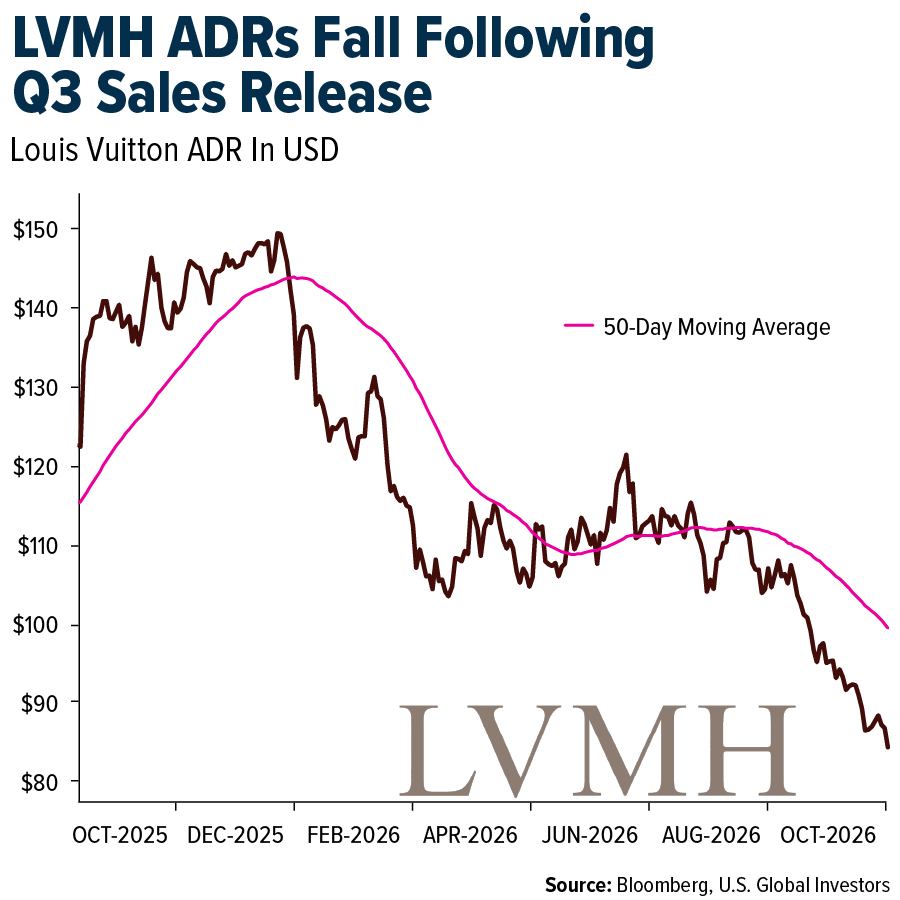
Investors have taken notice. Europe’s luxury groups have lost about €300 billion in market value this year. In dollar terms, LVMH is down nearly 43%, Hermès 42% and Kering 33%. Since Beijing’s July 24 announcement alone, LVMH has fallen 17% and Hermès 23%.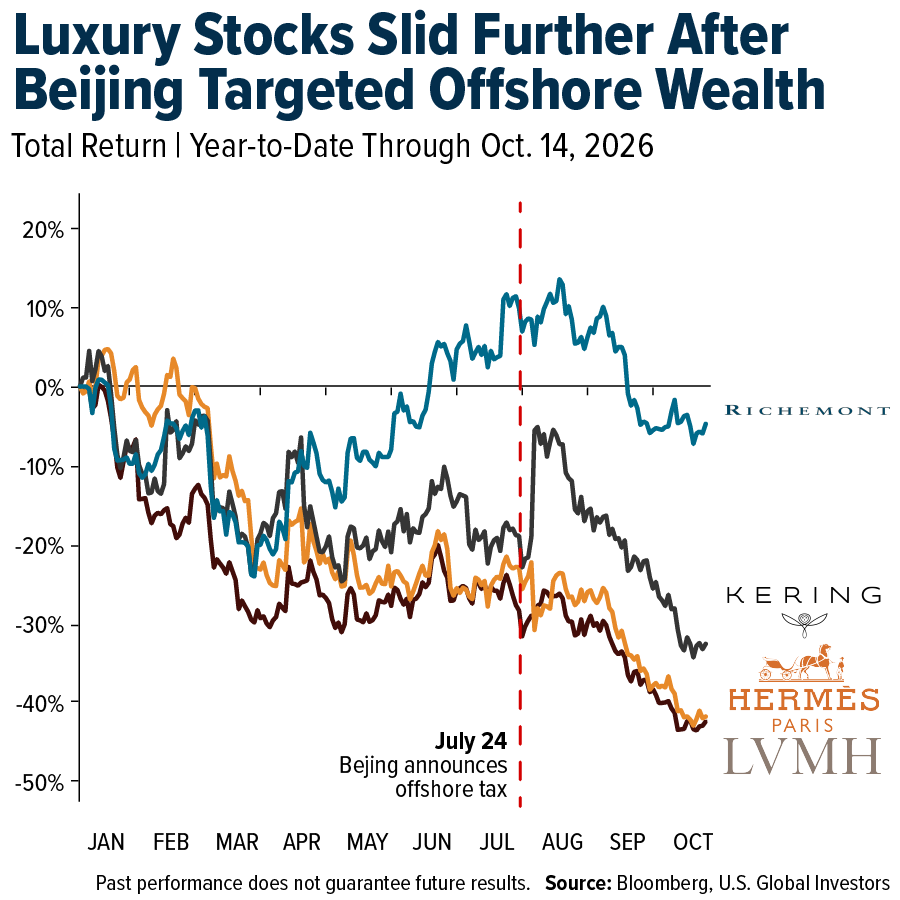
Wealth Gets Portable
Not every corner of luxury is hurting. Richemont, the owner of Cartier, grew sales in Asia outside Japan by 21% in its most recent quarter, adjusting for currency. Swiss watch exports to China rose 16% in August from a year earlier, according to Bloomberg data.
My read on this is that when the taxman comes knocking, wealth looks for things it can carry. A fine watch or a gold necklace holds its value and fits in a pocket.
The money itself is also on the move. Singapore has spent years courting Chinese family offices, but now lawyers, consultants and even lawmakers there are questioning whether the financial hub can continue to attract assets.
The American Version
If you think this is only a China story, look at California.
On November 3, Californians will vote on Proposition 40, a one-time 5% tax on the net worth of roughly 200 individuals and trusts with more than $1 billion in assets. Five percent sounds modest… until you do the math. If a stock portfolio gains 4% in a year, a 5% wealth tax works out to a 125% tax on that gain, as the National Taxpayers Union Foundation has calculated.
Residency is pegged to January 1, 2026, so anyone hoping to avoid the tax had to leave the Sunshine State last year. Many did!
Backers say the proposition would raise $100 billion, but researchers estimate it would collect closer to $40 billion. And once you count the income taxes lost when billionaires move away, the state comes out about $25 billion behind.
Google co-founder Sergey Brin has committed more than $100 million to defeating the measure. He told the New York Times this week that he “fled socialism with [his] family in 1979.” He knows the “devastating, oppressive society it created in the Soviet Union.”
Art Laffer, President Reagan’s economic adviser, was even blunter. He told Fox Business he believes the wealth tax will “destroy California.”
The race is close. One survey found 52% support for Prop 40, while two competing measures designed to cancel it polled at 51% and 54%. A separate measure making the state’s 2012 income tax hike on top earners permanent polled at 58%.
People don’t wait for a vote to make up their minds. IRS migration data show California lost nearly $12 billion in net income to other states between the 2022 and 2023 tax years, and New York lost about $10 billion. Florida, meanwhile, gained over $20 billion.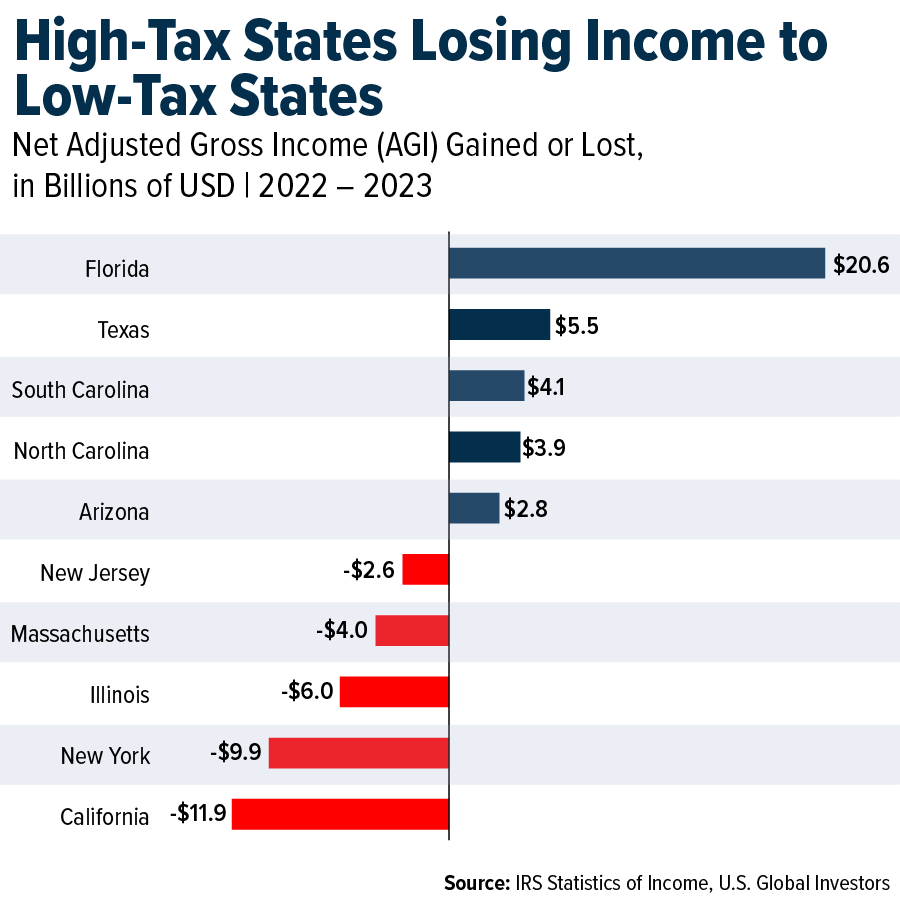
History’s Verdict
Other countries have tried this and failed. In the 1990s, 12 OECD nations had a wealth tax like the one California is proposing, but today, just four do: Colombia, Norway, Spain and Switzerland. France, Germany, Sweden and others repealed theirs, citing people leaving, high costs and disappointing revenue. Ten years ago, I wrote about Romania, which cut taxes and went on to become one of Europe’s fastest-growing economies.
Capital goes where it’s treated well, and it leaves where it isn’t.
The lesson is that when Beijing or Sacramento goes after wealth, wealth doesn’t sit still. It stops spending or it packs up and leaves. And it pays to follow where it goes.
Airlines and Shipping
Strengths
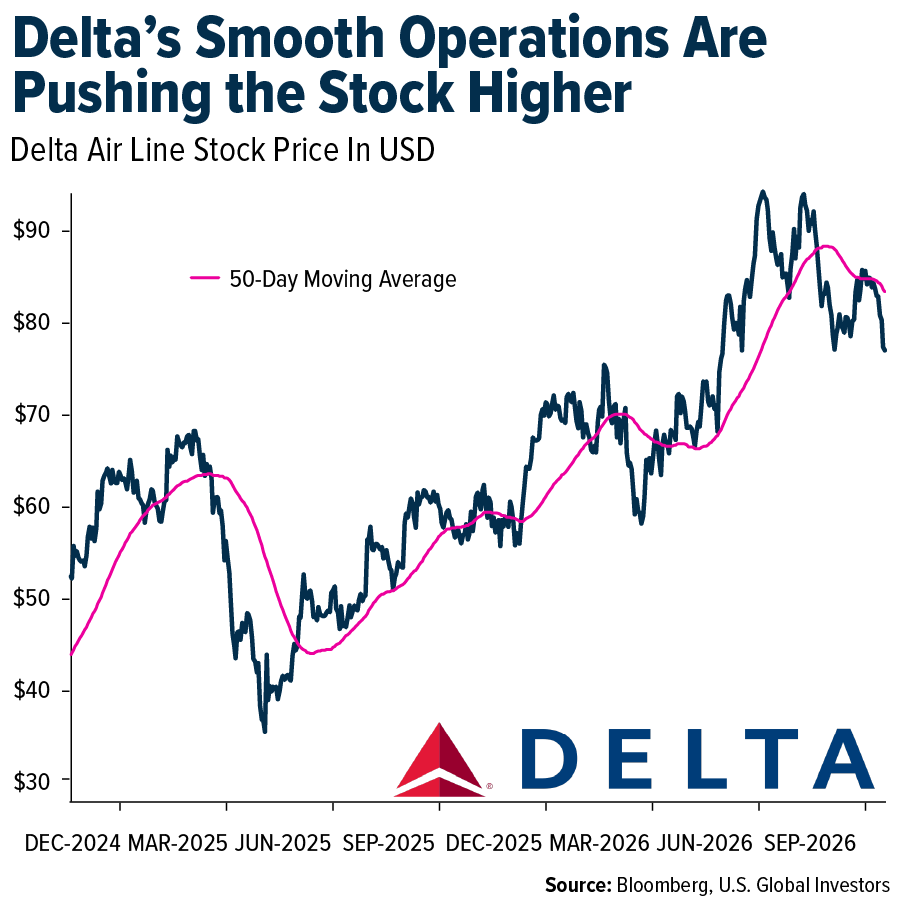
- The best-performing airline stock for the week was TripAdvisor, up 7.5%. According to BMO, Delta’s September on-time performance (OTP) of 82.5% ranked first among U.S. carriers. Results improved 3.4 points month-over-month (m/m). OTP was 5.3 points above the sector average, 3.9 points above United and 5.4 points ahead of American. Delta’s completion factor of 99.1% improved 0.9 points m/m, placing the airline near the higher end of the industry.
- The global air freight market remains strong. September volumes rebounded after a softer August, with worldwide tonnage up 3% month-over-month and 9% year-over-year (YoY), driven by strong demand from Asia and North America and continued support from the high-tech sector. Year-to-date volumes were up 5% YoY, indicating healthy underlying demand despite ongoing geopolitical disruptions, according to World ACD.
- According to UBS, 87% of U.S. travel managers expect travel budgets to increase in 2027, compared with 89% last year. The average expected increase was 12% YoY, versus 17% last year. U.S. travel managers also expect spending on flights to rise 10% YoY in 2027, compared with 15.8% last year. Assuming a stable economy, they expect corporate travel spending to remain solidly positive next year, supporting revenue per available seat mile (RASM) growth for the top U.S. airlines.
Weaknesses
- The worst-performing airline stock for the week was JetBlue, down 23.7%, driven by a drop in bond values. According to BMO, Southwest’s September on-time performance (OTP) of 71.1% declined 10.3 points year-over-year (YoY), the largest decline among carriers. It ranked last among airlines for the third time in 2026 (May, June and September) and was 6.0 points below the industry mean, marking its seventh month of underperformance relative to peers.
- China–U.S. West Coast freight quotes for departures over the next seven days are down 8% versus quotes collected last week. Quotes on the route are down 3% versus the latest Shanghai Containerized Freight Index (SCFI). Linerlytica sees limited support for higher transpacific rates as available capacity remains ample heading into the seasonally quieter period. Freightos suggests rates could come under renewed pressure following Golden Week.
- Boeing’s September gross orders totaled 165. September deliveries totaled 57, including 43 MAX aircraft and eight 787s. Third-quarter (Q3) deliveries totaled 161, versus 167 expected, and included 124 737s and 22 787s. Initial assessments noted that Q3 deliveries were lighter than expected, while also highlighting that year-to-date deliveries were tracking 8% ahead of the prior year.
Opportunities
- According to J.P. Morgan, United raised domestic fares by $10 each way. Overnight, Delta raised fares across its domestic portfolio, covering more than 7 million fares, by $10 one-way, following United’s lead. Matching increases from Alaska and American have been comparatively muted so far. Southwest filed several hundred thousand $10 one-way increases, but these do not represent its full domestic portfolio, which is estimated at approximately 1.5 million fares. Based on J.P. Morgan’s analysis, Southwest’s nonstop routes within the lower 48 states appear to be excluded.
- China’s port congestion index eased notably during China’s National Day holiday, reports Clarksons, returning close to the average level seen in the first half of 2026 (H1 2026). Clarksons has seen no further escalation in the impact of El Niño on Panama Canal transit. The climate phenomenon reduced daily Panama Canal transits from 36 to 32 vessels starting in September 2026.
- Mexico’s antitrust authority is expected to approve the Viva–Volaris merger by the end of 2026, according to Bloomberg. The regulator is expected to require the combined carrier to keep fares low, avoid widespread layoffs and maintain current routes. Viva said it remains attentive to the evaluation process, while Volaris said it is “confident in the strategic merits of the transaction.”
Threats
- Airline executives have warned of a potential industry “crisis” this winter as high fuel prices force carriers to cut flights and delay aircraft lease payments. EasyJet and Lufthansa plan to scale back operations, while Ryanair CEO Michael O’Leary has described the situation as dire. IAG CEO Luis Gallego warned that smaller and midsize airlines could struggle to survive, with some potentially going out of business.
- Container traffic through the Red Sea continued to recover last week. Containership transits through the Suez Canal reached 0.7 million TEUs in the first week of October, exceeding 50% of 2023 levels and marking the strongest weekly volume since rerouting began in late 2023, according to UBS.
- Heathrow’s £33 billion third-runway project faces mounting political uncertainty. CEO Thomas Woldbye warned that investors could reconsider their commitment without explicit government support by year-end. Shareholders, including Ardian, Qatar Investment Authority, Saudi Arabia’s Public Investment Fund and GIC, must decide in early 2027 whether to proceed with a formal planning application. The project could create 100,000 jobs, but regulatory hurdles, environmental opposition and political uncertainty have pushed the earliest opening date from 2035 to 2039.
Luxury Goods and International Markets
Strengths
- Early third-quarter (Q3) results from major U.S. banks have been broadly encouraging, highlighting consumer and business resilience despite higher interest rates. Several banks reported solid loan and deposit growth, healthy credit quality and improving capital markets activity. Strong investment banking and trading results at Goldman Sachs and Citigroup suggest economic activity remains supportive of cyclical sectors such as luxury goods and travel.
- Tom Ford, the global luxury brand spanning fashion, leather goods, eyewear, beauty, fragrances and accessories, surpassed $1 billion in revenue in fiscal 2026. Owned by Estée Lauder since 2023, the brand marked its 21st anniversary in October 2026, highlighting its strong luxury positioning and the growing contribution of fragrance and beauty.
- Rémy Cointreau, a French spirits maker, gained around 20% over the past five trading days, making it the top performer in the S&P Global Luxury Index. Shares benefited from improving investor sentiment around the company’s recovery, supported by better trends in its key Cognac business and expectations for a gradual improvement in demand.
Weaknesses
- Shares of LVMH ADRs fell Monday after the company reported weaker-than-expected third-quarter (Q3) results. The Fashion & Leather Goods division was the weakest segment, with sales declining 5% year-over-year (YoY), primarily due to softer demand in Asia excluding Japan. In contrast, the U.S. market remained resilient, with solid demand.
- U.S. consumers’ assessment of their current finances deteriorated. The preliminary University of Michigan sentiment index fell to 46.3 from 48.1, while the current-conditions component dropped 6.2 points to a record low of 44.7. Some 54% of respondents said they would cut spending on products with significant price increases, while another 16% would stop buying them.
- Lucid, an EV maker, declined about 17% over the past five trading days, making it the worst performer in the S&P Global Luxury Index. Shares fell amid continued concerns about weak deliveries, production cuts and funding needs, while recent analyst price-target cuts added further pressure. Morgan Stanley lowered its target to $3 from $5, while RBC reduced its target to $4 from $7.
Opportunities
- Early third-quarter (Q3) results from major U.S. banks have been broadly encouraging, highlighting consumer and business resilience despite higher interest rates. Several banks reported solid loan and deposit growth, healthy credit quality and improving capital markets activity. Strong investment banking and trading results at Goldman Sachs and Citigroup suggest economic activity remains supportive for cyclical sectors such as luxury goods and travel.
- Tesla has begun referring to its Full Self-Driving (FSD) system as “Tesla Assisted Driving” in Europe ahead of a regional vote on broader approval of its advanced driver-assistance technology. A favorable regulatory decision could expand access to these features across the Eurozone, potentially making Tesla vehicles more appealing to consumers interested in advanced driving assistance.
- On Thursday, Brunello Cucinelli reported stronger-than-expected revenue growth and raised its full-year guidance. The results suggest continued resilience in ultra-high-end luxury, particularly in the U.S. and China, reinforcing the view that affluent consumers remain willing to spend on exclusive, craftsmanship-driven brands despite broader sector headwinds.
Threats
- A terrorist attack by Houthi militants on a major airport in Saudi Arabia reportedly killed 12 people and injured more than 300. The airport is expected to remain closed until October 17, causing widespread flight cancellations and operational disruptions. Delta Air Lines has postponed the launch of its planned nonstop service from Atlanta to King Khalid International Airport, originally scheduled for October 2026, until next year. Continued geopolitical tensions and travel disruptions could weigh on international travel demand and related spending.
- Golden Week data suggest travel demand continues to improve, with international travel remaining the strongest growth area as consumers prioritize overseas experiences and luxury shopping. Domestic travel also increased, supporting overall tourism, but spending trends were mixed. Travelers are taking more domestic trips while spending less per trip, suggesting consumers remain eager to travel but are managing budgets more carefully.
- U.S. inflation came in above expectations at 3.7%, versus a consensus estimate of 3.4% and a prior reading of 3.4%. The hotter-than-expected reading could encourage the Federal Reserve to maintain a hawkish stance, potentially increasing the likelihood of further interest rate hikes.
Energy and Natural Resources
Strengths
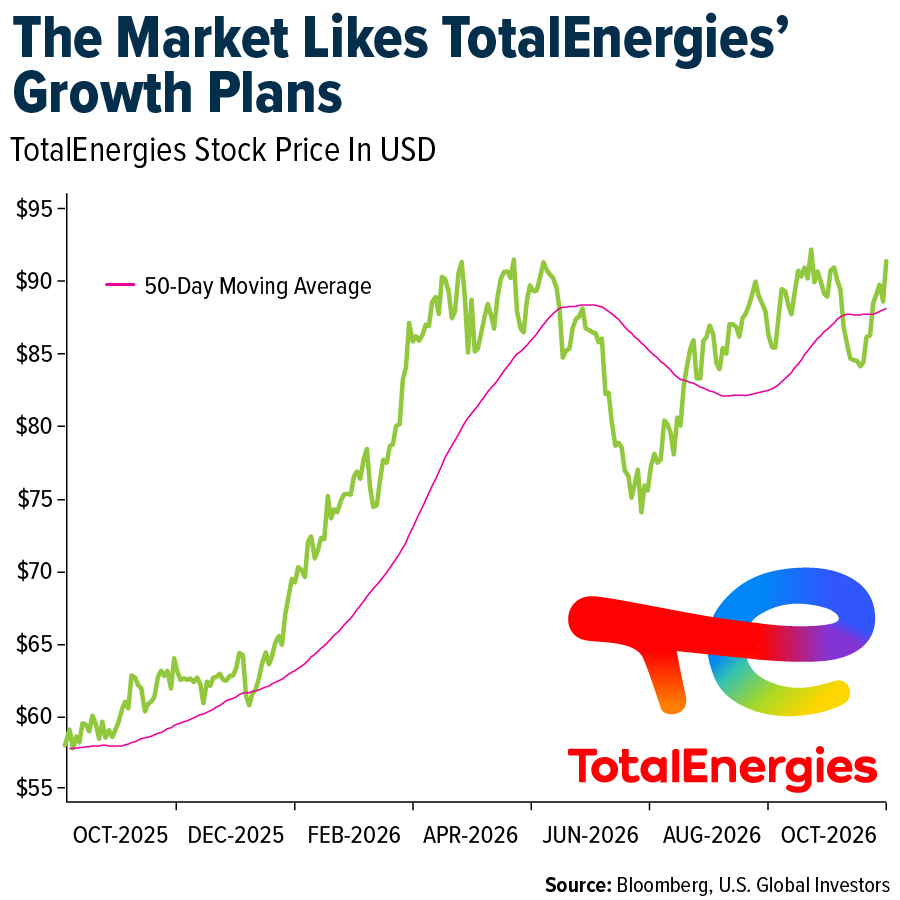
- The best-performing commodity for the week was WTI crude oil, up 10.75%, as Middle East tensions remained elevated. TotalEnergies expects cash flow from its refining and chemicals business to increase by approximately $2 billion from the previous quarter, Bloomberg reports, supported by historically high refining margins in Europe and globally. The company cited a 10% increase in refinery throughput and stronger LNG prices amid ongoing disruptions to Russian fuel production.
- According to Bloomberg, Alcoa reported adjusted earnings per share (EPS) of $1.82, exceeding analysts’ consensus estimate by $0.33, while adjusted EBITDA nearly tripled year-over-year (YoY) to $789 million. Aluminum shipments increased 13% to 693,000 tons, reflecting stronger operating performance and supporting the company’s earnings outlook.
- China’s steel exports reached 10.5 million tons in September, Bloomberg reports, up 0.3% YoY and marking an unprecedented fifth consecutive month above 10 million tons. Although shipments remained below the record 11.3 million tons reached in December 2025, sustained export volumes highlight China’s strong presence in global steel markets.
Weaknesses
- The worst-performing commodity for the week was lithium carbonate, down 15.06%. Chinese lithium futures plunged 10% to 104,740 yuan ($15,649) per ton on Monday, Bloomberg reports, extending a sharp selloff that erased approximately 25% of their value last month. The decline followed an EU-China agreement to limit hybrid vehicle exports, raising concerns about weaker lithium demand and potentially pressuring prices and profitability across the lithium mining sector.
- According to Bloomberg, iron ore futures in Singapore fell to $89.75 per ton, their lowest level since September 2024, extending their year-to-date decline to approximately 15%. Weak construction activity in China continues to weigh on steel production and iron ore demand, while rising energy and freight costs are making approximately 10% of global seaborne supply unprofitable, according to Vale.
- FMC Corp. now expects a third-quarter adjusted EBITDA loss of $510 million to $565 million, compared with its previous forecast of a $120 million to $140 million profit. Revenue guidance was cut to $65 million–$125 million from $840 million–$900 million, well below analysts’ expectations of $869.7 million. Shares fell as much as 28% in premarket trading, Bloomberg reports, highlighting concerns about the company’s financial performance.
Opportunities
- TotalEnergies and KKR agreed to add 700 megawatts of U.S. solar capacity to their 50/50 joint venture, expanding their combined portfolio to 2.1 gigawatts. The transaction includes three utility-scale solar projects in Texas and Ohio, highlighting continued investment in renewable energy infrastructure and growth opportunities in the U.S. solar market, according to Benzinga.
- Two workers died after an avalanche struck Codelco’s El Teniente copper mine in Chile on October 11, according to Bloomberg. The incident follows a fatal accident at another Codelco operation less than two weeks earlier and comes after six workers died at El Teniente last year, raising concerns about worker safety, operational risks and potential production disruptions.
- Germany plans to establish a 24-terawatt-hour strategic gas reserve to offset a potential 30-day shutdown of its largest gas import infrastructure, Reuters reports. Estimated to cost €3.08 billion over its first decade, the initiative would be financed through an annual household levy of up to €7.20 starting in October 2027. The plan highlights continued investment in energy security, while Gulf Coast exporters such as Cheniere Energy and Woodside Energy Group could benefit from strong liquefied natural gas (LNG) demand.
Threats
- Stainless steel is expected to drive most nickel demand growth through 2028, Bloomberg reports, as forecasts for nickel sulfate demand have fallen 30%–40% from projections made three years ago. Rising adoption of lithium iron phosphate (LFP) batteries and more efficient battery designs are reducing nickel use in electric vehicles. Despite an expected rebound in stainless steel production, the nickel market is projected to remain in a surplus of approximately 40,000 tons in 2026, potentially limiting price recovery and pressuring producers’ profitability.
- Zijin Mining Group’s Bisha copper-zinc mine in Eritrea has suspended ore processing due to fuel shortages, raising concerns about potential supply disruptions. Customers have been warned that the shutdown could last up to four weeks, potentially delaying copper and zinc concentrate shipments and highlighting operational vulnerabilities in the mining sector.
- Higher energy prices are increasingly affecting the U.S. economy, driving up costs for air travel, trucking and delivery services while complicating the Federal Reserve’s efforts to contain inflation, according to Bloomberg. Although grocery prices have remained relatively stable, economists warn of potential increases in food costs. Persistent inflationary pressures could delay monetary easing and weigh on industrial activity and commodity demand.
Bitcoin and Digital Assets
Strengths
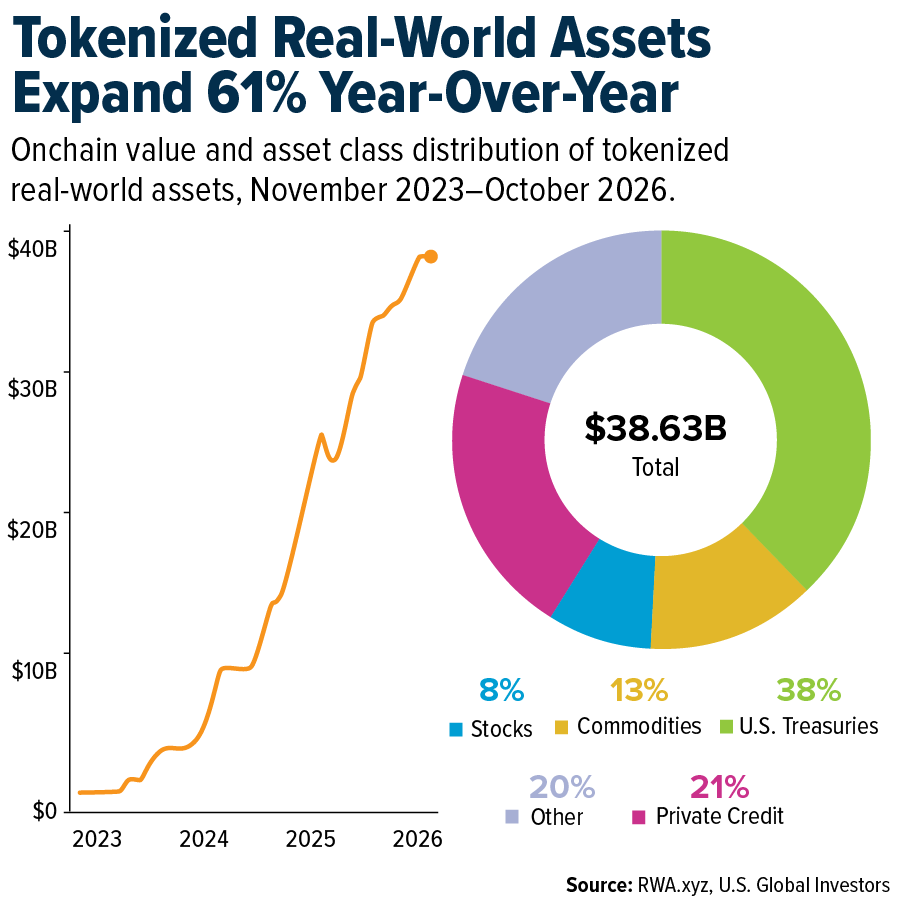
- Securitize announced plans to tokenize shares of 12 major U.S. companies, including Apple, NVIDIA, Tesla and Microsoft, on the Solana blockchain. Each token will be backed one-for-one by underlying shares, preserving shareholder rights, including dividends and voting. Trading will initially take place on Securitize’s platform, with Jump Trading providing liquidity and transactions settling in USDC. Potential expansion to the New York Stock Exchange’s planned digital trading platform and the OKX-ICE tokenized securities venue could accelerate institutional adoption of blockchain-based financial infrastructure, subject to regulatory approvals.
- Standard Chartered, a London-headquartered international banking group with a strong presence across Asia, Africa and the Middle East, plans to introduce custody services for select cryptocurrencies, stablecoins and tokenized real-world assets in Singapore by the end of 2026, subject to regulatory requirements. The offering will complement existing financing and securities services and expand the bank’s digital asset custody operations across the UAE, Luxembourg and Hong Kong. The move highlights growing institutional demand for regulated digital asset infrastructure and the integration of blockchain-based assets into traditional banking.
- The CoinDesk 20 Index surged 52.7% in the third quarter (Q3) of 2026, while Bitcoin gained 42.7%, significantly outperforming the S&P 500 (+2.03%), Nasdaq (+0.85%) and gold (+3.84%). The rebound was supported by improving liquidity, easing geopolitical tensions and renewed institutional demand. U.S. spot Bitcoin ETFs attracted $6.36 billion in net inflows during the quarter, reversing $4.67 billion in outflows in Q2 and highlighting renewed investor interest in digital assets.
Weaknesses
- U.S. spot Bitcoin ETFs recorded $487.1 million in net outflows on October 7, the largest single-day withdrawal since June 25, according to SoSoValue. The reversal follows approximately $2.65 billion in net inflows during September, bringing October’s cumulative flows to negative $165.6 million. Year-to-date net inflows have narrowed to $717 million, signaling weaker investor appetite and raising concerns about Bitcoin’s near-term price outlook.
- Bitwise CEO Hunter Horsley acknowledged that the firm’s spot Dogecoin ETF (BWOW) failed to attract sufficient investor interest, highlighting the gap between cryptocurrency users and traditional ETF investors. Launched on the NYSE in November 2025, the fund is scheduled to cease trading after October 14. As of October 7, it held just $725,870 in assets under management, with approximately $51,480 in trading volume during September. The closure highlights the challenges of translating cryptocurrency popularity into sustainable demand for regulated investment products.
- TD Cowen maintained its $260 price target and Buy rating on Strategy (MSTR), despite raising its Bitcoin price forecasts to $109,000 by year-end 2026 and $280,000 by 2029. Analysts warned that capital structure expansion, preferred-stock obligations and cash reserve building could dilute the benefits of rising Bitcoin prices for common shareholders. Strategy holds approximately 848,000 BTC, with $4.5 billion in unrealized gains, but Bitcoin exposure per common share has become less robust as financing obligations increase, highlighting challenges facing corporate Bitcoin treasury strategies.
Opportunities
- Grayscale said the SEC’s generic listing standards now cover approximately 15 cryptocurrencies, opening the door to more investment products. The firm’s Zcash ETF (ZCSH) attracted more than $1 billion in its first 30 trading days, ranking among the top 1% of ETF launches over the past decade by first-month asset gathering. Grayscale also filed to tokenize two covered-call funds focused on Bitcoin and Ether, highlighting further opportunities for digital asset innovation and institutional access.
- Samsung plans to integrate USDC transfers into Samsung Wallet and Samsung Pay through Solana, allowing eligible U.S. Galaxy users to send cross-border payments starting in late October. The service will support transfers to bank accounts in more than 60 countries, with local currency conversion. Bastion will power the service, with Coinbase providing custody infrastructure. The move could expand mainstream adoption of stablecoins and blockchain-based payments.
- Decentralized exchange Orca and lending platform Loopscale merged to form Formation, a platform combining trading, lending and investment infrastructure to finance emerging industries such as AI, energy, robotics and defense. Orca has processed more than $550 billion in trading volume since 2021, while Loopscale has facilitated over $2 billion in loans and attracted more than $150 million in deposits. Formation plans to launch new asset issuance tools and investment strategies over the next 12 months, working with Securitize, Figure and Shinhan Asset Management to expand tokenized financing and access to regulated U.S. capital markets.
Threats
- The European Securities and Markets Authority (ESMA) directed national regulators to ensure crypto platforms phase out stablecoins that do not comply with the Markets in Crypto-Assets (MiCA) framework by January 8, 2027. The guidance affects major tokens such as Tether’s USDT and PayPal’s PYUSD, which lack MiCA authorization. Platforms must stop purchases and trading of noncompliant tokens while allowing limited services to unwind existing positions. The restrictions could disrupt stablecoin liquidity, raise compliance costs and reshape crypto trading across the European Union.
- Ethereum researcher Justin Drake warned that rapid advances in artificial intelligence could, in a worst-case scenario, undermine the cryptographic signatures protecting Bitcoin and Ethereum wallets within months, before quantum computing becomes a practical threat. Bitcoin held in addresses with exposed public keys could be vulnerable, as could Ethereum-based stablecoins and tokenized assets. Although no practical attack has been demonstrated, the warning highlights cybersecurity risks and the potential need for faster blockchain security upgrades.
- The National Football League joined state governments, tribal groups and former regulators in urging the U.S. Supreme Court to clarify whether sports prediction markets fall under federal or state jurisdiction. Platforms such as Kalshi and Polymarket argue that the Commodity Futures Trading Commission (CFTC) has exclusive oversight, while opponents say state gambling laws should apply. Conflicting court rulings have heightened uncertainty, potentially increasing compliance costs and limiting industry expansion.
Defense and Cybersecurity
Strengths
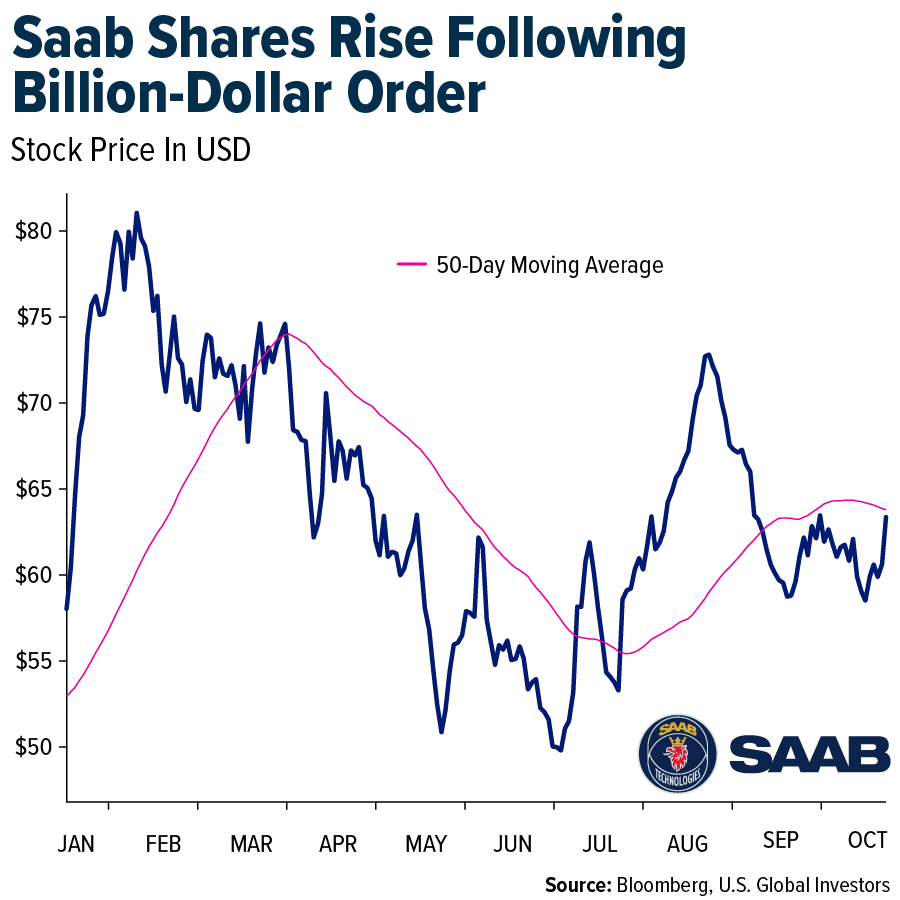
- Saab’s share price recovery gained support from positive operational developments, including its involvement in Sweden’s Nvidia-powered AI supercomputer project and the unveiling of the first GlobalEye aircraft for Sweden. The announcements highlight progress in AI-enabled technologies and high-value defense programs amid rising European security spending.
- Samsung Electronics’ 12-layer HBM4E memory stacks passed NVIDIA’s qualification testing on October 9, 2026, securing production volume allocations for next-generation Rubin AI GPU computing boards.
- Onsemi unveiled its next-generation EliteSiC power packaging platform on October 12, 2026, reducing parasitic inductance by 40% and lowering thermal resistance in direct-cooled silicon carbide power modules.
Weaknesses
- China’s CXMT triggered a sharp sell-off in global memory stocks after claiming it designed an advanced
 DRAM architecture ahead of Samsung and SK Hynix, potentially circumventing U.S. equipment sanctions. However, the claim remains unverified, with no demonstrated commercial yields, validated technical data or tested silicon provided to customers.
- Attacks and disruptions targeting Starlink-related infrastructure highlighted the vulnerability of communications networks supporting Ukrainian military and logistics operations. The incidents, alongside reports of delayed warning intelligence during recent missile strikes, underscored critical dependencies on external communications and information systems.
- A major cyberattack targeting the cooling systems of more than 300 French supermarkets remotely triggered defrost cycles, pushing temperatures to 50°C. The disruption spoiled dozens of tons of food and caused millions of euros in damages.
 DRAM architecture ahead of Samsung and SK Hynix, potentially circumventing U.S. equipment sanctions. However, the claim remains unverified, with no demonstrated commercial yields, validated technical data or tested silicon provided to customers.
Opportunities
- Northrop Grumman launched and deployed its first 21 communications satellites for the U.S. Space Development Agency’s Tranche 1 Transport Layer, part of a military network in low Earth orbit. The satellites will relay tactical information between military forces and transmit data from spacecraft that detect and track missiles.
- Lockheed Martin is introducing a next-generation Patriot interceptor, PAC-3 Edge, designed to counter emerging hypersonic missile threats. The interceptor features a multi-pulse solid rocket motor developed by Northrop Grumman to deliver precise thrust throughout flight.
- TSMC is projected to post quarterly profit growth of more than 60% on strong AI demand. Investors will focus on its 2027 capital expenditure (capex) outlook and potential supply bottlenecks following ASML’s warnings of chip-tool shortages.
Threats
- Russian ballistic missile attacks raised concerns over delayed or missing advance warnings from foreign intelligence partners, while temporary Starlink and Starshield restrictions disrupted Ukrainian drone and logistics operations. Although connectivity has largely been restored, the incidents highlighted Ukraine’s reliance on external military and technology support amid heightened battlefield pressure.
- ASML warned that proposed U.S. export restrictions banning deep ultraviolet (DUV) lithography equipment and servicing to China could backfire by accelerating Beijing’s efforts to develop domestic semiconductor tools.
- According to Cushman & Wakefield and Bloomberg Intelligence, building a 1-gigawatt AI data center in Abilene, Texas, now costs an estimated $30 billion, driven by rising land, materials, power generation and cooling costs. The increase comes amid a major hyperscaler construction boom, with hyperscalers projected to spend roughly $750 billion on capital expenditures in 2026.
Gold Market
This week gold futures closed the week at $4,188.10, down $28.20 per ounce, or 0.67%. Gold stocks, as measured by the NYSE Arca Gold Miners Index, ended the week lower by 1.56%. The S&P/TSX Venture Index came in off 3.29%. The U.S. Trade-Weighted Dollar fell 0.43%.
Strengths
- The best-performing precious metal for the week was gold, but it was still down 0.68%. Australia’s Federal Court ruled that the August 2024 declaration affecting Regis Resources’ delayed McPhillamys Gold Project in New South Wales was legally invalid, potentially removing a key regulatory obstacle to development. RBC values the project at A$1.00 per share, representing approximately 14% of its estimated group net asset value of A$7.10 per share.
- Aya Gold & Silver produced approximately 2.03 million ounces of silver in the third quarter (Q3), up 51% year-over-year (YoY) and exceeding BMO’s estimate of 1.62 million ounces. Boumadine’s historical tailings reclamation operation contributed 537,000 ounces, well above the 232,000-ounce forecast, while Zgounder achieved record throughput of 4,096 metric tons per day, up 5% quarter-over-quarter.
- Mineros increased its full-year production guidance to 235,000–245,000 ounces, up from 220,000–240,000 ounces, after Q3 gold output rose 14% YoY to 62,565 ounces, according to Bloomberg.
Weaknesses
- The worst-performing precious metal for the week was silver, down 6.43%. Buenaventura reduced its full-year direct gold production forecast to 112,000–131,000 ounces from 120,000–139,000 ounces and lowered its silver production outlook to 14.4–15.8 million ounces from 14.7–16.1 million ounces, according to Bloomberg. The revisions point to weaker-than-expected production across both metals.
- Evolution Mining reported fiscal first-quarter (Q1) 2027 gold production of 154,000 ounces, approximately 6% below RBC’s consensus estimate of 163,000 ounces. The shortfall was primarily driven by power outages and planned mill shutdowns at Red Lake, along with unplanned power interruptions at Mungari that limited mill availability.
- Wesdome Gold Mines reported consolidated gold production of 41,300 ounces in the third quarter (Q3), below expectations due to lower-than-anticipated grades at both operations and reduced throughput at Kiena, according to RBC. Full-year guidance remains unchanged at 180,000–205,000 ounces, but production is expected to finish below the midpoint. Meeting guidance will require Q4 production of 50,000–62,000 ounces, supported by higher throughput at Eagle River, the continued Presqu’île ramp-up and operational improvements at Kiena Deep.
Opportunities
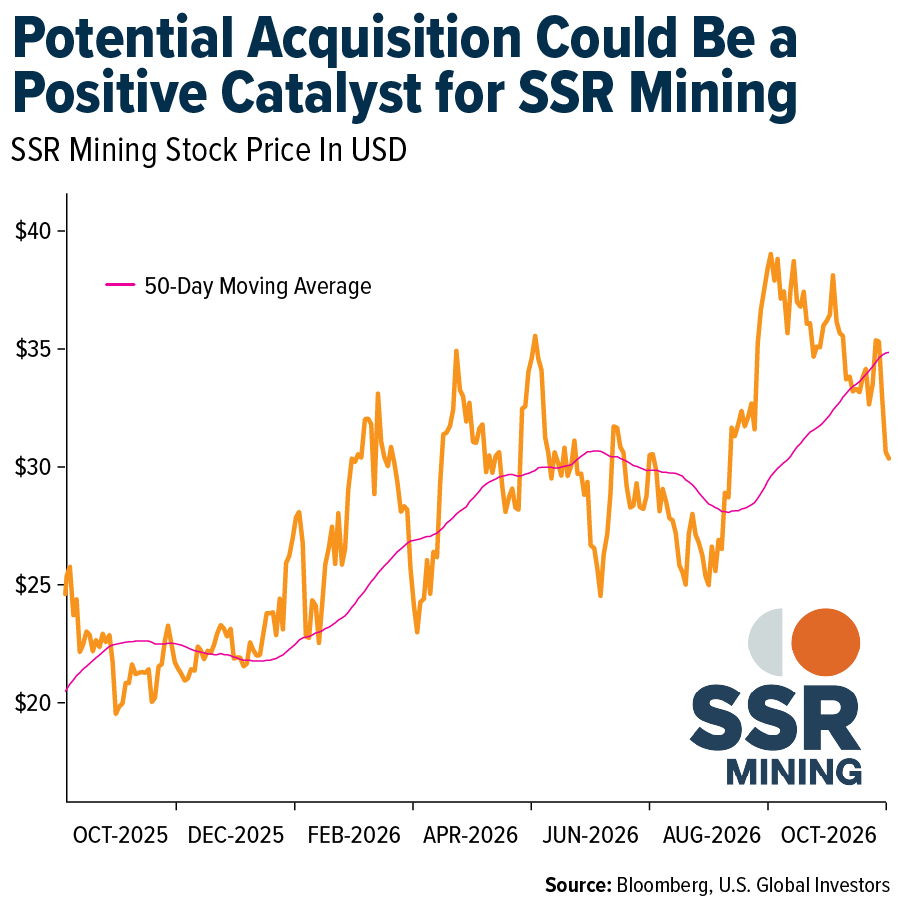
- SSR Mining agreed to acquire Roxmore Resources for C$6.75 per share in cash, with Roxmore shareholders also receiving shares in a new spin-off company. The acquisition would add the Converse Gold Project, located just 6 kilometers from SSR’s Marigold Complex. Meanwhile, Marigold’s updated 20-year mine plan targets 3.3 million ounces of gold production, with reserves increasing 43% to 4.63 million ounces and an estimated after-tax NPV of $3.3 billion at consensus gold prices.
- Bolivia issued a decree eliminating the requirement for central bank authorization of gold exports. Under the new rule, exporters must demonstrate that 80% of export proceeds are deposited in domestic financial institutions. The reform aims to facilitate private gold exports, reduce administrative barriers and increase foreign currency inflows into the country’s financial system, according to Bloomberg.
- Goldman Sachs analysts highlighted that central bank reserve diversification, fiscal sustainability concerns and sanctions risks continue to reinforce gold’s role as a hedge against currency debasement and declining institutional credibility. Meanwhile, major gold miners collectively hold approximately $20 billion in cash, providing financial flexibility for potential acquisitions, capital investment and shareholder returns despite the recent decline in gold prices.
Threats
- Bank of America warns that gold’s recent weakness despite rising ETF holdings could signal further downside if investors begin selling. Softer purchases from central banks, China and India have also weighed on demand. Meanwhile, gold fell as much as 2.1% to approximately $4,070 per ounce after U.S. consumer prices rose 0.6% month-over-month in September, reigniting concerns about further Federal Reserve tightening. Gold recovered about $110 per ounce by Friday. BofA expects gold to average $4,000 per ounce in Q4 2026 before recovering to $4,813 in 2027.
- UBS expects gold mining companies to face sustained operating cost pressures, with unit costs likely to rise further into 2027, potentially exceeding current consensus estimates. The bank also anticipates additional M&A activity but favors large-cap producers that prioritize sustainable cash returns over acquisitions, highlighting potential risks associated with deal execution and capital allocation.
- According to Morgan Stanley, gold has declined approximately 10% from its August peak but remains above $4,000 per ounce. Based on the historical relationship between gold and real yields observed from March through July, prices would have fallen below $3,000 per ounce, approximately 28% below current levels. However, central bank purchases and ETF inflows have helped offset these macroeconomic pressures, suggesting gold is becoming less sensitive to higher real yields.
A message from Advisor Perspectives and VettaFi: Discover something new! Click here to register for our upcoming webcasts.
U.S. Global Investors, Inc. is an investment adviser registered with the Securities and Exchange Commission (“SEC”). This does not mean that we are sponsored, recommended, or approved by the SEC, or that our abilities or qualifications in any respect have been passed upon by the SEC or any officer of the SEC.
This commentary should not be considered a solicitation or offering of any investment product. Certain materials in this commentary may contain dated information. The information provided was current at the time of publication. Some links above may be directed to third-party websites. U.S. Global Investors does not endorse all information supplied by these websites and is not responsible for their content. All opinions expressed and data provided are subject to change without notice. Some of these opinions may not be appropriate to every investor.
Holdings may change daily. Holdings are reported as of the most recent quarter-end. The following securities mentioned in the article were held by one or more accounts managed by U.S. Global Investors as of (09/30/2026):
LVMH
Compagnie Financiere Richemont
Hermes
Kering
Brunello Cucinelli
Tesla
Delta Air Lines
United Airlines
American Airlines
Southwest Airlines
Boeing
Alaska Air Group
Deutsche Lufthansa
Ryanair Holdings PLC
Saab AB
NVIDIA Corp.
TotalEnergies
Cheniere Energy
Woodside Energy Group
Aya Gold & Silver
Mineros SA
SSR Mining
Goldman Sachs Group
*The above-mentioned indices are not total returns. These returns reflect simple appreciation only and do not reflect dividend reinvestment.
The Dow Jones Industrial Average is a price-weighted average of 30 blue chip stocks that are generally leaders in their industry. The S&P 500 Stock Index is a widely recognized capitalization-weighted index of 500 common stock prices in U.S. companies. The Nasdaq Composite Index is a capitalization-weighted index of all Nasdaq National Market and SmallCap stocks. The Russell 2000 Index® is a U.S. equity index measuring the performance of the 2,000 smallest companies in the Russell 3000®, a widely recognized small-cap index.
The Hang Seng Composite Index is a market capitalization-weighted index that comprises the top 200 companies listed on Stock Exchange of Hong Kong, based on average market cap for the 12 months. The Taiwan Stock Exchange Index is a capitalization-weighted index of all listed common shares traded on the Taiwan Stock Exchange. The Korea Stock Price Index is a capitalization-weighted index of all common shares and preferred shares on the Korean Stock Exchanges.
The Philadelphia Stock Exchange Gold and Silver Index (XAU) is a capitalization-weighted index that includes the leading companies involved in the mining of gold and silver. The U.S. Trade Weighted Dollar Index provides a general indication of the international value of the U.S. dollar. The S&P/TSX Canadian Gold Capped Sector Index is a modified capitalization-weighted index, whose equity weights are capped 25 percent and index constituents are derived from a subset stock pool of S&P/TSX Composite Index stocks. The NYSE Arca Gold Miners Index is a modified market capitalization weighted index comprised of publicly traded companies involved primarily in the mining for gold and silver. The S&P/TSX Venture Composite Index is a broad market indicator for the Canadian venture capital market. The index is market capitalization weighted and, at its inception, included 531 companies. A quarterly revision process is used to remove companies that comprise less than 0.05% of the weight of the index, and add companies whose weight, when included, will be greater than 0.05% of the index.
The S&P 500 Energy Index is a capitalization-weighted index that tracks the companies in the energy sector as a subset of the S&P 500. The S&P 500 Materials Index is a capitalization-weighted index that tracks the companies in the material sector as a subset of the S&P 500. The S&P 500 Financials Index is a capitalization-weighted index. The index was developed with a base level of 10 for the 1941-43 base period. The S&P 500 Industrials Index is a Materials Index is a capitalization-weighted index that tracks the companies in the industrial sector as a subset of the S&P 500. The S&P 500 Consumer Discretionary Index is a capitalization-weighted index that tracks the companies in the consumer discretionary sector as a subset of the S&P 500. The S&P 500 Information Technology Index is a capitalization-weighted index that tracks the companies in the information technology sector as a subset of the S&P 500. The S&P 500 Consumer Staples Index is a Materials Index is a capitalization-weighted index that tracks the companies in the consumer staples sector as a subset of the S&P 500. The S&P 500 Utilities Index is a capitalization-weighted index that tracks the companies in the utilities sector as a subset of the S&P 500. The S&P 500 Healthcare Index is a capitalization-weighted index that tracks the companies in the healthcare sector as a subset of the S&P 500. The S&P 500 Telecom Index is a Materials Index is a capitalization-weighted index that tracks the companies in the telecom sector as a subset of the S&P 500.
The Consumer Price Index (CPI) is one of the most widely recognized price measures for tracking the price of a market basket of goods and services purchased by individuals. The weights of components are based on consumer spending patterns. The Purchasing Manager’s Index is an indicator of the economic health of the manufacturing sector. The PMI index is based on five major indicators: new orders, inventory levels, production, supplier deliveries and the employment environment. Gross domestic product (GDP) is the monetary value of all the finished goods and services produced within a country’s borders in a specific time period, though GDP is usually calculated on an annual basis. It includes all private and public consumption, government outlays, investments and exports less imports that occur within a defined territory.
The S&P Global Luxury Index is comprised of 80 of the largest publicly traded companies engaged in the production or distribution of luxury goods or the provision of luxury services that meet specific investibility requirements.
Please consider carefully a fund’s investment objectives, risks, charges and expenses. For this and other important information, obtain a fund prospectus by visiting our prospectus page or by calling 1-800-US-FUNDS (1-800-873-8637). Read it carefully before investing. Foreside Fund Services, LLC, Distributor. U.S. Global Investors is the investment adviser.
Read additional important information.
Membership required
Membership is now required to use this feature. To learn more:
View Membership Benefits