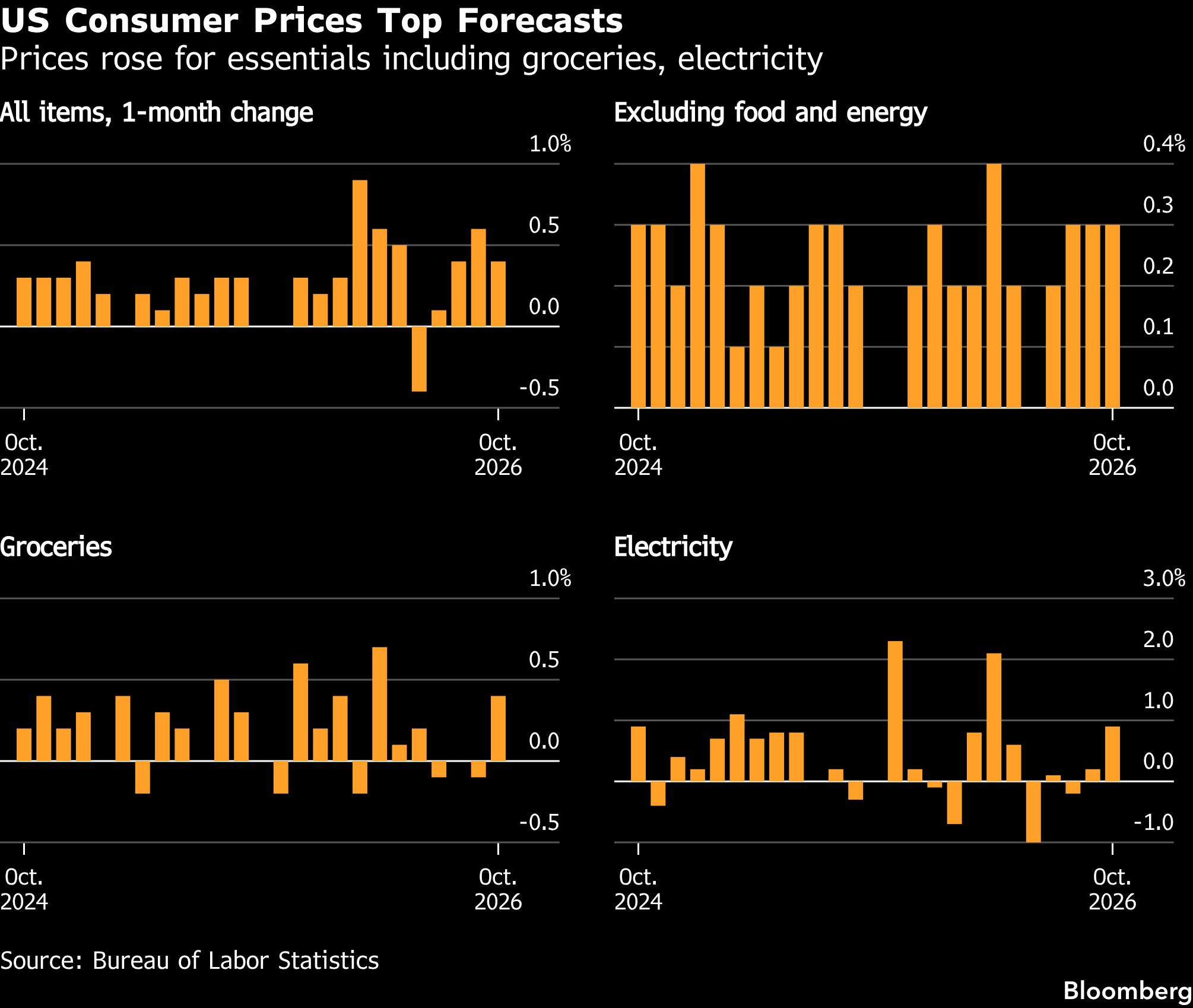
A key gauge of US consumer prices posted another firm advance in October, keeping the Federal Reserve on track to raise interest rates next month.
The consumer price index, excluding food and energy, rose 0.3% from a month earlier, according to Bureau of Labor Statistics data out Tuesday, topping estimates for a third straight month. Overall prices jumped 0.4% as the cost of essentials climbed across the board.

The report suggests price pressures continued to build just ahead of this month’s midterm elections, when Democrats retook both chambers of Congress following campaigns largely focused on the cost of living. The Iran war, tariffs and the data center boom have all helped fan inflation this year.
See more: Think Rates Are Peaking? Consider Mortgage-Backed Securities
It’s the last CPI report Fed officials will see before their Dec. 8-9 policy meeting. Investors expect them to raise interest rates at that gathering to counter inflation, following a quarter-point increase in September and a decision to leave rates unchanged in October.
Fed Governor Christopher Waller said earlier Tuesday that if the core CPI were to rise by 0.3% or more, the central bank may need to move by a larger, half-point increment in December. US Treasury yields rose and stocks opened lower after the CPI release as investors upped bets on a bigger rate hike.
“This report probably locks the Fed in for a hike in December and very likely another one in Q1,” said Thomas Simons, the chief US economist at Jefferies. “If we don’t see movement on the deal with Iran in the in the short term and a resultant decline in energy prices, that next hike could be as soon as January.”
The BLS didn’t publish year-over-year changes because data collection was interrupted last October during the government shutdown. Through October, the core CPI index was up 3.7% on a three-month annualized basis — the most in more than two years — and 2.7% on a six-month annualized basis, according to data compiled by Bloomberg.
The report showed broad-based increases across a range of everyday goods and services. Grocery prices rose by the most since April, including a record 5.1% surge in baby food and formula prices.
Owners’ equivalent rent, a gauge of housing costs that is the largest component of the CPI, rose 0.3%. Electricity prices jumped 0.9%, and motor vehicle insurance prices advanced by the most in more than a year.
Energy Shock
Gasoline rose 1% in October, though oil prices have plummeted over the last week amid rising optimism around diplomatic efforts to end the war in the Middle East. Other categories suggested the energy shock continues to filter through the economy: Airfares rose 0.4%, while delivery services prices also increased.
Broader services prices excluding energy and rents climbed 0.4%, according to data compiled by Bloomberg. Health insurance prices fell by the most in more than three years after the BLS incorporated in October a semi-annual update using industry data on premiums and benefits, though a wide range of other medical care services showed the biggest increases in several months.
Recreation services prices rose last month by the most this year. Some economists said they expected upward pressure following recent announcements of price hikes from streaming services including Disney+ and Hulu.
What Bloomberg Economics Says...
“The bar for not hiking is now high. Even if financial conditions tighten sharply — as we expect — our new baseline is that the Fed is likely to raise rates in December.”
— Anna Wong and Troy Durie
Core goods prices rose 0.2%, even as used-car prices declined. Categories particularly exposed to tariffs — including household furnishings, appliances and toys — saw material price increases. Smartphone prices rose by the most on record, coinciding with the release of Apple Inc.’s new iPhone Duo model.
The report also showed key categories exposed to the artificial intelligence buildout took a breather in October. Computer software and accessories prices fell 1.5%, while prices of computers, peripherals and smart home assistants advanced at the slowest pace in four months.
A separate report Tuesday that combines the inflation figures with recent wage data showed real average hourly earnings were little changed from the month before, extending a recent stretch of weakness. The inability of wages to keep up with rising prices contributed to the cost-of-living frustrations that drove the “blue tsunami” in the midterm elections.
A message from Advisor Perspectives and VettaFi: Discover something new! Click here to register for our upcoming webcasts.
Bloomberg News provided this article. For more articles like this please visit
bloomberg.com.
More Energy Topics >