 Advisor Perspectives welcomes guest contributions. The views presented here do not necessarily represent those of Advisor Perspectives.
What originally attracted you to wealth management, and what path led you to your first position in the profession?
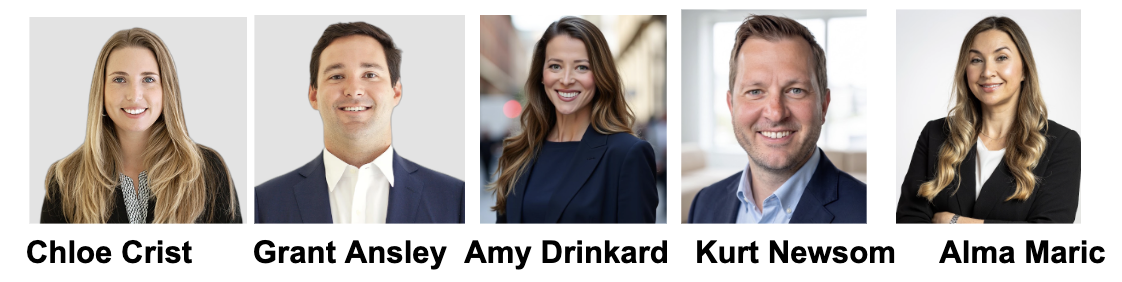
Alma Maric, co-founder, associate wealth advisor at Fairvoy Private Wealth: I was attracted to wealth management because I wanted to learn how to help people save, invest, and prepare for a life full of important financial decisions. I started at Morgan Stanley in 2000 in Salt Lake City, and after moving to Birmingham, returned to wealth management at Merrill Lynch, where I earned my Series 7 and 66 licenses and continued to grow in the industry.
Kurt Newsom, CFP®, managing partner at XXI Wealth: I started my career as an attorney, helping brokers who had traditionally been paid commissions for financial advice transition to becoming registered investment advisors, where they were paid fees and operated as fiduciaries.
That experience ultimately led me to go in-house at an RIA as its attorney and chief compliance officer. Over time, I realized that clients weren't necessarily looking for an investment person, an estate planning person, or a financial planning person. They wanted someone who understood how all of those pieces fit together.
So I added financial planning to my skill set, became more involved in portfolio strategy, and gradually evolved from an attorney supporting a wealth management business to a wealth manager.
Chloe Crist, CRPC™, assistant vice president, wealth management advisor at OpenArc Corporate Advisory: It runs in the family. My dad is an advisor, and I knew from an early age that was what I wanted to do. I remember visiting him at the office as a child and watching the tickers flash on his screen. As I got older and learned more about the profession itself, I was most attracted to the financial planning aspect, being able to help people and build long-lasting relationships and partnerships with those people.
Amy Drinkard, AWMA®, partner, client advisor at Steadmont Advisors: My story is a bit different from most. I grew up in a family full of finance careers and promised myself I would never become one of them, mostly because the numbers intimidated me. I fell into this path by sheer coincidence. I took an entry-level job filing paperwork and picking up everyone's lunch, thinking it would only last until I landed the role I really wanted in pharmaceutical sales. Obviously, that never happened.
Grant R. Ansley, CRPC™, assistant vice president, wealth management advisor at OpenArc Corporate Advisory: While I was an intern at a wealth management firm in college, I sat in on a client call during my first week. The client was on the verge of tears as she thanked her advisor. Her grandson had just graduated from college, and she said none of it would have been possible without the plan they had put in place together more than two decades earlier. From that moment, I wanted to be an advisor. I realized this isn’t just a job of managing money; it's a way to help people achieve the goals that matter most to them over a lifetime.
What was the most difficult or surprising part of beginning your career as a financial advisor?
Maric: The most surprising part was realizing how much there is to learn to be a good advisor. It is never just about being good at investing but about having an understanding of clients' specific needs, since every client or situation can be different.
Newsom: The most surprising thing for me was learning that knowing the technical answer and advising a human being are two very different skills.
Clients aren't always looking for the person who can give them the most sophisticated answer. They want someone who understands them — their family, their goals, what they're worried about, and what they're trying to accomplish. And they want to know that the person sitting across from them genuinely has their best interests in mind.
Crist: At first, it seemed like the most difficult part was going to be learning everything. It's true there is a ton to learn, and markets, products, rules, and regulations are always changing, but it becomes part of the routine.
I think the most surprising thing has been discovering the lack of true financial education and literacy available to most people throughout their careers. I've had many clients tell me they feel like they can ask me anything and do not have to worry about it sounding like a dumb question. It's really important to me that I have that kind of relationship with my clients.
Drinkard: The most surprising part was seeing firsthand how deep the relationship between client and advisor could run. That was also the hardest part. Clients would not talk to me because they only wanted the two people they had known for years. It took many years to earn that trust.
Ansley: Early on, I was most surprised by how much of the career is based on relationships and trust, not just spreadsheets. I had the preconceived notion that the job was mostly crunching numbers and analyzing portfolios. That technical work is essential, but what means the most to me is the relationship I build with a client, truly understanding their life and what they want to be able to accomplish.
Which mentors, training experiences, or early opportunities had the greatest influence on your development, and why?
Maric: I think working at Morgan Stanley and training across different departments gave me a strong foundation and helped me understand the business from many angles. I've also learned a lot by working alongside experienced advisors and seeing how they build relationships and take care of their clients.
Newsom: When I joined Geneva Advisors, I came in as an attorney and had the opportunity to sit in the room for a lot of high-level discussions with the founders. I watched them debate decisions, always coming back to the same question: How do we serve our client families better and build a better model for them?
Crist: Having the opportunity to join the OpenArc team was a game changer due to the culture of mentorship. OpenArc has a three-year training program in which experienced advisors volunteer their time to lead weekly training meetings. They pass down knowledge and skills that a new advisor can implement in their practice and use to build their book.
That type of access and collaboration is unique in our industry. When you hear people comparing today’s AI boom to the tech bubble, having the opportunity to ask someone who advised clients through that earlier period for their perspective, and knowing they are happy to dive deeply into the comparison, is incredibly valuable.
Drinkard: I had a fantastic mentor from day one. For months, I shadowed her for 10 hours a day. She had been working with our clients for more than 15 years when I started, and they trusted her with every detail because she always got it done perfectly and on time. I was pretty disorganized at 23, so watching someone run like a well-oiled machine was something I worked hard to copy.
Ansley: I was fortunate to join an incredible team at OpenArc, where, from day one, tenured advisors invest significant time in developing the next generation of advisors. The company invests heavily in advisor development through a structured three-year training program. Weekly sessions focus on real client scenarios, creating the kind of hands-on mentorship that has been instrumental in shaping how I serve clients today.
What advice would you give someone considering a career in wealth management, and what should the industry do differently to attract and develop the next generation of advisors?
Maric: My advice to anyone considering this path is to find a good mentor and a team that recognizes your ambition and supports your growth.
Newsom: Develop a skill set that allows you to bring real value to clients, whether that's investments, financial planning, tax or estate planning, but also learn how to listen and build relationships. Technical knowledge matters, but trust is ultimately what makes someone a great advisor.
I also think our industry needs a better apprenticeship model. Too often, I have seen young advisors handed a phone and told to find clients. You should not have to be a great salesperson at 22 to eventually become a great financial advisor.
Crist: Everyone wants to hire talent, but not everyone is willing to invest in talent. I think the industry needs to continue to evolve and hire advisors because they want to partner with them and grow together, not hit a quota or check a box.
Having interviewed many young candidates for the advisor role, they're most nervous about not knowing how to do the job. If you're driven, confident, and coachable, a good team will invest in your success because ultimately that's what drives the team's success.
Drinkard: Stay curious and leave your ego at the door. Learn every part of the business, not just the flashy parts. I started out filing and running lunch orders, and I said yes to every task I was given. I got plenty of things wrong, but I never gave up. Relationships take time, and trust takes time, so be patient. You are helping people with one of the most personal parts of their lives: their money.
Ansley: My advice to anyone considering this profession is to recognize that it's a career, not just a job. Clients entrust you with decisions whose impact unfolds over 20, 30, or even 40 years, shaping everything from their children's education to their retirement and caring for aging parents. That only works if you're still there for them a decade or two from now, not just for the first few years.
For that reason, it's an incredibly rewarding career. There are tough days mixed in — emotions run high during market swings — but at the end of the day I get to leave the office feeling like I made a positive impact on someone else's life.
A message from Advisor Perspectives and VettaFi: Discover something new! Click here to register for our upcoming webcasts.
More ETF Topics >
 Advisor Perspectives welcomes guest contributions. The views presented here do not necessarily represent those of Advisor Perspectives.
