
A weaker U.S. dollar cycle is boosting the appeal of emerging market debt, creating a compelling case for investors seeking income and diversification at an opportune time for the asset class.
While the duration and severity of the Iran war are still to be determined, the U.S. dollar has failed to rally significantly since the war began. In our view, this brings into question the dollar’s traditional safe-haven status. In fact, over the longer term, we see several factors supporting further depreciation of the U.S. dollar, conditions that historically have been favorable for emerging market debt, particularly EM debt held in local currencies:
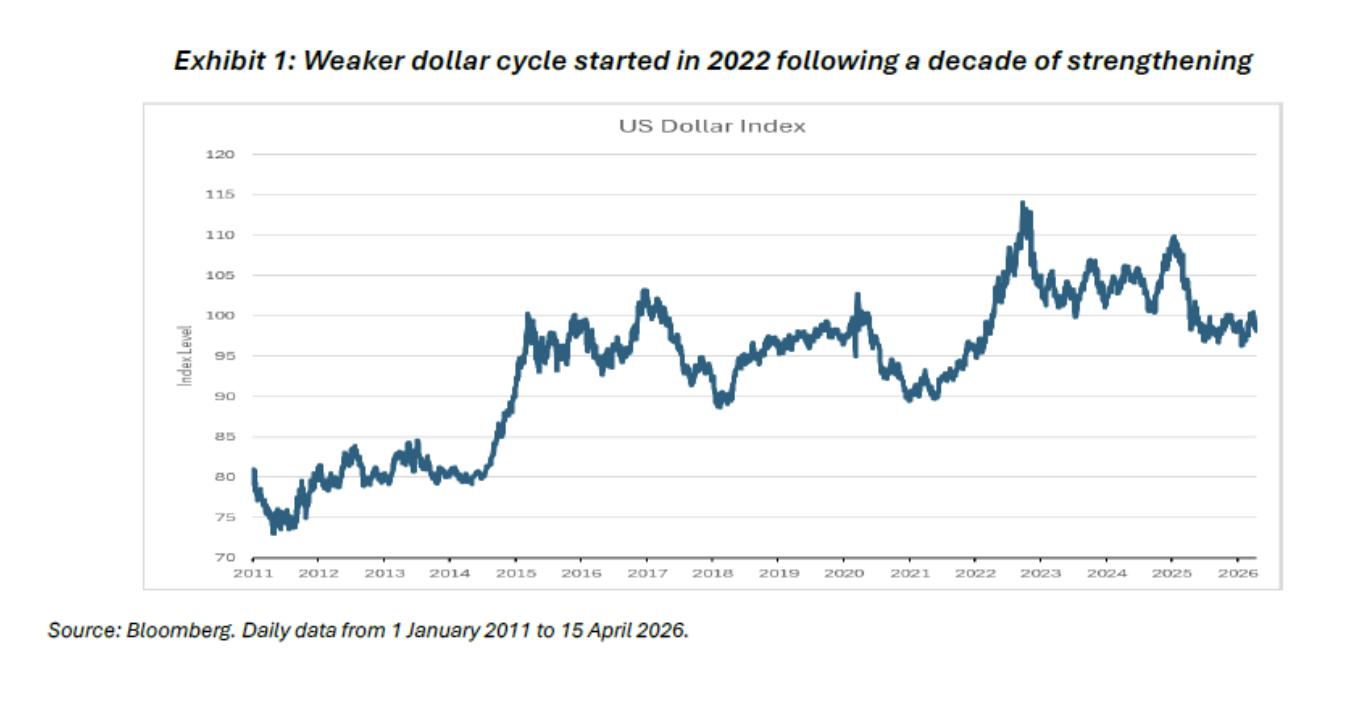
- Valuations: By most metrics, the U.S. dollar is trading at elevated levels relative to historical norms. One widely cited measure is the IMF’s real effective exchange rate framework, which has indicated periods in which the dollar has been materially above its long-run average. Consistent with that, the broad trade-weighted dollar and the U.S. Dollar Index have, at times since 2022, traded close to multi-decade highs versus major peers. This overvaluation suggests limited upside and increases the risk of mean reversion, especially in an environment where structural supports for dollar strength are eroding.
- Positioning: Investor positioning is heavily skewed toward the dollar. A shift in sentiment or fundamentals could lead to a broad-based reallocation away from the dollar and into undervalued currencies, including those in EM.
- Fundamentals: The U.S. is running substantial twin deficits. Together, a high fiscal deficit and a persistent current account gap increase the economy’s dependence on foreign savings, a configuration that has historically been associated with downward pressure on the currency over time.
- Policy: The U.S. administration has shown little resistance to a weaker dollar, removing a key support for the currency. Additionally, speculation about a dovish Federal Reserve under incoming new leadership is further eroding a critical pillar of dollar strength.
A weaker dollar can have several beneficial effects for emerging market assets. For starters, a weaker dollar backdrop tends to encourage additional capital flows into emerging market countries. This can cause local currencies to appreciate and allow emerging market countries to increase their foreign exchange reserves. Emerging market debt held in local currencies benefits most directly from currency appreciation. EM debt denominated in the U.S. dollar or other hard currencies also benefits from reserve accumulation and lower debt-servicing costs resulting from currency appreciation.
In addition, a softer dollar tends to lift commodity prices, which is especially supportive for commodity-exporting EM economies. Taken together, these effects strengthen what is already a supportive global backdrop for EM.
See more: The Mega-cap IPOs’ Impact on Index Funds
