Executive Summary
A credit-allocation problem is complicating the Fed’s dual mandate, with current policy restrictive for many consumers and weaker borrowers, but less so for large corporates, higher-quality issuers, and borrowers with access to private credit. This uneven transmission increases the risk that the Fed must tolerate tighter financial conditions and more volatility before policy can ease without extending pro-cyclical leverage. In the medium- to long-term, deficit financing may increasingly pressure monetary policy toward lower real rates, dollar weakness, and greater market intervention.
Key takeaways:
- Credit allocation: The core issue is not only the level of rates, but where credit remains available and where it does not.
- Transmission: Private credit and capital-market channels have weakened the link between policy rates and credit creation.
- Risk: Volatility and price discovery may be necessary to restrain leverage before policy can become more broadly supportive.
- Fiscal backdrop: Deficit financing may increasingly constrain monetary independence and increase pressure on the dollar.
- Positioning: We remain allocated at the low end of our risk budgets, with low spread duration and high balances in cash and easily accessible dry powder.
Since the late 1970’s, Federal Reserve policy has been guided by a dual mandate: price stability and maximum employment. Yet the aftermath of easy policy, which ended abruptly in 2022, together with new credit vehicles that operate outside the traditional monetary channel, has confronted policymakers with a host of new challenges. We believe the response to those challenges represents a theoretically new “third mandate” for the Fed — managing the distribution of credit across households, businesses, and borrower-quality cohorts.
The dynamics are multidimensional. They depend not only on the size of rate changes but on the time elapsed since those changes. They are also hard to observe; stress is visible in the weaker parts of the market, but much of the fastest-growing credit lacks daily marks that can be evaluated as readily.
We expect this third mandate to unfold across two distinct acts, and the order of operations matters because the degree of difficulty is high.
The first act is the near-term problem of credit allocation across a bifurcated economy, as policy is easy for large corporates and tight for consumers. We are wary of market memes, but the “K-shaped economy” framing fits. A widening split between capital and labor and between savers and consumers is making the economy harder to read through aggregate data alone. This provides context for both policymakers’ diminished confidence in forecasting and recent shifts in Fed communication.
The second act is the medium-term drift toward fiscal dominance, in which financing the deficit increasingly shapes monetary policy as the Fed attempts to keep its rate posture low enough for the Treasury to keep financing its deficits. As deficit financing increasingly constrains monetary policy, the bias may shift toward lower rates and resistance to dollar strength. Recent yen intervention alternative inflation trial balloons, as well as the Treasury’s increased buyback activity in the long end 1 signals that the adjustment may already be underway, raising the prospect of renewed price discovery and volatility.
See more: The More Often You Check Your Portfolio, The More Volatile It Seems
The rules of the road are shifting as we speak. Tellingly, this is territory our Emerging Debt team has experienced and traded through before, suggesting shades of an EM-style problem that could haunt the world's reserve currency at some point.
This is a conundrum very few investors have navigated, and one that will require careful research, disciplined risk management, and thoughtful maneuvering. At GMO, our research-first culture and willingness to think creatively about client solutions, rather than to approach markets with off-the-shelf products, position us well to navigate opacity.
From a positioning standpoint, this potential risk, in the context of valuation, is a major input into our relatively low-risk stance in the Opportunistic Income and Multi Asset Credit strategies, as expressed through low spread duration and a tilt toward long-short and relative-value positions. In multi-asset strategies, we favor areas that exhibit lower correlation to credit risk and intentionally position portfolios as such. It is also one input that helps to inform our focus on local-currency exposure across the Emerging Debt platform, a position we have advocated to clients vocally of late.
Easy for Business, Tight for Consumers
As we see it, interest-rate policy is currently restrictive for many consumers, but far less clearly so for large, high-quality businesses and for borrowers with access to private credit, a channel that benefits from low reported volatility, a benefit that has not been stress-tested, as well as cost of capital that is less tied to monetary policy than that in the traditional banking channel.
The divergence is reinforced by an untested AI narrative, creative credit channels, yield-hungry bond buyers, and possible circular financing in technology (nascent work on core tech earnings, excluding investment gains, may be revealing here).
Whatever the signal from high real rates, corporate financing conditions do not look uniformly tight: spreads remain contained, speculative funding is available, and cheap equity capital continues to offset tighter base rates. Policy is not biting evenly, so the Fed may need to stay tighter for longer.
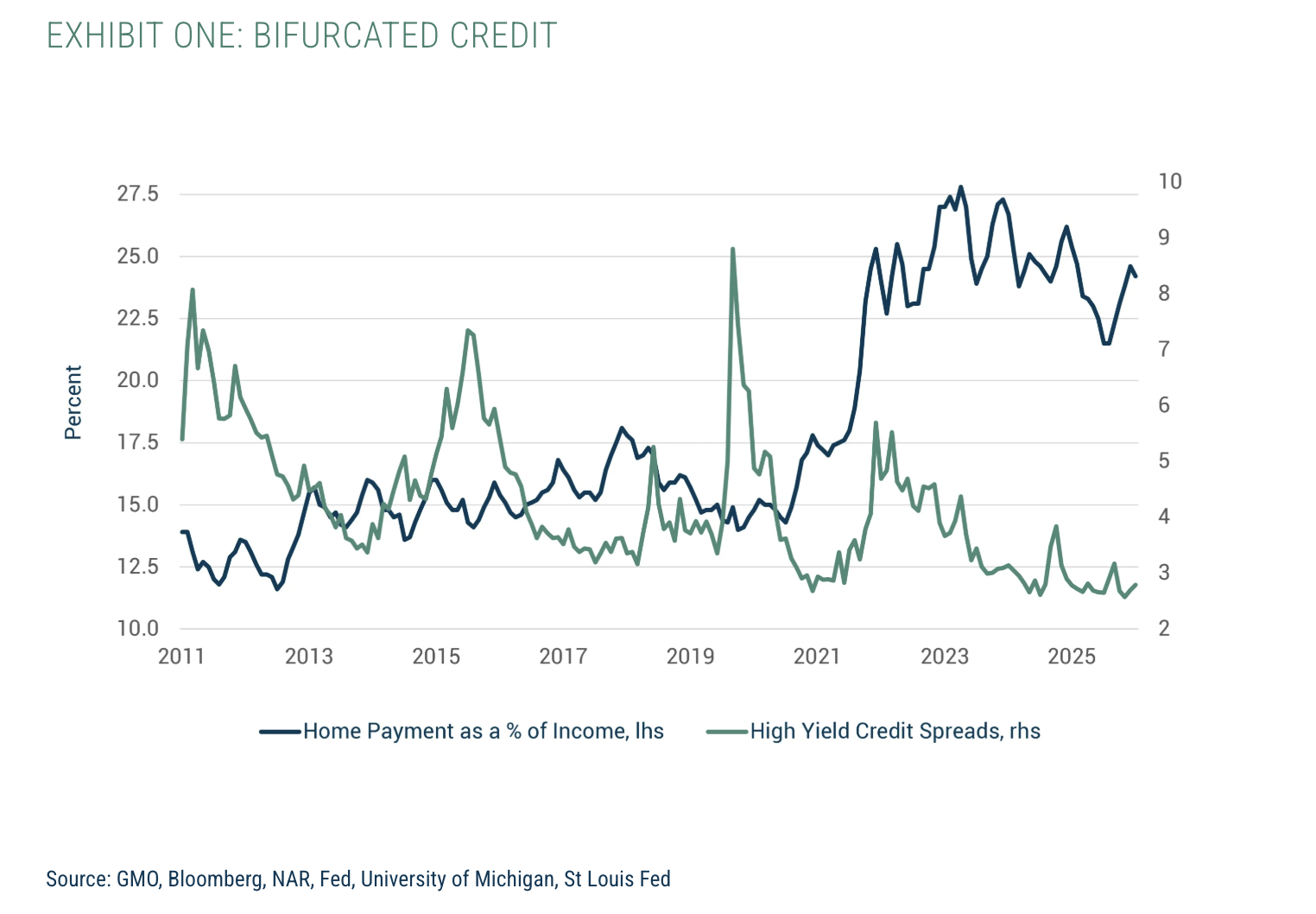
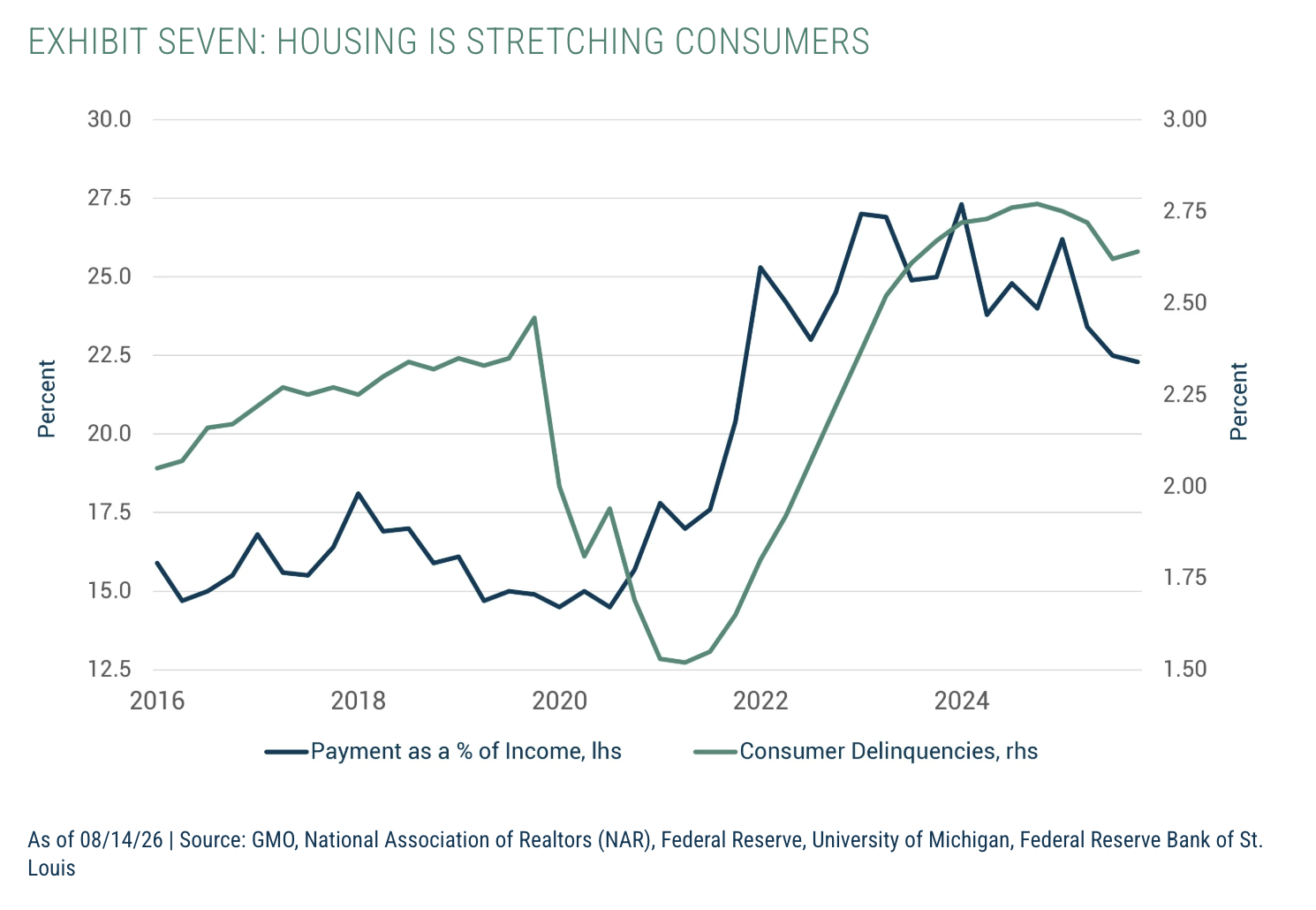
On the flip side, between elevated mortgage rates, the lack of affordable housing (a staple of upward mobility, household formation, and population growth), and persistent inflation in consumer goods and services, it is increasingly clear that the share of income required to put a stake in the ground and start a home is unsustainable.
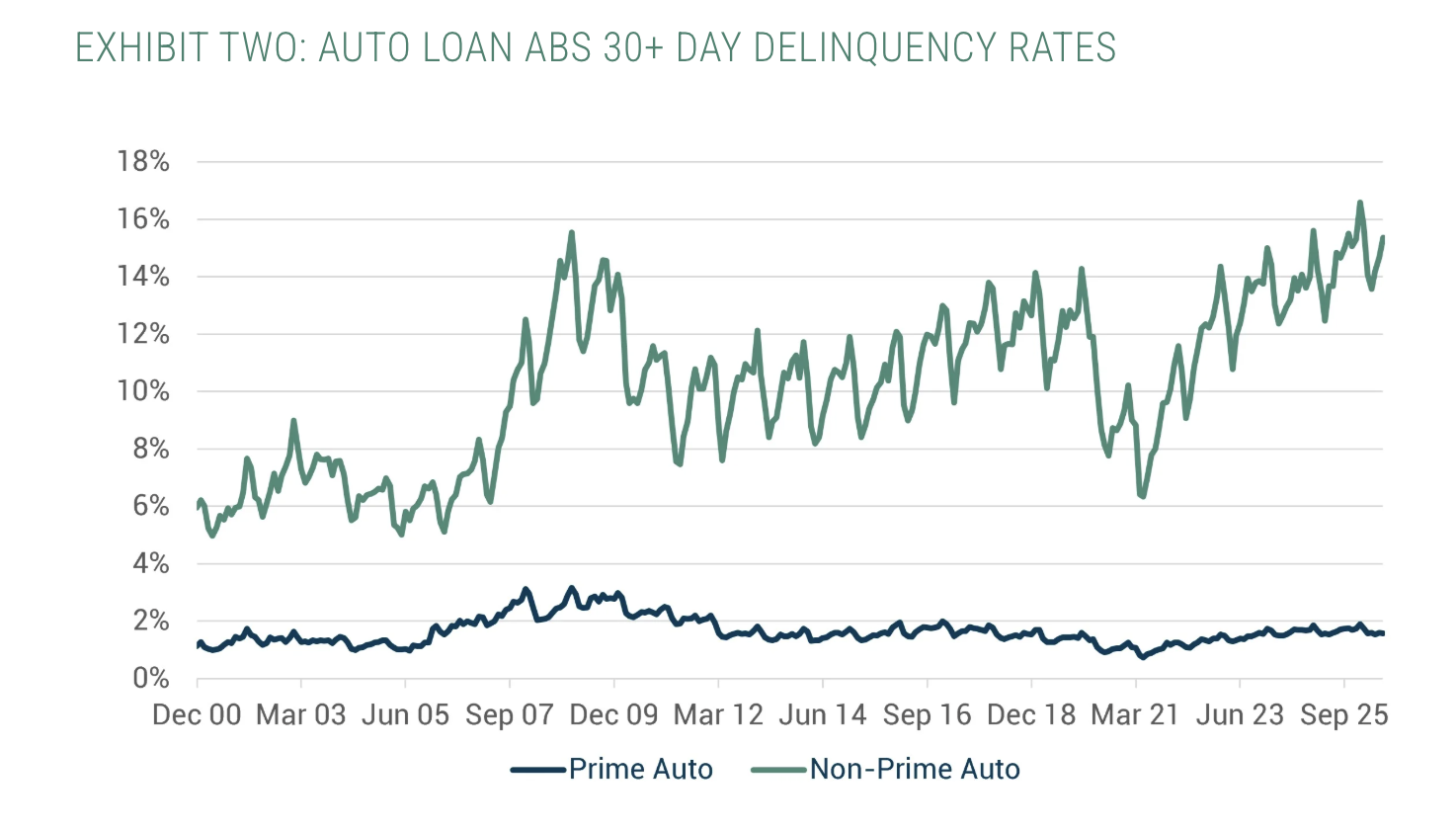
The bifurcation runs along a second axis as well, not just business versus consumer, but quality within each cohort. Higher-quality borrowers still access credit readily; lower-quality borrowers are increasingly left behind.
The impact of higher interest rates and tighter monetary policy has been uneven because many households and businesses locked in long-term financing at exceptionally low rates between the GFC and the 2022 hiking cycle. As a result, stronger borrowers, particularly homeowners who refinanced before rates rose, have been largely insulated from the effects of tightening and have even benefited through home and equity price appreciation, with deposit rates on par with low mortgage coupons.
This combination makes the Fed’s policy decisions and credit-allocation challenges more complex than they would be if borrowing costs repriced immediately across the economy.
Of course, some divergence is natural late in a credit cycle, but a bimodal distribution of credit availability is a policy problem, not a market outcome — and it is one the Fed cannot ignore.
This implies that we should expect volatility in the near term, a necessary evil to curb pro-cyclical leverage on large and speculative corporate balance sheets. It may then give way to a more accommodative stance, allowing homeowners to benefit.
From an investment perspective, this informs our positioning: we remain focused on the BB-rated area of high yield and away from spread duration. In fact, with weaker credit in need of lower rates, we see potential for risk and rates to exhibit a counter-intuitive positive correlation, an underappreciated dynamic for portfolio construction.
A De-banked Credit Channel
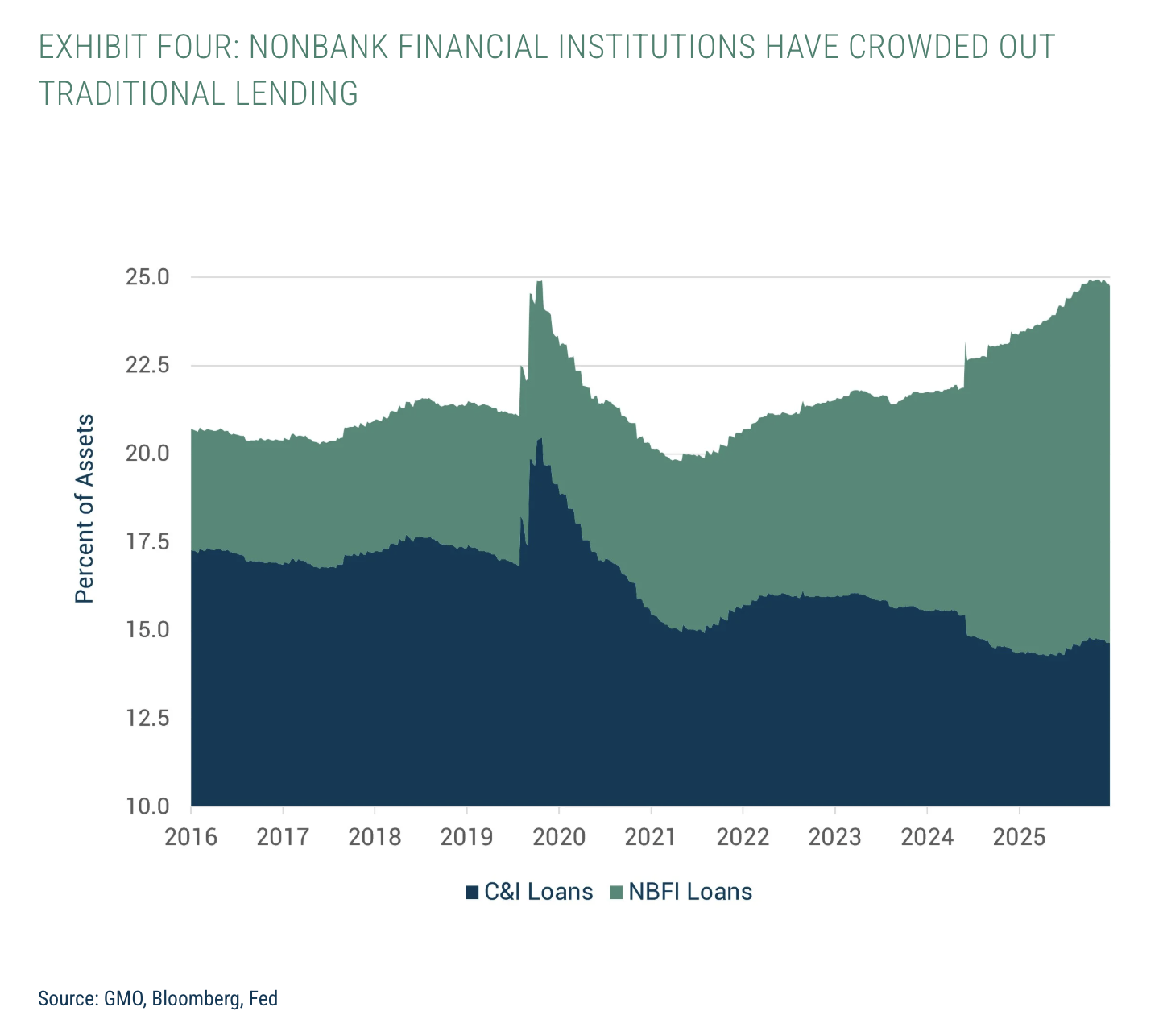
To us, a key driver is the rise of a credit channel whose economics differ materially from those of the banking system. A bank-centric model is often described as a spread game between the cost of overnight or deposit funding and risk-adjusted, loss-reserved loan books. By contrast, many private credit and capital-markets vehicles are funded by committed investor capital and earn management or transaction fees for deploying capital.
That distinction matters. Previous cycles relied heavily on the banking channel. This one is fueled as much by capital markets and private credit. Put differently, policymakers have constrained the most rate-sensitive channel of credit creation, while a growing share of lending has migrated to investors who are incentivized to deploy capital, generate yield income, and complete transactions rather than manage a deposit-funded spread book.
Imagine two lenders facing the same borrower. A bank must fund itself, hold capital, reserve for losses, and justify the loan against a regulated balance sheet. A fee-earning private credit vehicle, by contrast, may already have committed capital and an incentive to put that capital to work, provided the spread clears its return target. The result is not necessarily reckless lending, but it is a different monetary-transmission mechanism.
There are most certainly positives, such as keeping risky credit where losses can be socialized, in institutional investors’ hands. However, this form of more speculative capital can have knock-on drawbacks. There is also a regulatory question: if this channel is now systemically important, it may eventually invite the very oversight that constrained banks, a tail risk to the thesis worth monitoring.
But, when is speculative capital a problem for consumers? And why does the Fed find itself fighting a war on two fronts?
The easy answer to the first question is through the negative wealth effect felt when a cyclical bubble pops. Investors are quick to ride an uptrend, but psychology tells us that the pain and associated behavioral impact is far greater than the euphoria of gains.
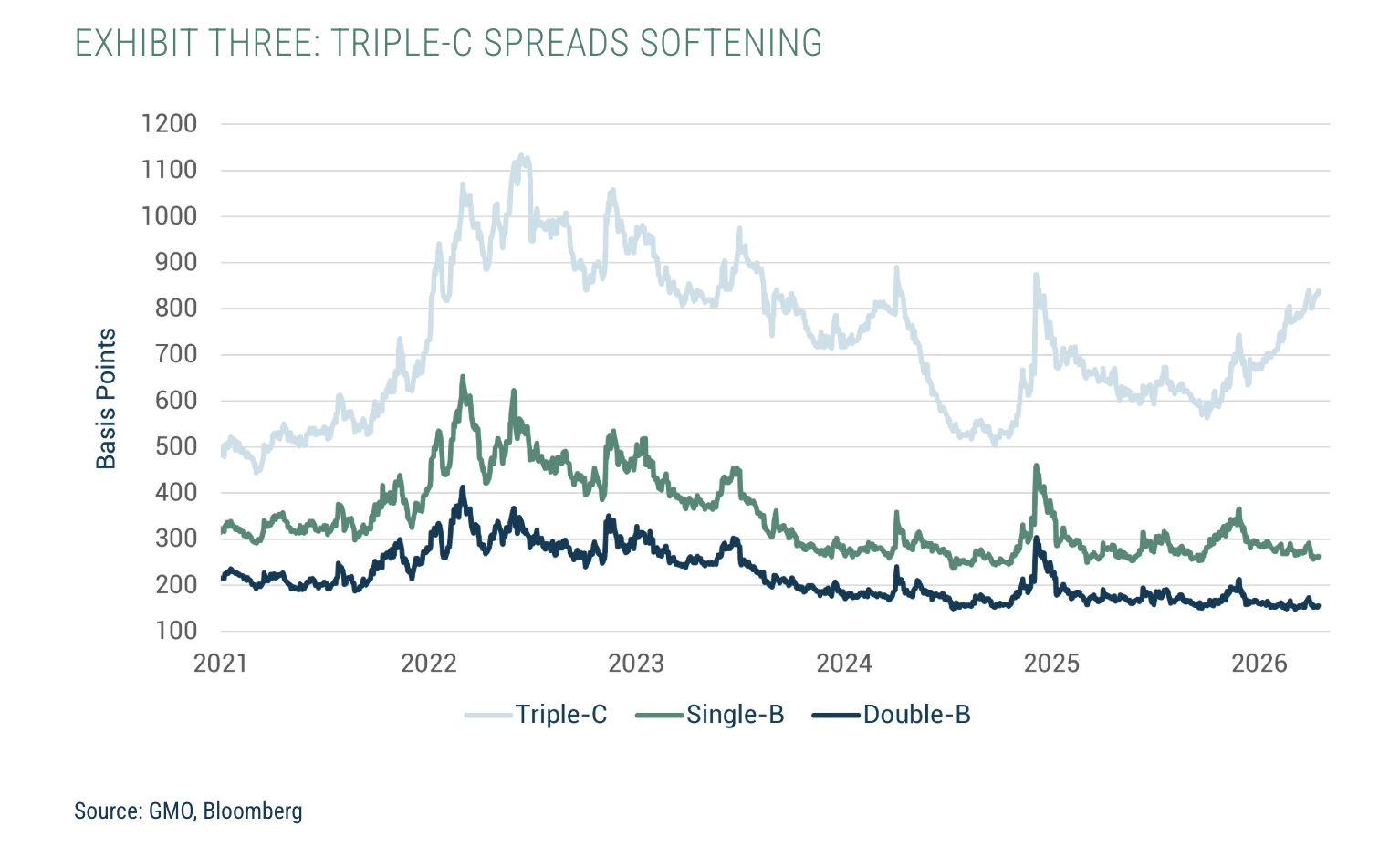
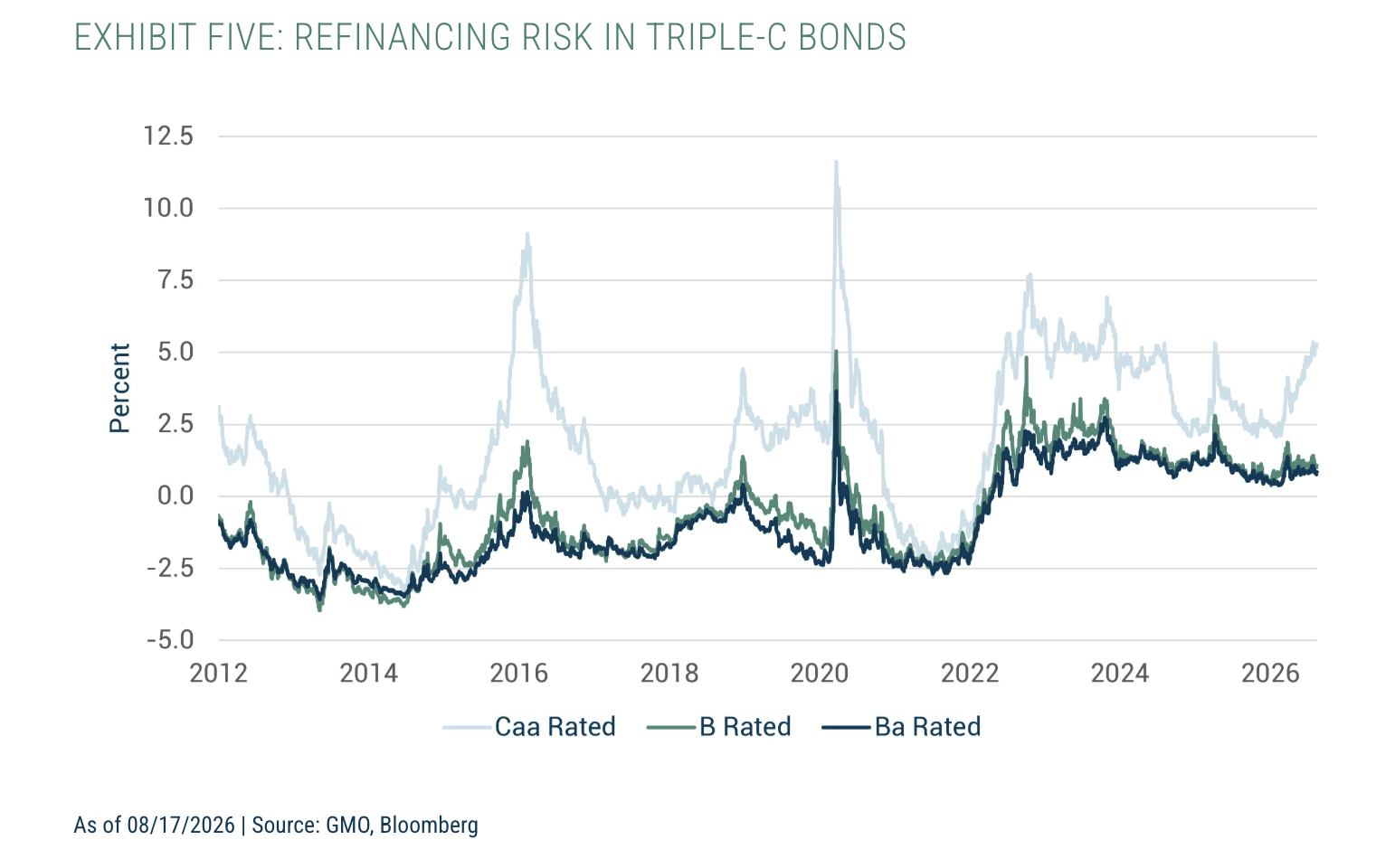
We do not know when, but if there is one guarantee in markets, it is that the credit cycle ends. Human greed and the tendency to extrapolate current conditions are the tinder. Price changes are the accelerant. And, given low legacy coupons in place before restrictive policy, refinancing risk is acute. Weaker credits will struggle given high base rates and widening spreads.
The chart below illustrates the difference between current market yields and par coupons issued four years prior, stratified by rating. This highlights the cost of refinancing old debt into the current market.
As we are learning in this cycle, consumers are also being asked to absorb higher energy costs, technology inflation, elevated base interest rates, anxiety around AI-related labor displacement, and, in some cases, a lack of liquidity in the investments that financed this new round of capital formation.
The crucial challenge for the Fed is that higher rates have not reduced credit availability evenly. For some households and small businesses, higher rates bite immediately. For parts of corporate America, private credit, and capital markets, higher rates may instead attract more yield-seeking capital and push credit outward. If the transmission mechanism itself has changed, so too must the posture of whoever operates it.
Enter, Kevin Warsh.
The Warsh Era & Fiscal Dynamics
Warsh’s elevation to Chairman of the Federal Reserve has received mixed reviews, driven in part by political divisiveness and in part by his approach to transparency and policy forecasting. The latter ruffles the feathers of investors who have relied on subdued policy volatility, clear forward guidance, and low uncertainty to extend duration, add risk, and, in some cases, increase leverage.
We believe Warsh’s elevation represents a sea change, though not because the Fed has formally adopted a new mandate. Rather, the chairman is more willing to let markets tighten financial conditions. He is attempting to have it both ways: to introduce greater uncertainty without stepping directly on economic growth.
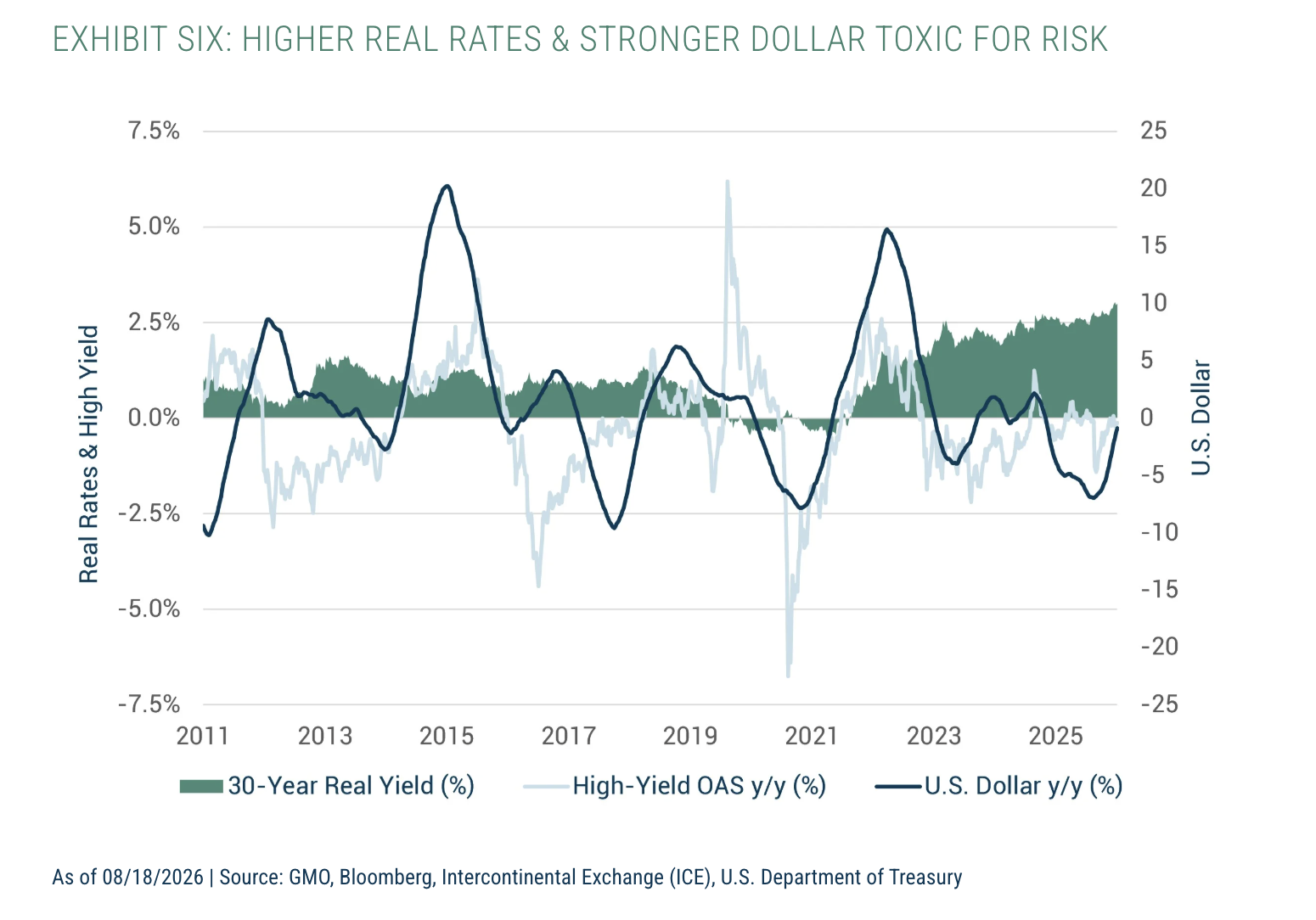
Warsh’s signal that he welcomes the rise in real rates, with the market doing some of the work for the Fed, rhymes with the focus on financial conditions emphasized by a string of Fed leaders in recent years. This is not entirely new. What is new is the possibility that policymakers may be less willing to suppress volatility merely because markets dislike it.
As an example, year-to-date in 2026, investment-grade corporate yields have risen by roughly 75 bp and non-investment-grade yields by about 100 bp; the broad dollar index is up some 5% from its January lows; and implied volatility on rates and equities sits near the top of its recent range.
Warsh appears to have welcomed this tightening in financial conditions. The Treasury, meanwhile, under Scott Bessent’s leadership and as a direct extension of the Executive, has signaled concern over Treasury yields. It has coordinated with the Bank of Japan to prop up the yen and forestall Treasury sales.
Importantly, that is not the message one would expect from perfectly cooperative monetary and fiscal policymakers, but it reflects longer-term financing goals that sit more within Bessent’s purview than Warsh’s.
This warrants investors’ attention.
The signal is not that the Fed wants a credit accident, nor that Treasury is shaking in fear. It is that the Fed may be less tolerant of pro-cyclical credit creation, suppressed volatility, and markets that price a falsely narrow range of outcomes, which has increased investors' ability and comfort in embracing leverage and amplifying small bets with stable funding.
A shift to less transparency and potentially fewer policy meetings means that investors need to approach markets with a more nuanced view of risk, which will likely increase volatility and dispersion.
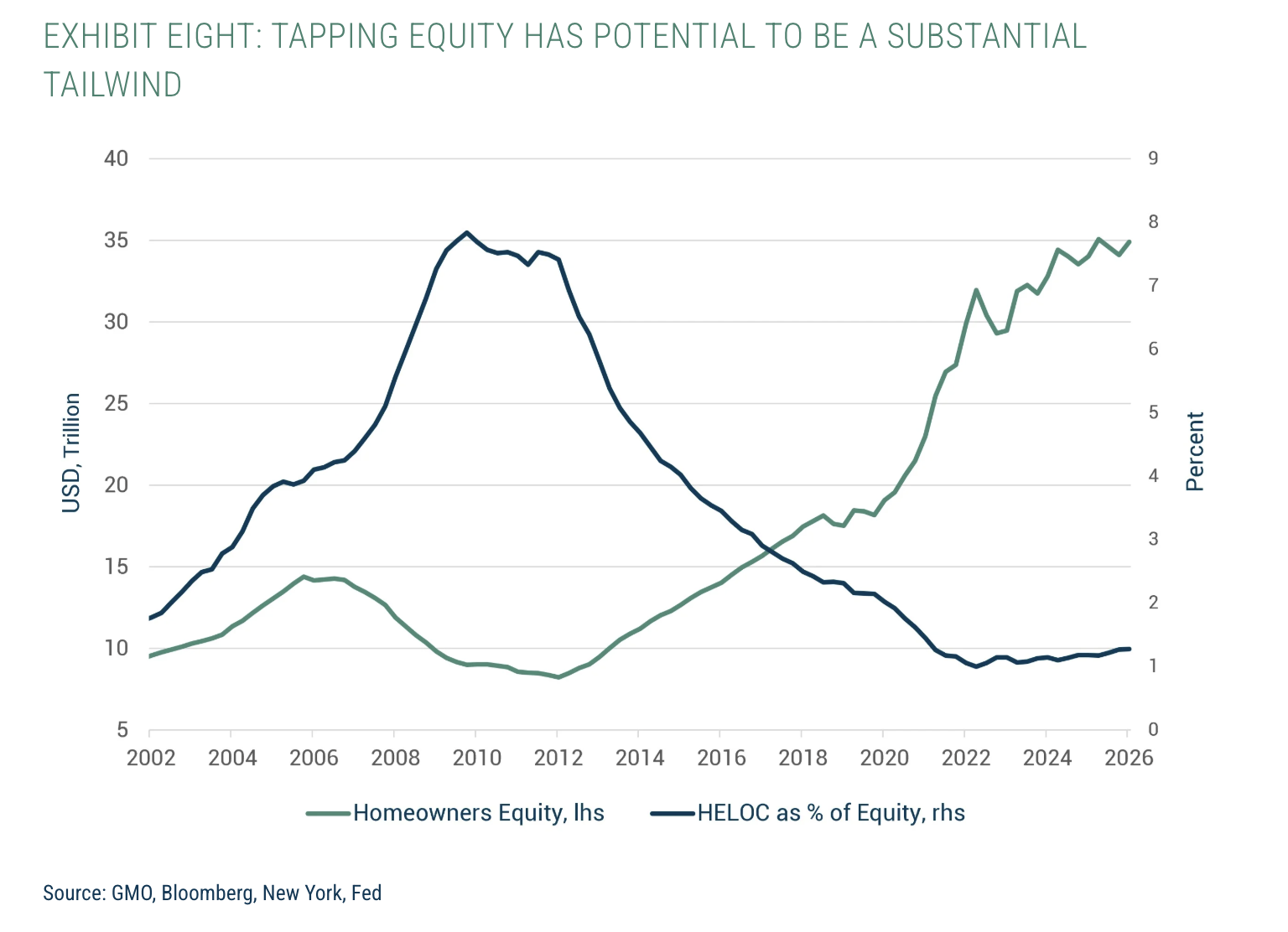
The Fed ultimately wants to increase credit availability for homeowners and Main Street borrowers so they can form households and tap trapped equity. This aim aligns with Bessent’s, but only after reducing the risk that easier policy simply fuels pro-cyclical leverage elsewhere in the system. That implies losses, defaults, and forced sales may need to reappear at the margin before policy can turn meaningfully supportive. This is music to a value investor’s ears.
The Risk of Fiscal Dominance
Importantly, this near-term dynamic sets aside the growing risk of fiscal dominance across Western governments, in which the primacy of fiscal impulse and deficit financing over monetary policy produces outcomes we are unaccustomed to. This is the second act.
Somewhat tongue-in-cheek, there are two ways out of a debt trap. The first is to run inflation higher than desired while suppressing interest rates, so that nominal growth exceeds the nominal interest rate. The second is far more disruptive. Again, drawing on EM experience is instructive.
As policymakers navigate this, a key variable will be the U.S. dollar. Strength is likely to be met with volatility and response (witness the yen intervention), whereas weakness will be welcomed. From our vantage point, that may serve as a tailwind for global investors with the flexibility to own non-USD assets, including emerging markets.
Investment Implications
Presuming we are correct, that volatility will re-emerge, speculative credit may contract, and the Fed will assert itself in this process of re-normalization, what sectors and positions stand to benefit or face uncertainty? How are we positioned to capitalize on this shift? And what are the long-term considerations?
Banks are one area that could benefit from re-channeling credit into a more predictable and observable channel. Most importantly, this channel would be more responsive to monetary policy and much less likely to behave in a pro-cyclical fashion. A larger role for banks could dampen the amplitude of booms and busts and give the Fed greater confidence that its policy stance is transmitting to the real economy.
Sectors that have benefited from these structural sources of leverage tend to be concentrated in cyclically favored areas. Focusing research efforts there, akin to oil and gas in the mid-2010s, will be an important step in allocating capital.
But beyond the potential sectoral impact, there should be a broad discussion around risk posture. Across our developed complex, we remain allocated at the low end of our risk budgets, with low spread duration and high balances in cash and easily accessible dry powder. If the cost of liquidity has the potential to rise, we will be in a position to supply it in exchange for assets at more attractive prices.
How We Are Positioned
- Risk budget: At the low end across the developed complex, with low spread duration.
- Liquidity: High cash balances and readily accessible dry powder to supply liquidity as its cost rises.
- Credit: Focused on the BB-rated area of high yield and, where we have discretion, on less risky areas of credit that we have a greater degree of confidence in cash flows.
- Currency: Local-currency exposure across Emerging Debt, with the flexibility to own both core and frontier assets.
- Alpha: Focused on idiosyncratic exposure where able, and repeatable sources of return.
Levered balance sheets and borrowers that have relied on wholesale or short-end funding would likely face strain. Within public markets, this is a much more benign risk than it was prior to the GFC, though leverage extended to hedge funds and other non-bank liquidity providers could become more expensive.
This may affect U.S. Treasury market liquidity, as levered investors have been an important marginal liquidity provider in recent years. Again, look to banks to opportunistically increase exposure to this area.
Home prices would most likely initially suffer through two channels: the cost of funds and the wealth effect that has served to prop up real asset prices such as real estate, art, and gold. We would argue, however, that this is healthy.
Residential real estate is not remotely as levered as it was in the GFC, and household equity cushions appear substantially larger. However, to create lasting prosperity in the economy, household formation must increase; today, both prices and interest rates are standing in the way. A reset is needed.
Meanwhile, consumers’ substantial accumulated equity could provide an economic boost as high-quality borrowers begin to tap into it. Importantly, this is not “GFC-style” creative financing. Instead, many choose term borrowing to avoid refinancing into a higher-cost mortgage.
Providing this opportunity to increase homeowners’ access to equity, as well as to increase mobility by reducing reliance on legacy low-coupon mortgages through refinancing, are noble goals. The latter would certainly help housing turnover and increase access for first-time buyers.
Bottom Line
As an investment team, we welcome volatility both as a tool of price discovery and as a clearing mechanism. Investors who rely on the false comfort of Fed forecasting may be disappointed, and excesses built on suppressed volatility could be reined in.
This adjustment will take time, but it is healthy in the long run. Pro-cyclical credit creation increases the amplitude and longevity of cycles, and it shifts losses toward investors who are more likely able to bear them.
We believe that at this moment in time, our bias to remain conservatively positioned will be rewarded not only with liquidity to provide to those in need, but also with opportunities to purchase assets at prices that will benefit clients in the long run.
Focusing on beneficiaries of capital flows, isolating where losses are likely to be concentrated, and identifying forced sellers of risk is the first stage in a correction. Only investors with liquidity, flexibility, and long-term time horizons will be able to capitalize on it.
GMO is unique in its approach to thinking about markets, as well as its ability to execute directional, relative value, and long/short opportunities. With traditional beta challenged and introspection deeply ingrained in our culture, we believe we are well-suited to partner with clients through this challenging time.
1 https://home.treasury.gov/news/press-releases/sb0607
A message from Advisor Perspectives and VettaFi: Discover something new! Click here to register for our upcoming webcasts.
© GMO
More Buffer ETFs Topics >