Key takeaways
- Homeowners remain largely frozen in place, with a strong equity buffer. Many homeowners remain locked into mortgages well below today’s rates and aren’t moving, supported by roughly $35 trillion of home equity. However, delinquencies are rising among lower-income households.
- Rates move affordability faster than prices do. Every 1-percentage-point drop in the mortgage rate lowers a buyer’s monthly payment by roughly the same amount as a 10% house-price cut.
- U.S. housing no longer describes a single national market. Some areas in Texas and Florida are softening given easier conditions for building, while undersupply has supported prices in the Northeast. That divergence shifts the opportunity from a national call to more local underwriting.
As bond yields have risen, mortgage rates are again facing upward pressure, extending the U.S. housing market's post-pandemic affordability challenges. Beyond mortgage rates, trends in wage growth, taxes, and insurance costs also continue to shape the affordability outlook. In addition, the national housing market is increasingly becoming a more local story, with regional divergence often driven by differences in new housing supply.
See more: September Fed Hike May Be More Than a Risk Management Exercise
For four years, the defining feature of U.S. housing has been paralysis. Homeowners with fixed-rate mortgages that originated well below today’s rates have had little reason to move. The resulting scarcity of listings has upheld prices, and affordability has deteriorated to its worst level since the 1980s. Activity remains slow, but the deep freeze in housing markets may show signs of thawing.
National inventories, while still low by historical standards, have been rising steadily and – measured in months of supply – are back to pre-COVID levels. The lock-in effect is eroding too: The share of homeowners carrying very low mortgage rates is steadily shrinking as newer loans enter the stock. Meanwhile, several years of negative real (inflation-adjusted) home price appreciation at a national level has aided affordability at the margin.
We remain generally constructive on mortgage credit. U.S. homeowners currently hold approximately $35 trillion of equity and collectively carry one of the least levered balance sheets across the credit landscape. The national shortage of homes persists, and we think a substantial pool of pent-up demand is waiting for affordability to improve.
Where the market may be going
When assessing the path back toward historical levels of affordability, the math is dominated by rates. As a rule of thumb, a 1-percentage-point decline in the mortgage rate lowers a buyer’s monthly payment by roughly as much as a 10% decline in the purchase price.
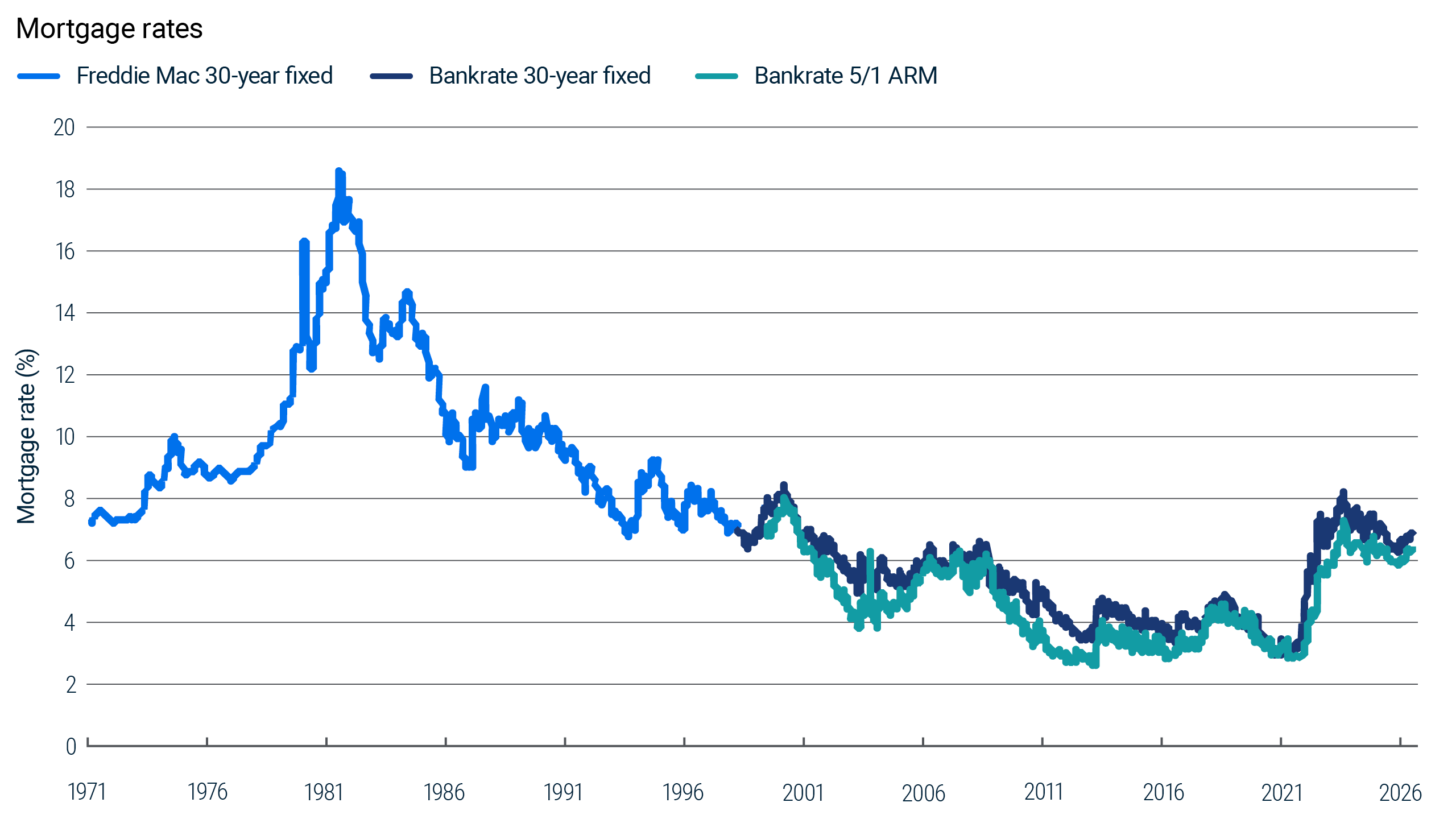
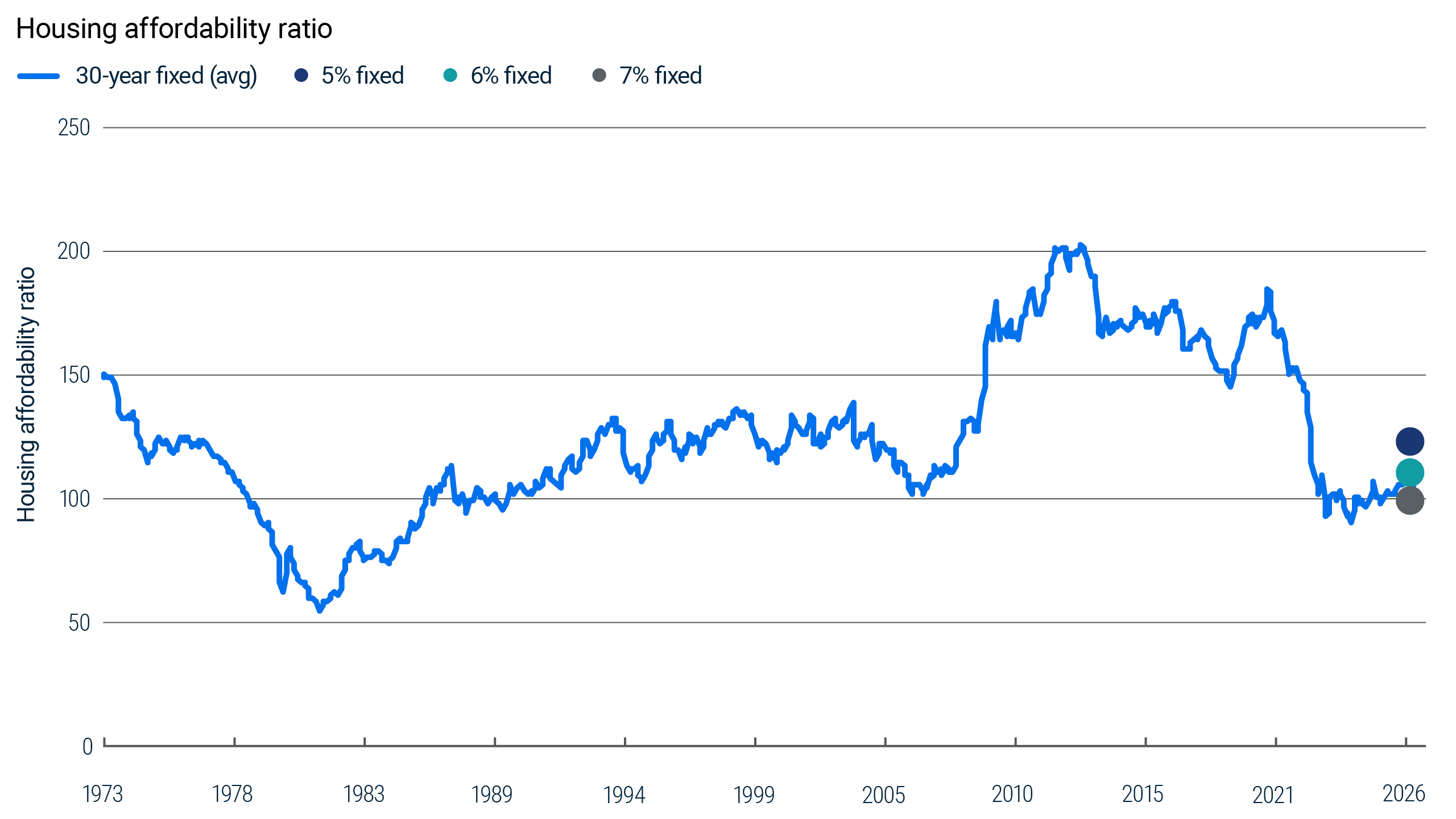
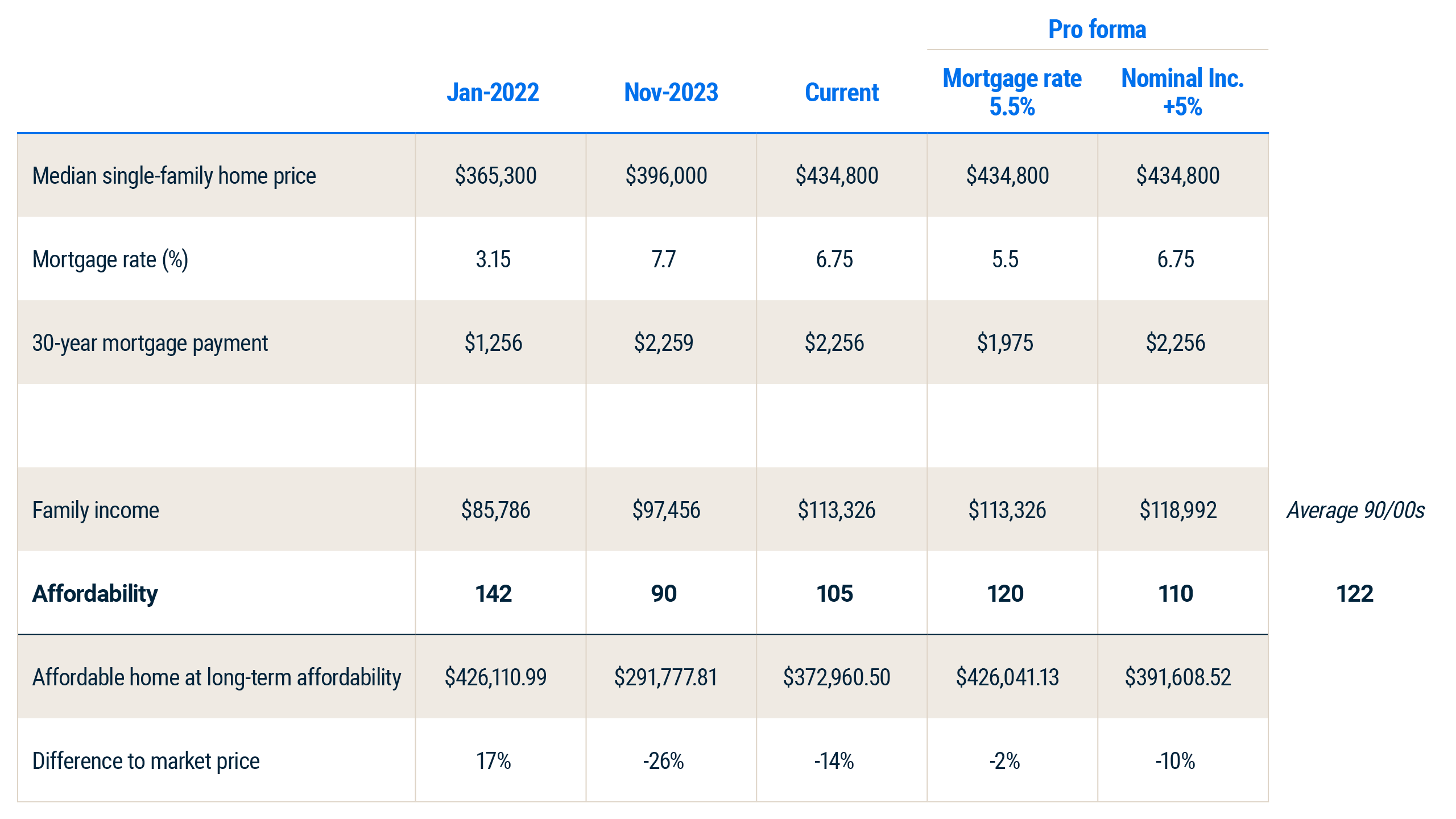
Figure 1 illustrates the rise in mortgage rates since the beginning of this decade. Figures 2 and 3 show the corresponding decrease in affordability, which is gauged by the ratio of the median family income to the income necessary to buy the median house at an 80% loan-to-value (LTV) ratio and 25% debt-to-income ratio.
Figure 1: Mortgage rates have risen since the start of the decade…
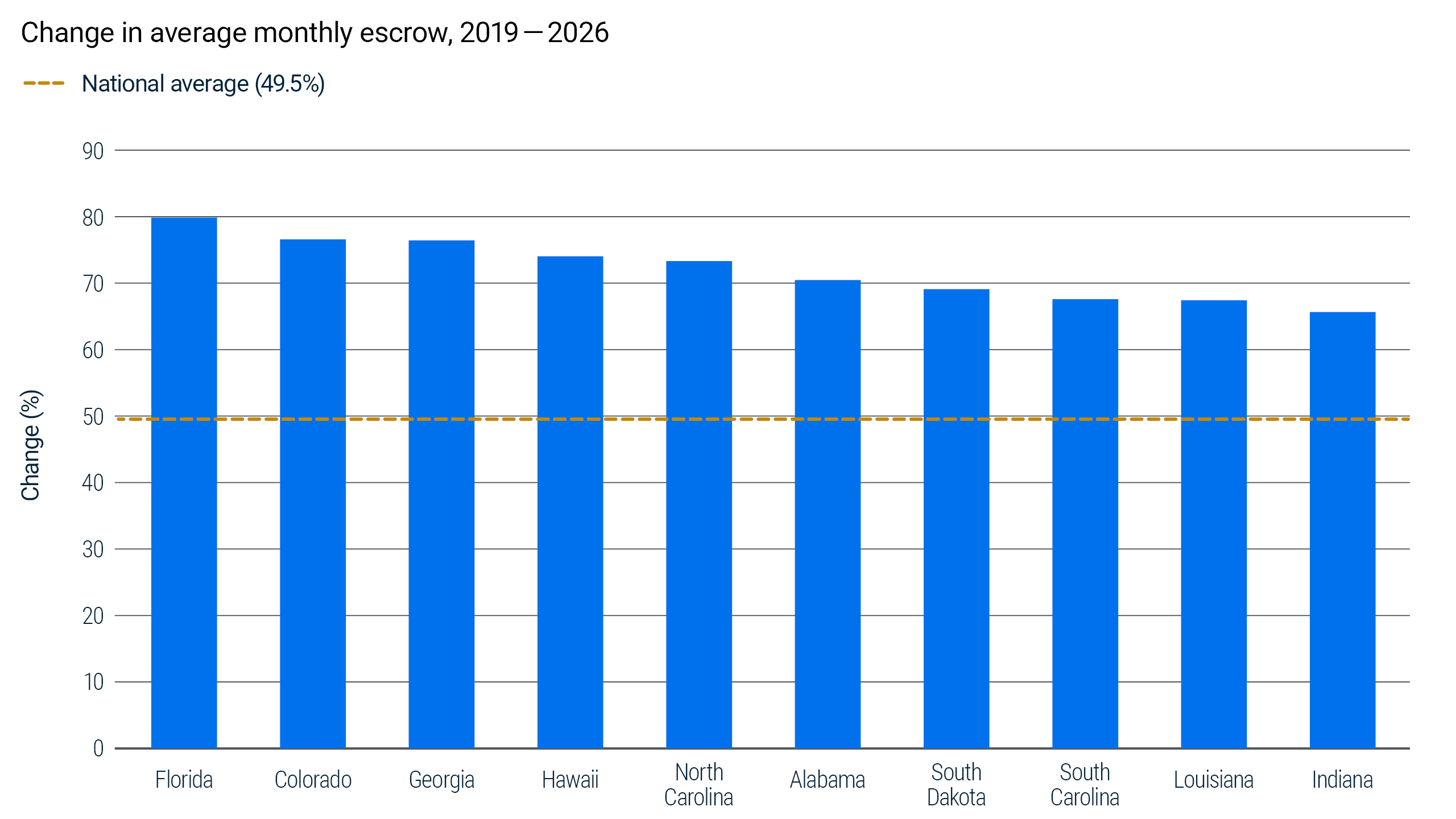
Second, carrying costs cut the other way: Taxes and insurance typically run 2% to 3% of the loan balance,Footnotei so a 50% increase in escrow-related items is worth roughly a full point on the mortgage rate. Unlike a rate move, this hits every borrower rather than only the marginal buyer. These costs are also diverging at the state level: Since 2019, average monthly escrow has risen roughly 80% in Florida, which faces elevated hurricane-related exposure, versus about 50% nationally (see Figure 4). A stabilization or decline in taxes and insurance could potentially help close the affordability gap even if mortgage rates remain elevated, since these costs directly affect the monthly payment households must carry.
Figure 4: Escrow costs have risen unevenly across U.S. states
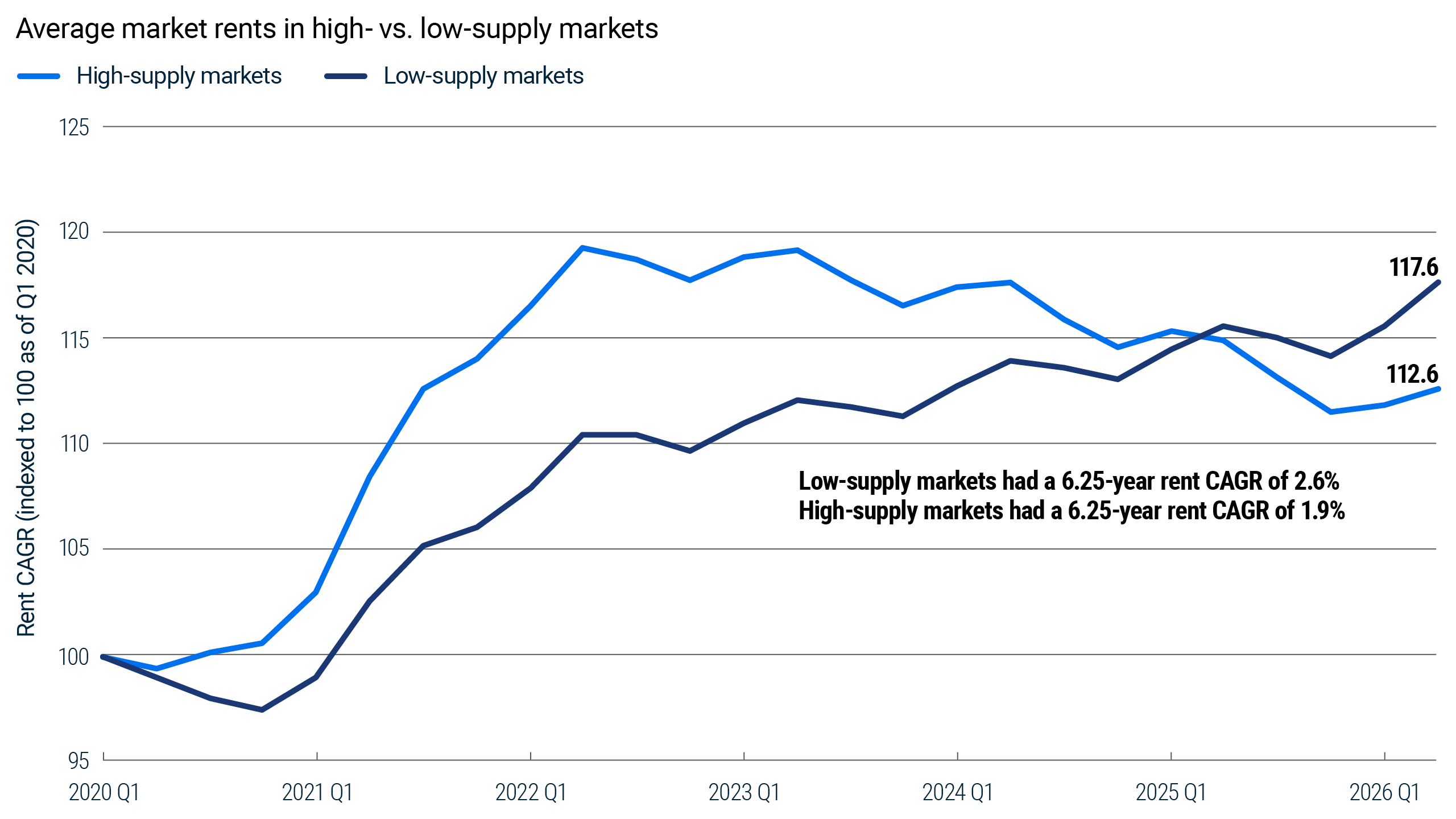
As the housing market has become more segmented, such local trends and granular data may offer greater insight than broader national averages. Geographically, pockets of inventory have emerged in areas that have accommodated more construction. For example, some areas in Texas and Florida have seen outright price declines, compounded by fast-rising insurance costs and property taxes in those same markets.Footnoteii
The West Coast, starting from a far more stretched affordability position, has been potentially the most rate-sensitive. Prices fell in Southern California and the Bay Area after the 2022 rate shock, though limited supply and difficulty adding units have since helped stabilize prices, and Bay Area prices are now picking up benefits of the AI boom. The Northeast, chronically undersupplied, has seen limited deceleration in home price appreciation.Footnoteiii
A similar dispersion shows up across borrowers. The K-shaped U.S. economy is visible in the mortgage market: Most homeowners sit on the upper arm of the K, but delinquencies are rising in the weakest segments, primarily Federal Housing Administration (FHA) loans (for more, see our 2 September Economic and Market Commentary, “How a K-Shaped Economy Affects Opportunities in Asset-Based Finance”). The scale is manageable and, with post-crisis underwriting remaining robust, in our view, we do not see a path to 2008-style contagion.
Markets that built more housing tend to have lower prices and cheaper rents. Across metro areas that added the most market-rate apartments over the past three years, rents on the most affordable Class C units fell roughly 8%. In the metro areas that built the least, those same Class C rents rose about 12% (see Figure 5). In the process, the higher-supply markets absorbed materially more demand.
Figure 5: U.S. Class C rents rise in low-supply areas, fall in high-supply areas
What could change our outlook
We believe three themes are worth watching. First, the recent increase in mortgage rates – if sustained – may further challenge affordability. Second, reform of the government-sponsored enterprises (GSEs) Fannie Mae and Freddie Mac could potentially reprice mortgage credit in either direction depending on how explicitly the government guarantee is defined (for more, see our 9 April 2026 commentary, “How Policymakers Can Lower Mortgage Costs and Increase Housing Affordability”). Third, demographics may be shifting. An aging population whose oldest cohort will move from aging in place to needing different housing, combined with a reversal in immigration, points to slower household formation and softer structural demand than the past five years implied.
What it means for investors
Housing is becoming less of a broad, market-based beta trade and more of a local underwriting exercise. We favor exposure tied to higher-income consumers and to homeowners with meaningful equity, alongside shorter-weighted-average-life, self-liquidating assets that return capital more quickly as the backdrop evolves. Seasoned mortgage credit may be attractive as years of appreciation have pulled effective LTV ratios lower, offering what we believe is meaningful downside mitigation (for more, see our 30 April 2026 video, “Financing the Everyday: A Closer Look at Mortgages”).
When we invest, we want to be paid for local fundamentals – namely inventory, carrying costs, and borrower quality – rather than for a directional view on a national index that increasingly doesn’t reflect underlying divergence.
Footnotes
- Source: Cotality, PIMCO calculations Return to content↩
- Source: Cotality Return to content↩
- Source: Cotality Return to content↩
A message from Advisor Perspectives and VettaFi: Discover something new! Click here to register for our upcoming webcasts.
Disclosures
A word about risk: Investing in the bond market is subject to risks, including market, interest rate, issuer, credit, inflation risk, and liquidity risk. The value of most bonds and bond strategies are impacted by changes in interest rates. Bonds and bond strategies with longer durations tend to be more sensitive and volatile than those with shorter durations; bond prices generally fall as interest rates rise, and low interest rate environments increase this risk. Reductions in bond counterparty capacity may contribute to decreased market liquidity and increased price volatility. Bond investments may be worth more or less than the original cost when redeemed. Mortgage- and asset-backed securities may be sensitive to changes in interest rates, subject to early repayment risk, and while generally supported by a government, government-agency or private guarantor, there is no assurance that the guarantor will meet its obligations.
Statements concerning financial market trends or portfolio strategies are based on current market conditions, which will fluctuate. There is no guarantee that these investment strategies will work under all market conditions or are appropriate for all investors and each investor should evaluate their ability to invest for the long term, especially during periods of downturn in the market. Outlook and strategies are subject to change without notice.
PIMCO as a general matter provides services to qualified institutions, financial intermediaries and institutional investors. Individual investors should contact their own financial professional to determine the most appropriate investment options for their financial situation. This material contains the opinions of manager ] and such opinions are subject to change without notice. This material has been distributed for informational purposes only and should not be considered as investment advice or a recommendation of any particular security, strategy or investment product. Information contained herein has been obtained from sources believed to be reliable, but not guaranteed. No part of this material may be reproduced in any form, or referred to in any other publication, without express written permission. PIMCO is a trademark of Allianz Asset Management of America LLC in the United States and throughout the world.
© PIMCO
More Mutual Funds Topics >