Investors are grappling with an evolving set of risks as 2026 draws to a close. The scale of the AI build-out is influencing more sectors and industries. Rising interest rates are reshaping market dynamics as inflation threats linger. We believe these conditions reinforce the rationale for maintaining a strategic allocation to defensive equities, despite recent performance challenges.
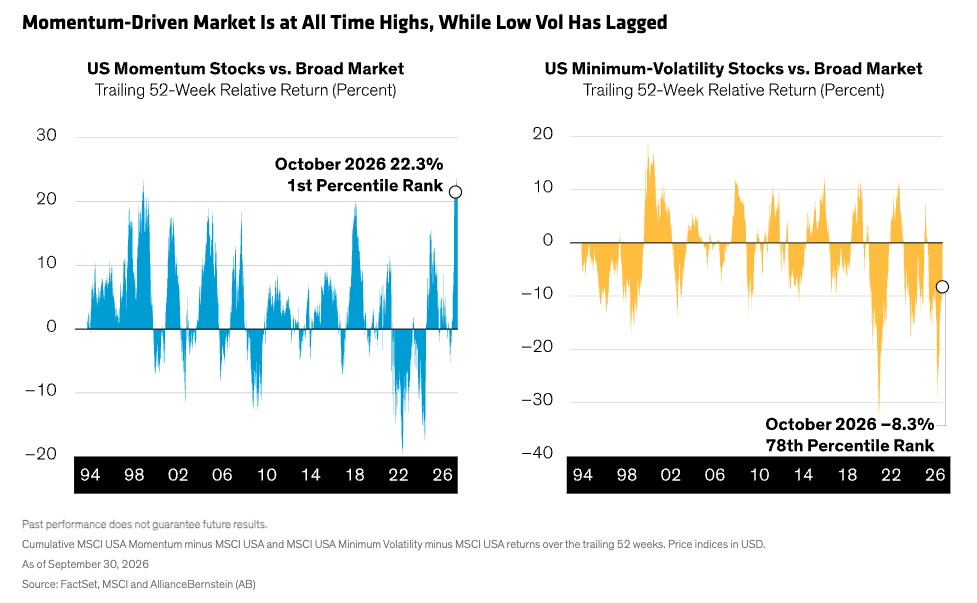
Defensive equities have struggled to keep pace in AI-driven markets. Minimum-volatility stocks have trailed the broader market (Display), which has been driven by momentum and speculative growth. As a result, many defensive equity strategies underperformed, including those that rely on high-quality stocks with resilient business models and strong cash flows to cushion market downturns while participating in up-market gains.
Despite the performance headwinds, we believe defensive stocks are still relevant. Three big risks are brewing today that may add pressure to equity returns, reviving the appeal of portfolios that reduce volatility and aim to deliver a more stable pattern of long-term returns.
See more: Cutting Back on Equities as Financial Conditions Offer Less Support
Risk 1: AI Build-Out and Financing Risks Are Growing
AI infrastructure spending is still rising, but the pace looks increasingly difficult to sustain. Our research suggests that year-over-year capex growth could decelerate sharply after peaking in 2026, even as aggregate free cash flow among major AI spenders turns negative. That shift would leave the build-out more dependent on balance sheets and external capital, raising the risks if financing costs increase or demand is slow to materialize.
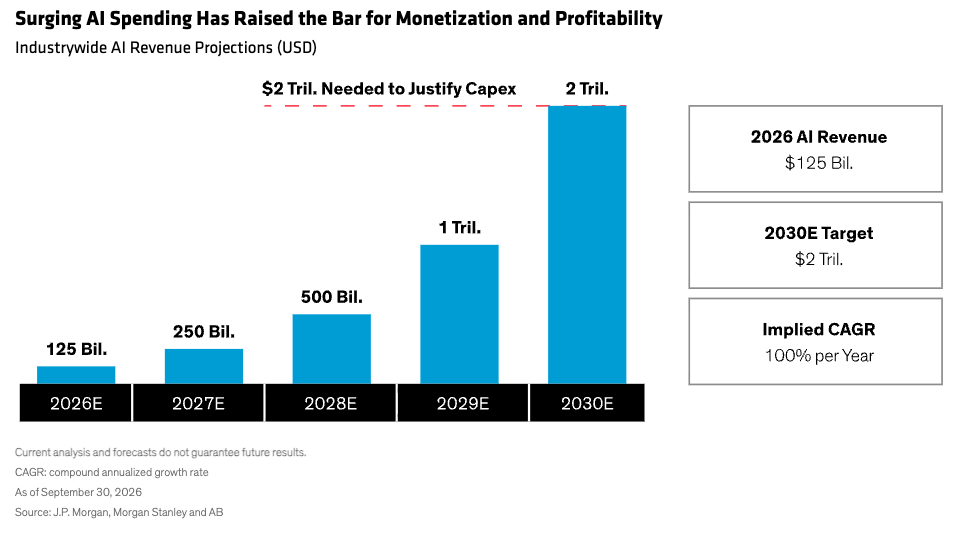
The return on that investment is also uncertain. Our research suggests that the revenue required to justify current spending plans is far greater than plausible near-term AI revenues (Display), while growing competition from open-weight models could compress pricing and redirect more of AI’s economic value toward customers. In other words, demand for AI may remain strong, but greater usage won’t necessarily translate into the revenues or returns needed to support today’s capital intensity.
AI capabilities will continue to improve. Better models will likely become more widely adopted even as returns on the capital funding the build-out come under pressure. A capex slowdown could ripple across the broad AI ecosystem, creating a stronger case for quality companies with durable cash flows, sound balance sheets and business models that don’t depend on aggressive spending continuing indefinitely. Indeed, recent volatility suggests that markets are beginning to differentiate between durable AI beneficiaries and more speculative businesses with volatile earnings and valuations. As this process plays out, we believe a focus on quality companies can help investors capture AI upside potential while mitigating AI disruption risks.
Risk 2: Rising Rates and Bond Yields
Rising rates also add risks for equities. Investors are paying closer attention to rates since the US Federal Reserve increased its policy rate in September, amid growing concern about inflation, in the first hike since the post-pandemic declining trajectory that began in mid-2023. The European Central Bank and the Bank of Japan have also tightened rates in recent months.
Higher interest rates tend to suppress broad equity returns. Companies with longer-duration cash flows tend to be more vulnerable to higher rates, which increase the discount rate used to determine the present value of future cash flows. By focusing on companies with more visible, shorter-duration cash flows, we believe investors can position a defensive portfolio to perform well in a rising rate environment.
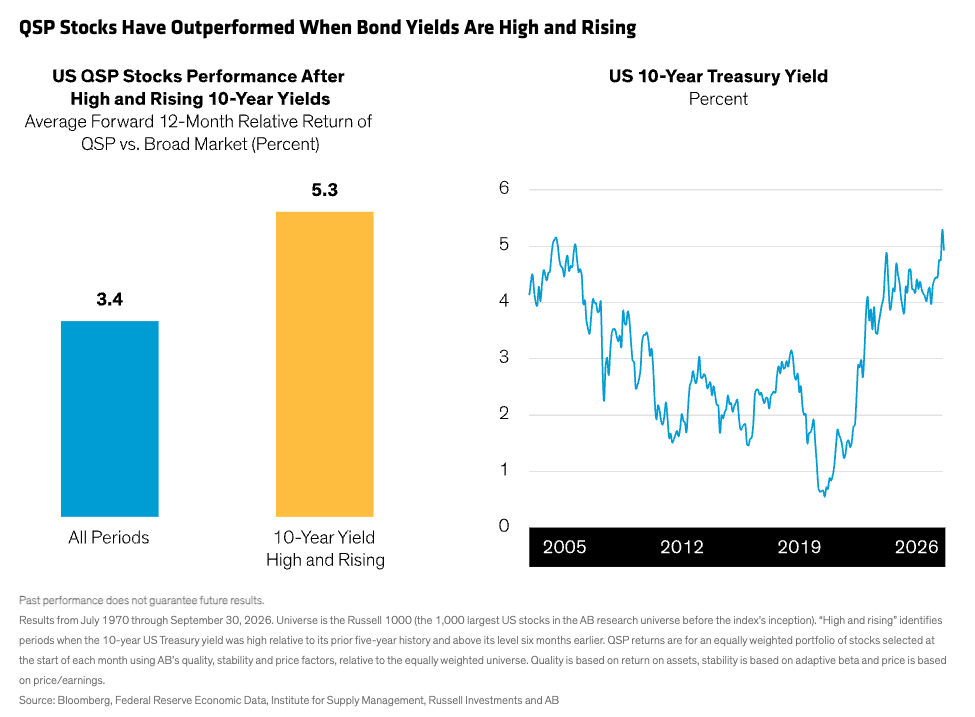
Meanwhile, more expensive financing could weaken the more speculative growth companies that have been fueled by the AI build-out, particularly those with cyclical earnings and volatile valuations. Our research suggests that stocks offering a combination of quality, stability and attractive prices (QSP) have done well after periods of high and rising Treasury yields since 1970 (Display), and are a key building block for defensive equity strategies.
Risk 3: Higher Inflation, Weaker Growth
Higher interest rates are a function of the inflation environment. Central banks have been on the alert as the Middle East conflict has dragged on, creating ongoing bottlenecks in the Strait of Hormuz, a critical waterway for oil shipments from the Persian Gulf region. Oil prices have remained elevated, adding to the uncertain environment around macroeconomic growth.
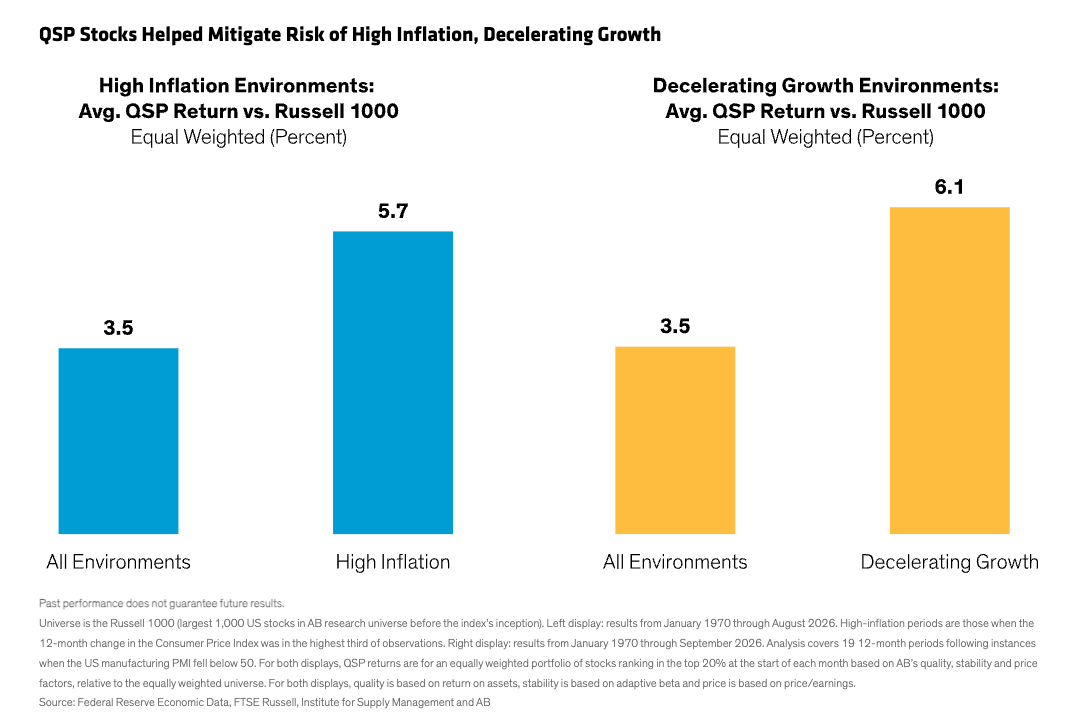
In the past, QSP stocks have also done well during periods of higher inflation and weaker growth (Display). That’s because quality businesses tend to have competitive advantages and pricing power, which provide a degree of resistance to inflation.
Judging the Defensive Trade-Off
Measured against a market led by a narrow group of AI winners, defensive equities have fallen short. But that may be the wrong benchmark for judging them. Defensive strategies that aim to capture much of the market's upside while cushioning the downside offer a trade-off that is best judged over a full cycle, rather than through the prism of an exceptionally speculative year.
As AI financing risks grow, rates rise and inflation lingers, we believe the case for that trade-off is getting stronger. And over time, we expect market returns will broaden to non-AI industries, which should provide further support recovery potential for quality stocks that have underperformed this year. In our view, investors should review their defensive allocations with a longer time horizon in mind. Quality companies with stable businesses that trade at attractive prices have historically held up well in the conditions now taking shape—and offer an attractive risk/reward profile for the market challenges ahead.
The views expressed herein do not constitute research, investment advice or trade recommendations, do not necessarily represent the views of all AB portfolio-management teams and are subject to change over time.
MSCI makes no express or implied warranties or representations, and shall have no liability whatsoever with respect to any MSCI data contained herein. The MSCI data may not be further redistributed or used as a basis for other indices or any securities or financial products. This report is not approved, reviewed or produced by MSCI.
A message from Advisor Perspectives and VettaFi: Discover something new! Click here to register for our upcoming webcasts.
© AllianceBernstein
Read more commentaries by AllianceBernstein