Managing Concentration Risk
Membership required
Membership is now required to use this feature. To learn more:
View Membership Benefits
Executive Summary
- Artificial intelligence (AI) concentration is increasing, both across the economy and in investor portfolios. Investors and policymakers are taking note. Indeed, investors are now considering how to best mitigate concentration risk without sacrificing the gains from AI, which include economy-wide productivity growth and potentially superior investment returns.
- Managing AI concentration risk in portfolios requires careful consideration of the sources of risk and their remediation. Investors should first assess concentration exposure and then consider mitigation or hedging strategies. The aim should not be to relinquish AI investment opportunities, but to participate in them prudently.
- Risk-mitigation strategies vary. They include moving away from passive index-tracking strategies to equal-weight portfolios, or to increasing exposures to companies improving operational efficiency from AI adoption. In multi-asset portfolios, US Treasuries and other higher-quality sovereign bonds can offer diversification benefits to AI-specific and growth-related equity risk, but they do not diversify inflation risk. Non-directional strategies incorporating alternative risk premia and hedge fund implementations are also diversifiers. Finally, total portfolio approaches can also redirect risk management toward desired outcomes, as well as to consideration of liquidity risk.
AI Concentration: In the Economy and Portfolios
AI is transforming the global economy and financial markets. The AI revolution is unfolding in three overlapping stages, each with different implications for economic growth, corporate profitability and investment returns: 1) transformative innovation; 2) the buildout of the AI ecosystem and; 3) the diffusion and adoption of AI across the broader economy.
The first stage has delivered extraordinary technological breakthroughs and financial returns. Semiconductor manufacturers, particularly those producing advanced processors and memory, have been the principal beneficiaries. Their innovations provide the computational foundations for increasingly sophisticated AI models and applications. Strong demand, rapid revenue growth, and dominant market positions have produced exceptional profitability, which in turn has handsomely rewarded investors.
The second stage involves the massive buildout of AI's digital and physical infrastructure. Hyperscalers, neocloud providers, data-center operators, utilities and real estate developers are committing unprecedented capital to expanding computing capacity, electricity generation and distribution, networking and other infrastructure. According to some estimates, capital expenditures required to expand the US AI infrastructure platform could top US$9 trillion over the next six years, equivalent to 3.2% of annual US gross domestic product (GDP).1 The ongoing buildout of the AI ecosystem is already a significant contributor to—and hence risk for—US real GDP growth in the second half of this decade.
The third stage—the diffusion and adoption of AI throughout the broader economy—is potentially the most economically consequential. AI applications are spreading rapidly across financial services, consulting, health care, manufacturing, robotics, logistics and transportation. Companies are deploying AI to automate tasks, improve decision-making, accelerate innovation, create efficiencies and reduce costs.
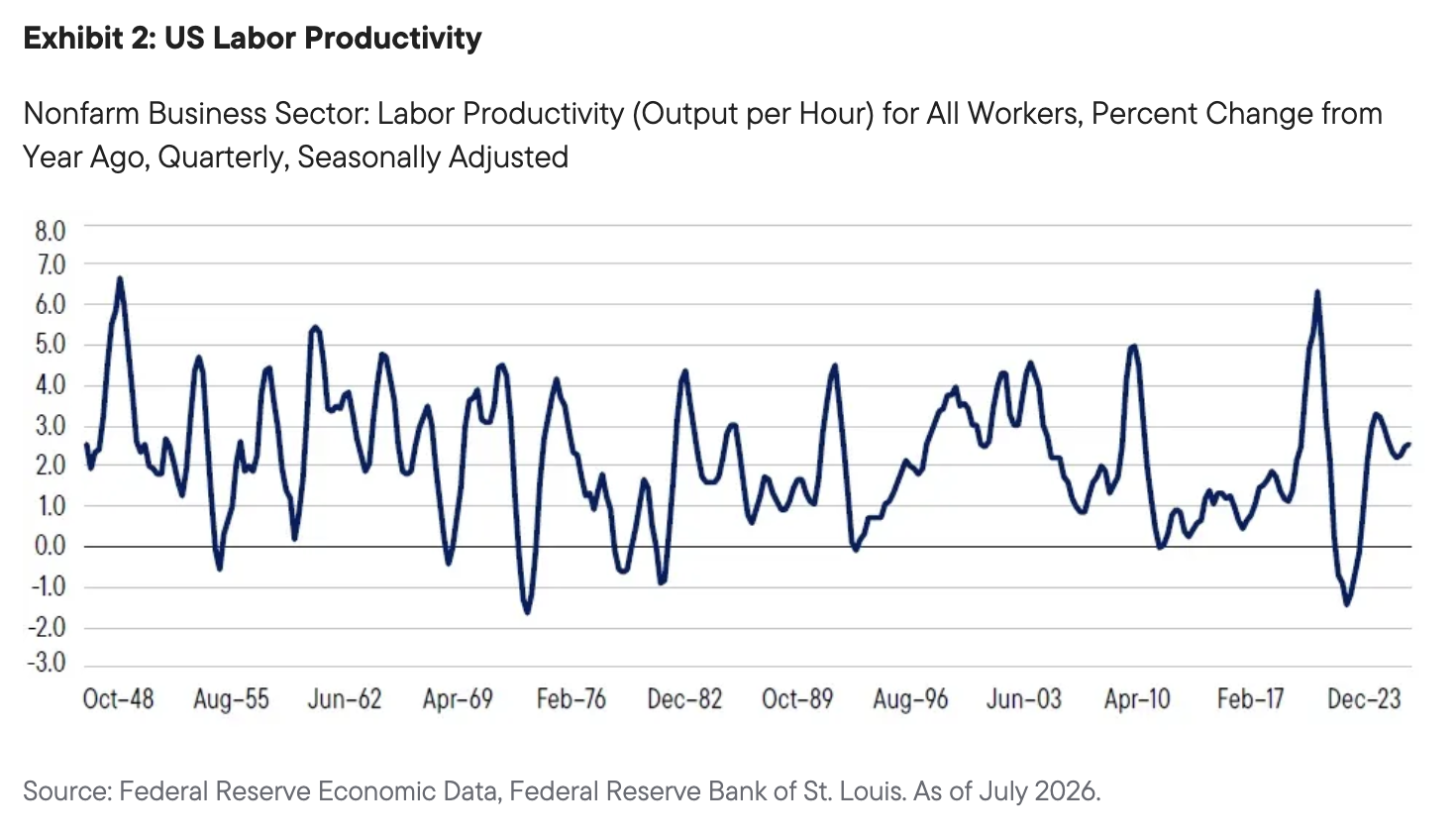
Yet the broad macroeconomic productivity benefits remain, thus far, less visible than the technological innovations and capital expenditures now underway. However, throughout history, transformative technologies have required time and complementary organizational investments before they realize their potential to deliver significant economy-wide productivity gains.
What is clear is that AI adoption rates are rising sharply, as highlighted in a recent NBER working paper.2 According to the authors’ surveys, as of mid-2026, 78% of all businesses in seven countries (the United States, United Kingdom, Germany, Australia, Canada, Mexico and South Africa) were using AI technology, up from 69% just six months earlier. And there are signs that downstream adopters are willing to pay for it. The average AI expenditure per employee in the United States, for example, is US$2,000. However, AI spending by adopters remains heavily skewed, with just 2% of all US and UK firms accounting for 50% of current AI expenditures.3
Yet as the survey also notes, productivity gains among AI adopters are thus far modest. Respondents said that AI was increasing productivity (as measured by sales per employee) at a 0.2% average annual rate, though the average respondent expects that figure to rise to a 0.6% clip over the next three years.
But that does not mean that productivity pessimism is warranted. AI is a new technology, and downstream users are only just now exploring its benefits and potential in businesses far removed from the technology sector. The lessons from history—whether steam engines, railroads, electrification, the internal combustion engine or the internet—suggest that it takes time for new technologies to transform the broader economy.
In sum, the rapid expansion of the US and global AI platform is a key source of economic vitality. Cyclically, capital expenditures, alongside resilient US consumption, have been the key drivers of global economic activity in 2026. But, as we show below, the costs of financing AI investment spending are rising, and participating companies are increasingly tapping public and private debt and equity markets, as well as intercompany lending, to finance those expenditures. Accordingly, AI concentration risk, which is typically thought of as primarily an investment topic, is also relevant for the US and global business cycle.
Accordingly, AI economic concentration risk must be a focal point for policymakers and investors alike. For example, should higher financing costs or other factors slow the build out of AI-related platforms, macroeconomic growth is apt to slow.
Therein lies, however, a key further consideration for investors exposed to AI equity and debt exposure in their portfolios. Specifically, US Treasuries, other higher-quality sovereign bonds, mortgage-backed securities, and similar investment-grade non-AI credits are likely to act as “ballast” in the event of an AI-induced cyclical slowdown in the economy.
For investors, therefore, a “barbell” of AI exposure alongside higher quality (core) fixed income holdings offers the prospect of participating in the promising returns offered by AI, but with some added diversification.
AI Concentration: Capital Markets
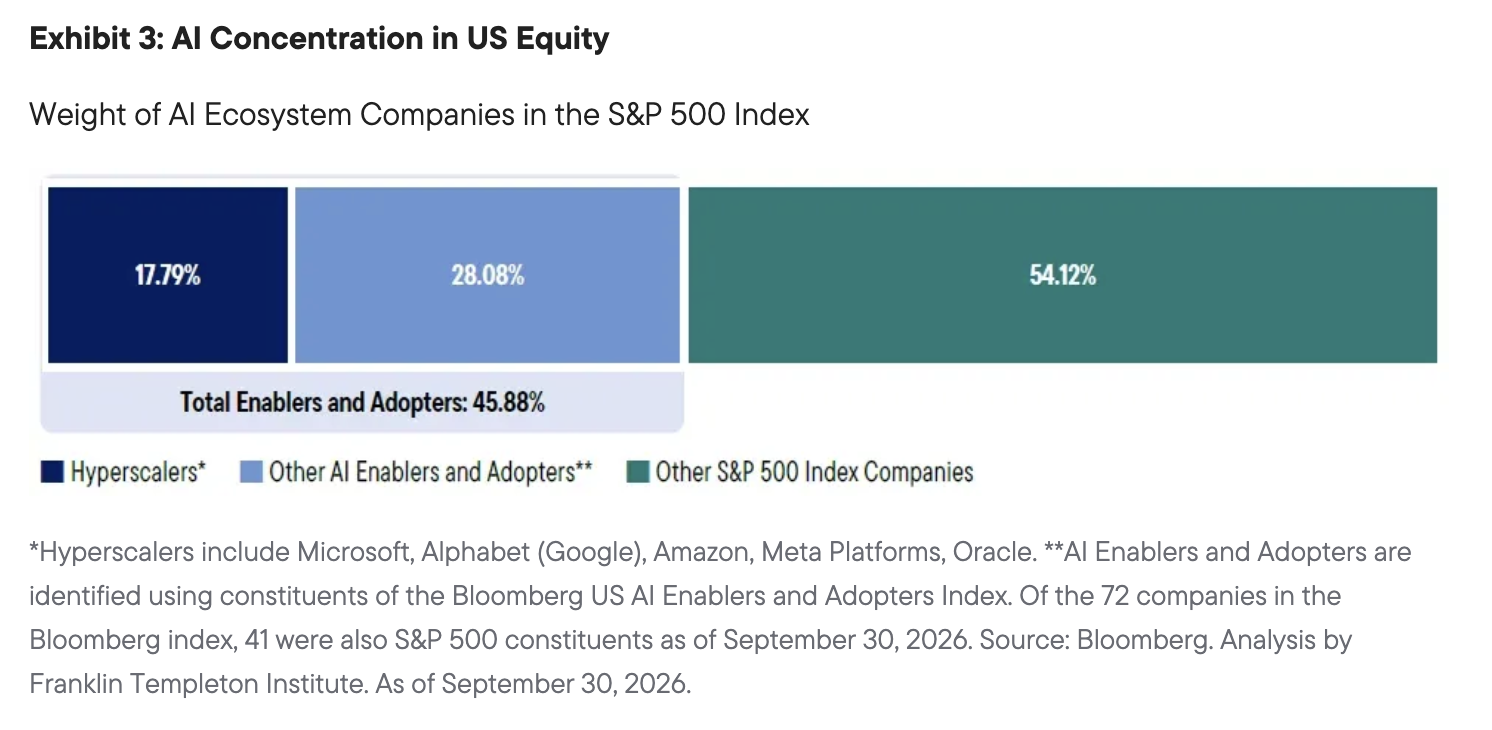
As noted, the AI revolution is creating large portfolio exposures in public and private capital markets. In US equities, for example, hyperscalers account for approximately 17.8% of S&P 500 Index market capitalization, while AI-adjacent companies represent another 28.1%. Together, these businesses comprise nearly 46% of the market capitalization of the index.
Using MSCI's AI Value Chain methodology, companies associated with AI represent approximately US$21.8 trillion, or 19% of global equity market capitalization. This includes businesses engaged in computing, semiconductor production, physical infrastructure and software applications.
Concentration can be found in other regions. Taiwan Semiconductor Manufacturing Company, Samsung Electronics, and SK Hynix collectively represent approximately 30% of the MSCI Emerging Markets Index and 36% of the MSCI Emerging Markets Asia Index. Consequently, shifting from US technology platforms toward Asian semiconductor manufacturers may simply exchange exposure from one part of the AI ecosystem to another.
Moreover, concentration is not just an equity market phenomenon. In US investment-grade and high-yield credit markets, AI-related companies have already issued approximately US$330 billion of new bonds during the first half of 2026. AI-related issuers now account for roughly 16% of the total outstanding investment-grade corporate debt.
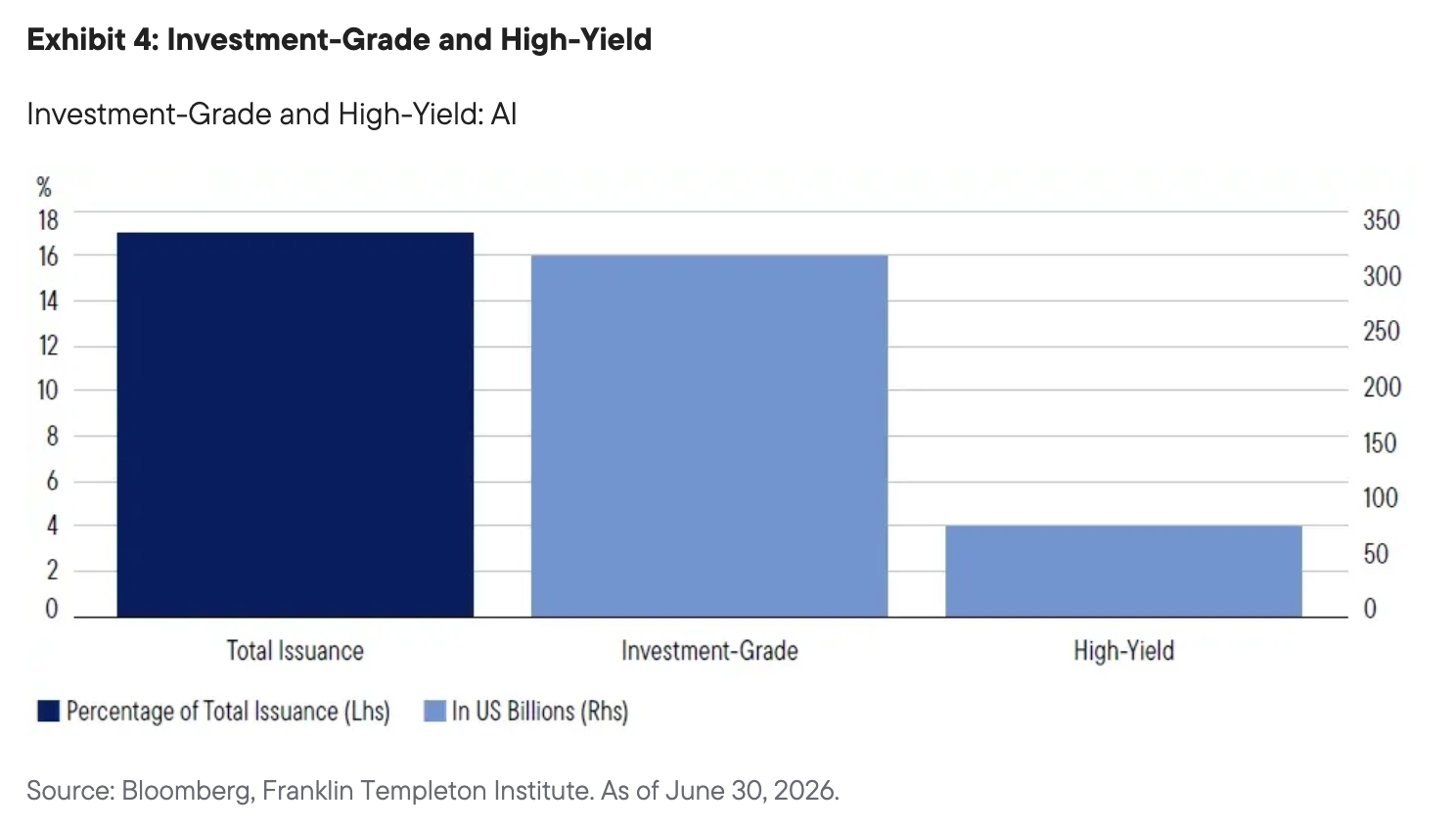
In high-yield markets, approximately US$32 billion of AI-related bonds were issued during the first half of 2026, representing roughly 40% of net new high-yield issuance. However, the use of the high-yield market by AI issuers is a relatively new phenomenon and, as a result, AI-related high-yield debt comprises only about 4% of the outstanding high-yield market (see Exhibit 4).
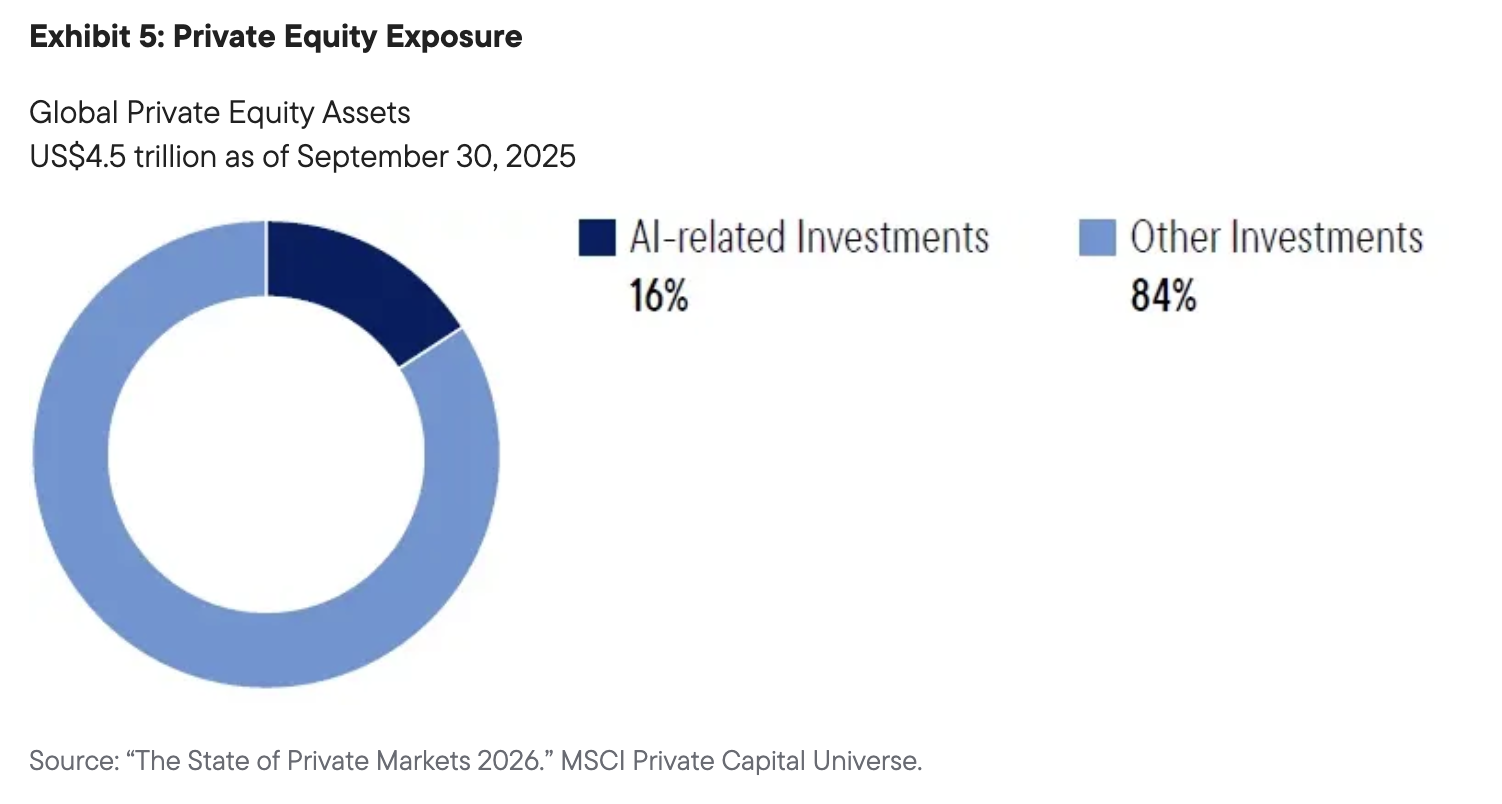
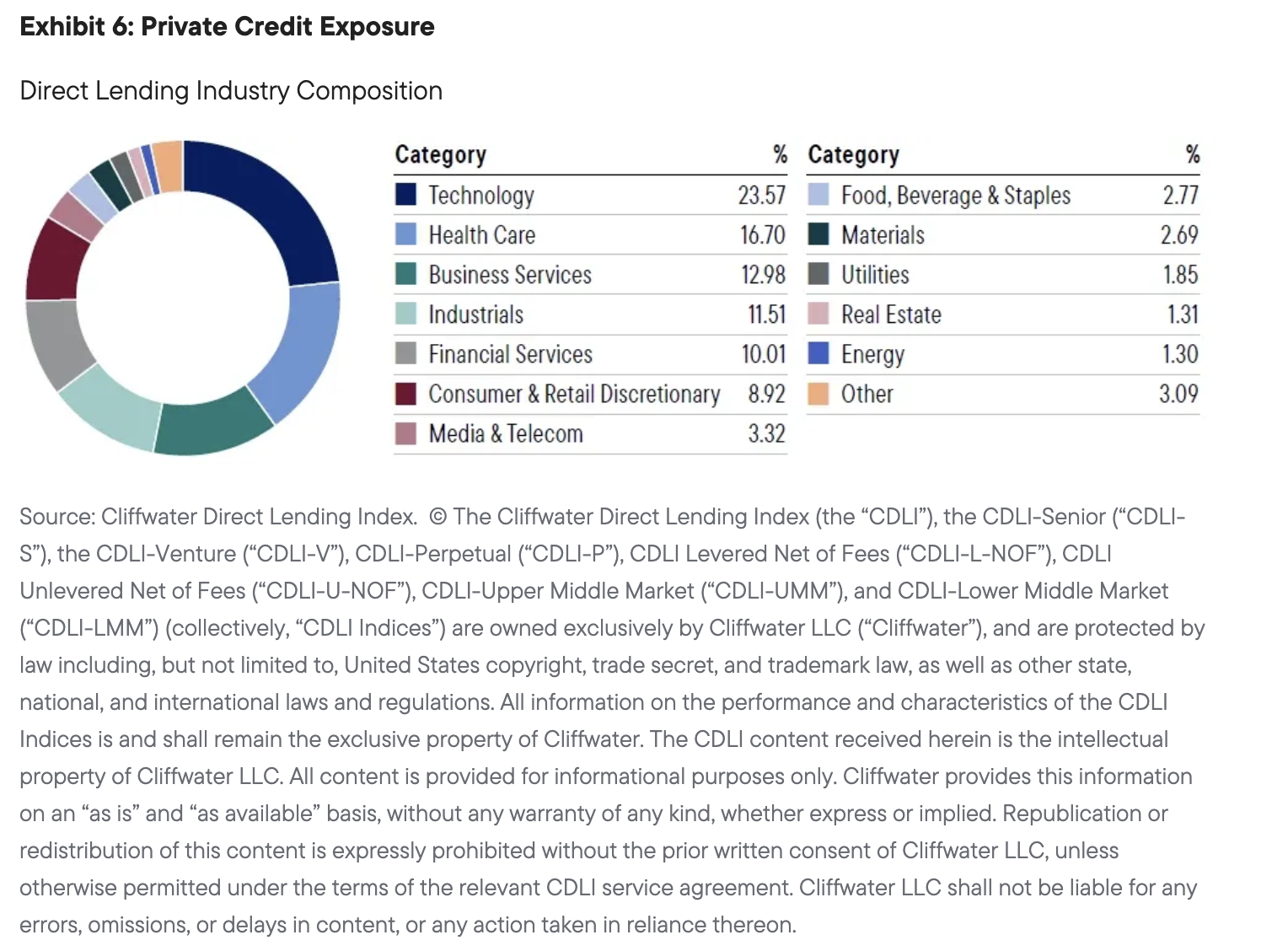
Private markets exhibit similar trends. Surging private credit AI activity means that AI-related companies now account for approximately a quarter of all direct lending. In private equity terms, over 15% of total private equity investments are in the AI space (See Exhibits 5 and 6).
These developments across public and private markets reflect the extraordinary financing requirements of the AI infrastructure boom, as well as perceptions of the high returns that are on offer. In terms of the borrowing surge, massive AI-related capital expenditures are reducing free cash flow, even among the most profitable players, which pushes financing toward increased borrowing demand.
The net result is that investors may be exposed to similar or overlapping exposures to the same AI “ecosystem” via combined holdings across public equities, investment-grade bonds, high-yield credit, private equity, private credit and infrastructure.
Concentration: Source of Returns and Risk
Importantly, rising concentration is not necessarily evidence of excessive speculation. It fundamentally reflects exceptional investment performance driven by transformative technology, as well as expectations of further such gains in the future.
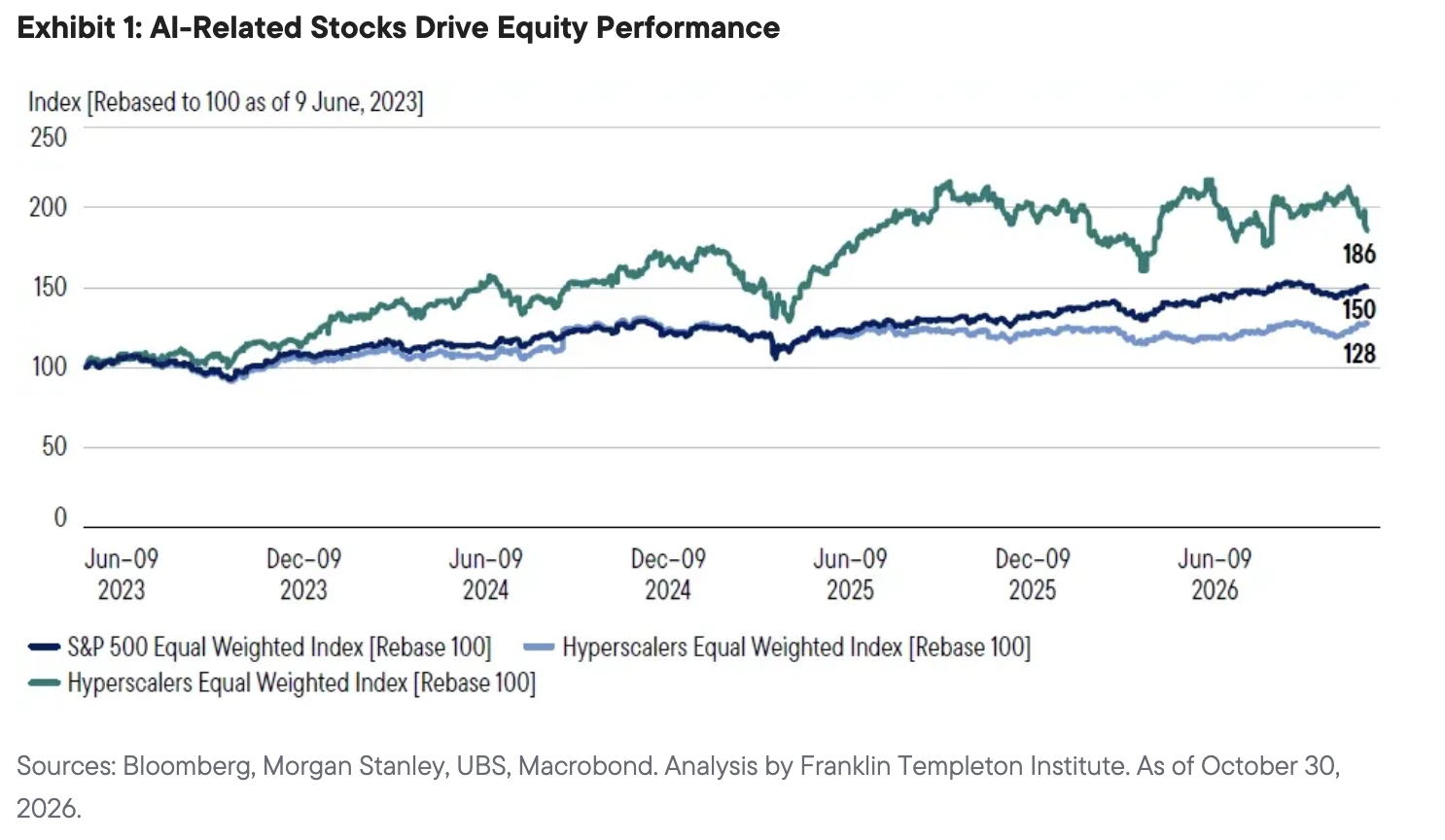
Over the past three years, hyperscalers have substantially outperformed both the capitalization-weighted S&P 500 and, by an even greater margin, its equal-weighted counterpart. Although accompanied by higher volatility, AI-related equities have contributed significantly to risk-adjusted portfolio returns.
AI-concentration is therefore simultaneously a consequence of prior investment success, expectations of durable high returns, and a potential source of vulnerability. Seeing it one dimensionally as “risk” would erroneously imply the need to reduce exposures indiscriminately, which would likely sacrifice returns from one of the most significant innovations in modern history.
Still, two things can be true at the same time. Concentration creates vulnerabilities when companies across seemingly different industries depend on common economic drivers. Semiconductor revenues depend on hyperscaler capital expenditures; data-center profitability depends on computing demand; and ultimately, computing demand depends on whether AI applications generate sufficient economic value among downstream users.
There are, however, signs that investors are perceptive to the challenges posed by the rapid growth of the AI field and the increasing reliance on borrowing to finance capital expenditures. That outcome suggests some wariness may also be emerging around concentration risk in portfolios, which implies the need for additional return via higher risk premiums.
For example, credit markets are already differentiating among borrowers. Highly leveraged neocloud companies have experienced sharp increases in financing costs as investors reassess leverage, cash-flow visibility, and refinancing risks. Even more creditworthy AI-related borrowers have experienced modest spread widening.
A central question is whether the returns on AI investment will continue to exceed the cost of capital, both because of higher risk premiums demanded by investors and because of the overall increase in global real interest rates now underway. Under these circumstances, the aggregate success of AI cannot assure attractive returns for every company financing its development, nor for every manner of exposure undertaken by investors.
Managing Concentration Risk and Enhancing Diversification
For investors, the critical point is to recognize that different risks require different mitigation strategies. Reducing concentration, which is one option, will also reduce opportunities to profit from high returns. Diversification requires recognition that correlations shift according to the nature of risk and of the shocks that periodically impact markets. Finally, hedging protects against specific adverse outcomes but may not protect overall exposures or safeguard against all risks.
When considering diversification, it can be useful to consider alternative scenarios and how they might impact cross-asset correlations.
For example, as demonstrated in 2022, an unexpected inflation surge can simultaneously depress equity and bond prices. Higher nominal yields reduce bond valuations and more heavily discount the present value of expected future earnings. Under those circumstances the “received wisdom" that bonds can diversify equity and credit risk is incorrect.
Alternatively, rising real interest rates, which will negatively impact nominal bond returns, need not imply poor equity returns. If higher real yields reflect faster productivity growth, stronger trend GDP growth, and improving profitability, equities could perform extremely well even as bond prices decline. However, if rising real interest rates instead mostly reflect a scarcity of capital caused by large fiscal deficits that “crowd out” private sector borrowing, returns in stock and bonds could eventually suffer.
In a third scenario, weakening growth, recession risks, or disappointment surrounding AI investment returns could restore the diversification benefits of high-quality government and non-AI corporate bonds. In particular, the starting point today of more elevated bond yields offers income protection, while declining yields during an economic downturn can generate capital gains that can offset equity losses.
In short, diversification depends on the state of the world. Different risks imply different correlations. Importantly, however, the rising weight of AI-related companies in equity indexes does not, per se, change the diversification relationship between equities and bonds. Put differently, greater AI concentration does not automatically undermine balanced portfolio construction where that approach otherwise makes sense.
Beyond diversification, investors should also consider other complementary approaches to concentration risk management.
For example, passive index-tracking equity holdings have experienced an increase in AI concentration. To reduce such exposures, investors can consider shifting to equal-weighted strategies. Or they can actively select companies that are likely to be downstream beneficiaries of AI adoption. Such businesses may achieve efficiency and profitability gains from AI adoption, but without the equity or debt exposure of AI technology and infrastructure sectors.
Credit portfolios, meanwhile, can be reallocated to styles that emphasize balance-sheet strength, sustainable cash flows, manageable refinancing requirements, and appropriate duration. Higher-quality issuers may also prove more resilient to higher interest rates. Select local currency emerging debt markets (e.g., in Latin America) also offer the prospect of high real yields, underpinned by economic fundamentals not closely linked to the AI story.
Non-directional strategies are also complementary to AI holdings. Examples include alternative risk premium or hedge fund strategies, that derive their returns from spreads and manager expertise (”alpha”) that, by design, is not linked to the ups and downs of broader stock and bond markets.
Lastly, investors should consider the merits of total portfolio approaches (TPA) to overall risk management. The TPA framework extends beyond traditional considerations of risk and return, to incorporate liquidity needs, which are becoming more important as less-liquid assets garner larger shares of investor holdings. TPA analysis also focuses on overlapping exposure by emphasizing detection of common issuers, counterparties, technologies, and economic dependencies rather than assuming different asset classes automatically provide diversification.
Conclusions
The AI revolution is progressing from technological innovation through infrastructure investment toward economy-wide adoption. The first stage has delivered exceptional returns; the second has generated unprecedented capital expenditures. The third will determine whether AI produces a sustained acceleration in productivity and economic growth.
Given the extraordinary buildout of the AI infrastructure platform, the global economy both benefits and is at risk from AI capital expenditure growth. Should those growth rates falter for any reason, higher-quality bonds and other credits can offer diversification to the cyclical risk posed by booming AI expenditures.
AI concentration is increasing across equity, credit and private markets. That concentration reflects genuine investment success but also creates shared vulnerabilities to financing costs, technological change, and disappointing future returns.
Within portfolios the appropriate response to growing AI concentration is not to abandon AI-related investments. Rather, it is to manage their risks through broader sources of equity earnings growth, disciplined credit selection, higher-yielding emerging market debt, non-directional strategies, and integrated portfolio analysis that delivers diversification tailored to investor needs and robust to economic and market shocks.
Lawrence Hatheway, Head of Research
Christy Tan, Managing Director
A message from Advisor Perspectives and VettaFi: Discover something new! Click here to register for our upcoming webcasts.
Membership required
Membership is now required to use this feature. To learn more:
View Membership Benefits