There is also a popular notion that bond traders can see the future, that they know what inflation will be or if a recession is coming. But bond markets are often wrong. And they may be wrong now because bond yields are low relative to the risks the economy faces.
It may be a cliche to invoke the pick-and-shovel sellers of the California Gold Rush, but what better way is there to frame what’s happening to Apple Inc.?
Alphabet Inc. is selling its biggest-ever euro-denominated bond and tapping the Canadian dollar debt market just months after record-breaking deals in other currencies, showing the huge funding needs of its ambitions in artificial intelligence.
When it comes to investing, it’s the Wild West out there. Our clients are hearing things from less scrupulous members of the financial services industry that appear true on the surface but are really aimed at separating people from their money.
The same forces that are straining the political marriage across the Atlantic are also creating a long‑term opportunity set in Europe. Advisors should position clients’ capital so that it benefits from that structural shift, while staying disciplined about quality, valuation, and risk.
The poor sentiment toward private credit funds has dragged down many high-quality BDCs, as well as weaker ones. The chaos and bad press surrounding private credit funds are not reasons to avoid BDCs. In fact, we think it’s a reason to consider them.
As the first-quarter reporting season winds down, companies are emerging from an earnings-related blackout. About 40% of corporates are currently in the so-called open buyback window, which is expected to remain open until June 12, according to Goldman Sachs’s buyback desk.
US transportation stocks plunged Monday morning after Amazon.com Inc. announced expanded logistics offerings that will turn it into a major competitor for parcel carriers and air freight companies, and also impact truckers and third-party brokers.
The world’s biggest technology companies posted strong earnings last week, showing that the artificial intelligence boom is alive and well. But in the stock market, investors are getting more granular as they try to divvy up the winners and losers in the AI trade.
The part of the bond ETF complex that’s growing fastest isn’t that part. It’s the active and outcome-oriented funds — multisector strategies, flexible income vehicles, securitized credit funds, options-overlay products — that charge 0.30 to 1 percentage point and promise more yield, less duration, or both. And the marketing pitch behind them quietly elides something important.
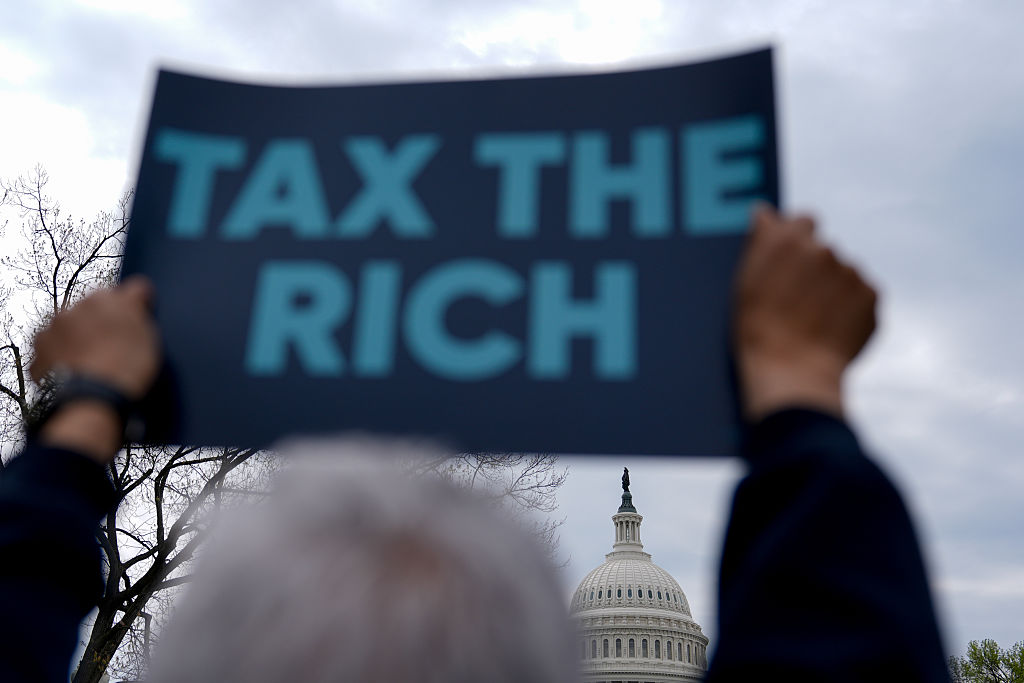
It’s happening. California looks likely to put a “one-time” tax of 5% on wealth above $1 billion on the ballot in November, and polls suggest it could pass — despite opposition from some economists (not so surprising) and Democratic politicians (more so).
One of private equity’s biggest challenges right now is getting money back to investors. Advent and Cinven have just made a small dent in the industry’s mountain of unsold assets by agreeing the sale of TK Elevator to Finland’s Kone Oyj.
Streamlining the rules is undoubtedly appealing. The new proposal would do this, in part, by allowing the largest banks to use one method to calculate the risk of their assets instead of two, as currently required. That makes sense as far as it goes. Yet other requirements — including leverage ratios and certain capital surcharges — are being loosened or otherwise made more bank-friendly at the same time.
Artificial intelligence might be the most transformative technology ever devised. Exactly how its effects will work through the economy is impossible to say, but serious disruption of one kind or another seems likely. Millions of jobs — in the end, maybe most jobs — could radically change, and many will disappear entirely.
The Pentagon has struck agreements with four more technology companies for expanded use of advanced artificial intelligence tools on classified military networks, according to a Defense Department statement and two defense officials briefed on the matter.
President Donald Trump will sign an executive order aimed at expanding access to retirement plans for workers whose employers don’t offer that benefit, according to a White House official, a bid to refocus the administration’s messaging on economic issues.
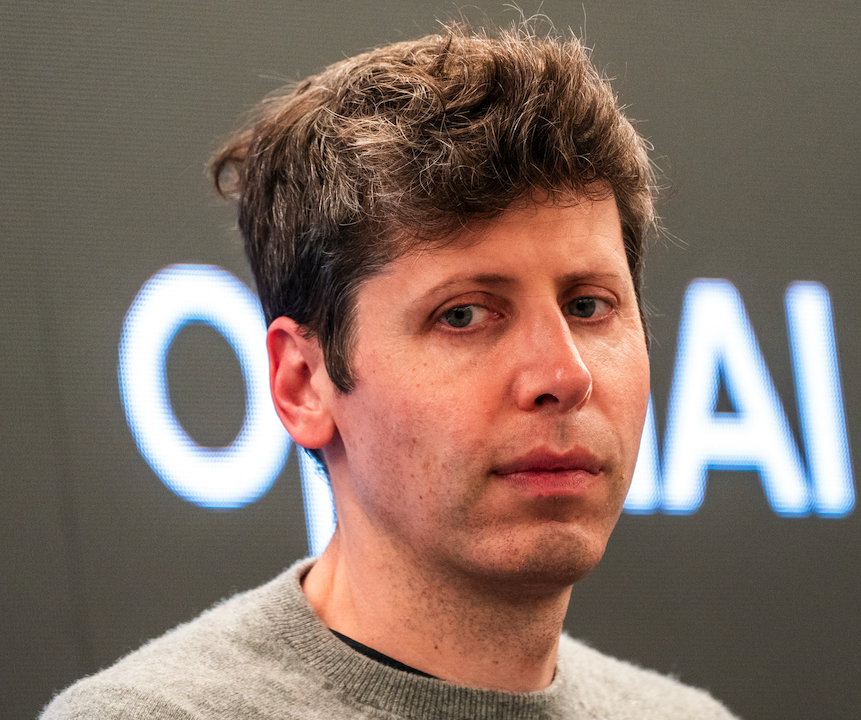
The OpenAI bubble was inflated thanks to the company’s first-mover advantage from the almost accidental success of ChatGPT. That launch, OpenAI’s first huge viral moment, made it the fastest-growing consumer tech product in history — 100 million users within two months. Extraordinary sums of venture capital followed, and the company is now worth $852 billion. Quickly placed on its shoulders was the fate of the industry.
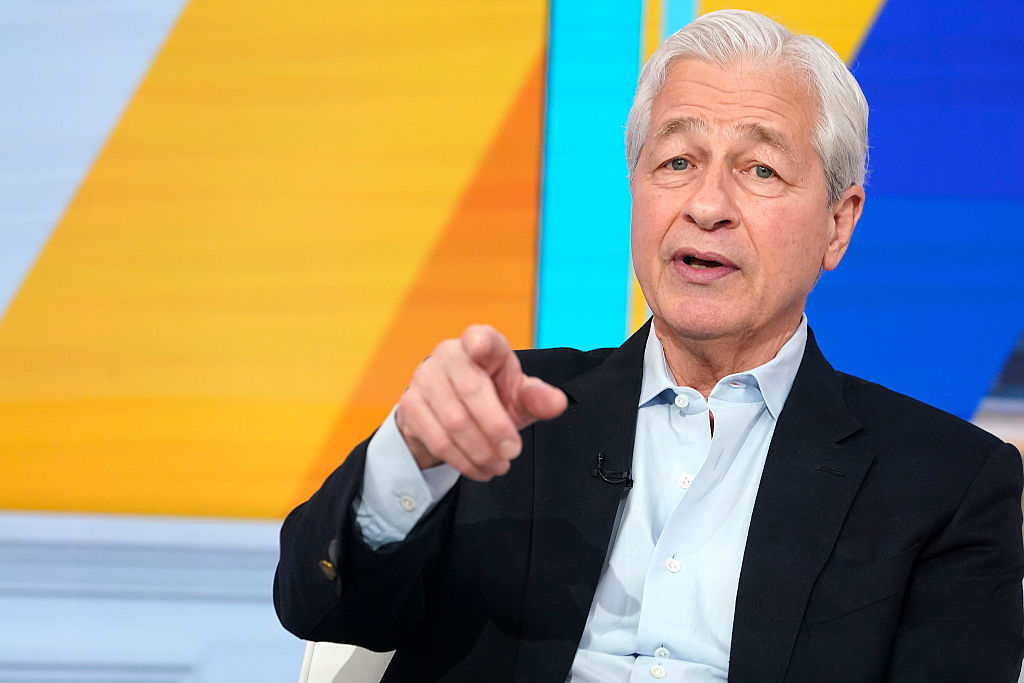
When Jamie Dimon turned to competitive threats in his shareholder letter this year, the chief executive officer of JPMorgan Chase & Co. did something unusual: He named some. Citadel Securities LLC and Revolut Ltd. were two of the firms Dimon picked out.
Eli Lilly & Co. surprised Wall Street by raising its annual sales and profit forecast, as demand for obesity medications soared and thousands of patients started taking its new weight-loss pill before advertising for the drug had even begun.
The AI hyperscalers are lumped together for obvious reasons, but after the four largest reported their earnings on Wednesday night, it became abundantly clear that one of these big-spending giants is not like the others.
Days before his first annual meeting as the chief executive officer of Berkshire Hathaway Inc., Greg Abel is facing a problem that seldom confronted his legendary predecessor: a floundering stock price.
Applications for US unemployment benefits plunged to the lowest level in decades, a sign that job-cut announcements have not yet meaningfully translated into layoffs.
Inflation-adjusted gross domestic product increased an annualized 2% in the first quarter after the longest-ever federal government shutdown limited growth in the closing months of 2025, according to an initial estimate issued Thursday by the Bureau of Economic Analysis.
Meta Platforms Inc. is looking to sell between $20 billion and $25 billion of investment-grade bonds, according to people with knowledge of the transaction, as the Facebook parent boosts spending on infrastructure for the artificial intelligence boom.
The stakes for OpenAI are existential at worst and a serious burden at best as it seeks to go public. In preparation, the company has taken spring cleaning to the next level — embarking on a culling of “side quests” like the video creator Sora, ending some science research and even putting on hold its plans for an erotic version of ChatGPT.
So the question is not whether innovation can drive growth. It’s how much growth innovation can drive. The falling population and heavy debt load mean productivity will need to increase GDP by at least 2.5%, maybe 3% depending on the path of interest rates.
In a choppy year for tech investors, one trade has stood out as a success: buy chip stocks, sell software shares. And the divide between winners and losers is getting bigger as 2026 moves along.
For many high-performing advisory teams, the challenge has never been ambition or capability. The missing ingredient has simply been an operational structure designed to support the level of success they have already surpassed. High-performing teams that tap into this reality strengthen firms from the top down and deliver exceptional service with the systems required to sustain it.
Offloading certain tasks to AI can be appealing, especially for solo advisors (or those operating with a lean team). Used effectively, it can be a time and energy-saver. But as you’re likely aware, AI tools are not perfect — they also tend to produce repetitive, generalized content that may not always resonate with your target audience.
If you read my column, you know I am a proponent of following the SHIFT format. First, get the team together to identify who you want to be as a team and what success looks like to you. Make sure everyone is headed toward the same outcome and cares about the same goals.
For much of the past few years, US Treasuries have failed to serve their traditional role as a sure-fire refuge from global market meltdowns.
Hyperliquid, the decentralized crypto exchange that has emerged as one of the most active trading venues in digital assets, is proposing to add prediction markets to its platform — a direct challenge to Kalshi and Polymarket as the fast-growing sector draws new competitors.
Hedge fund manager turned NBA owner Gabe Plotkin, who shut his firm after a bruising showdown with meme-stock traders, is planning to convert some of his own assets into an ETF using a tactic that’s helped a slew of wealthy investors defer tax.
A few weeks ago, I sat down at my laptop and built a trading platform. It connects to three financial exchanges. It ingests news from RSS feeds, web searches, Reddit and Twitter.
If venture capital investment is a measure of the economic future, California would seem to have locked things up. In the first quarter of this year — by far the biggest quarter for US VC investment ever — an unheard-of 85% of the money went to California companies, according to the PitchBook-NVCA Venture Monitor. For all of 2025, California’s share was an also-unprecedented 60%.
If you have an aging parent whose bills are starting to be neglected, or a client who needs more hands-on financial oversight than a planner provides, you might consider hiring a daily money manager. The American Association of Daily Money Managers can help you find someone in your area.
Every year, hundreds of thousands of life insurance policies lapse or are surrendered for cash. The policyholders walk away with whatever the carrier offers. Their advisors sign off. Their attorneys see nothing. And nobody asks the obvious question. Could this policy have sold for more?
No one likes that heart-drop feeling of missing an important detail. And yet, this happens all too often when it comes to healthcare planning. Healthcare and health insurance are complex topics. Without an expert or the right resources, it can be very difficult for financial advisors to do on their own.
Technology megacaps are pushing benchmark indexes to new records while the rest of the market is lagging behind. Traders can be forgiven for feeling like they’ve seen this movie before.
BlackRock Inc. is bringing its roughly $2.5 billion money market fund to cryptocurrency exchange operator OKX, with Standard Chartered Plc holding the underlying assets — the latest sign that Wall Street infrastructure and digital-asset markets are converging.
European stocks started the year much stronger than their US peers but the tantalizing prospect of the euro area clawing back some of its persistent gap in earnings growth, and the higher company valuations that come with it, looks to have slipped through its grasp again.
The chip industry seems to be the only game in town lately. The Philadelphia Semiconductor Index, known as the SOX, has risen 48% this year. Bourses in Taiwan, South Korea and Japan are riding the wave and hitting record highs, brushing away potential energy shocks from the military conflict over Iran.
Cook has spent 15 years focused on the King — the thousands of decisions about industrial design, manufacturing, and supply chains that make the iPhone an iPhone. Racing in AI would have meant counting pieces while leaving the King unguarded. Ballmer counted pieces, and it cost Microsoft $5.5 billion.
Many people seem surprised by the US stock market’s resilience during the Iran war. I’m not one of them, and I don’t see the war becoming a significant threat to the market, even if it drags on.
You don’t have to agree with Chater and Loewenstein’s “crowding-out” hypothesis or their policy prescriptions to benefit from It’s on You, which will, at a minimum, allow the reader to identify and deconstruct i-frame PR when they come across it.
With a better understanding of the derivatives and leverage that led to the GFC, we now explore private credit — a small “niche” financial sector, such as subprime mortgages — which is being called the next match to light a financial bonfire.
It’s tax season, and we’ve been reading a lot about taxes — and strategies for mitigating them. In this note, we’ll take a close look at one such strategy, known as leveraged long/short direct index tax-loss harvesting (LSDI), and explain how investors being pitched the strategy can assess whether it’s right for them.
If the first quarter of 2026 taught us anything, it's that markets are dynamic and that the factors shaping them extend well beyond corporate fundamentals. The road ahead presents a wider range of outcomes than investors have faced in some time. The outlook remains fluid and highly dependent on how several key factors evolve.
The world’s most important central banks will potentially hand investors fresh reasons to sell government bonds this week as policymakers find themselves forced to confront the risk of a war-driven inflation shock.
On Monday, the index returned to record highs, eclipsing the previous peak hit before the war started in Iran. Yet, when compared with the US market, emerging-market shares screen as cheaper than at the start of the war, reinforcing the case for investors to add exposure.