Alphabet Inc.’s Google is moving ahead with plans for a major data center in Michigan that features a 20-year electricity contract requiring it to cover the full expense of adding a haul of new clean power.
Gold sank for a seventh session as the escalating war in the Middle East drove oil prices higher and reduced prospects for a US interest-rate cut in the near term. Silver slumped more than 10%.
Japan’s equity investors will closely watch a meeting between President Donald Trump and Prime Minister Sanae Takaichi in Washington on Thursday for possible agreements on economic and military cooperation.
JPMorgan Asset Management is issuing its first Taiwan-focused wealth management product in more than a decade, joining global rivals rushing into one of Asia’s hottest exchange-traded funds markets.
Now that investors are aware of withdrawal limits, they’ll have a greater incentive to always ask for the maximum, requiring further asset sales that will depress returns — which, in turn, will encourage more withdrawals.
Federal Reserve officials left interest rates unchanged and continued to expect one rate cut this year as they acknowledged increased uncertainty due to war in the Middle East.
The advisors who build the strongest client relationships aren't necessarily the ones with the most resources. They're the ones who help clients feel the value of those resources consistently. You have more to offer your clients than you're probably telling them. Be bold. Tell the story.
If someone has deeply entrenched views — either to the right or to the left — they are not likely to change their minds because they listened to you. You could definitely offer some education here by talking about the long-term impacts of this war.
What moves clients — what really motivates them — is insight. Insight into their fears, their hopes, their priorities. Numbers are important. Reports are necessary. But insight is where you create impact. Insight is what turns hesitation into action, anxiety into confidence, and confusion into clarity.
The European Union has unveiled a red-tape-cutting plan dubbed “EU Inc.” to boost the emergence of companies that could compete on the world stage with US and Chinese rivals.
There’s been no love lost between builders and buyers in the entry-level housing market over the past five years. Good news for one was invariably bad news for the other. But we finally seem to be hitting a sweet spot where both sides can be cautiously optimistic.
It’s been a volatile stretch for US equities as Wall Street tries to wrap its arms around the war in Iran. But with the fighting now in its third week, investors are becoming more sanguine about the stock market as signs emerge that the worst may be over.
US stock futures extend a two-day rally as investors remain cautiously optimistic amid rising energy prices and before the Federal Reserve’s interest-rate decision.
It took a war in Iran to reveal the full extent of billionaire Mukesh Ambani’s sway over the White House — and his centrality to mending the frayed US-India bilateral relationship.
Understanding how traditional RIA growth models have evolved is essential for advisors making deliberate decisions about the structure, scale, and long-term direction of their firms.
Money is one of the most emotionally charged topics there is. It can evoke deep emotions like fear, shame, and anger. The good news is that couples can learn to talk about money without starting a fight. Here are some strategies that can help.
Individuals who haven’t yet taken the plunge into full-time entrepreneurial pursuits, are often surprised by the onslaught of new costs they’ll be responsible for when making the transition from W-2 salaried employee to self-employed, one advisor shares.
JPMorgan Chase & Co. is leading a push by Wall Street banks to offload risky loans for acquisitions. The latest is a $2 billion debt sale to finance the purchase of asset manager Janus Henderson Group Plc by Nelson Peltz’s Trian Fund Management and General Catalyst.
Every financial crisis has a moment — usually identified only in retrospect — when an obscure product intended to mitigate risk spreads through what author Rick Bookstaber called “tightly coupled” interconnections to cause widespread damage.
Morgan Stanley is sticking with a forecast that sees the Federal Reserve resuming interest rates cuts in June and delivering another reduction in September, even as soaring oil prices prompt traders to curb bets for how much policymakers will lower borrowing costs this year.
US stock futures rose Tuesday as investors buy the dip, signaling confidence in the markets even as Iran war tensions escalate.
The Federal Reserve is about to give America’s biggest lenders an extra $200 billion of capital to play with. Later this week, US regulators will launch fresh proposals to update and, in some ways, loosen US capital rules that will fuel stock buybacks, lending and trading.
It’s human instinct to want to know what the future holds and to protect and grow our nest egg based on our perceived knowledge of the future. It takes courage to ignore those economic forecasts from brilliant, well-meaning experts with very impressive credentials. Their logic is always compelling, but investing based on that logic can be hazardous to your wealth.
In our recent article, "The Value Rotation Illusion," we explained that in the recent rotation from growth to value. In this follow-up, we take the three-tier earnings valuation framework we introduced in the previous article a step further to uncover true value stocks.
In this article, I present a framework for investment models that integrates personal risk tolerance with academic lifetime investing theory that guides risk as the investor ages.
The scariest portmanteau in macroeconomics is making a comeback in market discourse: stagflation.
For years it was a punch line. Now the Laffer Curve — which purports to show that tax cuts can increase revenue — is making a kind of comeback.
Nvidia Corp. executives will likely need to deliver a surprise at the chipmaker’s annual AI conference that begins Monday to spark a rally in the moribund stock.
The mood in the stock market by the end of last week was the type of stuff that contrarian investors dream about.
Spending on data center projects in the US has exploded, surpassing offices for the first time at the end of last year. It’s a trend Matt Kunz saw early on when Meta Platforms Inc. built a computing hub outside Columbus, Ohio.
One of my most longstanding and controversial opinions is that the move from defined-benefit pensions to defined-contribution pensions was a success. It’s an especially unpopular view amid stories of retirees who fall through the cracks and a grim market that is pruning many retirement accounts, if not retirement dreams.
Back in 2008, executives at Goldman Sachs Group Inc. were zealots for valuing their assets at exactly the prices where they could be sold. Critics said this fervor for fair value inflamed the financial crisis, while supporters argued it helped investors and lenders at least know where they stood.
Volatility in US Treasuries jumped to a nine-month high as the Iran war fanned inflation concerns and upended traders’ expectations on the Federal Reserve’s policy path.
Americans will legally wager $3.3 billion on the NCAA men’s and women’s basketball tournaments this year, the American Gaming Association said.
European stocks rose Friday as oil prices slipped below $100 a barrel, following news reports of an Indian tanker’s passage from the Strait of Hormuz, a key shipping artery that’s been effectively shut amid the Iran war.
A key measure of US inflation was tame at the start of the year. But another metric is shaping up to paint a very different picture.
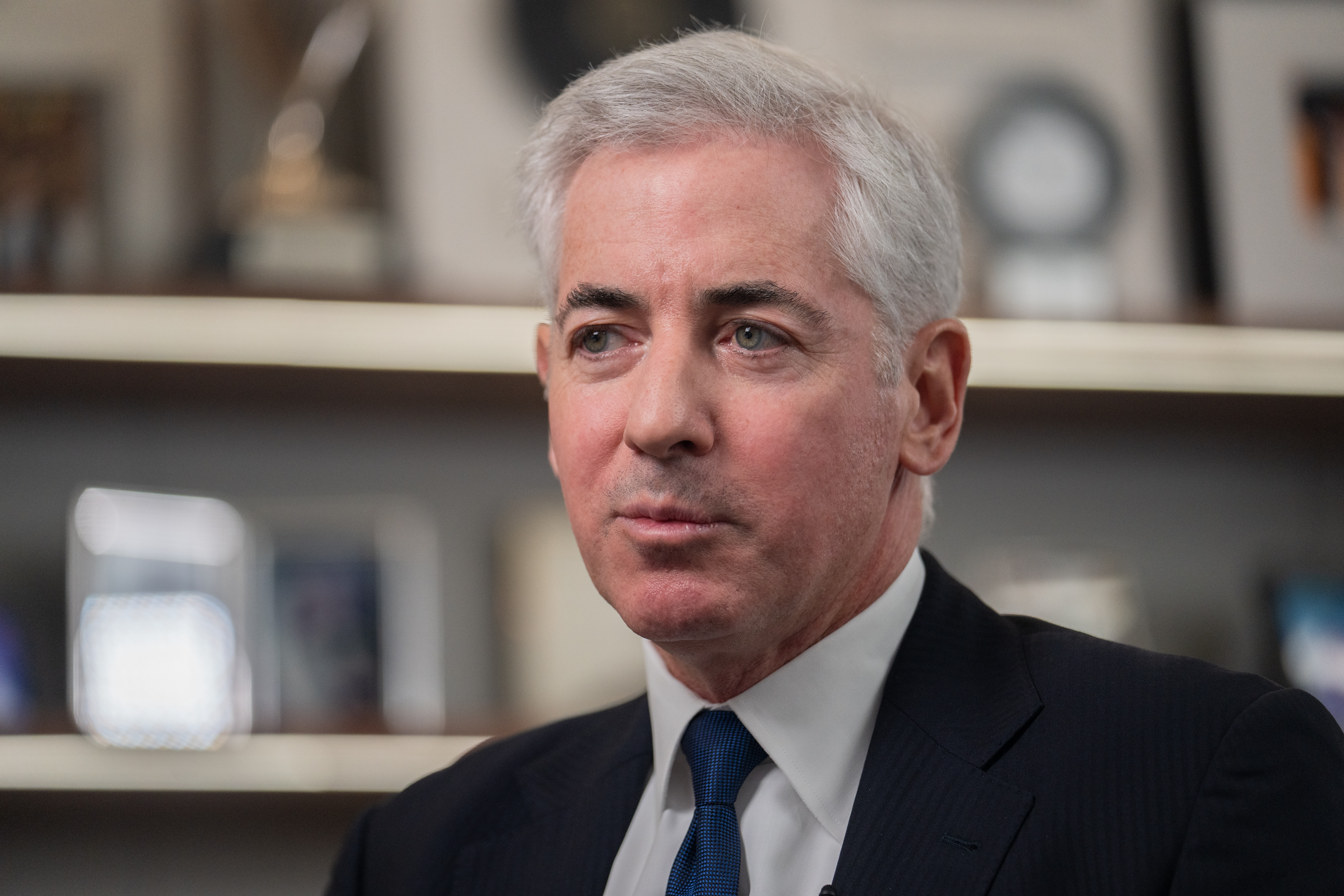
Apollo Global Management Inc. is ramping up efforts to give investors more regular insight into the value of its opaque private credit holdings, just as a spate of redemption requests from such funds rattles the wider market.
His time horizon is infinite. His capital is permanent. And the rewards, he argues, should be enormous.
For more than a decade, emerging markets have been a heartbreak for those who place their faith in developing countries. Since 2010, the benchmark MSCI Emerging Markets Index has not outperformed its US counterpart for two consecutive years.
Selling pressure for leveraged buyout loans has been high all year, amid fears that artificial intelligence will damage or even bankrupt the software companies that account for a fair chunk of the market.
Sophisticated email marketing requires automation: welcome sequences for new subscribers, nurture campaigns based on content interests, and reengagement sequences for inactive prospects.
The real value of AI isn’t in doing the marketing for you; it’s in making the process more efficient. Tasks that once required significant time and effort can be simplified and streamlined.
You might want to think about what I often call “internal PR”. Your leaders are focused on other things and are likely unaware of all that is happening directly with their advisors — and definitely with clients.
Amazon.com Inc. has blown the primary market for new debt wide open just days after market volatility, sparked by soaring-then-plummeting oil prices, all but halted issuance. Its mega offering is priced cheaply, for a reason: Too much of a good thing is still too much.
Hedge fund positioning across US equities has created a setup for stocks to rip higher after their recent wobble, according to Goldman Sachs Group Inc.’s trading desk.
After months of heavy selling on fears of artificial-intelligence disruption, software stocks appear to have found a bottom — at least for now.
The US and Israel’s war on Iran is forcing world governments to intervene to shore up energy supplies, with ongoing missile fire from both sides disrupting flows through a key waterway.
President Donald Trump said the US will get its first new oil refinery in 50 years with the help of investment from India’s Reliance Industries Ltd.
Prediction markets aren't going away. They're designed to be fun and exciting for bettors, intellectually engaging, and culturally resonant. The question isn't whether your clients will participate, but whether you'll have a productive framework ready when they do.
War with Iran is adding a new level of chaos to already uncertain times. What about your retirement savings? Is your investment portfolio safe? Is it time to think about pulling out of the stock market?