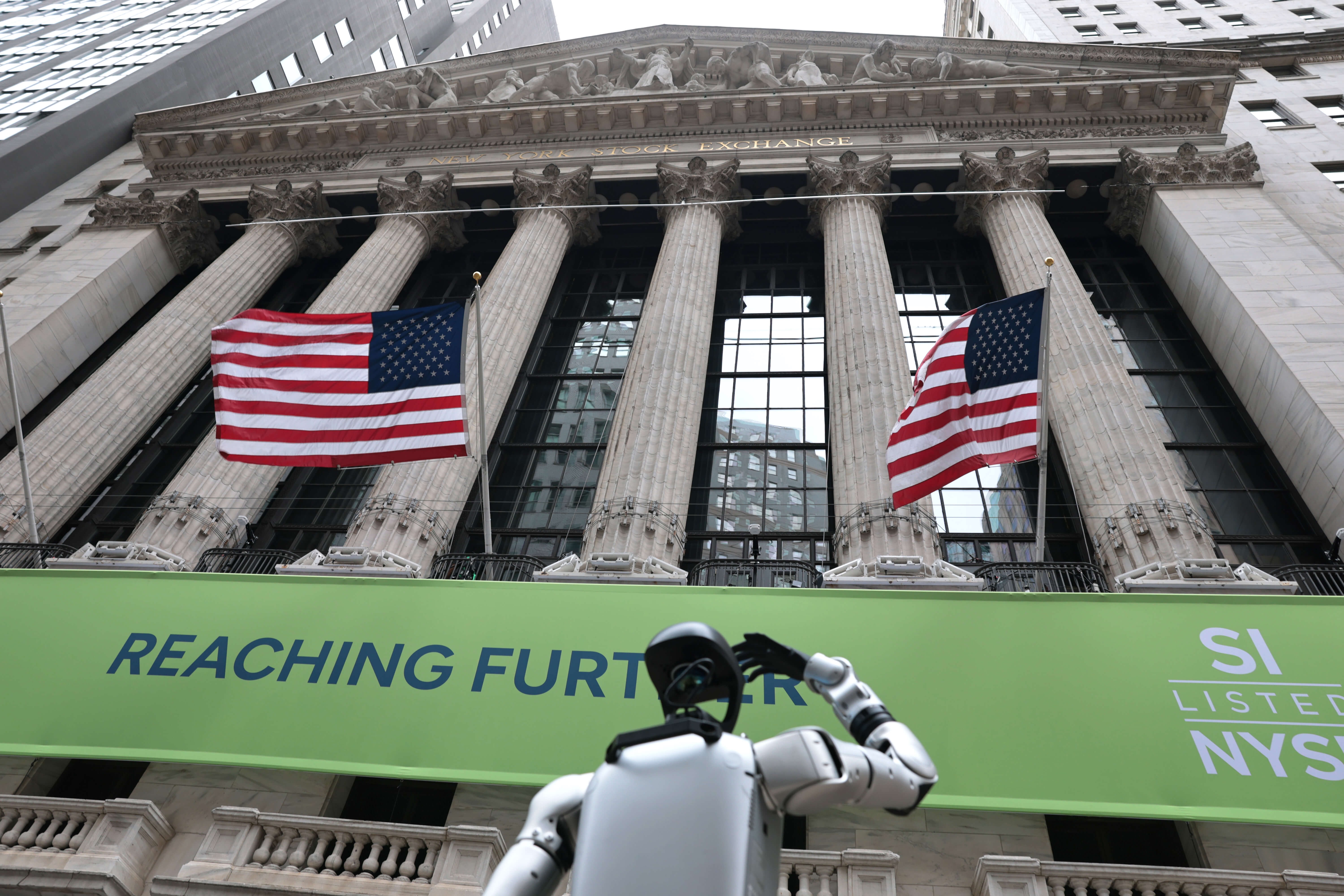
Wall Street is racing to roll out complex investment products tied to SpaceX shares that aim to shield buyers from future losses amid a sharp selloff following its market debut.
The US dollar will weaken if the Federal Reserve leaves interest rates unchanged this week, according to TD Securities.
One of this year’s hottest themes in the stock market has been the crowds of traders chasing the recipients of all the planned spending on new artificial-intelligence data centers.
Politicians all over the world are showing renewed enthusiasm for public ownership of private companies. The methods range from modest government stakes to outright nationalization, but the trend is apparent.
As equity compensation becomes a larger component of employee wealth, financial advisors are helping clients navigate the complexities of stock options, RSUs (restricted stock units), and ESPPs (employee stock purchase plans). Here, three financial advisors discuss how to balance the upside potential of equity awards with tax planning, concentration risk, diversification, and strategic exercise decisions.
In the coming years, more investors will expect financial planning to be a key part of the services they receive from advisors. To be prepared, advisors will need technology to help streamline added workflows, as well as the expertise of certified financial planners to support their clients long term.
BlackRock Inc.’s $12.55 billion bond sale tied to a Meta Platforms Inc. data center rallied in early trading on Monday in a sign that relatively high yields on the debt ultimately attracted investors.
CME Group Inc. said the debut weekend of 24/7 trading for its one-ounce gold futures saw stronger-than-expected demand with deep liquidity despite subdued volatility.
Registered investment advisors (RIAs) are increasingly adopting artificial intelligence (AI) tools that automatically transcribe and summarize client calls. While these technologies may offer efficiency gains, they introduce significant legal and compliance risks. This article discusses the intersection of AI transcription tools with state wiretapping laws, privacy considerations, Securities and Exchange Commission (SEC) requirements, and the evolving litigation landscape.
Pimco has been one of the loudest voices warning of risks in private debt markets, and Ivascyn, 56, has cautioned on the trillions of dollars pouring into the infrastructure underpinning the artificial intelligence boom.
US state and local government debt hit its cheapest level since the spring, after inflation fears caused municipal bonds to see their worst week of returns since April 2025.
Microsoft Corp., Meta Platforms Inc. and Amazon.com Inc. face renewed investor anxiety over their debt-fueled capital expenditure plans after Alphabet Inc. raised the upper end of its spending forecast this year by as much as $15 billion.
The narrative presented in this article is uniquely suited only to the retirement scenario. (And it neglects such complications as tax-deferred accounts, etc.) Other investing narratives will be different — for example, those of pension funds or endowment funds.
To evaluate SpaceX from a fundamental perspective, investors need to quantify the implied growth in its valuation and compare it with both their own and market forecasts. In this article, we attempt to help by providing context for growth expectations, using Amazon’s history as a proxy. The question we pose is: What does the Amazon playbook require of SpaceX?
Whenever faced with tradeoffs between risk and return, we recommend turning to expected utility. The method of maximizing expected utility is the most sensible technique for making these tradeoffs, taking into account both your personal preferences and the specifics of the situation.
Your client needs income. Investment-grade corporate bonds are offering it in the form of yields above 5%. That's a compelling number, and you're thinking about how to position this client's portfolio. Here's the problem: That 5% shouldn't be possible right now. And that's what should worry you.
Kioxia Holdings Corp. faces more wild price swings with leveraged exchange-traded funds tracking the Japanese memory chipmaker’s shares set to be listed in the US.
Jefferies Financial Group Inc. is hiring several muni sales and trading veterans, according to a person familiar with the matter.
US Treasuries edged higher as oil prices softened after the US paused its nearly two-week campaign of strikes against Iran, while traders eyed a roughly one-in-three chance of a Federal Reserve interest rate hike on Wednesday.
Goldman Sachs Group Inc. and T. Rowe Price Group Inc. are launching their first interval fund for the masses as Wall Street races to bring private investments to Main Street.
Let’s get this out of the way right away: It’s highly unlikely the Federal Reserve will raise interest rates when policymakers meet this week after the latest data showed inflation has slowed.
It is one of the great paradoxes of our time: Americans have never been richer — or more negative about the economy.
Artificial intelligence operates at speeds and levels of complexity that its human creators can’t match. So what happens when it’s unleashed on financial markets?
Intel Corp.’s long-awaited turnaround is in progress, now that the artificial intelligence data center boom is fueling demand for its chips.
Gold edged higher, holding firmly above the key resistance point of $4,000 an ounce even as the widening conflict in the Middle East fuels expectations for tighter monetary policy.
BlackRock Inc. began marketing $12.3 billion of high-grade bonds to fund a Meta Platforms Inc. data center project, testing investor appetite amid growing concerns about excessive AI infrastructure spending.
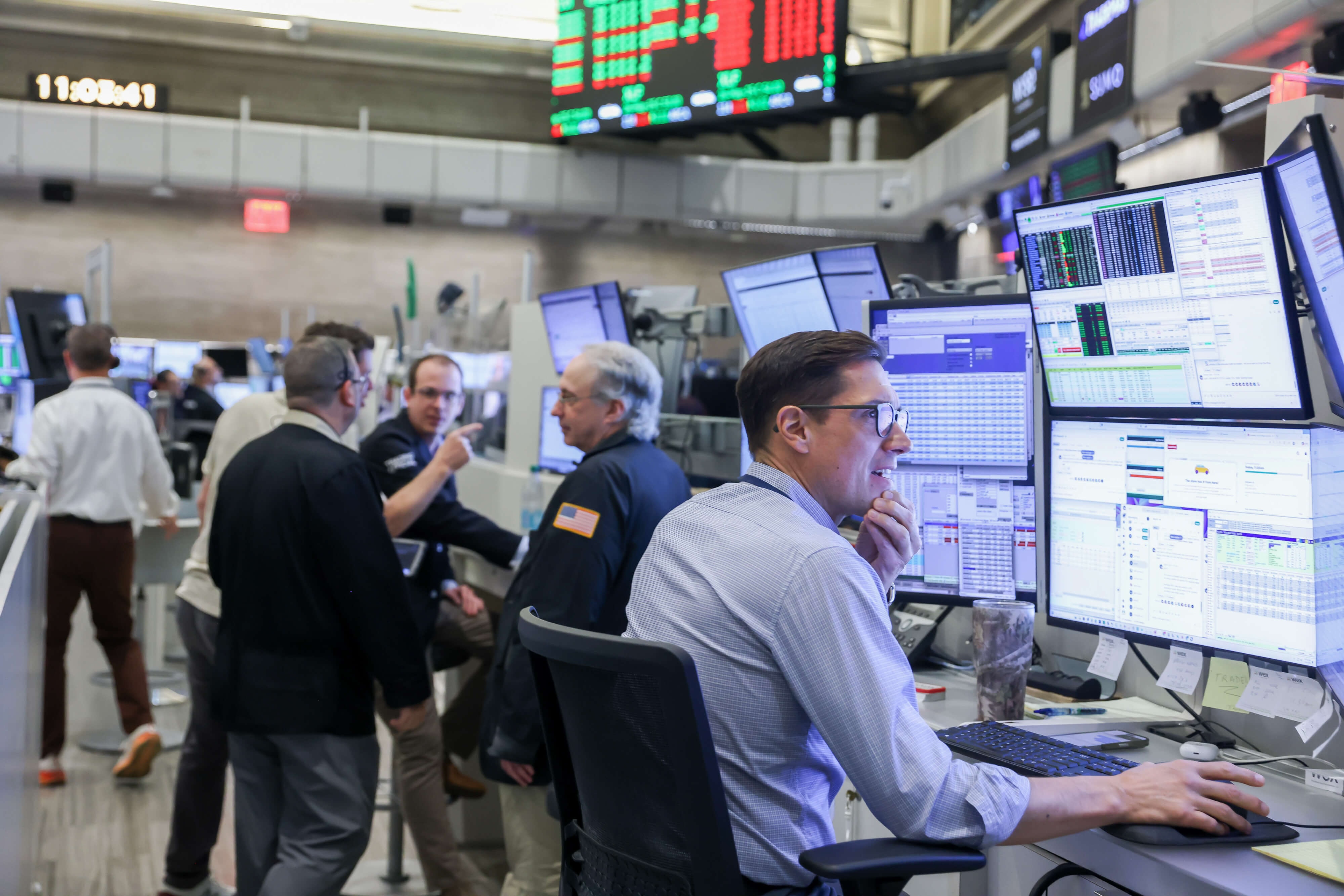
US equity futures on Friday were little changed, indicating stocks are poised to steady from the deepest one-day drop in a month, as Brent crude prices fell below $100 a barrel and a selloff in Big Tech shares eased.
Washington, DC is stepping up to borrow $1.2 billion this week at its annual municipal debt sale, tapping the market as its credit stabilizes.
US Treasuries are offering investors solid protection against losses as yields remain elevated, according to BlackRock Inc.
Intel Corp. is expected to report strong second-quarter earnings after the market close Thursday, but even blowout results likely won’t be enough to reverse the stock’s July slide.
US President Donald Trump said a civil nuclear agreement with Saudi Arabia would be contingent on the kingdom normalizing ties with Israel, throwing cold water on a landmark deal his administration finalized just a day earlier.
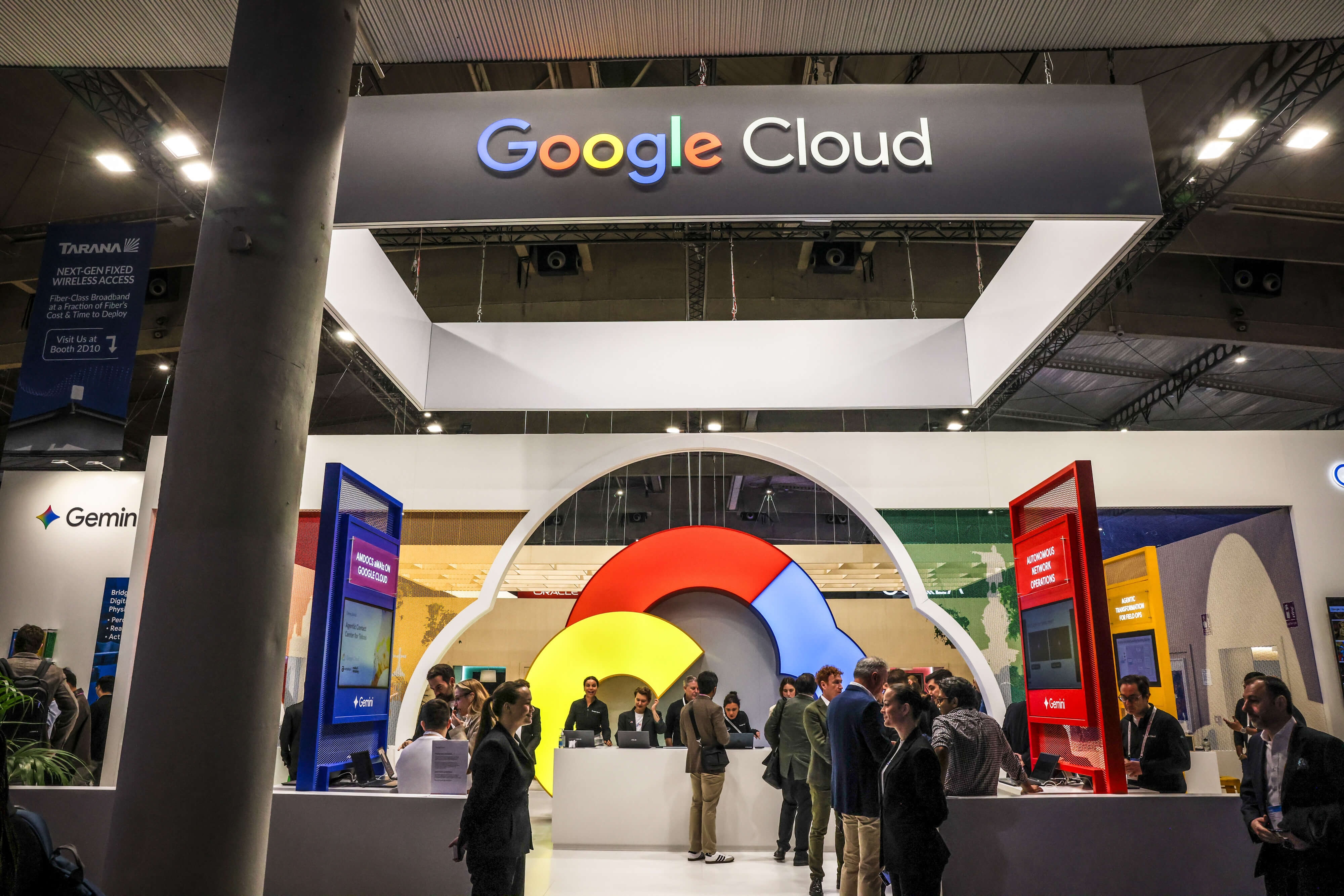
Alphabet Inc.’s impressive second-quarter earnings release on Wednesday seemed on course to go down mostly well with investors. Until the earnings call, the Google parent’s share price was up marginally in after-hours trading, buoyed by cloud growth that smashed estimates.
The global luxury industry, which has been grappling with three years of lackluster sales, may gain some relief as wealth generated by artificial-intelligence companies and their trillions of dollars of initial public offerings finds its way into fancy fripperies.
When clients, specifically, feel they matter to their advisor, they engage more deeply in the planning process, follow through on recommendations, refer more frequently, and build lasting relationships that transcend market volatility.
The buyer's journey for financial advisory services has fundamentally shifted. In 2026, prospects are making significant decisions and judgments before they ever speak to an advisor. Advisors who fail to recognize this shift are missing the most critical window in the entire client acquisition process.
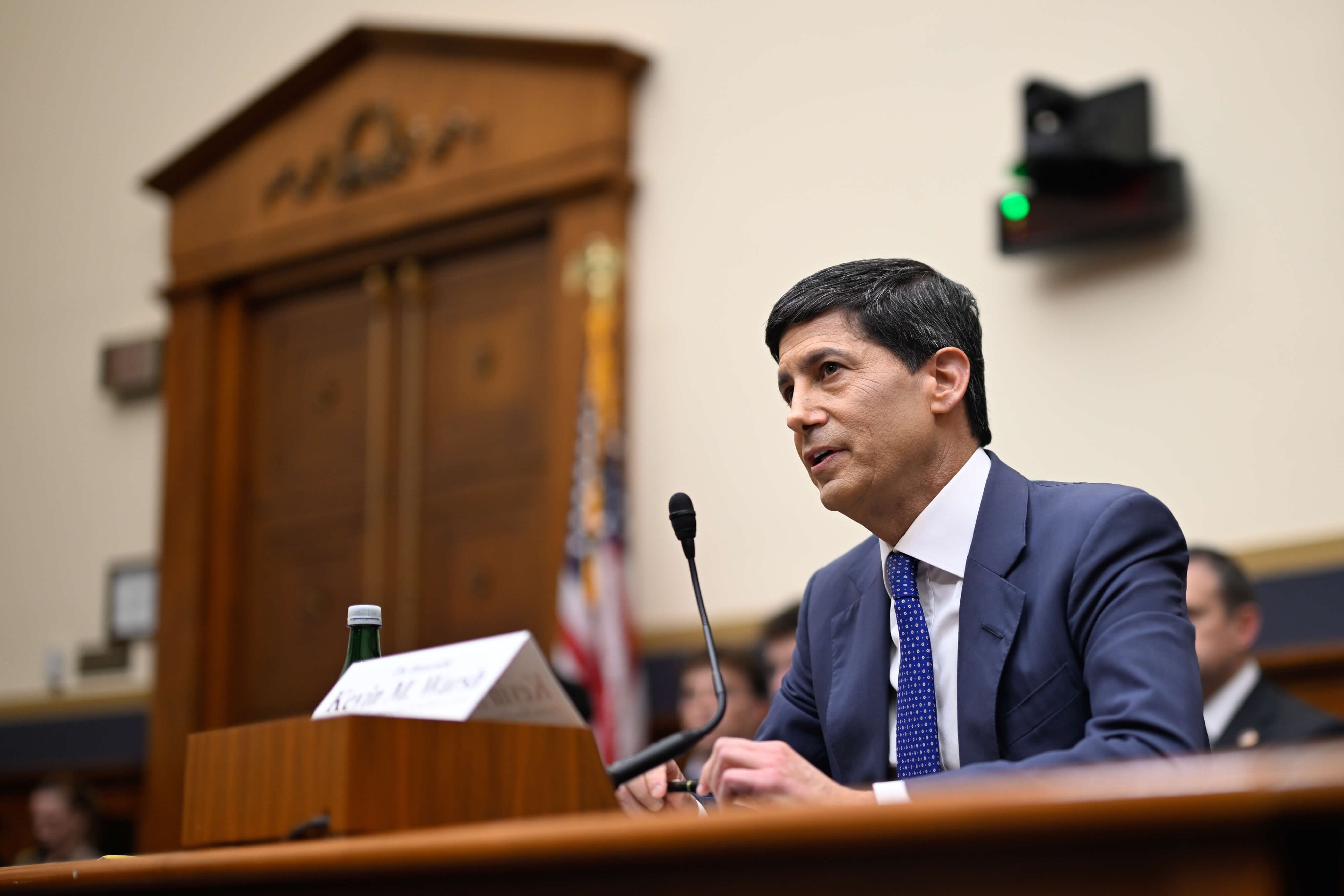
The first data releases since Federal Reserve Chairman Kevin Warsh took office suggest that inflation has subsided, making his job a little easier.
By moving forward with the latest proposal, Trump would cement his commitment to tariffs, despite voter concerns about the cost of living heading into November’s midterm elections.
The US 30-year bond yield is trading above 5% for the longest stretch since the dawn of the financial crisis, echoing investor concerns about a growing debt pile and sticky inflation.
Blackstone Inc. leaned on Wellington Management Co. and Vanguard Group to create two new funds that will give individual investors access to private assets as it looks to go beyond its roots as a money manager for pensions and institutions to become more of a household name.
With AI spending skyrocketing, investors are looking for Alphabet Inc.’s earnings to show strong growth in its cloud-computing business, which would demonstrate a clear return on the company’s investments.
to come
Digital assets have the products. They have access to vehicles such as ETFs, separately managed accounts, and direct custody. What they still lack is the foundational layer underneath those products: the agreed-upon definitions of what the market is, how its components are classified, and how performance is measured.
Wealth management firms are aware of the looming retirement wave and have put real effort into mitigating it through recruiting, training, succession planning, and technology to modernize the advisor workflow. But what’s truly at risk of being lost is the judgment that senior advisors have accumulated over decades
Government bonds are back in focus, as investors reassess where value lies in global fixed income. With markets wavering over how quickly interest rates will fall, sovereign debt in several developed economies is starting to look attractive again to us.
Strong economic momentum is a double-edged sword for US equity traders. Solid growth is an earnings tailwind. But let it run too hot, and it turns from blessing to curse.
Charles Schwab Corp. reported earnings that topped estimates as retail investors continued to jump in and out of the market amid volatility sparked by geopolitical uncertainty.
Investors poured billions into BlackRock’s exchange-traded fund tracking South Korean stocks, underscoring strong appetite for artificial intelligence companies even as wild swings continue to roil local equities.
The biotechnology sector is stealing the US IPO market thunder from artificial intelligence-related listings, delivering standout returns as bankers line up a steady stream of summer debuts.
Gold and silver rose on dip-buying, as traders monitored Middle East tensions for signs that higher energy costs could stoke inflation, putting pressure on the Federal Reserve to tighten policy.
Trading volumes on prediction markets are expected to hit $1 trillion by 2030. Overconfident traders think they are beating the crowd. Herders join it without thinking. Neither approach is likely to be a consistent winner.