In business as in life, a healthy sense of self-awareness is often the first step to meaningful change. Companies that are conscious of their flaws and eager to address the root problems offer a source of solid return potential for equity investors who identify the turnaround stories early.
Inflationary pressures are mounting, based on evidence from the recent earnings season. The question for investors is, which companies can pass on those costs to help protect profit margins?
The US high-yield market has staged a strong comeback since its downturn at the onset of the COVID-19 pandemic and—despite historically tight spreads—fundamentals for credit continue to improve. Along with a strong global economic recovery, credit spreads are getting positive tailwinds from declining default expectations, falling levels of distressed debt, and improving access to capital.
The US Federal Reserve will soon slow its open market purchases of fixed-income securities. These purchases have served to keep rates low and liquidity flowing, but as the post-pandemic economy heals, it’s time for the Fed to taper. As they step back from buying, who is going to step forward?
Executive pay is a powerful motivating factor. But investors need to consider whether executive pay incentives are fully aligned with the goals of the business. We find that companies with meaningful ESG goals embedded in their executive compensation schemes tend to have a better understanding of the ESG factors that are material to their business, use specific key performance indicators (KPIs) and are more likely to achieve them.
With COVID-19 still a top employer concern, protecting workers’ health and well-being naturally comes first. But the pandemic’s impact isn’t limited to only physical and mental health: financial wellness is also ailing. The crisis has exacerbated the problem, but it’s not exactly a sudden occurrence.
In December, the European Central Bank (ECB) is likely to announce the retirement of its Pandemic Emergency Purchase Programme (PEPP) next March. But how will the central bank manage this process? And what will this mean for euro-area bond yields?
One of the most crucial components of investing in commercial mortgage-backed securities (CMBS) is assessing the underlying collateral value. But what if investors are disregarding risks that threaten a property’s very existence?
Major central banks are exploring digital currencies, which seem likely to become a mainstay of tomorrow’s economy. As policymakers wrestle with the many moving parts of digital dollars, euros and yuan, their decisions will shape the next dimension in national currency—and could reshuffle international currency leadership.
COVID-19 has increased inequality and aggravated social problems across emerging market economies, fueling populist pressures—but several emerging countries share features that make them particularly vulnerable. Assessing key environmental, social and governance (ESG) metrics can help identify potential pressure points.
Disruptions and dislocations associated with COVID-19 mean current economic data may not be a reliable guide to the future. But by turning to the past, we find compelling evidence that inflation regime change is accelerating.
A single-minded approach to price stability is under threat as policymakers start to focus on what are—arguably—more pressing concerns.
Defensive stocks are often misunderstood. In recent years, even when they have delivered strong and steady earnings, returns have disappointed.
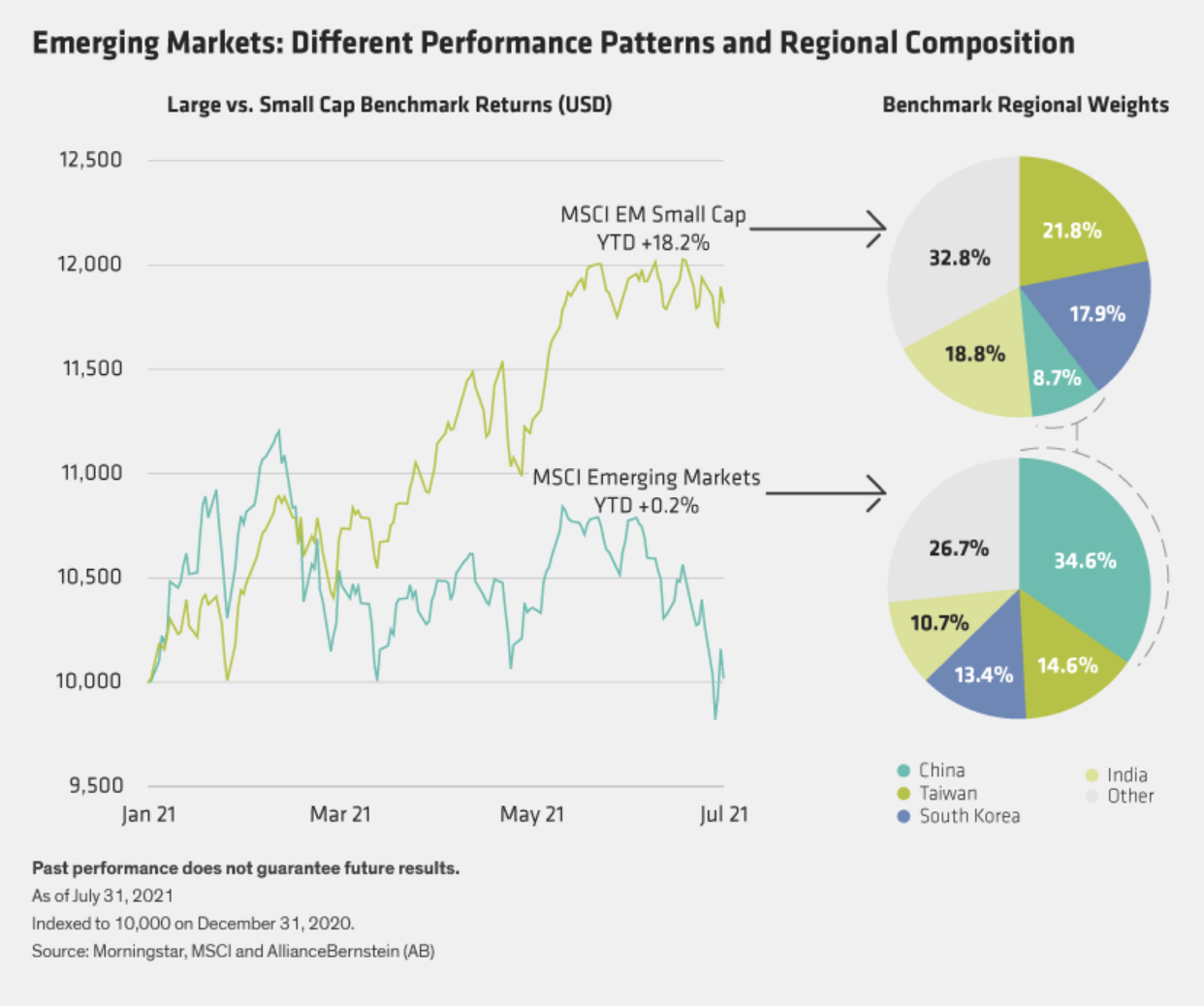
Emerging-market (EM) stocks have hit a rough patch, but shares of smaller companies have held up well.
Much of the volatility that has recently shaken China’s credit markets has been associated with government interventions.
What You Need to KnowMunicipal bonds are the cornerstone of many portfolios, but efficiently navigating today’s complex, fragmented and ever-changing muni market can be overwhelming. Unfortunately, many managers research, evaluate and trade municipal bonds like it’s 1995, missing out on opportunities because they can’t find them in the chaos. The right technology can change that.
Technology is advancing at a rapid pace, exerting downward pressure on prices
Many investors, perhaps scarred by 2013’s “taper tantrum,” are focused on the likelihood that the Federal Reserve will start reducing its bond purchases in the next few months.
Today’s complex, fragmented, fast-moving muni market is rapidly outpacing the capability and capacity of traditional portfolio-construction methods.
As equity style winds shift, investors are still debating the merits of growth versus value stocks.
What we’ve seen this year is an exceptionally high rate of earnings growth across markets, but that’s not going to persist.
As the summer progresses, US vacationers are out in force while the European and Asian holiday scene remains relatively subdued.
Central banks are being forced to address many challenges—inequality, climate change, and debt management to name but three.
There’s considerable uncertainty in today’s municipal market. Questions persist about the likelihood of rising interest rates, inflation that may not be transitory and the impact on municipalities once the benefits of fiscal stimulus fades. Active bond managers have many decisions to make and need to be nimble in a changing landscape. What’s next for municipal bonds, and how can trading and portfolio management technology help investors navigate this changing environment?
Inflation has been on the rise recently, raising concerns about long-run inflation and its impact on the spending power of those who can least afford it—investors approaching or already in retirement.
China’s regulatory crackdown on education and tech companies led early this week to a dramatic sell-off that started in Chinese stocks and extended into offshore Chinese currency and credit markets.
Chinese stocks have tumbled amid a regulatory crackdown on education and technology companies.
Hang on to your hat.
The US high-yield market has seen a strong comeback since its panic-driven downturn at the onset of the COVID-19 pandemic.
Market crises and macroeconomic recessions typically create fertile ground for value stocks to outperform in a recovery.
In 2010, 68% of the companies in Fortune Magazine’s Global 500 were domiciled in Group of Seven (G7) countries, compared with 17% in the E20* emerging-market (EM) countries.
Many investors with exposure to the Chinese renminbi (RMB), having enjoyed a strong rally in the second quarter, are worried that policy uncertainties could hurt the currency’s short-term outlook.
As the world convalesced from the pandemic, stocks advanced in the second quarter and earnings rebounded across sectors.
Bond investors are worried, and who can blame them?
High-quality companies are always in style. In good times and bad, features that define resilient businesses and stocks underpin consistent and solid equity return potential.
US inflation continued to soar in May, with the Core Consumer Price Index (CPI) up 0.7% month over month and 3.8% year over year—its highest annual rate in more than 25 years.
Japanese equities have long been overlooked by many global investors.
Environmental, social and governance (ESG)-linked bond structures have become very popular in investment-grade bond markets.
With the post-pandemic US economy on the mend, a new threat has emerged: inflation.
Disappointing returns for healthcare stocks through the market’s recovery from the pandemic have raised concerns about the sector.
With the US economy accelerating and price pressures rising, investors have started wondering when the Federal Reserve will start to wind down, or taper, its current QE asset purchases—a pillar of accommodative monetary policy since the global financial crisis.
Passive equity portfolios continue to gain popularity, but some investors might not know that a small group of outperforming stocks have driven most of the gains in recent years.
We’re optimistic that environmental, social and governance (ESG)-linked bonds will help create a better, more sustainable world.
Municipal bonds have held up well this year, despite rising interest rates and inflation. Munis’ long-term outlook is strong too. What accounts for their outperformance in today’s environment?
Widespread lockdowns have resulted in record output declines and soaring debt across the euro area. But the political response to the COVID-19 crisis may be positive for the European integration project—and for euro-area bond markets.
Global indicators continue to signal a sharp business recovery from last year’s COVID-19 pandemic lows. While inflation expectations are increasing as a result, business improvements offer multi-asset investors good reasons to remain tilted to equities for the next stage of the recovery.
Retirement planning has evolved from a singular focus on savings to ensuring that account values provide income for life. Multiple generations of DC plan participants are concerned that they’ll outlive their retirement savings, and they’re turning to plan sponsors for solutions.
After a strong rally for value stocks in recent months, some investors are wondering if the rebound will continue.
As the US economy continues to reopen, economic growth is accelerating in line with our above-consensus forecasts.
Developed-market (DM) household savings recorded a significant gain last year, with an increase equivalent to 10% of combined gross domestic product (GDP).