Bank lending rarely commands the attention that payrolls, inflation or consumer spending do. But it helps determine how much momentum the economy can sustain. The Role of C&I Loans: Commercial and industrial (C&I) loans, the workhorse of corporate finance, pay for everything from working capital to machinery and software.
The U.S. economy is handing investors a muddled picture. Housing is stuck, hiring is lopsided, and households feel worse than the jobs data suggest. Add a string of geopolitical shocks and a Federal Reserve (Fed) under new leadership still establishing its reaction function, and the signals markets rely on are harder to read. Investors will have to adjust to this market, where clarity is scarce.
Assessing the wall of worry. Here, we assess the market's growing wall of worry, explain why these worries warrant attention, and justify our continued constructive intermediate-to-long-term stock market outlook.
The S&P 500 has remained remarkably resilient in the face of mounting macro headwinds. Despite oil prices topping $100 per barrel, 10-year Treasury yields climbing above 5%, and a renewed shift toward tighter monetary policy, the index continues to hover near record levels.
LPL Research analyzes S&P 500 margin expansion, assessing how much is structural versus cyclical and what that means for future earnings forecasts.
The Federal Reserve (Fed) made something clear this week that markets had been reluctant to accept. Apparently, the easing cycle isn't paused, it's over for now.
With so much attention focused on what the Fed might do at its policy meeting this week, it’s a good time to look back at history to get a sense of how stocks might respond should policymakers hike rates as the market now expects. LPL Research had been characterizing the rate decision as a coin flip until Fed Chair Kevin Warsh’s hawkish comments at the Jackson Hole meeting and the strong August jobs report.
With so much attention focused on what the Federal Reserve (Fed) might do at its policy meeting next week, it’s a good time to look back at history to get a sense of how stocks might respond should the Fed hike rates as the market (barely) expects.
LPL Research analyzes rising U.S. debt, Treasury yields, and fiscal trends, highlighting implications for markets and investors.
Stocks have enjoyed a powerful run off the spring lows and have largely shrugged off concerns around growth, inflation, higher interest rates, the effects of artificial intelligence (AI), geopolitics, and policy uncertainty. As the calendar turns to September, however, they are entering what has historically been, from a seasonality perspective, the most challenging month of the year for equities.
Should the recent value rotation be viewed as a regime shift-driven change in market preference, or a simple reversal trade? We think there is a compelling case to be made for the former. In a regime of higher interest rates and stubbornly above-target inflation, the market is increasingly focused on capex intensity, free cash flow conversion, and the cost of capital.
For an asset often designated as a store of value, gold volatility has been especially apparent this year. After starting off the year with a high-paced record-setting run that lifted the metal to nearly $5,600 an ounce, including a 13% rally in January alone, momentum quickly faded as tensions with Iran ratcheted higher.
Join us for a live conversation on what it takes to make AI work inside an advisory practice. You won’t want to miss this VettaFi webinar on Aug 27, 2:00 PM ET featuring LPL Financial executives John Stevens, SVP, AI Product Management, and Miller Staten, Head of Product Operations, moderated by TMX VettaFi’s Kirsten Chang.
Earnings have built a strong foundation. As we wrote earlier this month, earnings have provided a strong foundation for stocks this year. With second quarter earnings growth for the S&P 500 on track to exceed 30% (excluding private investment mark-ups) and analysts continuing to raise estimates, it's safe to say this season strengthened the fundamental case for equities.
For years, Russell index reconstitutions have been treated as a routine maintenance event. Thousands of stocks are ranked, memberships are adjusted, and markets move on
Global business activity is showing signs of stabilization, but beneath the surface, the world economy remains divided. Growth momentum has improved in several major developed economies, led by a stronger U.S. expansion and a tentative recovery in parts of Europe.
The S&P 500 towed an anchor for much of the summer as a historic momentum and leverage unwind under the surface dragged on the equity benchmark before breaking out to fresh records last week.
Demand continues to outpace record supply. Municipal bonds remain an attractive income opportunity in a market where the Federal Reserve (Fed) is likely to remain on hold and carry is driving returns. Despite record issuance of roughly $50 billion per month, demand has remained strong.
LPL Research highlights strong corporate earnings, AI-driven growth, and a favorable equity outlook while monitoring inflation, oil prices, and risks.
LPL Research explores whether hyperscalers can generate attractive returns on massive AI investments through a framework focused on ROIC, growth, and capex.
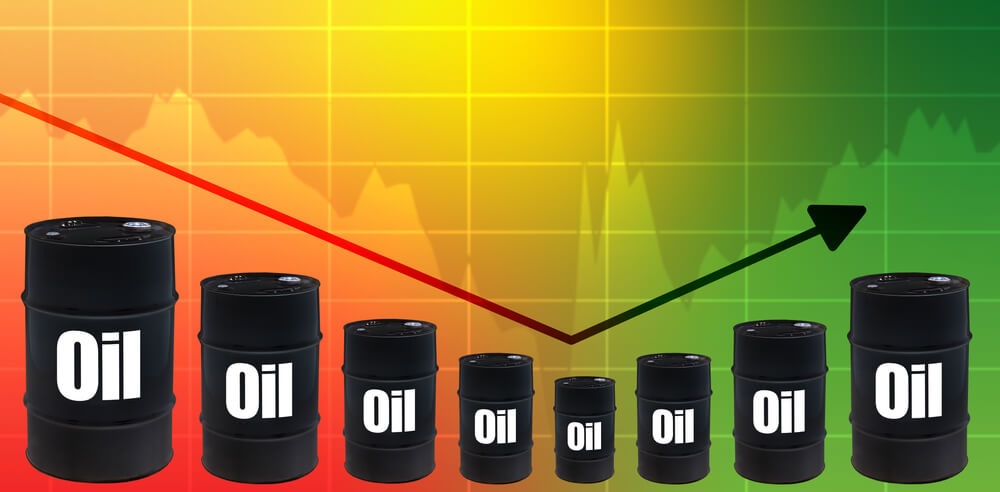
Oil has staged an impressive rebound this month as the conflict between the U.S. and Iran has re-escalated. The memorandum of understanding signed on June 17 created a 60-day window for negotiations, but the diplomatic opening lasted only a few weeks. Both sides subsequently accused the other of violating the peace agreement, and military operations have resumed.
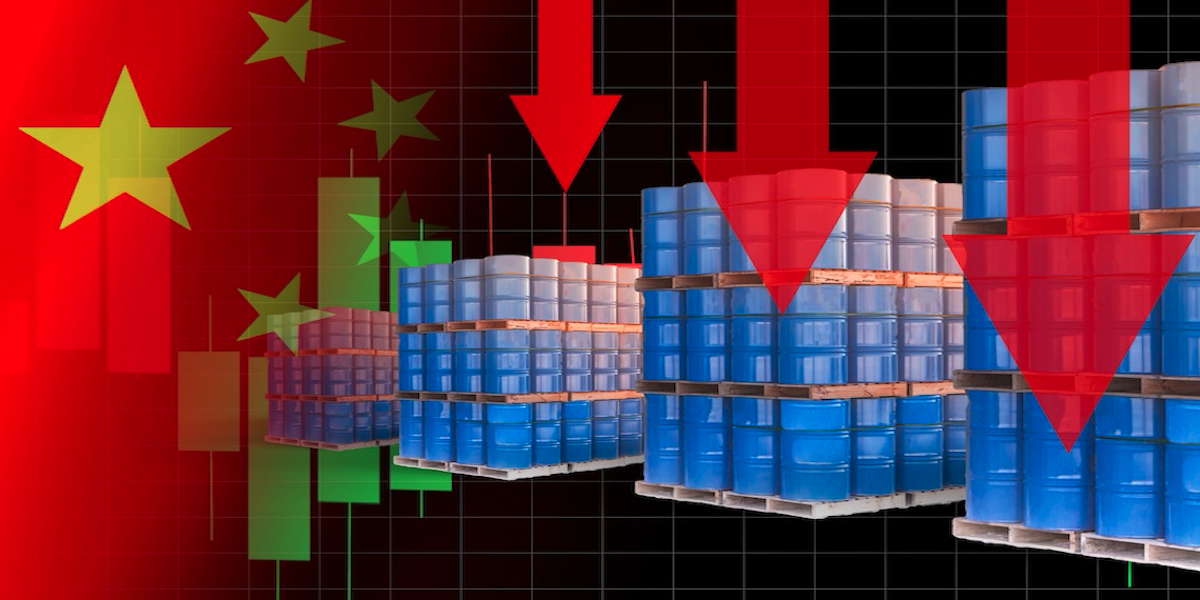
LPL Research analyzes China’s declining crude imports, inflation risks, and the resilient U.S. economy driving above-trend growth.
LPL Research examines how sticky inflation, Fed leadership changes, and AI-driven borrowing are shaping the fixed income outlook for 2026.
Over the first half of 2026, markets faced some expected — and unexpected — tailwinds and headwinds, ranging from geopolitical developments, blockbuster corporate earnings, increasing artificial intelligence (AI) scrutiny, resilient economic data, and a new Federal Reserve (Fed) Chair.
The dollar holds a central place in global markets due to its role as the world’s reserve currency. Its movements influence cross-asset correlations, shape liquidity conditions, and often offer early indications of shifts in the broader macro regime. In short, it is a critical variable that warrants close attention.
The second quarter wraps up today, and it was a good one. With the S&P 500 having returned more than 14% (including dividends) with just one trading day left, it will almost certainly end up being the best quarter for the index since the second quarter of 2020. Technology was the leader despite the June weakness.
A strong quarter across major indexes. The second quarter is winding down and what a quarter it has been with the S&P 500 up 12.6% quarter to date, while the Nasdaq-100 and Russell 2000 are both up over 20%. Despite some twists and turns, the path of least resistance for stocks broadly remained up and to the right for much of the last three months.
Municipal bonds often see a seasonal lift during the summer months. This pattern, known as summer technicals, stems from a straightforward supply and demand imbalance that tends to favor bond prices. Over the past ten years, the summer months (May through July) have generally been positive months for the Bloomberg Municipal Bond Index, with monthly returns averaging +0.83%, +0.43%, and +0.82%, respectively.
Kevin Warsh, the new chairman of the FOMC, has long been critical of forward guidance, which is the Fed’s practice of explicitly signaling the future path of interest rates (e.g., “rates will stay low for an extended period” or publishing a projected path for policy rates). His concern is that the guidance could give the impression that policymakers might have a high degree of confidence about the future path of the economy and rates.
One of the key questions for investment professionals is whether oil prices will return to pre-war levels once the Middle East crisis is resolved. At the same time, many are asking why oil prices are not higher, especially since the latest geopolitical deal recently pushed crude to its lowest level since the initial attack.
The U.S. initial public offering (IPO) market appears to be entering one of its most consequential periods in years. After a long drought following the 2021 issuance boom, a healthier macro backdrop, improved risk appetite, and a long queue of mature private companies have reopened the new-issue window.
LPL Research analyzes bond markets as yields rise, exploring Fed policy expectations, inflation trends, and whether bad news is already priced into Treasuries.
For weeks now, media reports have been suggesting that Washington and Tehran are moving closer to a memorandum of understanding (MOU). In practical terms, that would extend the current ceasefire by roughly 60 days and create a window to negotiate a more durable peace agreement.
LPL Research analyzes stock valuations, finding them fair given growth, rates, inflation, and AI-driven earnings outlook despite risks.
Risk appetite remains firmly intact as optimism surrounding a potential resolution to the war with Iran continues to improve investor sentiment. The S&P 500 has now advanced for eight consecutive weeks, with price action remaining remarkably resilient throughout the recovery.
Commodity market trends: Commodity markets have been on an impressive, and volatile, run so far this decade, with leadership oscillating between energy and precious metals. Not surprising, after commodities’ “Lost Decade” of the 2010s, given the asset class tends to move in long capital cycles.
The artificial intelligence (AI) boom has transitioned from an equity market narrative to a defining force in fixed income. Hyperscalers (Amazon (AMZN), Alphabet (GOOG/L), Meta (META), Microsoft (MSFT), and Oracle (ORCL)) are shifting from internal cash flows to substantial bond issuance to fund massive data center, graphics processing unit (GPU), and power infrastructure buildouts.
From the April payroll report released on May 8, we realize that not all industries are equally impacted by AI. Diagnostic imaging centers, an area where AI is thought to replace humans, have increased demand for workers, whereas bookkeeping demand has declined in recent years.
LPL Research examines rising inflation risks amid geopolitical tensions, while resilient growth and strong investment support continued expansion.
Many have drawn the comparison between the current AI buildout with the dotcom period in the late 1990s, when the infrastructure for the internet was built. It’s a sensible comparison to make because of the massive amount of capital deployed to commercialize the buildout of revolutionary and life-changing technology.
LPL Research explores how a potential Warsh-led Fed could reshape policy, Treasury markets, and volatility amid rising deficits and shifting demand.
As equity markets transition into 2026, large cap equity portfolio managers share a surprisingly consistent framework — paired with sharp disagreements on where risk and opportunity sit. A survey of large growth, value, and blend managers reveals a market shifting away from simple narratives toward selectivity, fundamentals, and manager skill.
LPL Research examines overlooked tech growth, assessing strong earnings, AI skepticism, and valuation opportunities for investors.
The sharp rebound from the March lows has pushed most major equity indexes back to record highs. This upside momentum has been fueled in part by signs of de-escalation with Iran and growing expectations that the Strait of Hormuz could reopen soon.
With the proverbial ceasefire negotiation can kicked down the road for the second time in a week, the U.S. and Iran remain in a stalemate over the Strait of Hormuz.
The “American Industrial Renaissance” is an investment theme investors and allocators alike have probably been pitched several times, or at the very least heard about. Supply chains for manufactured goods have evolved to become more complex, while U.S. manufacturing employment as a share of total employment has steadily declined, leaving policy makers to grapple with the ramifications of a shrinking manufacturing base.
Kevin Warsh's bid to become the next chair of the Federal Open Market Committee (FOMC) unfolded amid sharp political tension, legal uncertainty, and pointed questions about his independence from President Trunp. During a combative Senate confirmation hearing, Warsh sought to reassure lawmakers that he would not allow political pressure to dictate monetary policy, even as unresolved Justice Department investigation into current Chair Jerome Powell threatens to delay his confirmation and underscores broader concerns about the politicization of the central bank.
Concerns about the sustainability of U.S. fiscal policy have moved back into the investment spotlight. Over the past week, both multilateral institutions and prominent policymakers have raised warnings about the potential implications of America’s expanding debt burden for Treasury markets.
LPL Research examines the fixed income space as global bonds broaden yields and reduce U.S. concentration, offering diversified income and resilience via non‑U.S. developed and emerging markets.
Over the past year, LPL Research’s Strategic and Tactical Asset Allocation Committee (STAAC) has emphasized that tactical investing does not require constant activity. Instead, it requires preparation, patience, and the discipline to act only when the expected benefit of a change clearly outweighs the risks.