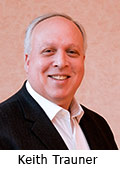
The GoodHaven Fund (GOODX) is managed by Larry Pitkowsky and Keith Trauner of GoodHaven Capital Management, LLC. For most of the previous decade, Larry and Keith held research, portfolio management and executive positions with Fairholme Capital Management, LLC and its affiliated Fairholme Fund.
As of July 13, the fund had returned 12.75% year-to-date, as compared to 3.84% for the S&P 500, placing it in the top 2nd percentile of its Morningstar peer group.
The fund’s mission is to make a few intelligent business decisions with the money its shareholders have invested (including significant sums of their own), earn a competitive rate of return over the long-term when compared to lower risk alternatives, and do it without relying on risky leverage to magnify the results.
I spoke to Larry and Keith on July 8.
Your performance this year has been exceptional; your returns are in the top 1% of your Morningstar peer group. What have been the key contributors to your success this year?
Larry: Although this was not the only reason, we saw a material price increase in two of our largest holdings, Barrick Gold and WPX Energy. The stock prices of both of them suffered last year, despite both companies making meaningful fundamental progress. This is still the beginning of some mean reversion for these two companies, which had been so out of favor. A disadvantage and advantage of being a focused fund that looks nothing like the S&P 500 is you will have periods of crummy relative performance from time to time. But we hope over an extended period of time it’s also a big advantage and you can have much better performance than the index, if you know what you are doing.
You’re Graham and Dodd acolytes. You are devotees of the margin of safety, which you expressed and our previous interview. What is the margin of safety in your fund’s largest investment, Barrick Gold?
Keith: In none of our companies was our primary focus the fact that there was an underlying commodity. But here you’ve got an interesting position. First, we bought most of the position as the gold market was going through one of the two or three worst bear markets of the last several decades. Most of it was bought near four- or five-year lows in the commodity. We were starting with a depressed underlying commodity and that helps when you’re talking about a margin of safety.
Second – and this is something that I don’t think a lot of people really think through – just like Hewlett-Packard, which was a significant moneymaker for us after they made a terrible acquisition and Meg Whitman came in and took over, Barrick went through a very similar event where they made a bone-headed deal and leveraged the balance sheet. It resulted in a forced governance change at the company. Most of the management team was replaced. The Chairman of the Board was replaced with a very smart guy, John Thornton. You had costs that were bloated. There was low-hanging fruit to pick. The company attracted top-flight management to complement their very valuable asset base.
When you’re talking about safety, there were a lot of costs that could be reduced. You had a very large and valuable asset base. Barrick’s core properties have reserves with a grade nearly twice that of its largest competitors, meaning their reserves are more concentrated and more efficient. You have extremely low cash operating costs, which the company has been able to reduce even further.
The company generates free-cash flow at a very low price of its underlying commodities – approaching $1,000 or less per ounce of gold. That gives us a significant margin of safety. Given that you’ve had a modest but not a huge rally in metals prices cash flow is going to increase further and should significantly increase the margin of safety.
One of your larger investments is in Walter Investment Management. The stock is no doubt depressed but the price is not wholly unwarranted based on the fundamentals (e.g., profit margins, ROI, ROE and debt-to-equity). Improving those metrics from these levels would seem to require a change in the macro environment (something that in our previous interview you dis-avowed as part of your investment process) or a turn-around (something that many if not most value managers avoid). Furthermore it is not clear where the margin of safety is. What would Benjamin Graham see here that I am missing?
Keith: Walter is probably our most frustrating investment, but it is no longer even close to being one of our largest. It is about 1.5% of the portfolio. Some criticism here is warranted and we sized it wrong and that hurt us in the past. But at the core, the company is essentially a processing business that takes very little credit risk. It is also in a sector that has only a handful of scale players, which should be a big advantage.
I’ll give you three reasons why the company has performed poorly. One, management clearly did not move quickly enough to adjust its cost structure to a new compliance environment. Costs were coming down, but not nearly fast enough. Two, you had a huge decline, contrary to the expectations of almost everybody, in 10-year Treasury rates, which negatively affected the balance sheet, because it forces a non-cash write-down to mortgage servicing assets. Third, although management had expressed on numerous occasions their concrete plans to reduce leverage, they have not been able to execute on a number of those actions.
In the last several months, the two largest shareholders joined the board. Those two shareholders control almost half the company. They recruited a new executive chairman and interim CEO. All of those parties, the entire board and the new management are all on the same page trying to move very quickly to resolve the issues that I just discussed. They are behind the 8-ball, but we are trying to give the new chairman a chance to get some things done.
In fairness, this is a case where we overestimated the margin of safety and underestimated the odds that worldwide interest rates would decline materially even seven years into an economic recovery. That is something that hurt servicers generally across the board, but which probably won’t last much longer
Larry: Berkshire Hathaway owns two substantial companies that are in the servicing business, Vanderbilt Mortgage, part of Clayton Homes, and half of Berkadia, which they own in conjunction with Leucadia National. Vanderbilt is on the residential side, while Berkadia is a commercial-mortgage servicer. There are reasons that Berkshire owned both companies through the different cycles and found it to be, if run properly, a sector that has interesting profit dynamics.
In late June Walter Investment Management extended their shareholder rights plan for another year. As professed long-term investors, how do you view shareholder rights plans in general and specifically how do you view it at Walter Investment Management?
Larry: Generally, we believe in measures that treat all shareholders fairly and prevent management from becoming entrenched with respect to a potential transaction that could be beneficial. Given that there are now two large shareholders on the board at Walter who control about half the shares, we believe that governance at Walter is headed in the right direction and that the renewal of the rights plan for an additional year is not something that we view as harmful to minority holders, including ourselves.
Walter Investment Management recently made a multi-million dollar payment to its departing CEO. How does a value manager justify paying such a sum?
Larry: Management should be paid well for success conceptually, and not be paid for failure. In this case, most of that payment was pursuant to an employment contract and was not discretionary. It’s a little hard to stomach given the recent results, but it is a function of having a contract in place when they retained the executive in question. It does appear to be a relatively common type of agreement for a public company.
Keith: It’s an issue across public companies generally. When you try to attract management, very often boards feel compelled to enter into agreements that pay them on the back end if you’ve got to get rid of them.
You have owned Berkshire Hathaway for some time and White Mountain Insurance is currently one of your largest investments. Can you compare and contrast the two businesses. What makes you favor one over the other?
Keith: Both companies have had a long history of absolutely superb capital allocation on behalf of shareholders. That said, they are very different businesses. What they share is a nexus to the property-casualty insurance business and that both are undervalued in the marketplace.
White Mountain is a very tightly run, opportunistic buyer and seller of businesses, particularly insurance-related companies. The company has one of the best records on Wall Street for retiring stock at attractive prices over a long period of time. Over 30-plus years, it has retired 90% of its outstanding shares. Almost all of those shares were retired at a discount to tangible book value and were value-accretive on a GAAP basis.
They also have a large and very conservatively positioned the investment portfolio, which has held down their earnings because its duration is short relative to the indices. They have a big cash cushion. Ultimately White Mountain is either going to start increasing dividends, continue to buy back shares at favorable prices or external conditions will change, which will give them an opportunity to buy an entire business at a very favorable valuation, which they have done in the past.
Berkshire is a little different. It is a one-of-a-kind holding company with many wholly owned operating businesses across many different industries. Some of the subsidiaries are very important in their industries and very hard to replace. It has a very large investment portfolio. It has very significant recurring cash flows. It has one of the best business people, besides being an investor, at the helm with a very, very deep management team.
Between the two, Berkshire is clearly a better overall business, but it is also much, much larger. Berkshire should be more stable and should slowly grow over time. If you get the opportunity to buy it at a large enough discount to its intrinsic value, it should be bought. White Mountain may have the potential to move the needle faster, but with somewhat greater business and execution risk.
White Mountain is currently overseen by Ray Barrette, who was number two in command to Jack Byrne, who was the founder of White Mountain. Jack passed away in 2013.
Jack was a legend in the insurance business. He was the guy who saved GEICO for Warren Buffett when it got into trouble. There is a nexus between the two companies, but we like both of them. Both are also very well positioned to take advantage of a tougher business environment.
You are not the only value manager that owns shares in Alphabet. I have three questions related to it. First, how can you gain an edge on a company that is so widely followed?
Larry: First, an important way to gain an advantage is time-value arbitrage, meaning having a longer time horizon outlook for a potential investment than the market, where people are searching for something that is going to move within the next quarter or even sooner. Attention spans have dropped down to such short periods of time to look for stock-price results. We are willing to think about longer periods of time and it is a material advantage for us and our fellow shareholders.
Second, we have always been proponents of doing deep and extensive field research, talking to customers, competitors and ex-employees. As it relates to Alphabet, that’s been very helpful.
Second, what is the value argument for owning the company, specifically what do you see that others may be missing?
Larry: Even assuming growth slowing significantly from here, it’s an unbelievably profitable company, one of the best businesses we’ve ever seen. It’s got about $100 a share in excess cash on the balance sheet. Subtracting a high portion of that cash from the market capitalization, the company is selling at around 15-times expected cash earnings per share, hardly a ridiculous or very high multiple for a company, even assuming very modest growth. That is for a business that is dominant.
There’s also something that doesn’t get discussed nearly enough, which is the optionality of all of the venture-type investments that it has and are constantly working on. Every so often, one of them proves to be potentially a very valuable new or additive business in the Alphabet complex.
Keith: I’ll add two quick things. One, that balance sheet actually has more than $100 a share in cash. That $100 is net of debt. But the company is generating somewhere between $30 and $40 a share in cash annually, which is a number that has been growing. Over a three-year horizon, assuming they don’t throw away the money, either they will reinvest it to improve the business or it will have another $100 a share in cash. Those are very large numbers relative even to the share price.
Second, periodically there are fears in the marketplace that it’s a one-trick pony, or that the advertising market is slowing or what have you. Google is a gross royalty. In other words, it gets a growing piece of the worldwide ad market which over time, even with nominal inflation, will grow. The economics of the business are wonderful.
Lastly, how does a company that is arguably favored by momentum investors (for lack of a better label) also be a value stock?
Larry: We always prefer growing companies. Growth is a component of value, we just don’t want to pay up for that growth. In general, we’re not big fans of labeling companies as value, growth or momentum. While we do own some companies that are sometimes popular with short-term-oriented investors, those investors are usually not present when we are buying the shares.
Keith: They are never there.
Larry: When we are often doing our purchasing when the company is under some temporary cloud or the market is going through a weak period. We are happy to buy growing companies as long as we can satisfy ourselves that our purchases have a margin of safety and we are going to earn an attractive, compounded return. Of course, we are never keen to pay astronomical prices for that growth. But if more short-term-oriented people show up at a later date, well, that doesn’t do anything to throw our thesis out the window.
In your 2015 annual report you listed thee energy companies that detracted from your returns, WPX Energy, Birchcliff Energy, and Exco Resources. What did you learn from this experience?
Keith: I would include Barrick in the group as well, and its important to note that none of those was a macro bet on commodities, although we understood that there was potential price variability. We didn’t expect oil to go from $100 to the $20s per barrel, but we did assume it could come down from where was. But these were not investments that were made based on a macro-commodity call.
WPX was a company that was spun out of Williams Energy, which had a very large asset base with significant governance changes. We thought it could lead to a much more valuable business.
Birchcliff was a well-run, growing business with a large and successful owner that we thought was a willing seller at a price that would be a good acquisition target.
Exco was a fallen angel that had gone through a failed corporate auction and was selling at a huge discount to the sale price with a board that was looking to exit.
But even with a margin of safety, you are not immune to a big macro move. Over the last year or two, energy was the functional equivalent of buying a well-researched hotel company the month before 9/11. No matter how good the business was, you had a perfect storm in the travel industry worldwide for a year. You had to be able to live through it and hopefully take advantage of it.
It really was a perfect storm in energy. We sold Exco to realize a tax loss. But the other companies that we own have come through in better shape than when they entered the storm. They are all positioned with better risk profiles, better growth profiles and better properties. They’ve been able to upgrade what they own and their operations.
You always have to be prepared, in case the day after you buy something there is a macro event that creates a delay of game. But we try to look at the fundamentals of the underlying business rather than trying to predict macro events. A lot of the time, we are not trying to predict anything macro. We are trying to position ourselves so we can react to it. Because of our positioning last year, we were able to add to some of these holdings when they were under severe pressure, and that is helping us this year.
In your annual report you wrote, “In today’s world, there is one enormous macroeconomic elephant in the room worth mentioning. Since 2008, corporate debt has grown faster than cash flows, but growth of sovereign debt and central bank reserves has been absolutely astonishing.” You go on to express concern that this process will not end well. You held 29% in cash at year-end. Do you consider that an adequate margin of safety given your macro concerns and are there any non-cash investments that you have considered to protect you from the risk you see?
Keith: We try to invest based on individual business economics and the pricing of those businesses. Cash is actually a bit lower today, but we are not trying to predict macro. At the same time, we don’t operate in a vacuum. We try to avoid what are clearly foreseeable risks. From late 1998 to early March 2000, we wrote repeatedly (in our prior lives) about how the pricing of technology didn’t make any sense and undoubtedly would not end well, but we didn’t know when. We couldn’t predict the circumstances. We said, “People, listen, we’re not going to play this game because we think it is a clearly foreseeable risk that can’t possibly end well.”
As it turned out, we suffered for about 15 months. Then we looked very, very smart for the next decade.
You’ve got a similar situation today. When we look at our portfolio, we think that the liquidity that we have allows us to be opportunistic. Based on common measures of valuation, our portfolio seems much cheaper in the aggregate than the S&P 500. Interest rates have been declining for 30 years and are at record lows around the world. We have several companies that would be significant beneficiaries of a change in that trend. We have a material exposure to Barrick. But we are not gold bugs. We are not “apocalyptic end of the world” guys. But gold is essentially an alternate currency in a world where everybody seems to be involved in a race to the bottom with respect to major currencies around the world.
We feel comfortable that we are configured defensively with respect to those risks you mentioned. No matter how far back you want to go, one thing that we are pretty sure of is that the natural rate of interest on sovereign debt is not zero. There are plenty of sovereigns today that aren’t that safe.
Companies like Berkshire or White Mountain have tremendous liquidity and ability to take advantage of stress, and tremendous upside to interest rates. A company like Leucadia has upside to interest rates. There are others.
We are positioned defensively and opportunistically. Over time we expect to react to what happens rather than try to predict it. To the extent we have liquidity, it gives us an opportunity to buy companies cheaply when others want to run for cover.
Has your posture toward macro driven risks changed at all as a result of the Brexit vote? Has it caused you to rethink whether to hedge any of your currency risks?
Keith: We didn’t predict that vote nor did we try. Generally, relative currency moves between stable nations tend to equalize over time. But we are in a world where central banks seem to be engaged in a race to the bottom.
Larry: We have what we call our “10-minute rule.” We spend no more than 10 minutes on any given day discussing macro things, and less is better.
Keith: Once we’ve talked for 10 minutes, we have to go back to individual businesses.
Larry: At 11 minutes and internal alarm start sounding.
Keith: In an imperfect world, we are positioned better than most, but we want to continue with our focus of picking individual businesses and trying to avoid obvious risk.
Bob: You are large investors in your fund. What perspective does that give you, specifically with respect to investing over a long time horizon?
Larry: Keith and I are the largest individual shareholders in the fund that we know of. Our tag line of “our money with yours” is not something we dreamed up on Madison Avenue. It is something that is important for our fellow shareholders to know and be aware of and to know how important our personal investments are and how we think about managing the portfolio.
Keith: Larry and I have been in the business for over 30 years. When talking to capital allocators, its important to convey that if you are a focused or concentrated value investor, no matter how good you are, you are going to go through periods where you are going to be out of sync with the market, sometimes significantly. We just went through one of those periods. A good time for asset allocators to take a hard look at people who have been associated with or responsible for good track records over time is after they’ve been through a rough patch, not when they are sailing on top of the world. That results, generally, in much higher returns for investors over time.
It goes back to an old article called The Tortoise and the Hare,[1] which was written by Eugene Shahan. He described a wonderful cohort of value investors who outperformed their benchmarks over multi-decade periods. But these same investors under performed in any individual year roughly one-third of the time. That is a staggering and important number for people to think about.
One of the things that people have been attracted to in the last few years has been indexation and passive investment; the other has been low-volatility hedge-fund-like investing. Indexation is overly popular today and we think it will drag on returns going forward as it was after the tech bubble burst in March of 2000. We also think that if you try to get rid of volatility it is inevitable that you are also going to get rid of returns over time. Being willing to avoid the popular and accept some volatility has a history of correlating with higher returns.
[1] The actual title was: “Are Short Term Performance and Value Investing Mutually Exclusive: The Hare and the Tortoise Revisited.”
Read more articles by Robert Huebscher