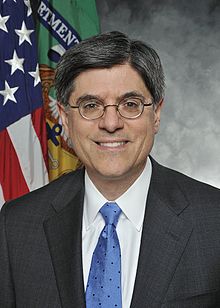
While generally upbeat about global economic prospects, former Treasury Secretary Jack Lew warned policymakers against “blowing a hole in the deficit” by cutting taxes and pursuing aggressive fiscal policy measures.
 |
| Jack Lew |
Lew delivered the opening keynote address at the Pershing INSITE conference on June 14 in San Diego. He was secretary of the Treasury from 2013 to 2017 under President Obama. He previously served as White House chief of staff in the Obama administration.
He spoke on the day Representative Steve Scalise and four others were shot in Washington and commended the bipartisan sympathies that had been expressed in Congress.
“The economy is ‘steady as you go’ in the U.S. and throughout the world,” Lew said, adding that growth is stronger in Europe than many people realize and the anxiety about China’s economic path has subsided.
Yet, he said, it is hard to reconcile the deep anxiety and anger expressed by many Americans with the positive economic conditions. It has to do with technology and globalization and the connection between the two, according to Lew.
Factories throughout the world are highly automated, he said, not because of lower labor costs but because of technology. “Technology is making the structure of manufacturing different,” Lew said.
Technology makes things more affordable but is threatening workers’ careers and those of their children, according to Lew.
Some things can help, like investment in infrastructure, which would “resurrect” blue-collar jobs, and the “retraining” of workers. But Lew worries that the merger of technology and globalization makes it too easy to blame America’s problems on “others.”
He said the U.S. should invest “fairly heavily” in infrastructure and “turn the corner” of education.
But, he said, we don’t need a tax cut.
“We don’t need to add fiscal stress in a world where the Fed is raising rates,” he said, which it had done before he spoke.
Looking abroad
China knows what it needs to do, Lew said. It must open its economy to market forces and become more entrepreneurial, and its politicians need to embrace that transition – “before it is too late.” It still has time, given its $3 trillion in currency reserves, Lew said. China will take those measures for itself, not for the U.S., because it needs the growth, according to Lew.
He was less optimistic about Europe, which he said lacks access to capital, which has driven higher unemployment. “We are seeing daylight now with looser credit, but banking reform is still needed, such as an FDIC-like backstop,” Lew explained. He added that Europe needs better fiscal policies and more aggressive use of them. He pointed out that the common currency (the euro) helps the countries that don’t use fiscal policy.
Politically, some European countries are “willing to look away” from facts and analysis, Lew said. He referenced Britain, which “should not have to go through what it is experiencing.” Britain is not benefitting from a weaker currency following the Brexit vote and its elections. He warned of “a long period without clarity.”
The economic risks facing Britain and other countries won’t lead to an economically-driven market shock in the U.S. or elsewhere, he said. Lew predicted steady growth and enough jobs to “start to make it feel better” among those in the U.S. who are nervous.
Lew was much more concerned about geopolitical threats than economic ones.
He specifically cited the idea that North Korea might have a usable nuclear weapon, the fact that ISIL is still growing, the threat posed by populism despite the leadership that France has shown, and cyber-risks that are “threating personal and national security.”
The uncertainty created by Trump was unpredictable and has threatened whether other countries can count on us as a reliable partner, according to Lew. “We don’t know what others will do,” he said, naming Australia and Japan as countries where U.S. relationships have been fraying. “That’s a story we won’t know the end of for a very long time,” Lew said.
Lew remarked on the lack of volatility in the VIX (a measure of volatility in U.S. equities), which shows that those threats are “not priced into the market.”
“Some unpleasant surprises will happen in the not too distant future,” Lew said, and those risks are not being priced in because “you have to put your money somewhere.”
Blowing a hole in the deficit
This is not when the U.S. should create a growing fiscal gap, he said, while Baby Boomers are retiring and “we have to pay their bills.”
If hard decisions like how to pay for tax reform and closing loopholes prove too difficult to make, then he said “having an insistence that you don’t blow a hole in the deficits should matter to both parties.”
A growing deficit “will limit the tools at our disposal,” Lew said. “Our flexibility to deal with growing problems will be more challenging.”
In the next half dozen years, he predicted that the “pendulum will swing back” in terms of policy direction. “Both sides are poisoning the well for potential compromise,” he said. He added that a pendulum swing does not necessarily mean clear control by one party; it could be a divided government.
When asked whether the rest of the world will continue to fund our deficits, Lew said, “The depth of our credit markets will not go away.” He said that things could change over the next 20, 30 or 50 years. “But what makes America a safe haven is that we get things done and we have a rule of law.” Our deficit and debt are at a “manageable level,” but if they get “out of control” it will have consequences, he said.
Lew did not speak to the question of whether tax cuts, such as those proposed by President Trump, could accelerate economic growth and eventually be self-funding. Nor did he speak to whether running a budget surplus and reducing the federal deficit would lead to deficits in the private sector. Many economists have claimed that the federal government should nearly always run a deficit and that the more salient issue is having the government invest in a way that is economically productive.
Read more articles by Robert Huebscher