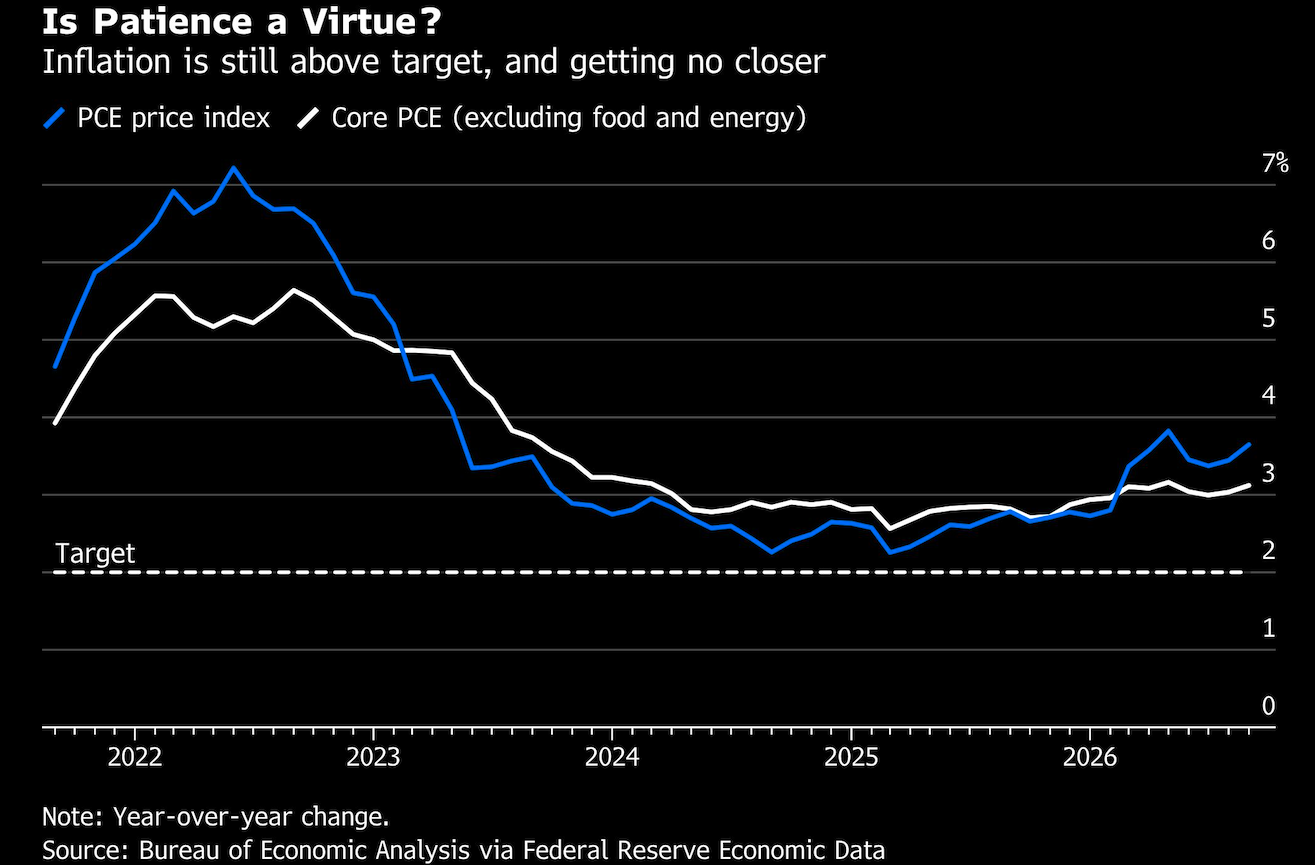
The Federal Reserve held short-term interest rates steady last week. If it does so again at its next meeting in December, it’ll need a better explanation.
Recent inflation figures have been surprisingly bad, and new data released after last week’s meeting underlined the message. The Fed’s preferred measure, the personal consumption expenditures price index, rose by 0.5% in September, the fastest since March. Excluding food and energy, the increase was 0.3%, for a year-over-year rise of 3.1%, higher than August and still well above the central bank’s 2% target.
Meanwhile, growth has picked up. In the third quarter, output grew by a solid 3.4% at an annual rate. The Fed’s new policy statement called the pace of expansion “strong” and domestic demand “resilient.” The labor market, despite fears that AI will destroy more jobs than it creates, is still at full employment.
All of which implies that the federal funds rate, at 3.75% to 4%, is still too low. Granted, hiking again just before midterm elections would’ve been awkward. And even now, some of the latest inflation overshoot is likely to be temporary. Tariffs and higher energy costs due to the war in Iran have pushed up prices; with time, assuming there’s no more bad news and expected inflation stays anchored, some of the excess should fade.
Yet if the Fed is tightly focused on price stability, as Chairman Kevin Warsh insists, it shouldn’t be happy with where things stand. Inflation has run significantly above target for more than five years. At some point, expectations will shift.
Warsh, famously skeptical of “forward guidance,” had nothing to say about what the Fed might do when it meets in December, except that the next six weeks would be “information-rich.” No doubt. What’s less clear is how the Fed will respond to this information as it arrives. Would a lack of further progress in lowering inflation call for a rate increase? If not, why not?
Beth Hammack, president of the Cleveland Fed, was one of two dissenters from the latest policy decision, calling for another quarter-point increase. In a recent speech, she noted how “Taylor”-type rules, which tie inflation and unemployment metrics to a particular path for rates, are a useful starting point in framing monetary policy. (Currently, the Cleveland Fed’s summary of this family of rules has a median recommended policy rate of 4.26%.) As she emphasized, such rules can’t dictate policy — the economy’s too complicated. But they offer a way for the Fed to make its thinking clearer to investors and the public by obliging it to say why it’s deviating.
Warsh is an innovator. He has established task forces to study various Fed policies and practices and has announced that he and his colleagues will move from eight annual rate-setting meetings to seven next year and six in 2028, to allow more time for big-picture discussions. As part of his intended reforms, Hammack’s comments deserve careful consideration. Ruling out forward guidance — firmly predicting what rates will be — is wise, except in extraordinary circumstances. But that leaves plenty of room for explaining how future decisions will take account of new information.
In any event, the chairman had better understand that his current approach — that the Fed is “committed to price stability” and the coming weeks will be “information-rich” — has a limited shelf life.