We believe that active engagement with issuers can help reduce credit risk, unlock value for investors, and influence positive impact on economies, societies and the environment. One important objective for PIMCO’s ESG (environmental, social and governance) initiative is to incorporate the UN Sustainable Development Goals (SDGs)into our engagement activity as a framework for focus, accountability and ultimately measuring impact.
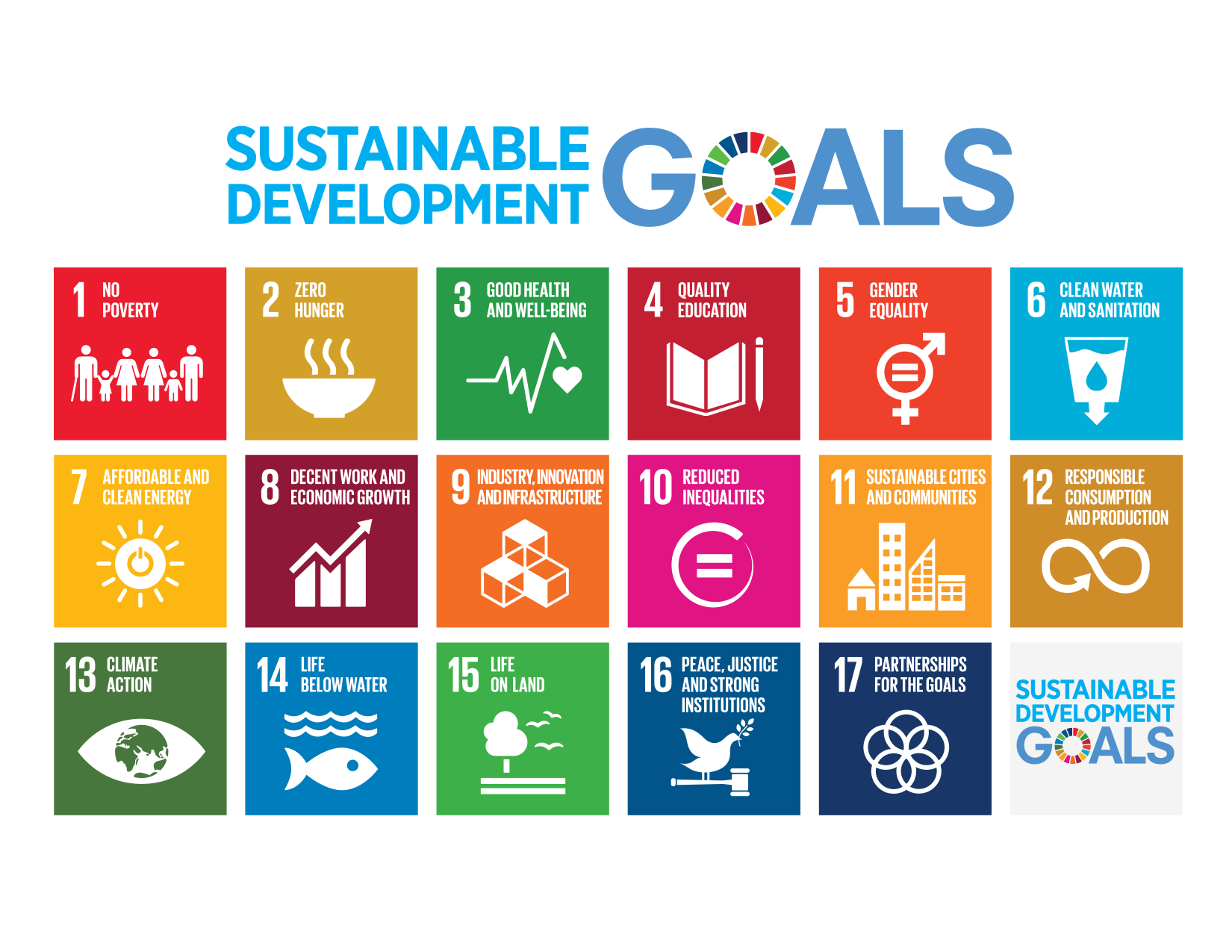
Since their publication in 2015, the 17 SDGs – see graphic below – have taken on a significant role in mobilizing action and cooperation by governments, companies and the financial community in advancing sustainable development. In November 2017, the world’s first sustainable development SDG bond was also issued.

Status review of current SDG activity
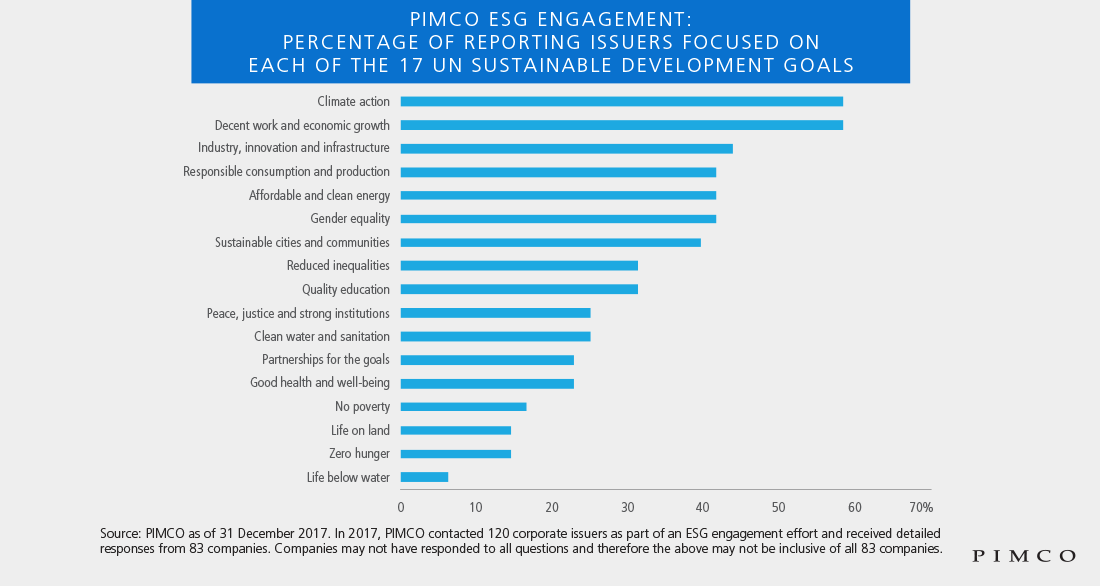
In 2017, PIMCO undertook a targeted engagement effort to encourage issuers to assess and disclose the SDGs that are most relevant to their business. Of the issuers who provided detailed responses to our questions, 58% are reviewing how their business can contribute to the advancement of the SDGs. Next steps would include quantifiable metrics such as revenues from products and services that directly support SDGs.
A tool for dialogue
Many of the issuers we contacted are testing the relevance of the SDGs for their business and are mapping the 17 goals to their activities. Some have moved to the next stage and identified priority SDGs where they can have the greatest impact. This mapping exercise can serve as a tool for investors looking to assess exposure to advancing the SDGs – see figure below.
This process also helps to identify critical links between different industries and the SDGs, as a talking point to develop industry-specific ideas for action.
For example, the banking sector is a key enabler of the SDGs. At the macroeconomic level, there is a clear link between financial inclusion and sustainable development, and the SDGs will be hard to achieve without bringing people into the banking system (Goal 10 – Reduced Inequalities). In addition, banks will play a critical role in helping to facilitate the transition to a low-carbon economy by developing a broad portfolio of investment options (Goal 7 – Affordable and Clean Energy) and integrating climate risks into underwriting practices (Goal 13 – Climate Action). For example, a number of banks have introduced policies that prohibit financing of new coal-fired power plants or new greenfield coal mines in OECD countries. In PIMCO’s ESG initiative, we seek to identify banks that prioritize lending to environmentally sensitive infrastructure projects (Goal 9 – Industry, Innovation and Infrastructure).
If you can’t measure it, you can’t change it
An increasing number of international actors, including the UN Global Compact and the Principles for Responsible Investment (PRI), have begun work to align investment practices and measurement methodologies with sustainability goals. PIMCO actively participates in the SDG initiatives of both of these organizations.
Ultimately, we want the ability to quantify and compare the contribution of each company to the achievement of the SDGs. It is not sufficient to know that an issuer is improving its social and environmental performance. We also want to understand its role in supporting the global ambitions agreed by world leaders in 2015.
ESG-focused investors seek to build portfolios that match their financial and impact goals. Issuers can support this effort by measuring and reporting the wider impact of their products and services on society and the environment.
Niamh Whooley is a senior vice president and ESG engagement analyst.
© PIMCO
© PIMCO
Read more commentaries by PIMCO