The measurement of inflation has been getting a lot of attention lately. Some modifications are underway, with more potentially to follow.
The Bureau of Economic Analysis recently announced technical changes to their calculation of specific components of the personal consumption expenditures (PCE) price index. The indices for portfolio management and investment advice services, computer software and legal services will be modified in the data to be released September 30, restating values for the past five years. The updates are logical. For example, the current portfolio management price measure tends to simply reflect the recent performance of the stock market. If a person pays a fixed 1% portfolio management fee, and their portfolio rises by 20%, it counts as a 20% rise in prices. The new calculation will draw on employment and hours in the sector, a more stable series than fees. The new approaches coming this year are forecast to reduce core PCE inflation by about 0.2%.
See more: Do Fiscal Rules Work?
These are not the only services that are difficult to capture in inflation calculations. Prices of healthcare services are rarely stated directly, nor fully paid by the patient. The cost of shelter is straightforward for renters, but an indirect proxy value for homeowners. Improvements are welcome, but any revisions must be communicated cautiously amid elevated scrutiny surrounding the independence of official statistics.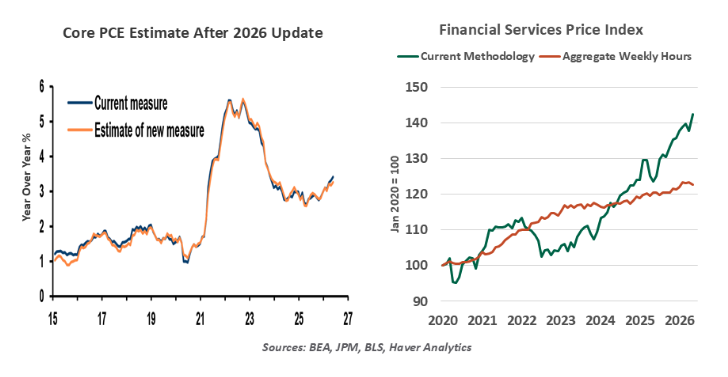
Fed Chair Kevin Warsh has announced five task forces to help steer how the Fed approaches its mandate. One group will focus on the Fed’s inflation framework, and one will review the Fed’s use of economic data. While the task force members have strong and varied credentials, the challenges these teams face will be twofold. First, the Federal Reserve relies on economic data produced by other agencies to gauge the labor market and price stability. Novel ideas may struggle to find uptake from resource-strained government statistical agencies.
