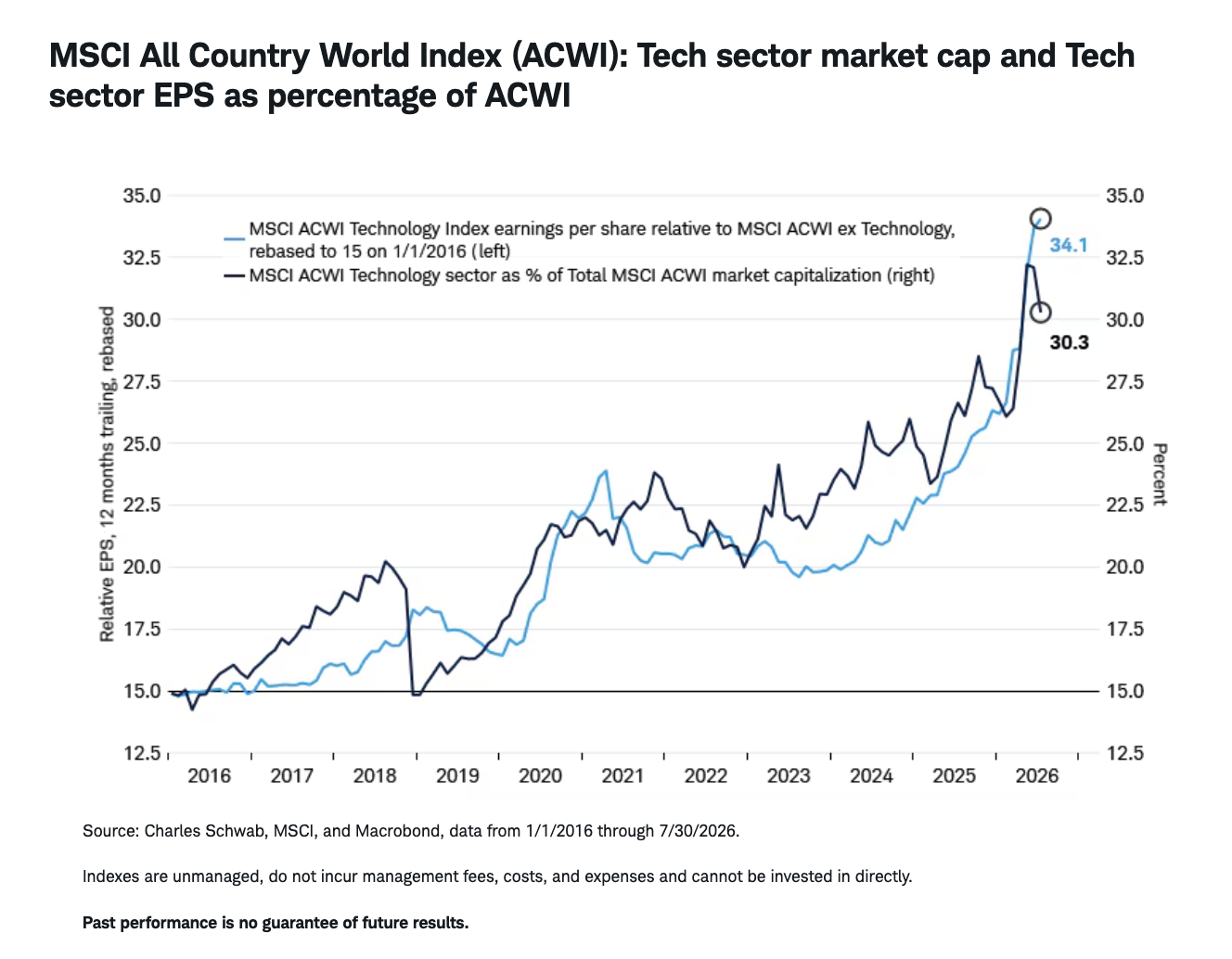
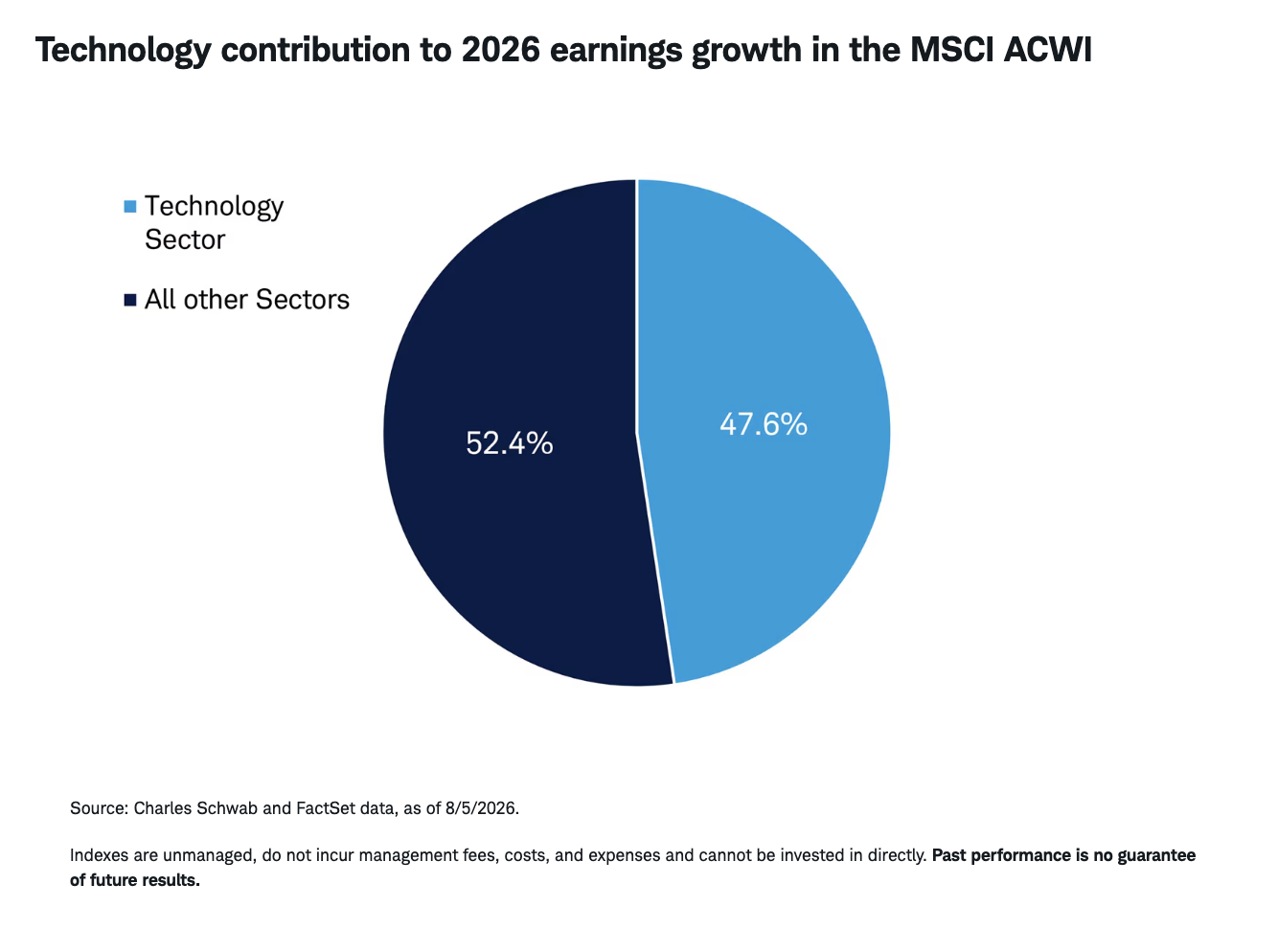
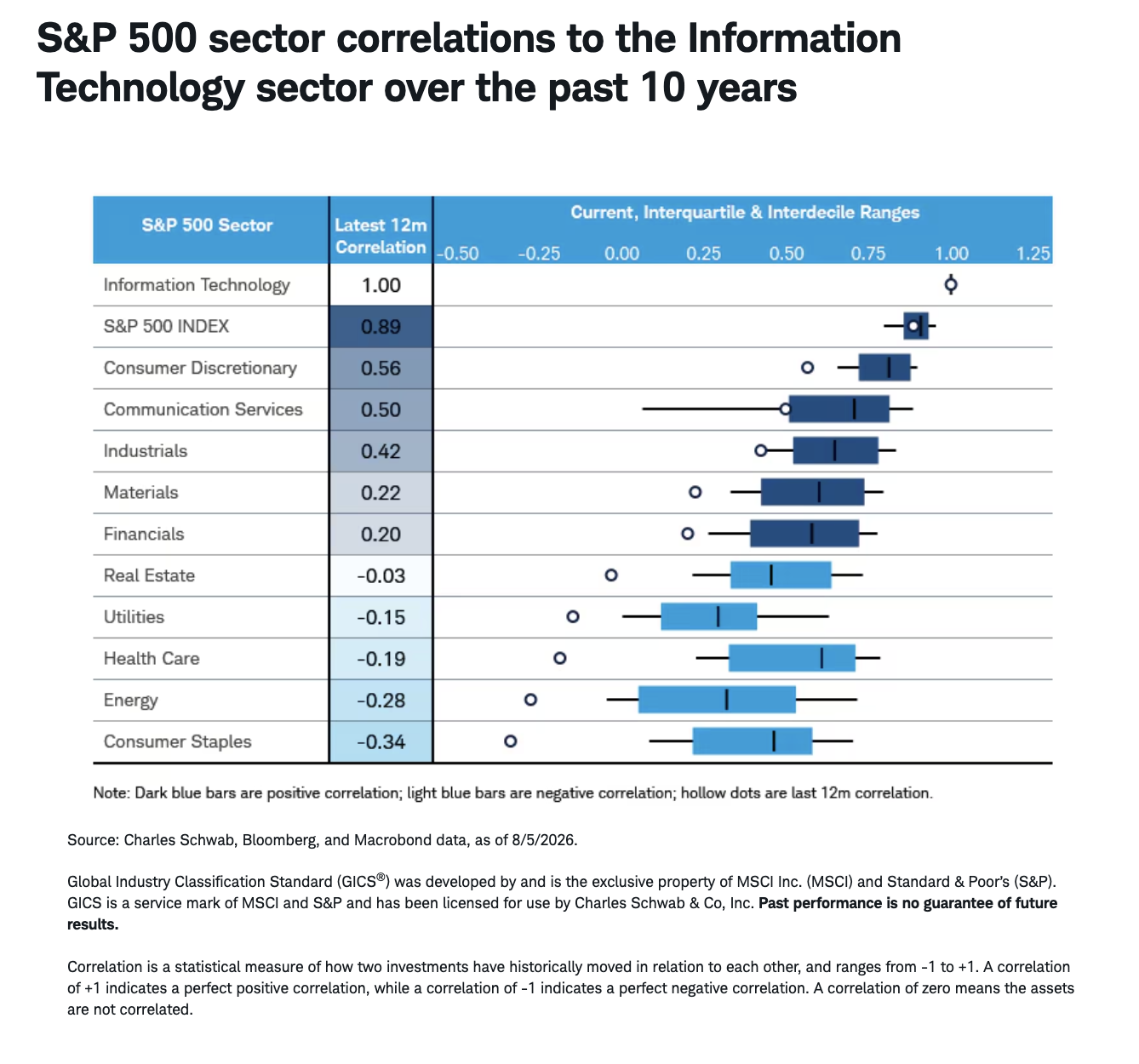
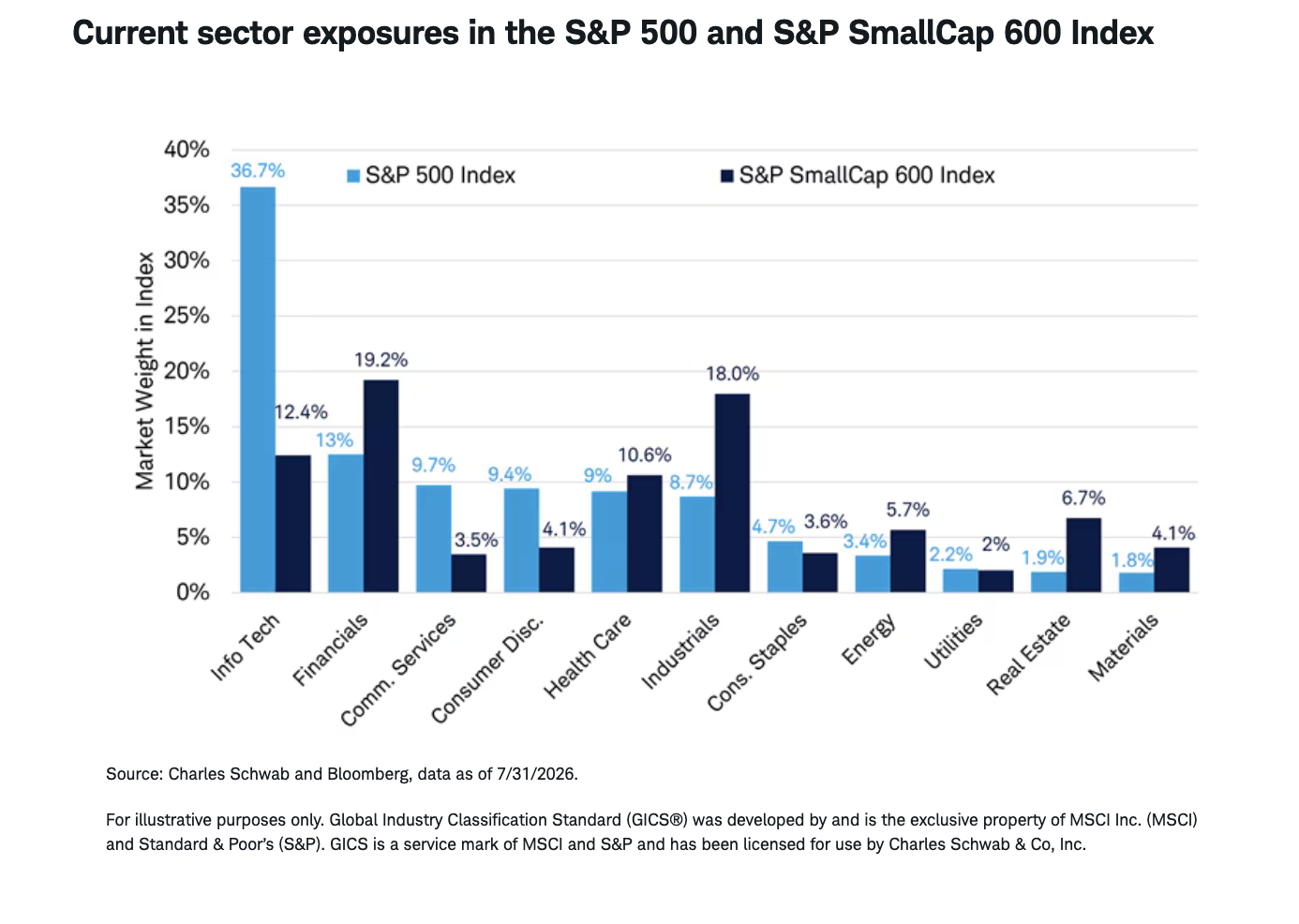
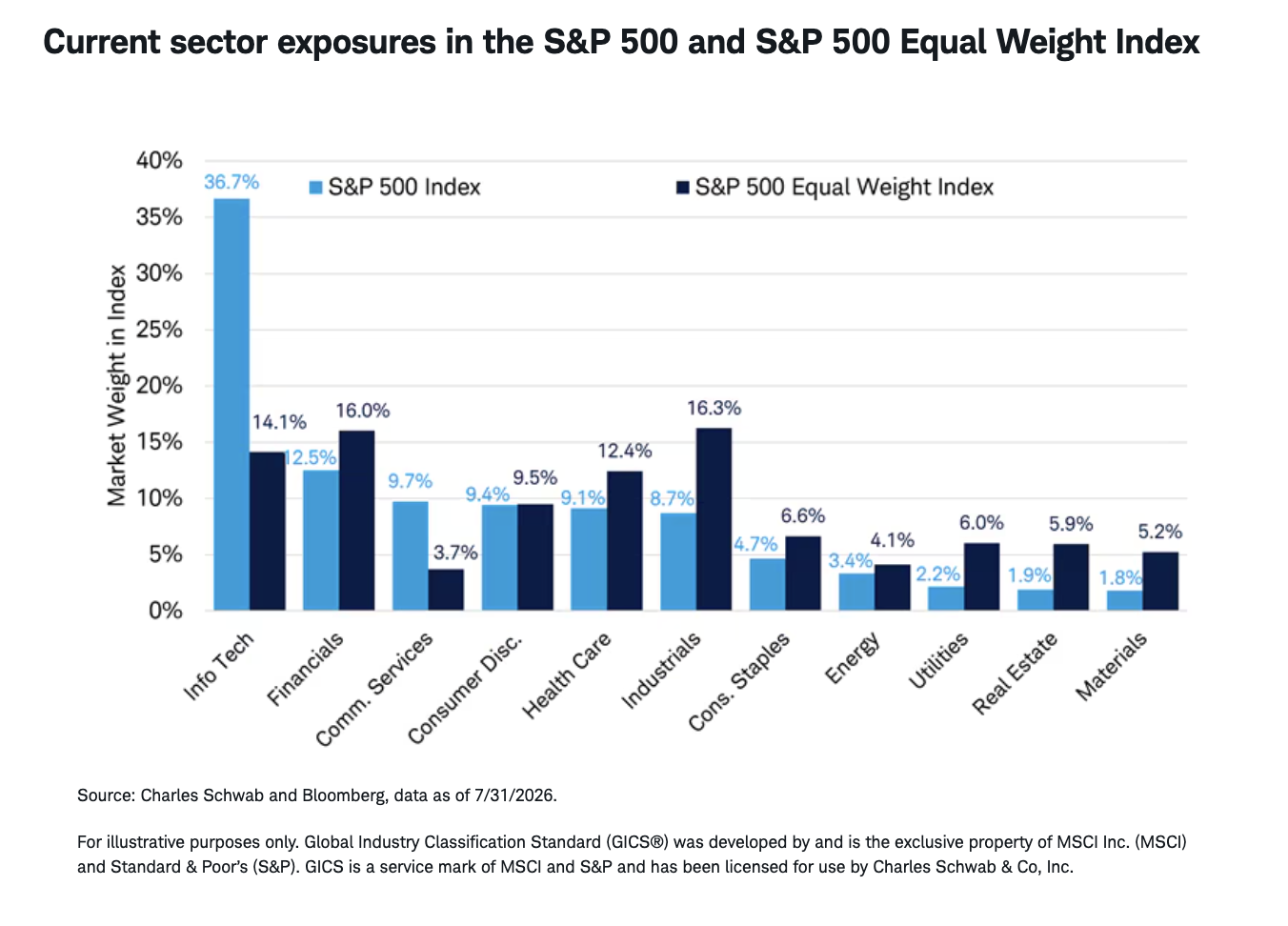
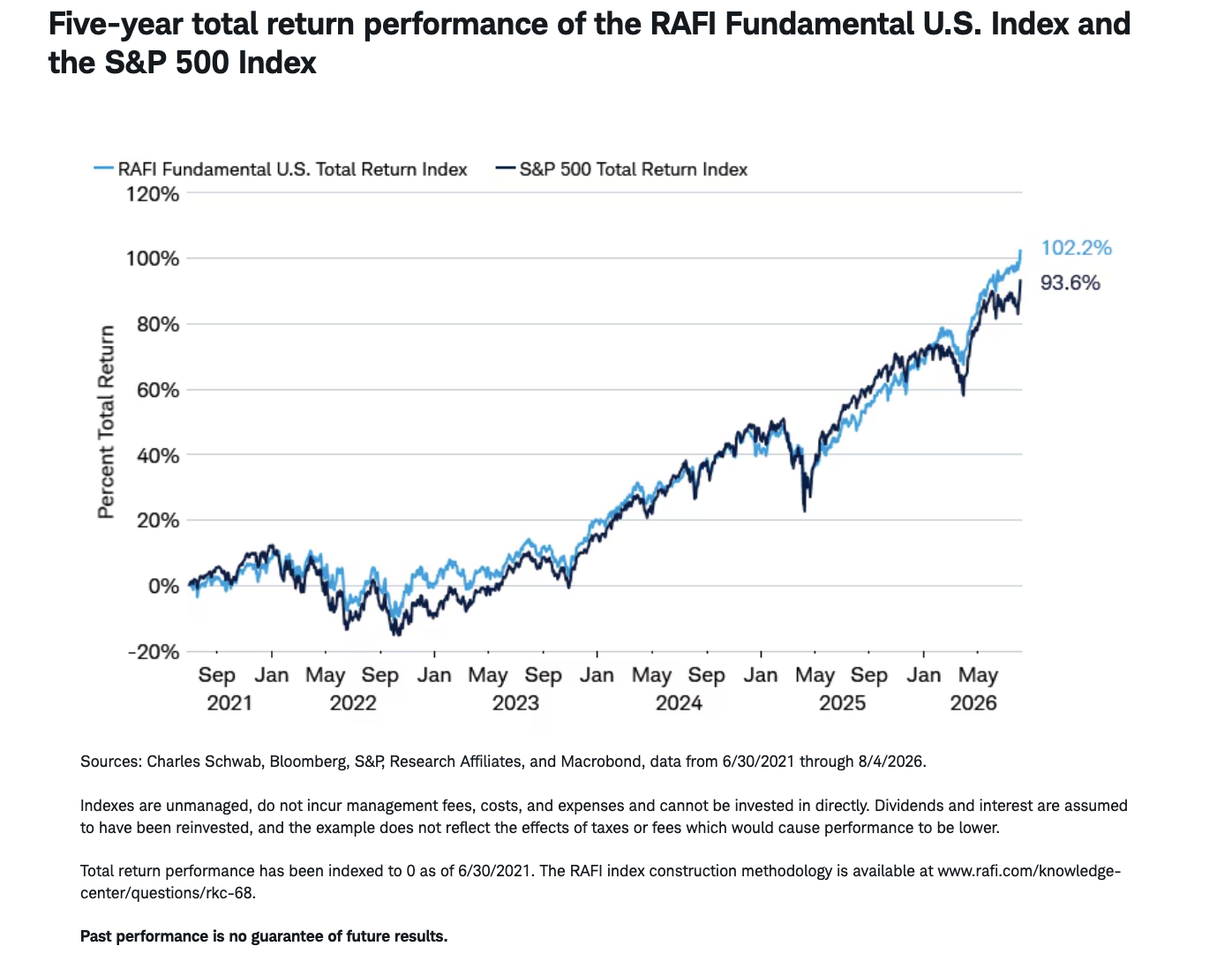
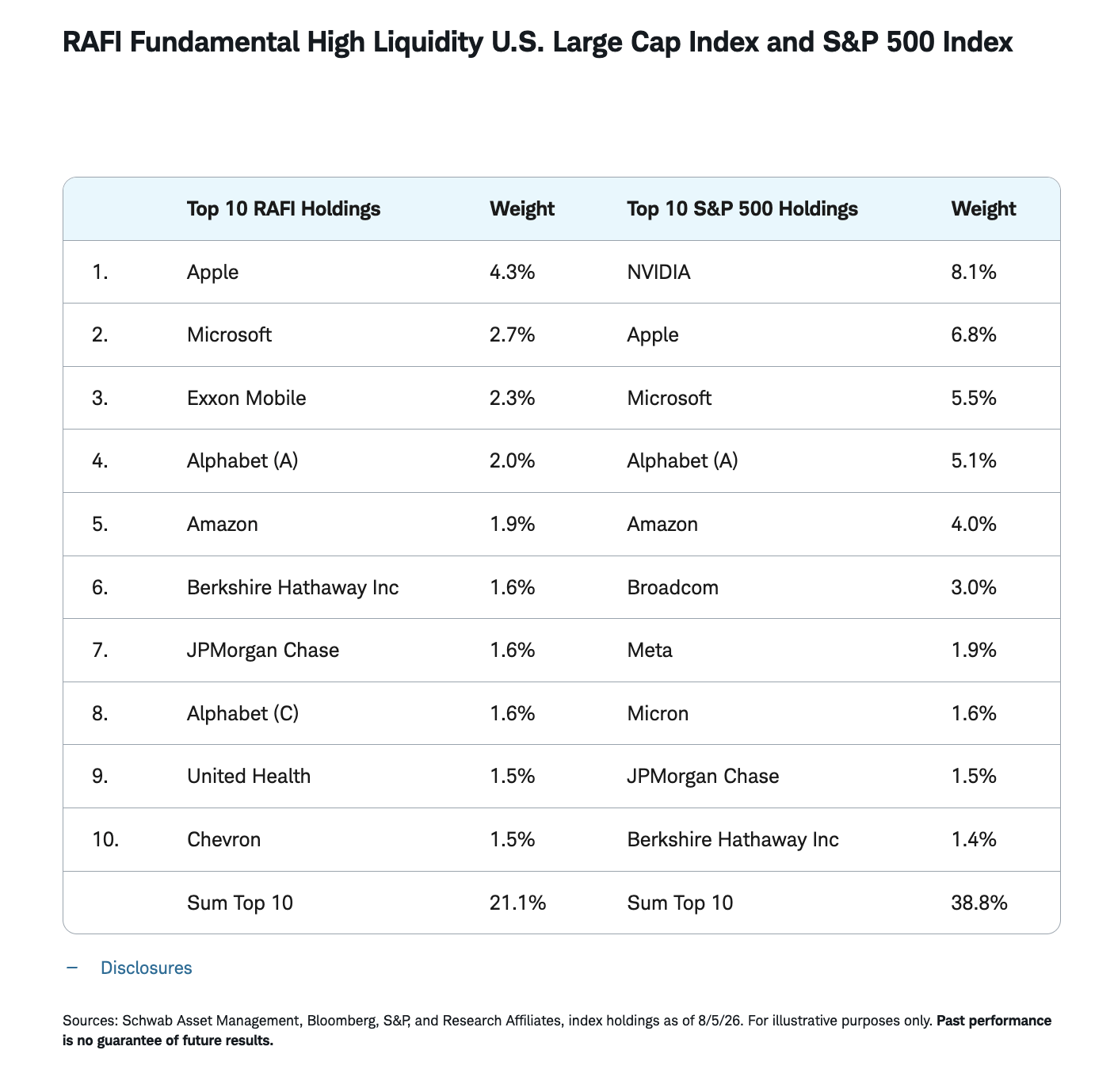
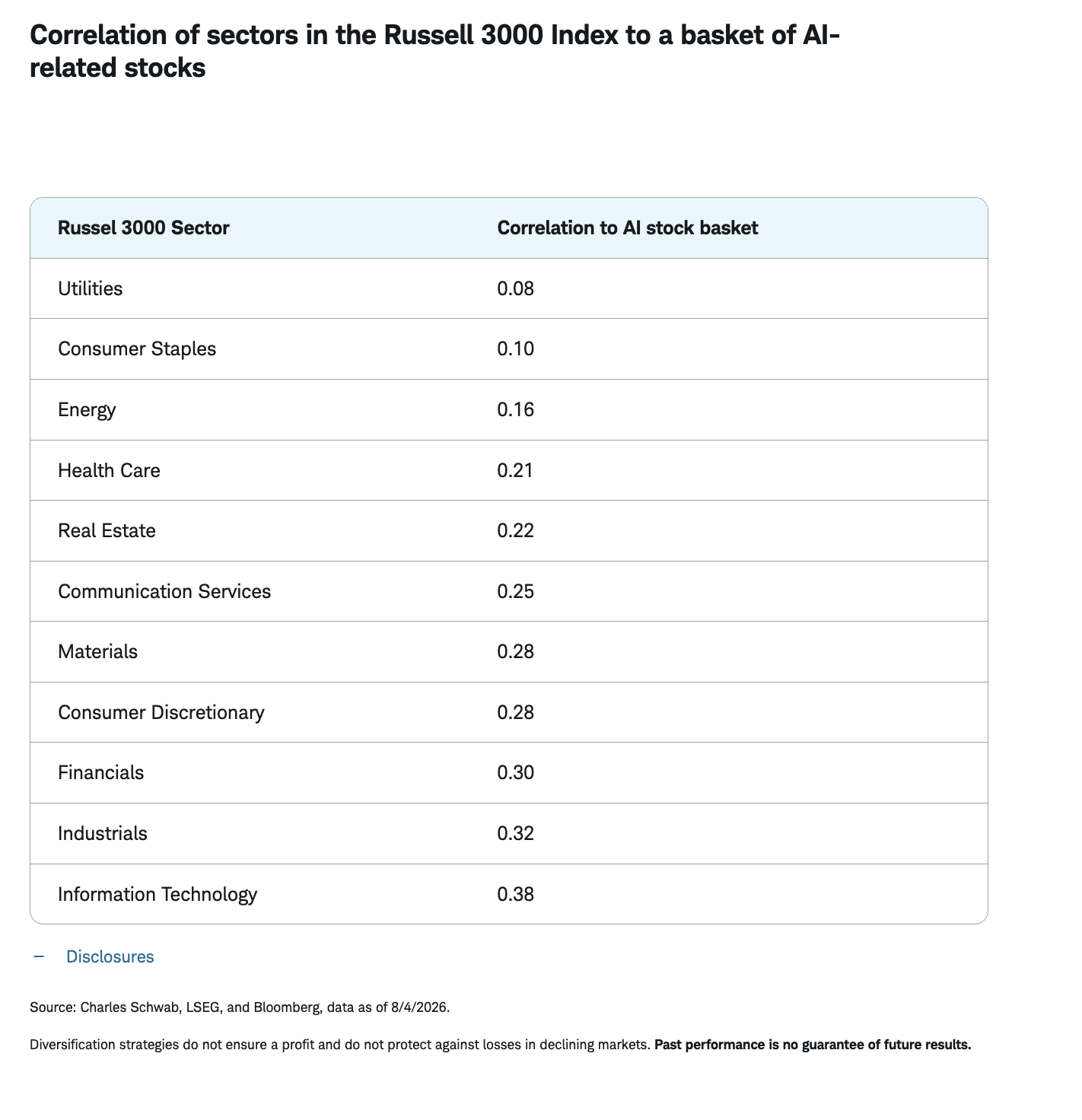
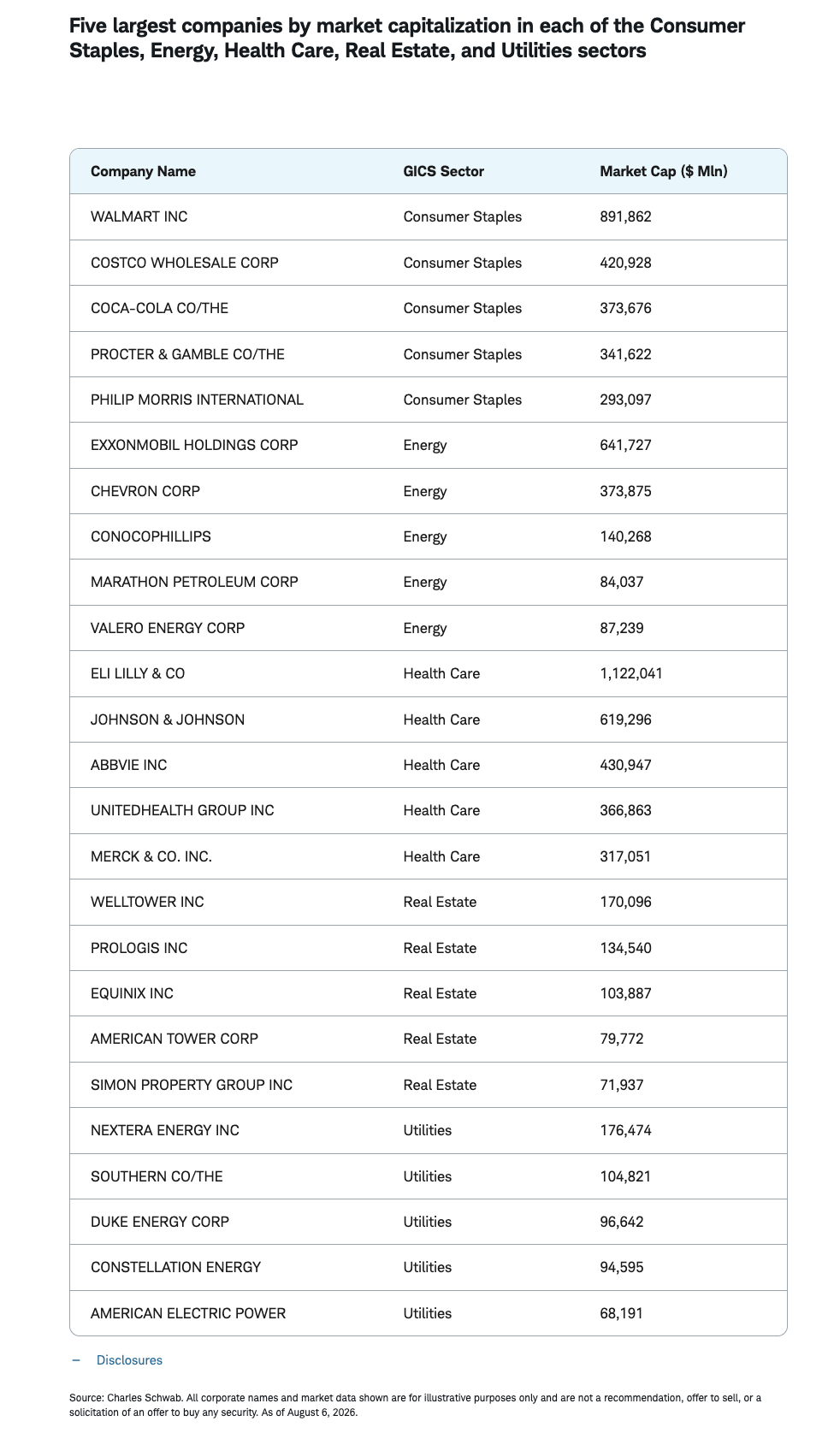
The underlying composition of equity indices is changing all the time. This can be a benefit to investors holding investments that track index funds as index composition typically shifts toward those companies and industries showing strong fundamental growth. But it can also be a risk if broad indices become dominated by any one particular source of return. A challenge for investors today is that the Technology sector now accounts for an unusually large share of global index composition and is expected to deliver more than half the entire global equity market’s earnings growth for 2026, according to consensus estimates and our calculations.
From our perspective, the combination of market cap and earnings concentration—and the circularity of these conditions (including the large reliance on the AI theme)—is where the risks add up.
These considerations do not mean we foresee an imminent end to the AI investment cycle or the powerful earnings growth it's generating. Rather, we acknowledge that there are any number of possible outcomes of this current technological innovation story. However, high Tech sector valuations combined with elevated earnings expectations imply that markets are discounting a quite optimistic outcome, based on our analysis. From this perspective, we see the risk outlook having shifted to the downside; that is, there are now greater downside risks than upside ones.
While we can’t predict how the AI innovation cycle will play out, we believe more active diversification can potentially improve risk-adjusted returns across a range of potential scenarios. This isn't a call to abandon the Tech sector or those companies most benefiting from the related investment cycle, but we do believe more actively diversifying portfolios is warranted. Of course, diversification alone does not ensure a profit nor protect against losses.
This material is intended for general informational and educational purposes only. This should not be considered an individualized recommendation or personalized investment advice. The investment strategies mentioned are not suitable for everyone. Each investor needs to review an investment strategy for his or her own particular situation before making any investment decisions.
All expressions of opinion are subject to change without notice in reaction to shifting market, economic or political conditions. Data contained herein from third party providers is obtained from what are considered reliable sources. However, its accuracy, completeness or reliability cannot be guaranteed.
Past performance is no guarantee of future results.
Investing involves risk, including loss of principal and for some products and strategies, loss of more than your initial investment.
International investments involve additional risks, which include differences in financial accounting standards, currency fluctuations, geopolitical risk, foreign taxes and regulations, and the potential for illiquid markets.
Investing in emerging markets may accentuate this risk.
For illustrative purposes only. All corporate names and market data shown are for illustrative purposes only and are not a recommendation, offer to sell, or a solicitation of an offer to buy any security.
Diversification, asset allocation and rebalancing strategies do not ensure a profit and do not protect against losses in declining markets.
Rebalancing may cause investors to incur transaction costs and, when a non-retirement account is rebalanced, taxable events may be created that may affect your tax liability.
Small-cap investments are subject to greater volatility than those in other asset categories.
Schwab does not recommend the use of technical analysis as a sole means of investment research.
Sectors are determined using the Global Industry Classification Standard (GICS®). Global Industry Classification Standard (GICS®) was developed by and is the exclusive property of MSCI Inc. (MSCI) and Standard & Poor's (S&P).
Indexes are unmanaged, do not incur management fees, costs, and expenses and cannot be invested in directly. For more information on indexes, please see schwab.com/indexdefinitions.
The Schwab Center for Financial Research is a division of Charles Schwab & Co., Inc.
Source: Bloomberg Index Services Limited. BLOOMBERG® is a trademark and service mark of Bloomberg Finance L.P. and its affiliates (collectively "Bloomberg"). Bloomberg or Bloomberg's licensors own all proprietary rights in the Bloomberg Indices. Neither Bloomberg nor Bloomberg's licensors approves or endorses this material, or guarantees the accuracy or completeness of any information herein, or makes any warranty, express or implied, as to the results to be obtained therefrom and, to the maximum extent allowed by law, neither shall have any liability or responsibility for injury or damages arising in connection therewith.
The MSCI All Country World Technology Index is a market-cap-weighted equity index designed to track the performance of large- and mid-cap companies in the Information Technology (IT) sector across all developed and emerging markets worldwide.
The MSCI ACWI ex Technology Index is a free float adjusted, market capitalization weighted index that measures the performance of large and mid cap equities across Developed Markets (DM) and Emerging Markets (EM) countries, excluding companies classified in the Information Technology (IT) sector under the Global Industry Classification Standard (GICS®).
The MSCI World ex USA Index measures the performance of large and mid-cap companies across developed markets, excluding the United States.
The S&P 500 Equal Weight Index (EWI) is an alternative version of the widely used S&P 500 index. The S&P 500 Equal Weight Index assigns the same weight to each of the 500 companies in the S&P 500, giving smaller companies equal influence as the largest ones.
The RAFI Fundamental U.S. Index is a non-market-cap-weighted index that selects and weights U.S. companies based on fundamental measures of size, such as book value, cash flow, sales, and dividends, rather than stock price.
The RAFI Fundamental High Liquidity US Large Cap Index weights companies based on fundamental measures of size rather than market capitalization, applying liquidity screens and systematic contrarian rebalancing to capture potential excess returns.
MSCI China represents a market-cap-weighted index of investable Chinese equities, tracking the performance of major Chinese companies accessible to international investors.
The MSCI Brazil Index is a benchmark that measures the performance of large and mid-cap Brazilian stocks, covering about 85% of the country’s equity market.
The MSCI Canada Index tracks the performance of large and mid-cap Canadian equities, covering approximately 85% of the free float-adjusted market capitalization in Canada.
The MSCI Germany Index is designed to measure the performance of the large and mid-cap segments of the German market.
The MSCI India Index is a benchmark that tracks the performance of large- and mid-cap Indian stocks, serving as a key reference for global investors in the Indian equity market.
The MSCI Japan Index is designed to measure the performance of the large and mid-cap segments of the Japanese market.
The MSCI Korea Index is a global equity benchmark that measures the performance of the large- and mid-cap segments of the South Korean stock market from the perspective of international investors.
The MSCI United Kingdom Index is designed to measure the performance of the large and mid-cap segments of the UK market.
The MSCI Switzerland Index is designed to measure the performance of the large and mid-cap segments of the Swiss market.
The MSCI Taiwan Index is designed to measure the performance of the large and mid-cap segments of the Taiwan market.
A message from Advisor Perspectives and VettaFi: Discover something new! Click here to register for our upcoming webcasts.