Keeping The Pace Up
Membership required
Membership is now required to use this feature. To learn more:
View Membership Benefits
Outdoor sports and exercise are more difficult at the height of summer. Runners slow their paces, and teams start their practices early to beat the heat. Competitors must marshal their energy carefully to perform at their best.
The U.S. economy is managing its pace well. Volatile energy prices, uncertain inflation and ongoing geopolitical risks could be too much for a more fragile economy to bear, but the U.S. hasn’t lost its stride. Activity has sustained despite a range of uncertainties.
However, hot conditions raise the risks of both overheating or a sudden crash. We remain vigilant in our monitoring, but at this time, growth appears sustainable. Following are our thoughts on the outlook.
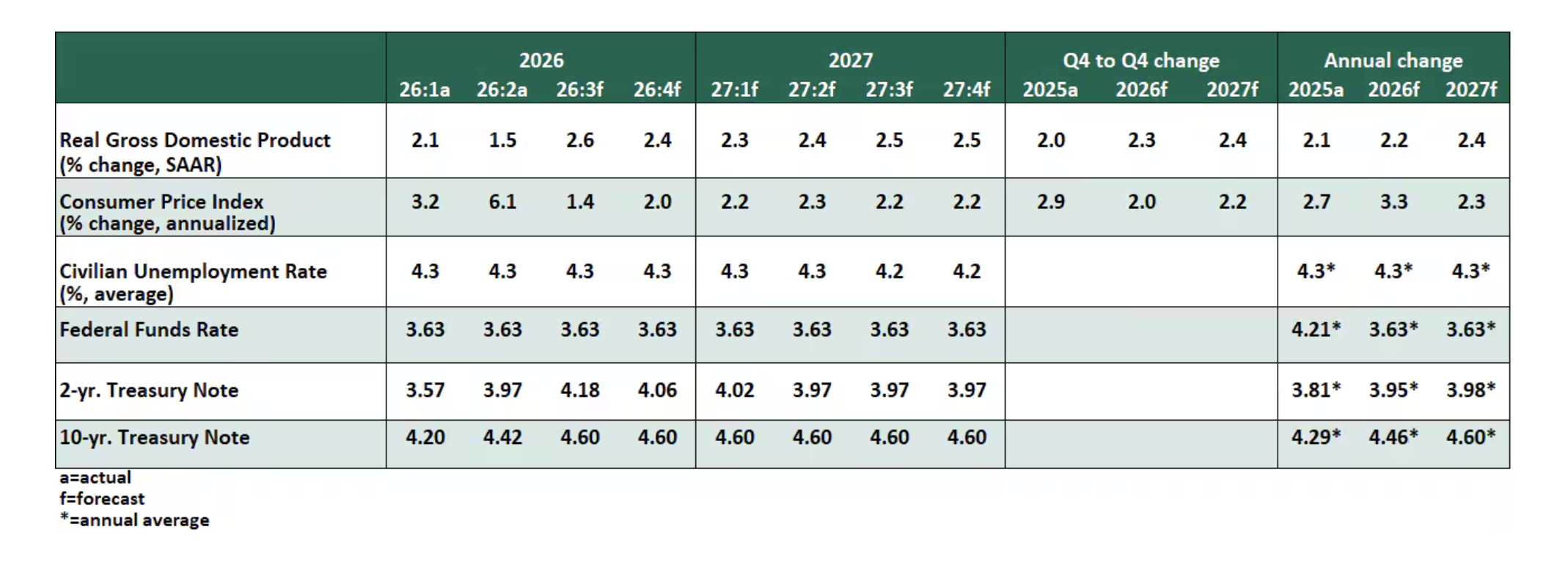
See more: A Market Ahead of Its Economy
INFLUENCES ON THE FORECAST
- The U.S. economy grew at an annualized rate of 1.5% in the second quarter. The details of the reading revealed drags from inventory drawdowns, the trade deficit and slower government spending. Consumption and business investment each rebounded, reflecting underlying strength. Business spending on technology is a bulwark of growth, but also a driver of elevated imports.
- Consumer demand appears increasingly uneven. Tech-led strength in equity markets is helping to support aggregate spending. At the same time, softer retail sales and purchasing-power pressures from still-elevated prices suggest that growth is more reliant on higher-income households than in prior cycles.
- Inflation remains above target. The July consumer price index (CPI) weighed in with a 3.4% annual increase, or 2.5% excluding food and energy. Underlying details showed modest monthly price gains across most categories, but little evidence of broad inflationary shocks from energy prices or tariff pass-through. The price index on personal consumption expenditures (PCE), the basis of the Fed’s 2% objective, is running hotter, most recently 3.7% headline and 3.3% core. Energy markets remain the principal source of uncertainty, with developments in the Middle East creating the risk that headline inflation could reaccelerate.
- The labor market is a growing source of debate, but not yet a reason for alarm. Payroll employment showed a net loss in July, and there were significantly negative revisions to readings for the prior two months. The unemployment rate fell one tenth to 4.1%, but for the discouraging reason of a reduction in the size of the labor force, leaving fewer people estimated to be out of work. The monthly employment report suffers from low response rates and is adjusting to a baseline of slower immigration, adding to noise in the results. Concurrent indicators like unemployment claims and the Job Openings and Labor Turnover Survey suggest both layoffs and hiring remain subdued.
- Federal Reserve uncertainty remains unusually high. Chair Warsh has drawn criticism for refusal to share any thoughts on economic developments in his public appearances. He has affirmed the Fed’s commitment to the 2% inflation target. At the July meeting of the Federal Open Market Committee, three voting members dissented in favor of a hike, expressing hope in subsequent statements that a small move today could prevent the need for a larger rate hike later. A reheating of inflation could bring a majority of the committee to their side. We anticipate inflation will work its way down gradually, allowing the Fed to hold rates steady.
- Kevin Warsh will have a chance to clarify his posture during his plenary address to the upcoming Jackson Hole conference. Those remarks should set the tone for policy during the balance of the year.
- Longer-term yields remain pressured by fiscal concerns, global sovereign issuance, corporate borrowing needs, and energy-price volatility. A lack of forward guidance may also have added to the bond repricing. We anticipate stable inflation and restrained labor costs will temper the market forces pushing up long-end yields, but offer little relief.
- The forecast continues to assume that the Middle East conflict does not significantly escalate. If the way forward is less peaceful, the U.S. economy is well-insulated from the worst effects of a global shock. The key risk would be inflation as prices of commodities like oil and fertilizer are set on a global basis. The longer the conflict wears on, the greater the risk of unforeseeable supply chain disruptions.
A message from Advisor Perspectives and VettaFi: Discover something new! Click here to register for our upcoming webcasts.
Membership required
Membership is now required to use this feature. To learn more:
View Membership BenefitsSponsored Content
Upcoming Virtual Events View All