The term “backfire” originally referred to the intentional burning of underbrush when there is a wildfire on the horizon, to keep a bad situation from turning worse. Over time, however, backfire has come to mean an action that makes a bad situation worse.
Last week, efforts by the U.S. Treasury Department to bring down long term interest rates backfired. While the administration has vowed to sustain the effort, the bond market appears unmoved.
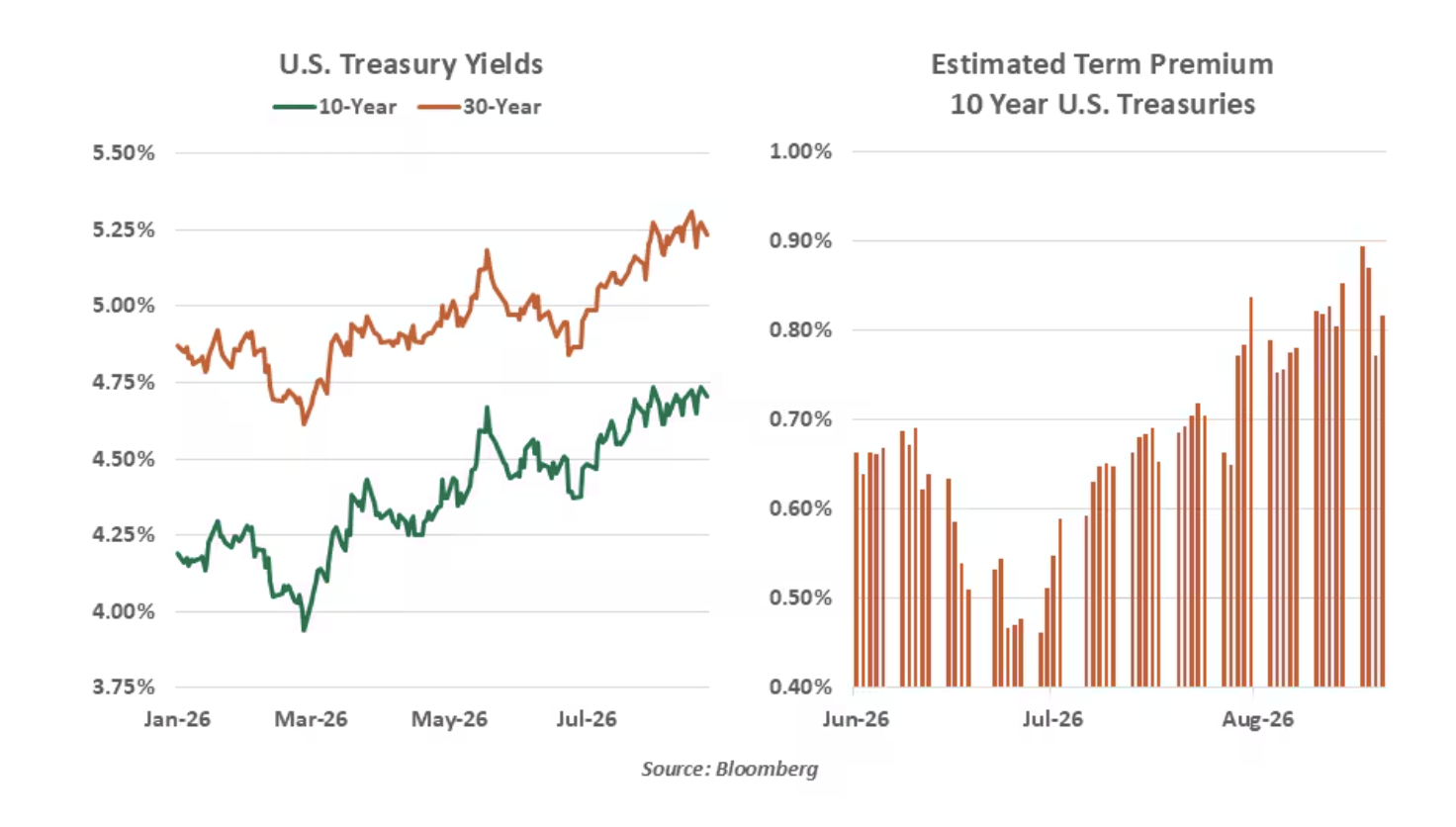
Yields have been rising throughout this year. Inflation has been an issue, debt is escalating and the AI buildout has created immense demand for credit. The term premium, which measures the compensation that investors demand for holding long-term bonds, has risen sharply since the end of June.
Public officials are very sensitive to the level of interest rates, as they drive government borrowing costs and consumer sentiment. The temptation to contain them is substantial, as evidenced by the U.S. administration’s efforts to gain more influence over the Federal Reserve.
On August 19, the Secretary of the Treasury announced his intention to steer long-term yields more actively. Bond markets initially rallied, but quickly retreated.
See more: Long TIPS Yield 3%. Time to Buy?
Interventions in deep markets must be large and persistent to have a real impact; it is not clear that the Treasury has the ability to keep up the effort at scale. Unlike the Federal Reserve, the Treasury cannot print money to pay for its program. (The new Chair of the Federal Reserve is actually advocating for a reduction in its holdings of Treasury bonds.)
The situation called unwanted attention to America’s fiscal challenges. Deficits continue to run at an unhealthy rate, and the national debt recently crossed $40 trillion. It also created potential friction with the Fed in advance of this year’s Jackson Hole conference, adding to the drama surrounding Kevin Warsh’s keynote speech.
It’s almost impossible for Treasury officials to create a fire break in the financial markets. The best way to extinguish rising rates would be through better fiscal discipline, but that is not on the horizon.
Carl Tannenbaum is the Chief Economist for Northern Trust.
Information is not intended to be and should not be construed as an offer, solicitation or recommendation with respect to any transaction and should not be treated as legal advice, investment advice or tax advice. Under no circumstances should you rely upon this information as a substitute for obtaining specific legal or tax advice from your own professional legal or tax advisors. Information is subject to change based on market or other conditions and is not intended to influence your investment decisions.
© 2026 Northern Trust Corporation. Head Office: 50 South La Salle Street, Chicago, Illinois 60603 U.S.A. Incorporated with limited liability in the U.S. Products and services provided by subsidiaries of Northern Trust Corporation may vary in different markets and are offered in accordance with local regulation. For legal and regulatory information about individual market offices, visit northerntrust.com/terms-and-conditions.
A message from Advisor Perspectives and VettaFi: Discover something new! Click here to register for our upcoming webcasts.
© Northern Trust
More Nuclear Energy Topics >