Vigilante movies have always been popular with audiences. From Clint Eastwood (Dirty Harry) to Halle Berry (Catwoman) to Denzel Washington (The Equalizer), characters that take justice into their own hands when systems fail are seen as heroes.
With global interest rates rising rapidly, some are wondering whether investors are meting out fiscal justice where policy makers have failed to provide it. The current day is reminiscent of forty years ago, when bond vigilantes arrived on the scene.
The American economy struggled in the early 1980s. A primary cause was very restrictive monetary policy, which aimed at taming inflation that had reached 15%. By the middle of 1983, inflation had fallen to 2.5%; pressure was mounting on the Federal Reserve to reduce overnight interest rates, which still stood near 10%.
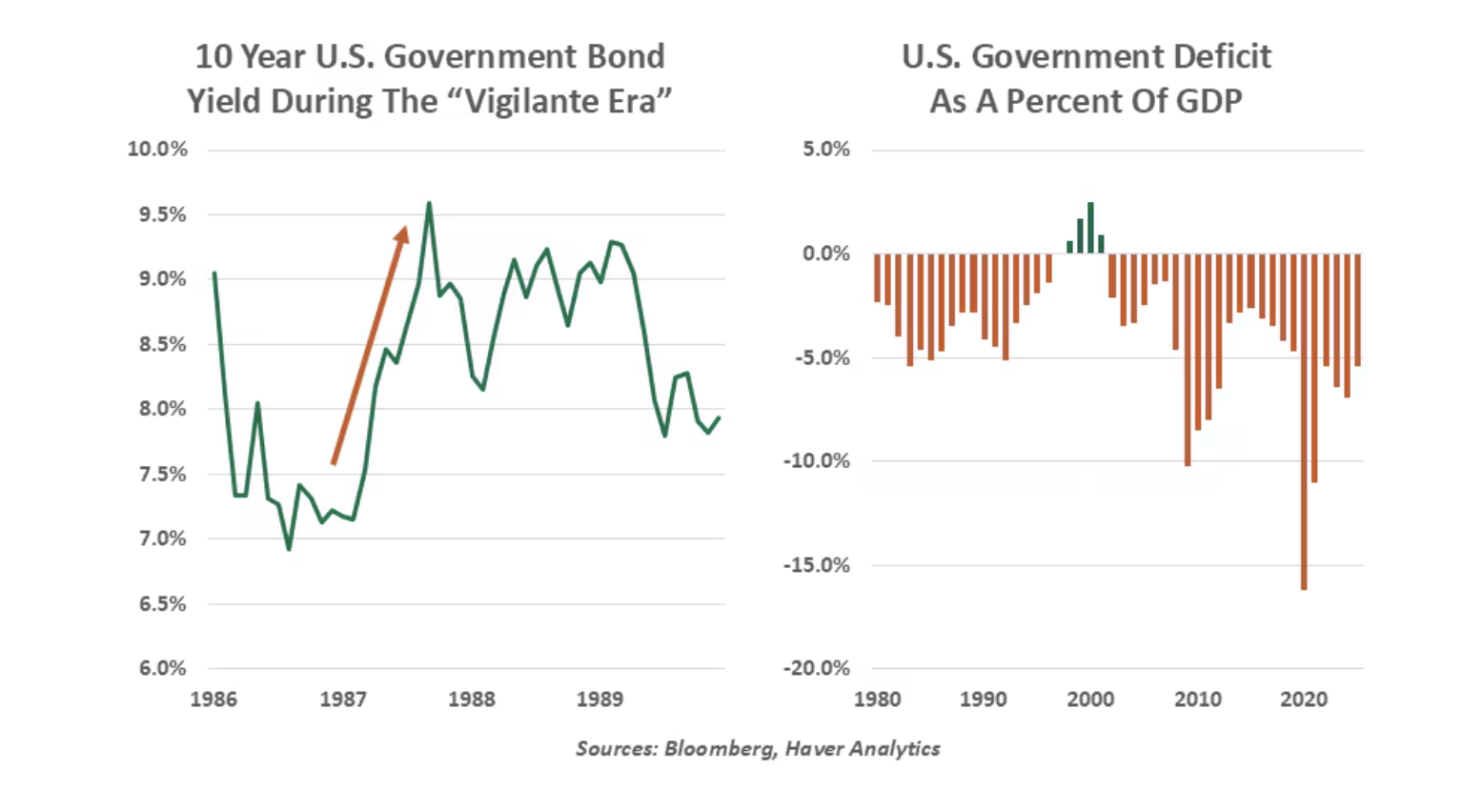
Paul Volcker was the Fed chair at the time. He was concerned that the government’s trend toward running big budget deficits could cause the economy to overheat. The annual deficit was close to 5% of gross domestic product (GDP), just below today’s levels. High interest rates, he argued, were an important counterbalance.
See more: Have a Process for Decisions on Major Changes at Your Firm
This did not sit well with the Reagan Administration, which favored lower borrowing costs. A series of new appointments to the Federal Reserve Board began turning the tide; rates were gradually cut to 6%, and Volcker eventually chose to resign rather than be out-voted.
Concerned by a perceived lack of policy discipline, investors bid interest rates up by more than 200 basis points in seven months in 1987. The economist Ed Yardeni attributed the retreat to “bond vigilantes.” Ever since, the threat of vigilantism has loomed over government bond markets; recent expressions have been seen in the United Kingdom and France.
As of this writing, the 10-year U.S. Treasury yield has risen 120 basis points since February. War-related inflation is certainly a factor, but the trend may also reflect investor discontent with monetary and fiscal policy that is seen as too loose. A commitment to better discipline on both fronts may be needed to keep the vigilantes at bay.
Carl Tannenbaum is the Chief Economist for Northern Trust.
Information is not intended to be and should not be construed as an offer, solicitation or recommendation with respect to any transaction and should not be treated as legal advice, investment advice or tax advice. Under no circumstances should you rely upon this information as a substitute for obtaining specific legal or tax advice from your own professional legal or tax advisors. Information is subject to change based on market or other conditions and is not intended to influence your investment decisions.
© 2026 Northern Trust Corporation. Head Office: 50 South La Salle Street, Chicago, Illinois 60603 U.S.A. Incorporated with limited liability in the U.S. Products and services provided by subsidiaries of Northern Trust Corporation may vary in different markets and are offered in accordance with local regulation. For legal and regulatory information about individual market offices, visit northerntrust.com/terms-and-conditions.
A message from Advisor Perspectives and VettaFi: Discover something new! Click here to register for our upcoming webcasts.
© Northern Trust
More Income Topics >