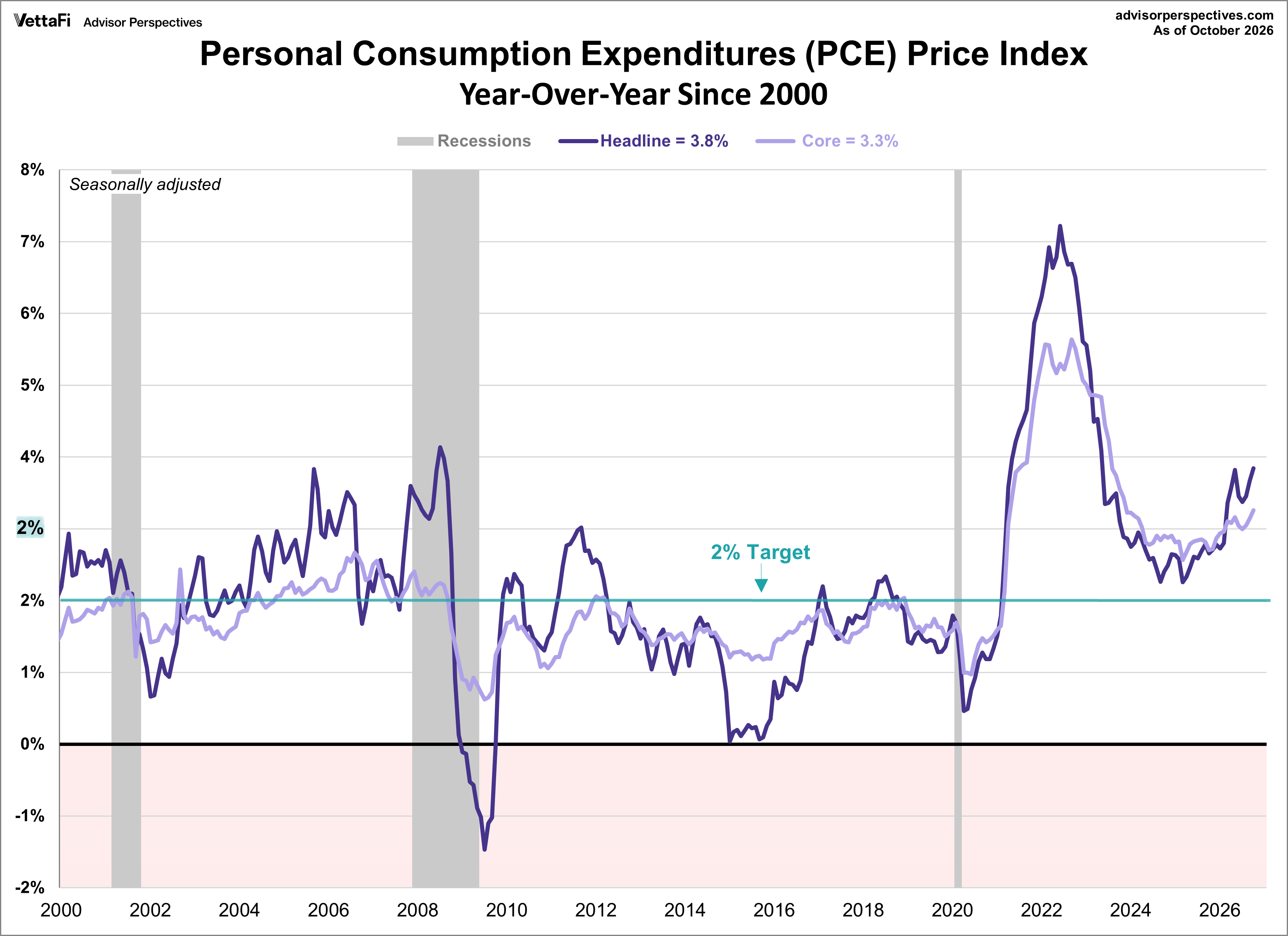
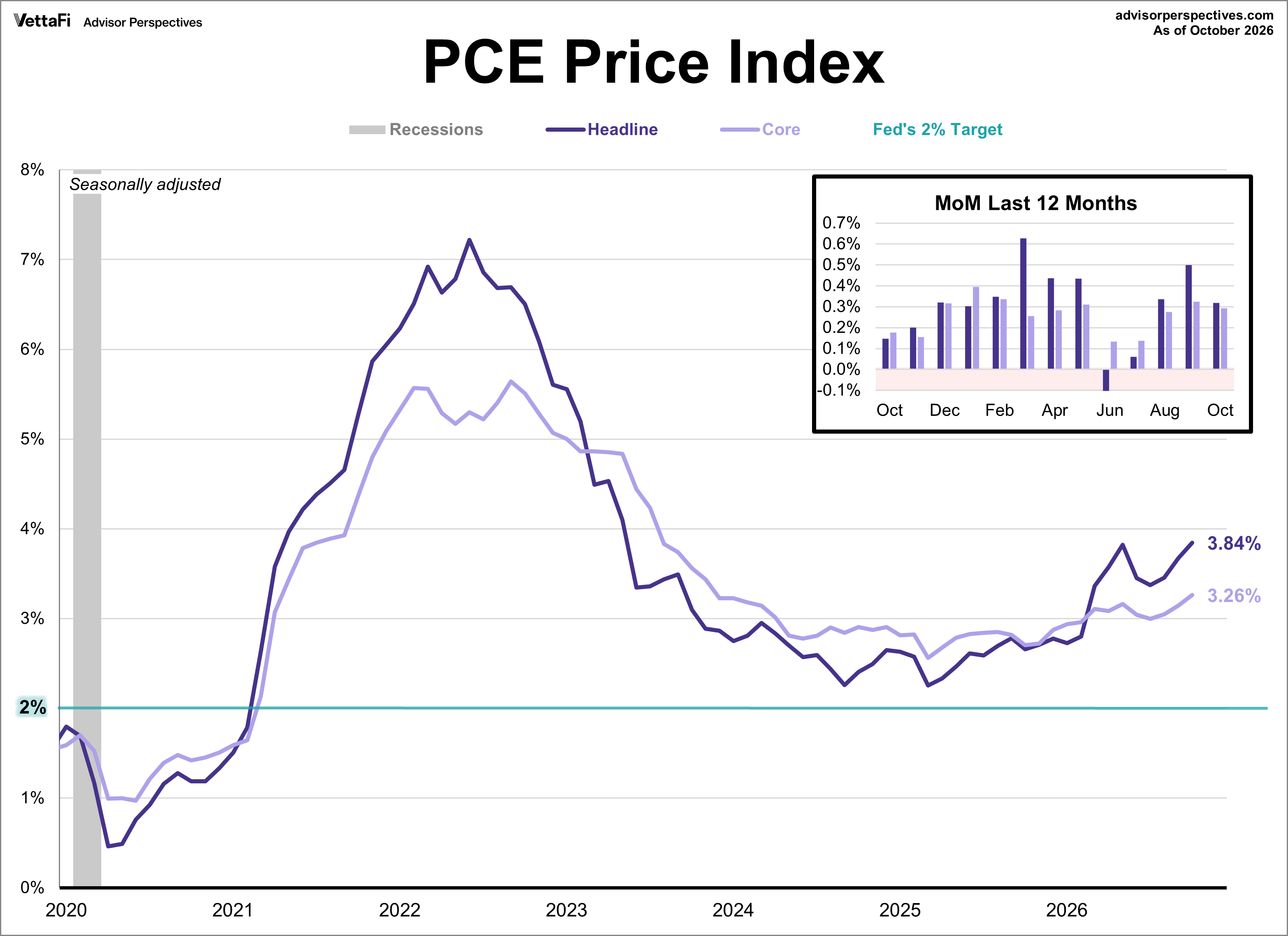
The Federal Reserve’s preferred inflation gauge, the core PCE price index, climbed 3.3% year-over-year in October, exceeding the 3.2% forecast. This is an uptick from September's 3.1% reading and marks the highest level in almost three years. On a monthly basis, core prices rose 0.3% as expected.
Headline PCE rose 3.8% year-over-year and 0.3% on a monthly basis, both in line with their respective forecasts.
Understanding the PCE Price Index
Personal consumption expenditures (PCE) track the actual spending habits (personal consumption) of domestic consumers. The headline number includes all categories, capturing the immediate "sticker shock" felt by households at the pump and grocery store. Core PCE excludes food and energy, making it less volatile than the headline PCE and thus provides a clearer view of long-term inflation trends.

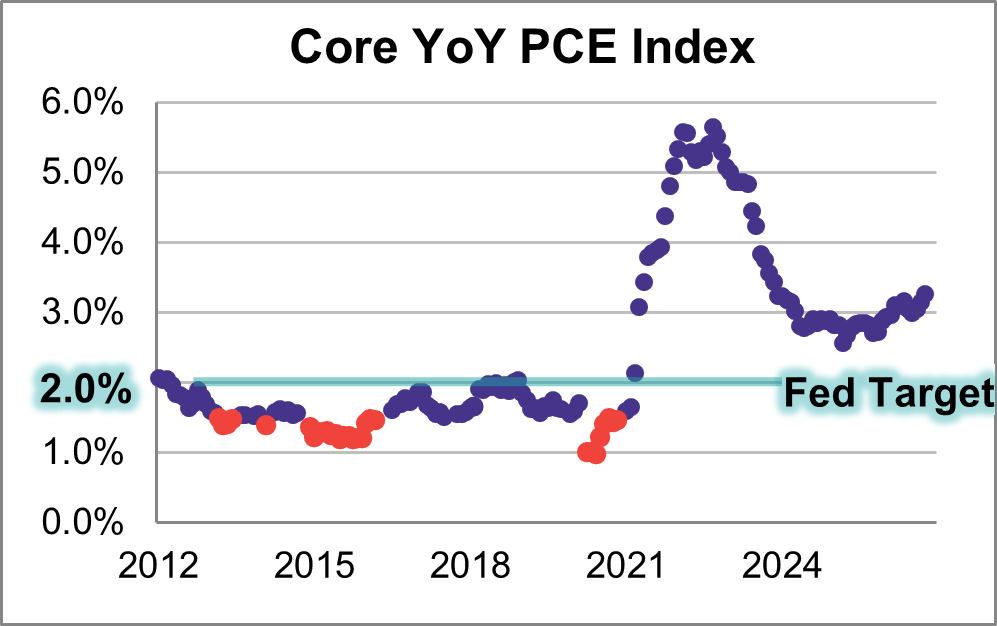
The adjacent thumbnail gives us a close-up of the trend in YoY core PCE since January 2012. The first string of red data points highlights the 12 consecutive months when core PCE hovered in a narrow range around its interim low. The second string highlights the lower range from late 2014 through 2015. Core PCE shifted higher in 2016 with a decline in 2017, 2019, and 2020, with a major jump in 2022.
The following chart illustrates the monthly year-over-year changes since 2000, with the 2% benchmark highlighted as the Fed's ultimate target.
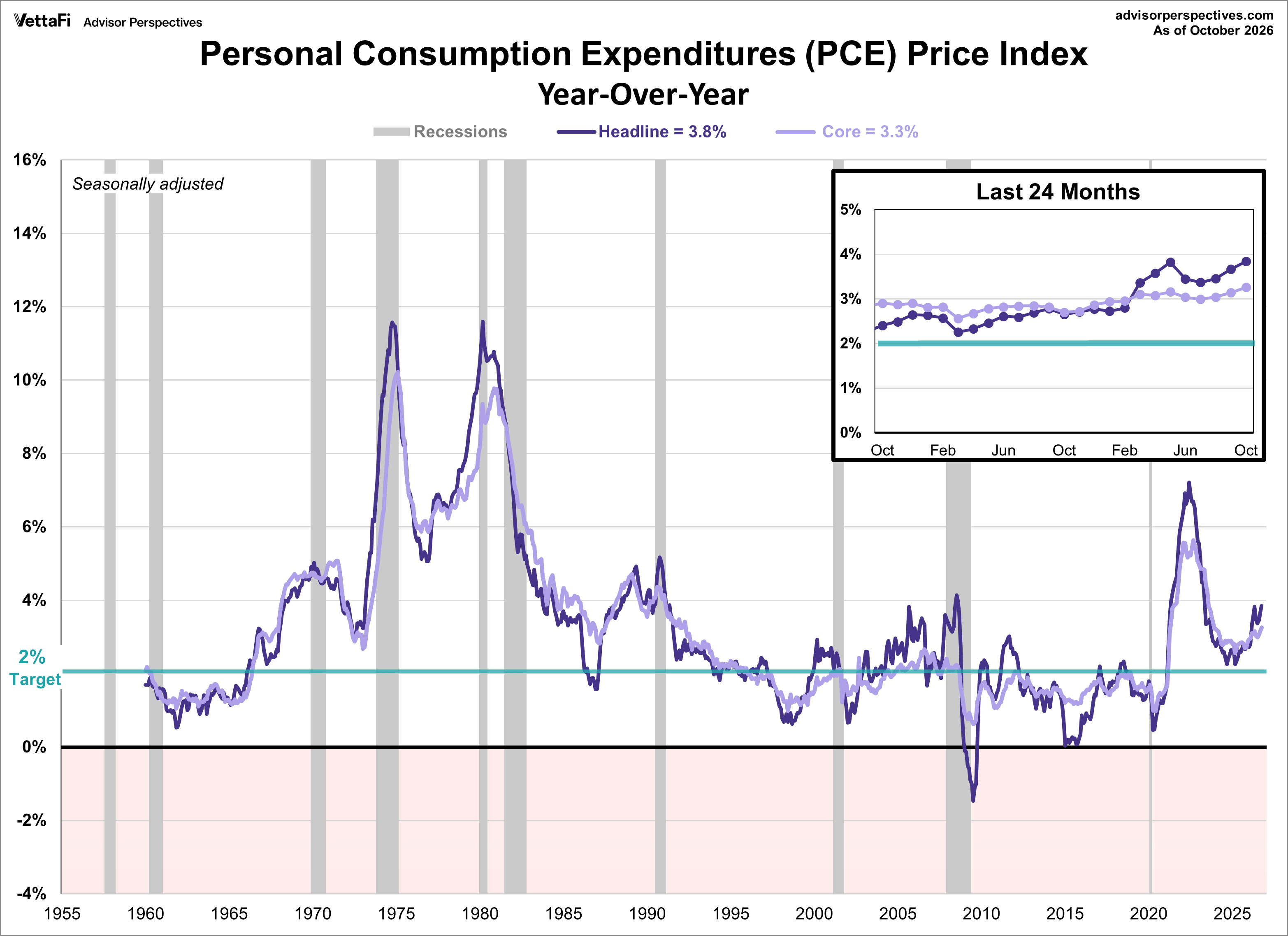
For a long-term perspective, here are the same two metrics spanning five decades.
Inflation: The Fed's 2% Target
The Federal Reserve concluded its seventh meeting of the year by holding the federal funds rate steady at 3.75%–4.00%. The decision comes after the first benchmark rate hike since 2023. However, the recent PCE figures suggest the fight against inflation is far from over.
The Fed will meet again in a few weeks where they are expected to raise by another 25 basis points. At the time of writing, the CMEFedWatch Tool shows a 94% likelihood the Fed will raise rates versus a 6% likelihood of keeping rates where they are.
For further comparison on how this data aligns with other metrics, see our analysis on PCE vs. CPI.
Read more updates by Jen Nash
 The adjacent thumbnail gives us a close-up of the trend in YoY core PCE since January 2012. The first string of red data points highlights the 12 consecutive months when core PCE hovered in a narrow range around its interim low. The second string highlights the lower range from late 2014 through 2015. Core PCE shifted higher in 2016 with a decline in 2017, 2019, and 2020, with a major jump in 2022.