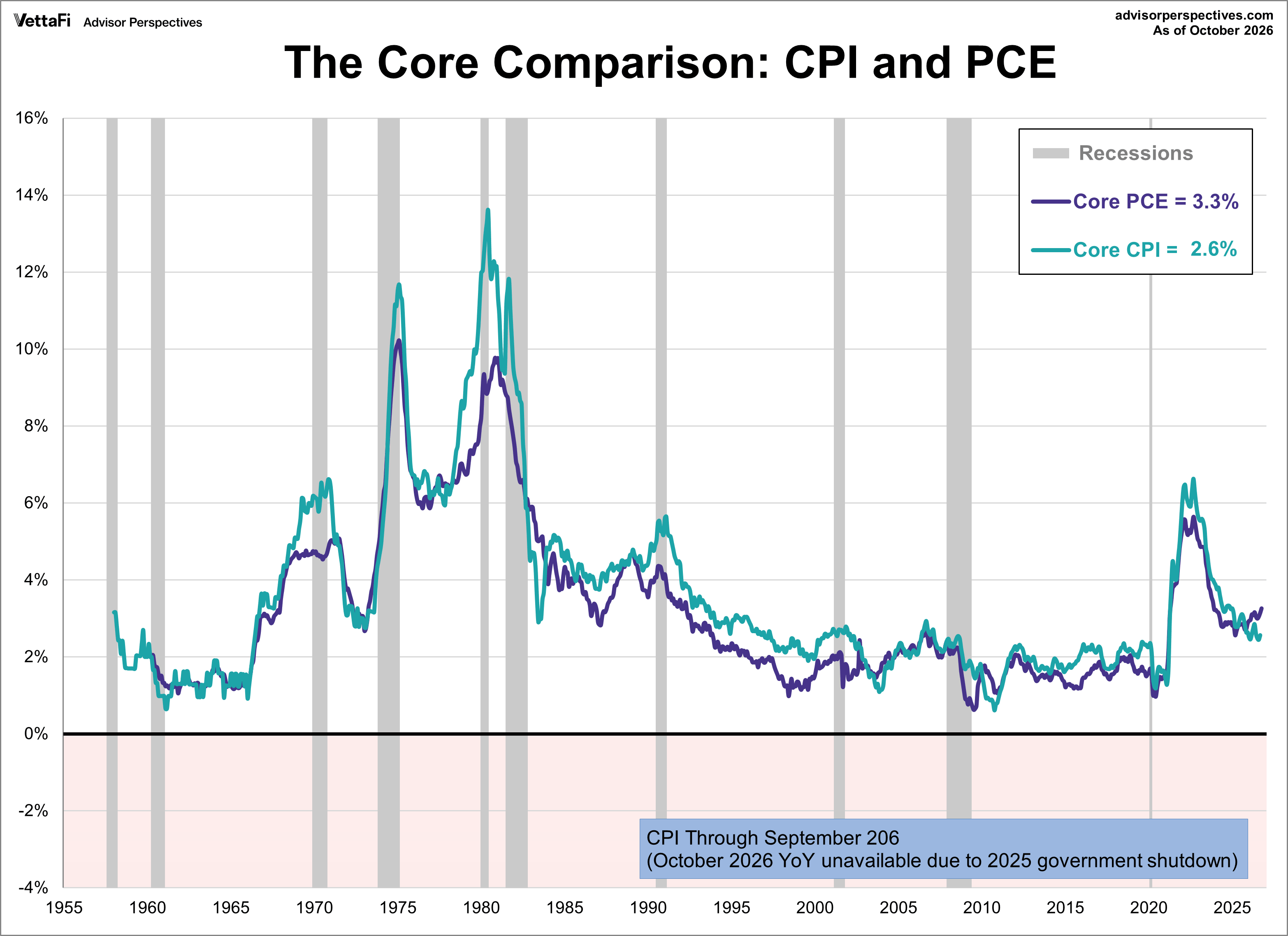
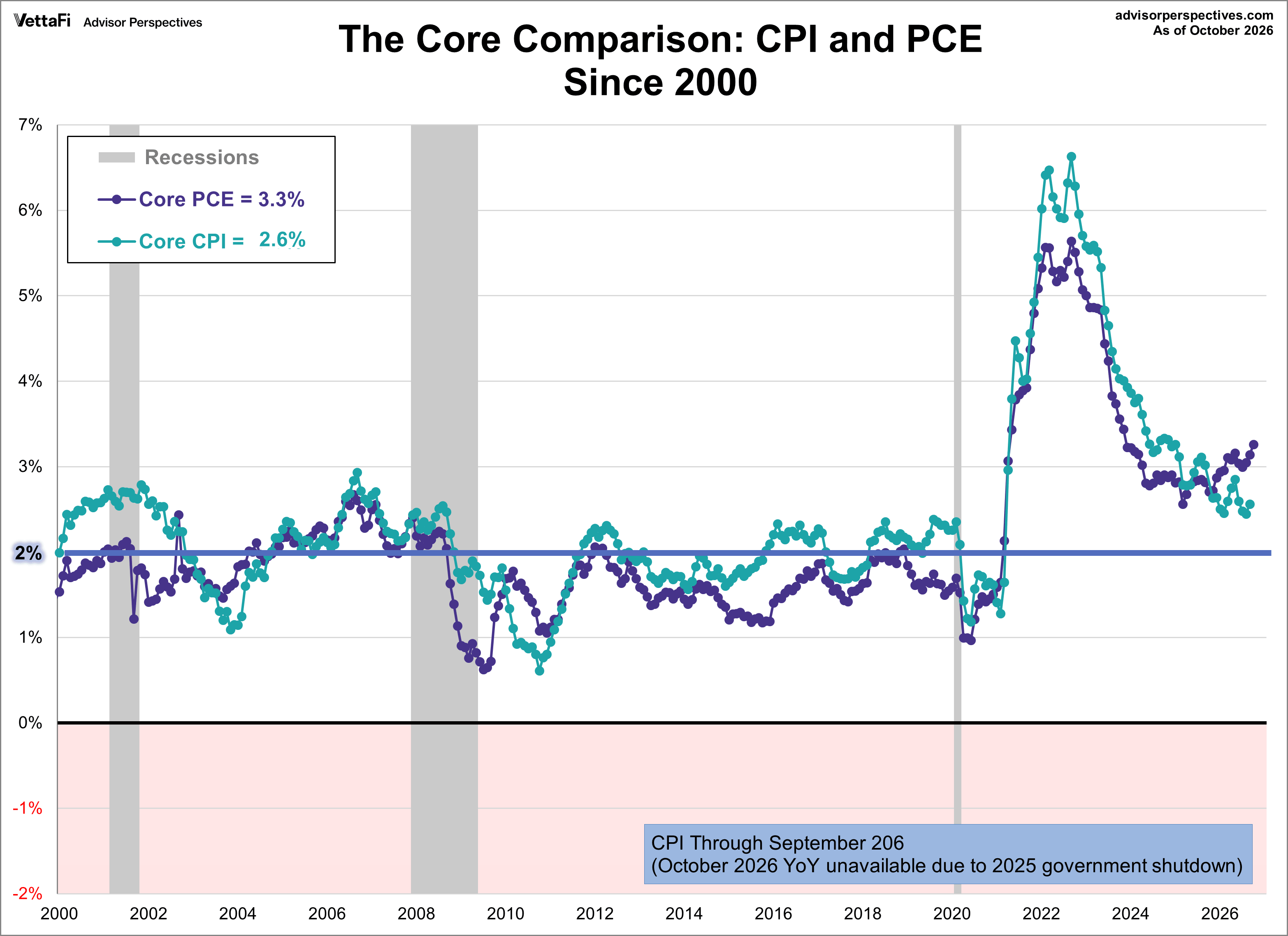
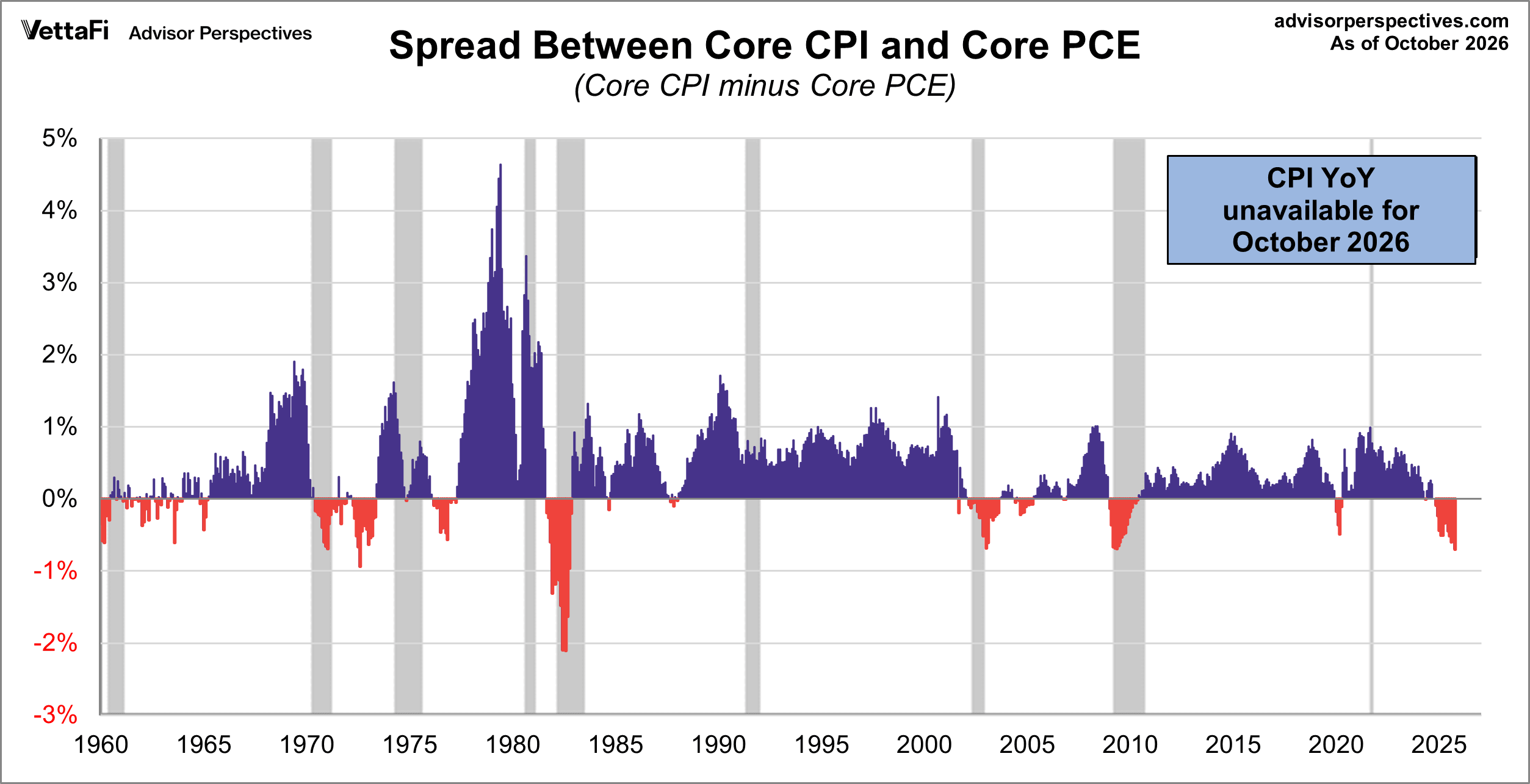
Inflation remains a hot topic, directly impacting everything from your grocery bill to interest rates. As of the latest data, two key inflation gauges — the Personal Consumption Expenditures (PCE) Price Index and the Consumer Price Index (CPI) — show that prices are still well above the Federal Reserve's 2% target, with the core PCE at 3.3% and core CPI at 2.6%. Note PCE data is through October 2026 while CPI data is only through September 206 due to the 2025 government shutdown creating a lapse in year-over-year data.
Key Takeaways
-
Core PCE inflation reached 3.3% in October and core CPI inflation reached 2.6% in September.
- Inflation (from both measures) has moved away from the Fed's 2% target over the last several months.
-
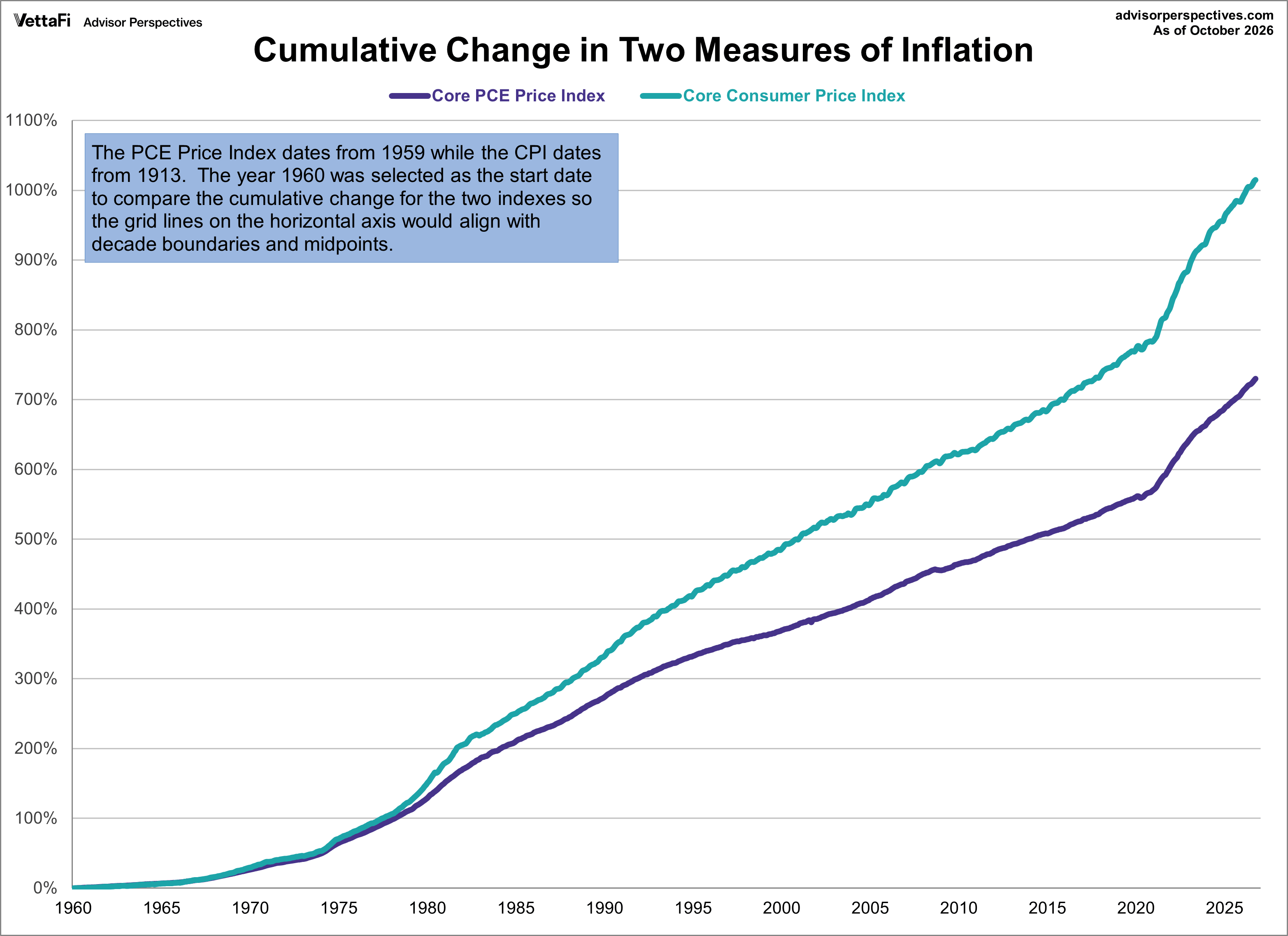
Core CPI has increased 1,015% since 1960, while core PCE is up 730% over the same period.
The Fed's Preferred Inflation Gauge
The Fed is on record as using PCE data as its primary inflation gauge, with a 2% target rate. Elsewhere, the Fed has stressed the importance of "core" inflation, which excludes food and energy prices, which tend to be more volatile.
Finally, policymakers examine a variety of "core" inflation measures to help identify inflation trends. The most common type of core inflation measures excludes items that tend to go up and down in price dramatically or often, like food and energy items. For those items, a large price change in one period does not necessarily tend to be followed by another large change in the same direction in the following period. Although food and energy make up an important part of the budget for most households — and policymakers ultimately seek to stabilize overall consumer prices — core inflation measures that leave out items with volatile prices can be useful in assessing inflation trends. [Source]
The Federal Reserve concluded its seventh meeting of the year by holding the federal funds rate steady at 3.75%–4.00%. The decision comes after the first benchmark rate hike since 2023. However, the recent PCE figures suggest the fight against inflation is far from over.
The Fed will meet again in a few weeks where they are expected to raise by another 25 basis points. At the time of writing, the CMEFedWatch Tool shows a 94% likelihood the Fed will raise rates versus a 6% likelihood of keeping rates where they are.
PCE and CPI: A Side-by-Side Inflation Comparison
So, why does the Federal Reserve pay more attention to core PCE than core CPI when assessing its progress in managing inflation? A side-by-side comparison reveals key differences.
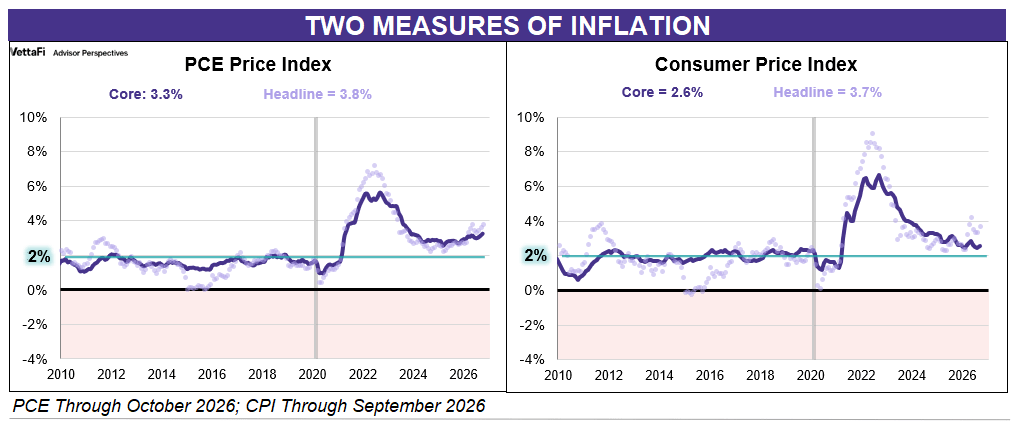
One of the primary reasons is volatility. Core PCE tends to be considerably less volatile than core CPI. This stability makes it a more reliable indicator for the Fed, which has a dual mandate of achieving price stability and maximum employment. Historically, the less erratic nature of core PCE has made it the preferred metric of choice, though the disinflationary trend in core PCE prior to 2022 casts doubt on the effectiveness of the Fed's monetary policy.