Looking back to the 1990s need not be just a matter of nostalgia. Those too young to have lived it envy the fortunes made as technology firms grew. Seasoned investors who worked through the cycle can warn us of the pain of a correction. Along the way, the cycle taught useful lessons.
2025 has not been just a story of U.S. resilience. The Asia-Pacific (APAC) region has weathered storms and stayed firmly on course.
Before we started some recent home renovations, neighbors offered advice: stay patient. Construction projects feature weeks that feel like no progress has been made, and days that feel like everything has changed at once.
While many lessons have evolved over time, one maxim has never changed for children: look both ways before crossing the street. I reinforced with my children to then look again. We might not see everything on a quick glance, and traffic can change quickly.
These shifts are not signs of stress; shortfalls have been minor, and relief systems are working as intended. However, we can be certain the era of excess liquidity has ended. Fed speakers have characterized the pandemic-stimulated economy as one of “abundant reserves,” with bank reserves elevated beyond their natural level.
Broad measures of the U.S. economy are strong. Stock market indices have set new record highs this year.
The GENIUS Act shows the way forward for payment stablecoins.
Oil prices are notoriously difficult to forecast. Production can be volatile, and the global oil supply chain is complex.
Healthcare costs will be a chronic pain.
Cuts are in store, but decisions will be weighed carefully.
Powell’s speech seemed to give an all-clear signal for a cut in September. The speech started with a focus on the softening labor market, concluding it is in a “curious kind of balance” with rising risks of layoffs.
Limited price collection will complicate estimates of inflation.
A cooler labor market was long in the making.
An ambitious policy yielded great gains and high debts.
Trade tensions spread to the copper and pharmaceutical markets.
Everything that our team publishes has been through peer review. We candidly call out every opportunity we see to improve each other’s writing, from quibbling over word choices to challenging an essay’s entire premise.
Only a subset of subsidies will be rolled back.
OBBBA sets a path for more borrowing ahead.
Some of the most useful financial advice has a homespun tone, like to make hay while the sun is shining or save up for a rainy day. I recently encountered another helpful idea in that vein: Think of your house like a family member who is always sick.
Debt collectors have been unpopular since ancient times, but they play a necessary role in the lending lifecycle. Their jobs are not easy: I recall one collector noting that there are few ways to communicate with defaulted borrowers.
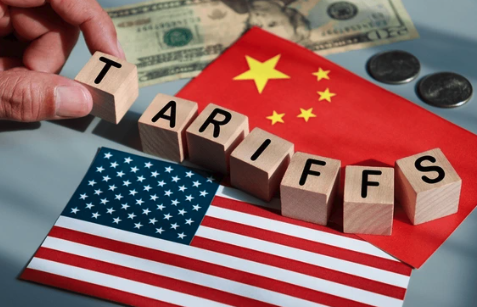
China has been a focal point of American trade policy for many years, but tensions were escalated early in the second Trump term.
Most economists and portfolio managers are cautious when discussing gold. Its handling and transaction costs are high, and it pays no interest or dividends.
Many American consumers recently endured their first inflationary cycle, and recent trade headlines have elevated fears of a another bout with higher costs. While not impacted by tariffs, energy markets may play a critical role in driving the price level during the balance of this year.
To say that it has been a tumultuous year in Canada would be an understatement. The country’s business model, which relies heavily on commerce with the United States, has been put under severe stress by the American administration.
The last time the dollar needed policy intervention was in 1985. The dollar was ascendant, and that put American exports at a disadvantage.
The time is right to let the Fed's balance sheet level off.
Policies to support mainstream crypto adoption are underway.
Short-term deadlines will complicate long-run plans.
Differing sales tax regimes can appear unfair.
The greatest benefits of TCJA were deep in its details.
U.S. dependence on metal imports could prove costly.
Tariff threats offer a glimpse of what is in store.
Tax and spending cuts will face Congressional roadblocks.
From the start of December to their recent peaks, 10-year yields have gained 68 basis points in the U.K., 60 basis points in the U.S., 55 basis points in Germany and 48 basis points in Canada.
When and how will new policies take shape?
As the year comes to a busy conclusion, we’re still catching up with news that didn’t make the front page. In the first week of November, the U.S. Bureau of Labor Statistics published a data release that’s even less frequent than the four year presidential election cycle.
We are prone to animal analogies when describing disorderly situations: like herding cats, like a barrel full of monkeys, like a dog’s breakfast.
The people have spoken. While there are still some unknowns, the contours of the American government that will be seated next January are reasonably clear.
The election is unlikely to influence monetary policy.
State and municipal budgets are adjusting to life after pandemic interventions.
The regulatory outlook is a question of direction more than extent.
New business formations have held up, but closures are also rising.
Sports fans know that a lot can change in the fourth quarter of a game. So too for the U.S. economy, as a substantial labor action commenced the minute that calendars turned to the fourth quarter of 2024.
The next president will face a difficult fiscal context.
How rapidly should the Fed cut rates?
The next U.S. president will face immediate fiscal challenges.
Money can still be a factor in inflation.
Last week, we explored the old economic rules that falsely predicted an imminent recession. Losing those guideposts has complicated our efforts to craft an outlook.
Previously reliable recession signals have not worked in this cycle.
The strong currency is neither a blessing nor a curse.