Total return is the entire amount of income passed to an investor holding a particular security. It annualizes any price change plus any dividends or interest earned over time.
All eyes were turned toward the Middle East throughout the month of March, with the US and Israel’s ongoing conflict with Iran causing energy prices to surge. The closure of the Strait of Hormuz, alongside damage to energy infrastructure across the gulf region, caused crude to rise above $100 a barrel for the first time since 2022.
Recent weeks have been a whirlwind of headlines centered on the Middle East conflict and rising oil and gas prices, particularly as the conflict enters its fourth full week.
Next week’s releases should help clarify whether recent volatility remains contained or begins to translate into weaker fundamentals.
Rapid advances in artificial intelligence, persistent geopolitical tensions – particularly the conflict in Iran – and ongoing trade uncertainty have kept headlines loud and emotions elevated, ultimately demanding investors remain adaptive and disciplined. In this kind of environment, the biggest mistakes come from reacting to noise rather than fundamentals.
Your financial requirements are multifaceted, necessitating strategies tailored to your specific needs. Tailored lending can be a valuable addition to a high-net-worth individual’s financial plan, helping you optimize cash flow, maximize tax efficiency and realize important estate planning goals.
Although the US now produces more oil than it consumes, it still exports lighter crude and imports heavier crude that US refineries need. As a result, global supply disruptions continue to play an outsized role in determining what US consumers pay at the pump. In short, during geopolitical crises, international oil markets matter more for gasoline prices than domestic production alone.
The key swing factor remains oil prices. If the conflict ends within this window, we still expect only limited impacts on our economic and asset‑class outlooks.
When you start investing, your advisor builds a portfolio aligned with your personal investment objectives. Your target allocation takes into consideration your goals, risk tolerance and time horizon, among other things. Unless something in your life changes, your portfolio should continue to align with your objectives.
In this commentary, I’m not going to try to predict any outcomes or long-term effects but rather want to cover how markets have reacted so far and highlight some opportunities that have been created.
The Fed’s new economic projections are fraught with even more uncertainty. The Middle East conflict is unlikely to derail growth in a meaningful way.
Although the administration has expressed support for a lower federal funds rate, several policy developments since taking office continue to complicate that objective. In particular, recent tariff actions – some of which were legally challenged and later invalidated by the Supreme Court – have contributed to ongoing uncertainty around trade policy.
North is south, south is west, west is east, east is north, up is down, and down is steady. This week’s employment reports have something for everyone, which is precisely why we should interpret them cautiously.
Doug Drabik discusses fixed income market conditions and offers insight for bond investors.
While senior military officials on both sides have signaled that the campaign may intensify in the near term, keeping headline risks elevated, we outline below why we believe the conflict is likely to be short-lived, and what that could mean for the economy, the Federal Reserve and financial markets in the weeks ahead.
Investing in financial markets is not for the timid. In a very recent Bond Market Commentary, the Head of Fixed Income Solutions, Nick Goetze, discussed “Preparing for the Storm.”
AI-related disruption has moved to the forefront of market conversations in recent weeks, driving shifts beneath the surface. While the S&P 500 remains near all-time highs, leadership has rotated across sectors as concerns about AI’s impact on future demand and long-term valuations have spread.
Markets could face near-term volatility in the wake of the Supreme Court’s decision to strike down tariffs levied under the Emergency Economic Powers Act (IEEPA). The ruling creates a complex landscape as markets adapt to multiple unresolved issues, including raised global tariffs, investigations and potential refunds.
Raymond James Chief Economist Eugenio J. Alemán discusses current economic conditions
It’s been a busy start to the midterm election year in Washington, marked by a second government shutdown, rising geopolitical tensions - including Iran and Venezuela – and continued uncertainty around tariffs.
Investors have long known balance is a key aspect of portfolio design. It presents a chance to achieve long-term growth and protect hard-earned assets at the same time.
Raymond James Chief Economist Eugenio J. Alemán discusses current economic conditions.
Markets move through phases of resilience, shifting leadership and renewed opportunity. We’ve seen this play out in recent months as performance has broadened beyond mega‑cap tech into areas that had long been overlooked.
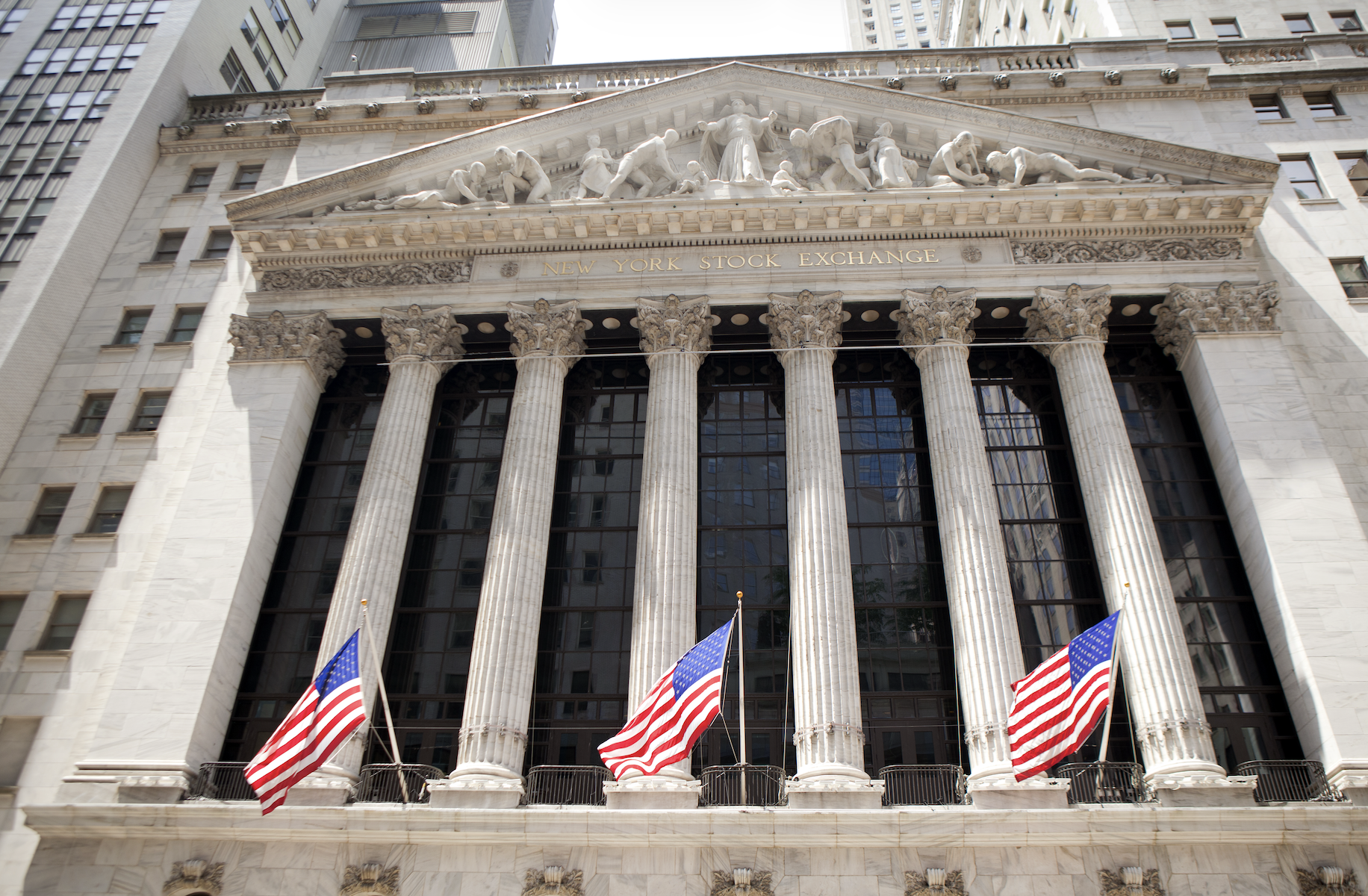
The Dow Jones Industrial Average, better known as “the Dow,” closed above 50,000 points for the first time. It’s a historic milestone that comes less than two years after surpassing 40,000 in May 2024, but what does the milestone mean, and does it signal time for investors to reduce exposure?
There are reasons people dig storm shelters in Tornado Alley, build their houses on higher ground on the coast of Florida, and at a basic level why most of us buy insurance.
A couple of weeks ago, on Jan. 23, 2026, we dedicated part of the weekly commentaries to the mismatch between the economy and how American consumers feel about it. We said that measures of consumer confidence and consumer sentiment were not in sync with the strength of economic activity.
Recent tech headlines have stirred up fresh disruption fears, weighing on software stocks and the sector more broadly. Below, we break down key takeaways from 4Q25 earnings and share our latest views on tech:
When it comes to investing, you don’t have to do it alone. Whether you’re planning for the future with your spouse, growing wealth with a family member, or expanding your goals alongside a business partner, a joint brokerage account allows you to share the opportunities and responsibilities that come with growing your money together.
It may be fitting that Groundhog Day occured on a Monday this year. Punxsutawney Phil has been officially prognosticating the weather since 1887.
With rising geopolitical tensions, sharp market swings and Congress at odds over Department of Homeland Security funding – likely to cause a brief government shutdown – there’s no shortage of factors influencing sentiment. Here, we address some of the most prominent headlines shaping sentiment and offer our perspective.
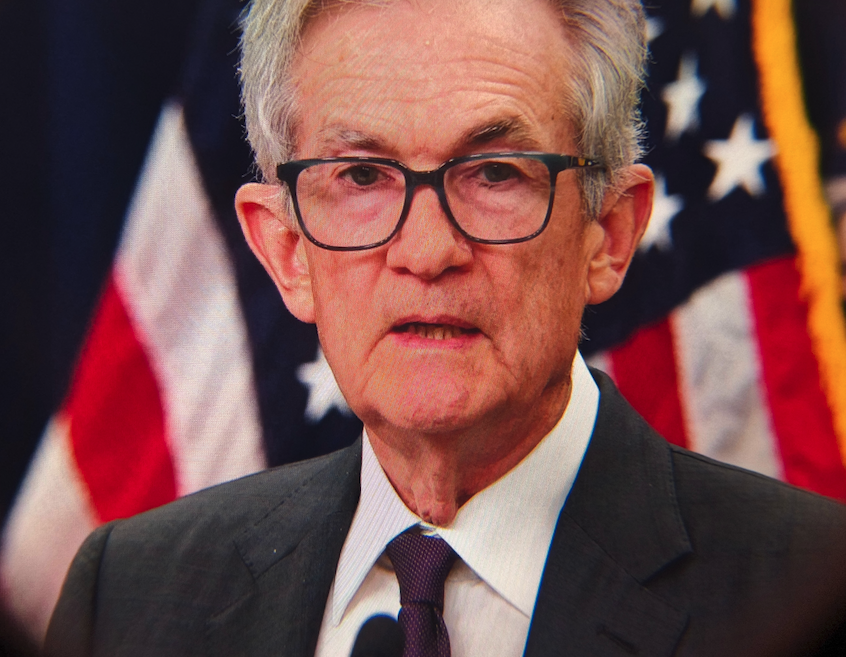
This week’s press conference by Federal Reserve Chair Jerome Powell was one of the most consequential of his tenure at the helm of the Federal Reserve (Fed).
Markets, interestingly enough, felt their own version of a “deep freeze” this week. Geopolitical flare-ups, fresh tariff threats and a mini-meltdown in Japan’s bond market briefly rattled investors and pushed volatility sharply higher.
Each spring, investors in individual publicly traded companies get a chance to voice their opinions as the companies whose stock they own prepare for their annual shareholders’ meetings.
Investors have reaped the benefits of good market conditions in many of the recent years. These periods are ideal for wealth accumulation.
2026 is coming out of the gate quickly. In just the first two weeks, we’ve seen a flurry of headlines – rapid-fire policy proposals, legal uncertainties, and fast-moving geopolitical developments – all with the potential to influence the economy and financial markets.
The biggest concern for the Federal Reserve (Fed) today is the weakness in employment over the last year, and especially during the second half of the year. This weakness was behind its decision to resume interest rate cuts in September of 2025.
Raymond James Chief Economist Eugenio J. Alemán evaluates economic conditions heading into 2026.
Drew O’Neil discusses fixed income market conditions and offers insight for bond investors.
As we step into the new year, many of us are setting personal and professional goals for what we hope to accomplish in the months ahead. The same holds true for financial markets, where Wall Street strategists have been busy refining their outlooks for where the S&P 500 might finish the year.
Our forecast for 2026 is for a strengthening US economy on the back of a strong fiscal spending profile due to the implementation of the One Big Beautiful Bill Act (OBBBA).
In 2025, the S&P 500 delivered double-digit returns for a third straight year. Heading into the fourth year of the bull market, Raymond James Chief Investment Officer Larry Adam identifies 10 themes to watch in 2026.
After three consecutive years of increasing stock prices, it can feel comfortable and certainly satisfying to ride the trend. Investors may want to capture the boon rather than be complacent with it. Long-term financial health can go hand-in-hand with the opportunities the markets have laid out.
For the third consecutive year – and sixth among the past seven – the S&P 500 tallied double-digit gains – a remarkable run. As the index climbed 16.39% for the year, it also recorded 38 new record highs.
This week’s release of the FOMC meeting minutes showed relatively strong diverging views on current monetary policy as well as on the path for policy this year.
Now, as we turn the page to 2026, new challenges await: geopolitical tensions, lofty valuations, and an evolving macro backdrop. That’s why we’re excited to unveil our Ten Themes for 2026, inspired by Mission: Impossible, celebrating the 30th anniversary of its first movie this year.
Now that the Bureau of Labor Statistics (BLS) released the delayed October and November nonfarm payroll numbers, do we know more about the US labor market than we knew before the release? Probably not.
Before we turn the page on 2025, let’s take a moment to reflect on the key trends that shaped the economy and financial markets this year. Despite heightened policy uncertainty and persistent geopolitical tensions, both proved remarkably resilient.