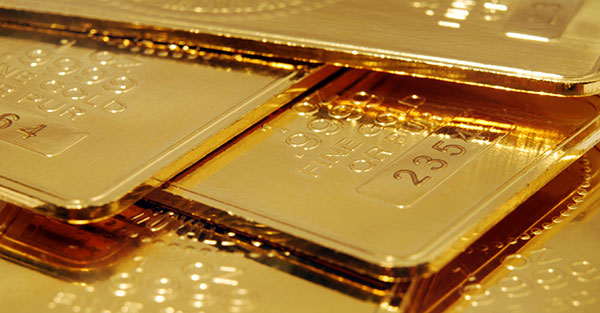
Gold and Bitcoin had a very good 2020. Investors, worried about currency debasement from all the money-printing, sought stores of value. Gold surged over 25%, its best year in a decade, while Bitcoin was up more than 300%.
Now that 2020 has drawn to a close, I’m revisiting my most popular investment posts of the year, based on views. It was a truly historic 12 months, to say the least, but I won’t be covering everything that happened.
And then there’s Bitcoin. The world’s biggest cryptocurrency has surged nearly 220% this year, touching an all-time high of $23,717 in intraday trading on Thursday.
Airline stocks are on track to record their third straight month of gains on hopes that the coronavirus vaccine will help normalize commercial air travel sooner rather than later. Investors are also betting that U.S. carriers may be in line to receive additional relief in the stimulus package currently being negotiated in Congress.
“This garage is the birthplace of the world’s first high-technology region, Silicon Valley,” the marker reads. It names two Stanford students, William Hewlett and David Packard, who “in 1938 began developing their first product, an audio oscillator, in this garage.”
Industrial metals are well on their way to being among the top performers of 2020, supported by red hot demand from China and global supply concerns.
“Dr. Copper,” so named for the metal’s ubiquitous use in many different applications, has been ripping higher since its 52-week low in March, thanks to a number of factors including promising economic data.
Chinese factories signaled their strongest improvement in over a decade.
So far this year, shares of HIVE Blockchain Technologies have soared an incredible 715%, well past Ethereum’s gain of 273%. 2020 has been marked by healthy expansion in mining capacity, the most recent example being HIVE’s acquisition of additional access to low-cost green energy.
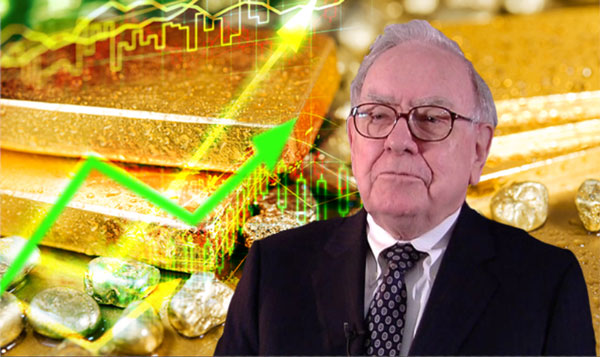
Gold “is a hedge on policymakers screwing up, and there has been a lot of screwing up in the last 20 years.”
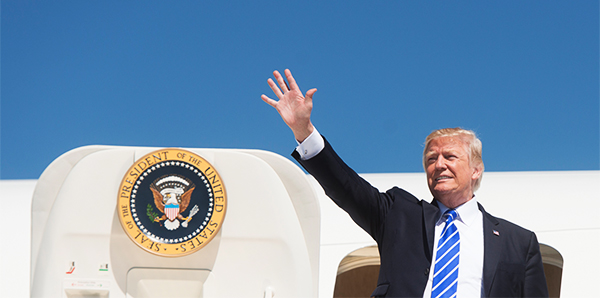
By now you may have heard that President Donald Trump signed an executive order banning Americans from investing in a select number of Chinese firms that have ties to China’s military.
America, and the world, received a huge shot of hope this week. The $210 billion drugmaker Pfizer announced on Monday that its coronavirus vaccine is 90% effective at preventing COVID-19.
On Saturday, Joe Biden was named president-elect. In hindsight, the market clearly predicted this outcome.
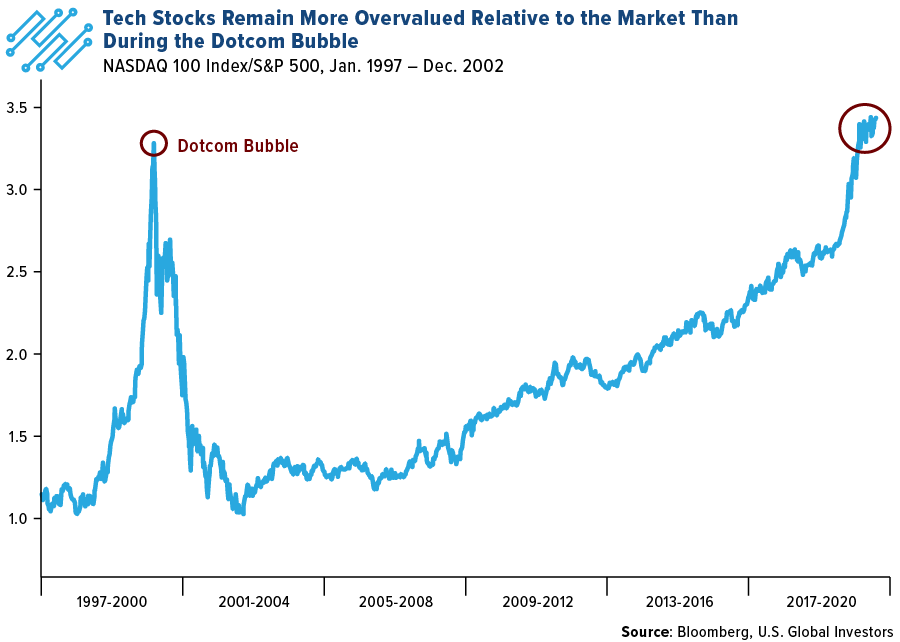
Businesses love Congressional gridlock. Tech stocks had been trending down for days before the election as they faced antitrust scrutiny, but now that it appears certain Congress will remain divided, they’ve recovered most of their losses. The tech-heavy Nasdaq 100 jumped close to 10% for the week.
Want to hear something really scary? Inflation, the scourge of the modern economy, may be running much faster than we’re led to believe.
Here at U.S. Global Investors, we’re very bullish on commodities, particularly industrial and precious metals.
We could also see a so-called “blue wave,” whereby the Democrats pick up control of not just the White House but also both chambers of Congress.
“Resilience” was this week’s theme as better-than-expected market data came to light. Earnings season has begun, and so far reports have proven the doomsayers wrong. Even industries that have been hardest hit by the economic downturn, including air travel, are expressing optimism that we’re at the “end of the beginning” in terms of recovering from the worst health crisis in 100 years.
To some critics, Trump’s behavior and decision-making process may seem erratic, but I believe they make a sort of sense when viewed through the lens of game theory.
President Trump has declared rare earth metals a national emergency and asks that the U.S develop a “commercially viable” mineral supply chain that does not depend on imports from China or elsewhere.
Investors should try to avoid getting distracted by the feuding political parties within the U.S. A lot of the infighting is being fueled by outside actors, who thrive on the chaos and the division. Russia’s Putin and China’s Xi Jinping are delighted that we’re so divided right now.
You may have seen headlines questioning whether this is the end of the gold rally. Hardly. Corrections are normal and healthy. During the rally of the 2000s that culminated in gold hitting its previous record high of $1,900, there were several significant pullbacks, some of them exceeding 20 percent.
Gold is one of the rarest elements in the world, making up roughly 0.003 parts per million of the earth’s crust. But how much gold is the world digging up each year and what countries produce the most?
This “exodus,” as some are already calling it, may end up being among the biggest in U.S. history, or at least the biggest since the 1950s and 60s. A record 27.4 percent of homebuyers sought to move out of their metro areas in the second quarter, according to Redfin data.
At least through 2023: That’s how long the Federal Reserve expects near-zero interest rates to last as it seeks to support an economy that’s seen more than 60 million jobless claims since mid-March. Gold has thrived in this low-rate environment, hitting an all-time high of $2,070 an ounce in early August...
One of our favorite natural resource companies, Ivanhoe has returned more than 146 percent in the past six months alone as investors anticipate the start of production at the Kakula Mine, which has the potential to become the world’s second-largest copper mining complex, with annual output projected to be 800,000 metric tonnes a year.
Supply is getting tight. Helium is notoriously difficult and expensive to store, for the very good reason that it escapes every known container over time.
Travel stocks—including airlines, cruise lines and hotels—were among the best performing equities during the month as new daily COVID-19 cases have declined in the U.S. from their mid-July highs.
The Federal Reserve just tweaked how it thinks about inflation, and this could have a huge impact on gold and gold mining stocks. But Fed Chair Jerome Powell’s speech raises the question yet again if we’re even measuring inflation accurately in the U.S.
The number of Americans filing for initial jobless claims this week spiked above 1 million, while the number of deaths attributed to COVID-19 remains above 1,000 a day. But there was much else to celebrate.
Berkshire unexpectedly announced that, as of the end of the second quarter, it held a $565 million position in Barrick Gold, the world’s second largest producer of the metal.
The price of gold had its first down week since early June, ending a spectacular nine-week rally. The yellow metal briefly fell below $1,900 an ounce on Wednesday as stocks neared their all-time closing high and the 10-year Treasury yield jumped on record supply.
By now you’ve all heard the news. Joe Biden, the Democrats’ presumptive nominee for president, has selected as his running mate Kamala Harris, junior senator from California and the state’s former attorney general.
For the week, airlines stocks increased 9 percent, its best weekly performance since early June. Wheels up!
Russian stocks, as measured by the MOEX Russia Index, turned positive for the year on Tuesday of this week after plunging 30 percent due to the pandemic. This puts them slightly behind the S&P 500...
Two companies in the metals and mining space I’m looking forward to hearing from are Ivanhoe Mines and Franco-Nevada. Both are scheduled to report next week.
As you’re probably aware by now, spot gold is trading at an all-time high in nominal terms, having recently hit $1,977 an ounce. Futures touched $2,000 for the first time ever.
We all know that past performance is no guarantee of future results, but you can see in the chart below that the white metal could possibly be setting up for another epic run-up. At this stage of the bull market, silver’s current price appreciation is ahead of any previous rally.
Both gold and silver have been on a tear this week, with the yellow metal touching a nine-year high of $1,897 in intraday trading on Thursday. Silver was trading above $22.70, up 94 percent from its 52-week low on March 18.
Weeks before the S&P 500 bottomed, many millennial Robinhood investors began picking up coronavirus-impacted airline stocks. The buying spree continued even after Warren Buffett announced that he’d dumped his holdings.
Many reports now say that the uber-wealthy have pulled back their spending on non-essential goods and services due to the coronavirus. But that doesn’t mean they’ve cut spending entirely.
Precious metals were the big winners for the first six months of 2020. Spot gold took the first place position, rising over 17 percent, followed in second place by silver, up nearly 2 percent. Palladium rounded out the top three, essentially flat at negative 10 basis points.
American ingenuity is something to take pride in this weekend as we (safely) celebrate the Fourth of July.
As you may have already heard, the European Union (EU) just released its list of 15 countries that are permitted to visit the 27-country bloc starting today, and the U.S. was not among them.
A “perfect storm” of surging government debt levels, plunging real bond yields, rising coronavirus cases and deteriorating economic forecasts pushed the price of gold to an eight-year high this week, and some analysts now project the metal to top its all-time high within the next 12 months.
We like to go a bit further with our definition and add that luxury goods are those for which demand has tended to grow faster than potential buyers’ disposable incomes. This contrasts with “necessities,” for which demand growth has been more in line with income growth over time.
Coronavirus cases and hospitalizations are spiking again in several countries, including the U.S. California had its biggest one-day jump in infections. Arizona, Florida and Texas are also turning into new hotspots.
Back in March, I predicted that the total U.S. economic response to the COVID-19 crisis would be at least $10 trillion.
The selloff this week was “perfectly normal,” according to the math. Find out why it makes sense to have a long-term investment horizon.