Amazon.com Inc.’s cloud-storage business is on a clear path toward a $3 trillion value...
The good news is that yields in US Treasury securities may be near their peak. The bad news is that makes the recession I’ve been forecasting since February more likely.
Given the Fed's hawkish monetary policy agenda and its effect on asset prices, I thought it might be helpful to share my thoughts on Fed-based trend analysis.
What are the most common scenarios that give rise to private foundations converting to DAFs (or making a thoughtful decision not to convert), while preserving the original donor’s intent and satisfying the administrative concerns of surviving family members?
I’m having a hard time training one of our newer advisors on how to be a good listener.
It came as a surprise when I found the annual report of the New Zealand SuperFund. While no one could fault it for sticking with passive investments, it chose a different path, with stunning results.
Wall Street analysts are sticking with their bullish earnings forecasts for this quarter, and Morgan Stanley’s Lisa Shalett says they need a reality check.
Our economy is in a will-they-won’t-they relationship with the next big recession.
Business has started to evaporate across home-lending firms in recent weeks, after the Federal Reserve boosted borrowing costs to tame decades-high inflation.
Here are three lessons about the cognitive biases advisors need to be aware of as the trusted protectors of their clients’ financial futures.
Here are five steps to ensure your systems are operating on the best and cleanest data set possible.
Many of my clients or their kids will face repaying student loans. And given the inflationary environment and related rising interest rates, some of them will need to make careful choices about prioritizing their payback plans.
If hydrogen is to become a clean fuel of the future, urgent technological solutions are needed to keep it in place and move it at will.
Some Uber and Lyft drivers are finding that renting or buying a Tesla, the luxury electric car, is a more profitable option now amid soaring gas prices that have upended the economics of gig work.
For a generation of alienated techies, crypto's all-for-one ethos was its biggest draw. Now panic is spreading across this universe — and that same ethos is posing what may be the biggest threat yet to its survival.
My CFP peers must be tired of hearing me sing the praises of living in South Dakota. But one of them recently emailed some disturbing news. A recent national survey that ranked financial literacy placed South Dakota in 49th place.
Russia defaulted on its external sovereign bonds for the first time in a century, the culmination of ever-tougher Western sanctions that shut down payment routes to overseas creditors.
Cathie Wood’s flagship fund has posted its longest streak of inflows in over a year as it fights back from an interest rate hike-fueled decline.
Social Security applies a substantially higher penalty on people subject to GPO for claiming widow(er) and spousal benefits prior to normal retirement age.
Surge meetings will maintain important ongoing contact with your clients while better managing your time.
I will demonstrate how financial advisors can combine behavioral finance and deep analytics to have a robust conversation with clients during financial turmoil, showing compassion and understanding on the one hand, while telling a compelling long-term story on the other hand.
Contrary to economic theory, in recent years funds with an ESG mandate have outperformed the broader market. New research shows that outperformance was caused by increased asset flows to so-called green stocks, raising the prospects for lower returns going forward.
Orders placed with US factories for durable goods rose more than expected in May, suggesting business investment so far remains firm even in the face of rising interest rates and mounting concerns about the economy.
It’s easy to be carried away: Top banking regulators are hungry for the efficiency, profitability and better service that pan-European banks could deliver.
For years, investors valued Facebook’s parent company as if its growth would never falter. Now that it has, fund managers who buy cheap, out-of-favor stocks are finally getting a chance to own shares of Meta Platforms Inc.
Gasoline consumption in the US probably peaked in the years before the pandemic.
Surging mortgage rates have finally cooled off the housing market. The cooldown, though, is coming unevenly, accentuating differences between the existing home market and new construction.
Industrial metals are on track for the worst quarter since the 2008 financial crisis as prices are pummeled by recession worries. Copper, the great economic bellwether, has ricocheted into a bear market from a record four months ago, while tin just tumbled 21% in its worst week since a 1980s crisis froze London trading for four years.
Crypto curious stock investors are taking little comfort in the rebound in the shares of companies linked to the digital-asset world in the past week, with the sector underperforming just about every other risky corner of the financial markets this year by a wide margin.
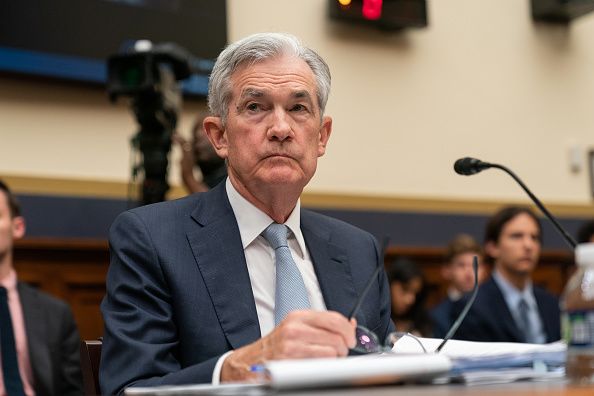
Federal Reserve Chair Jerome Powell sees two possible paths for the economy and monetary policy over the next year: With some luck, inflation will cool with the help of more supply. And if that fails, the Fed won’t hesitate to impose a more painful solution.
Options insurance. Hedging with Treasuries. Using sentiment to pick a bottom. The things that have lessened the pain of past equity selloffs are coming up short this time around.
Another Federal Reserve official has lined up with those who favor following last week’s 75 basis-point interest-rate increase with the same again next month to curb rampant inflation.
A major “capitulation event” in which Bitcoin miners funnel thousands of tokens to exchanges could signal an approaching bottom for the world’s largest cryptocurrency, if history is any guide.
Pipe down for a second Elon, the hottest things in the auto industry — the most electric electrics — now come from Hyundai Motor Co. and Kia Corp.
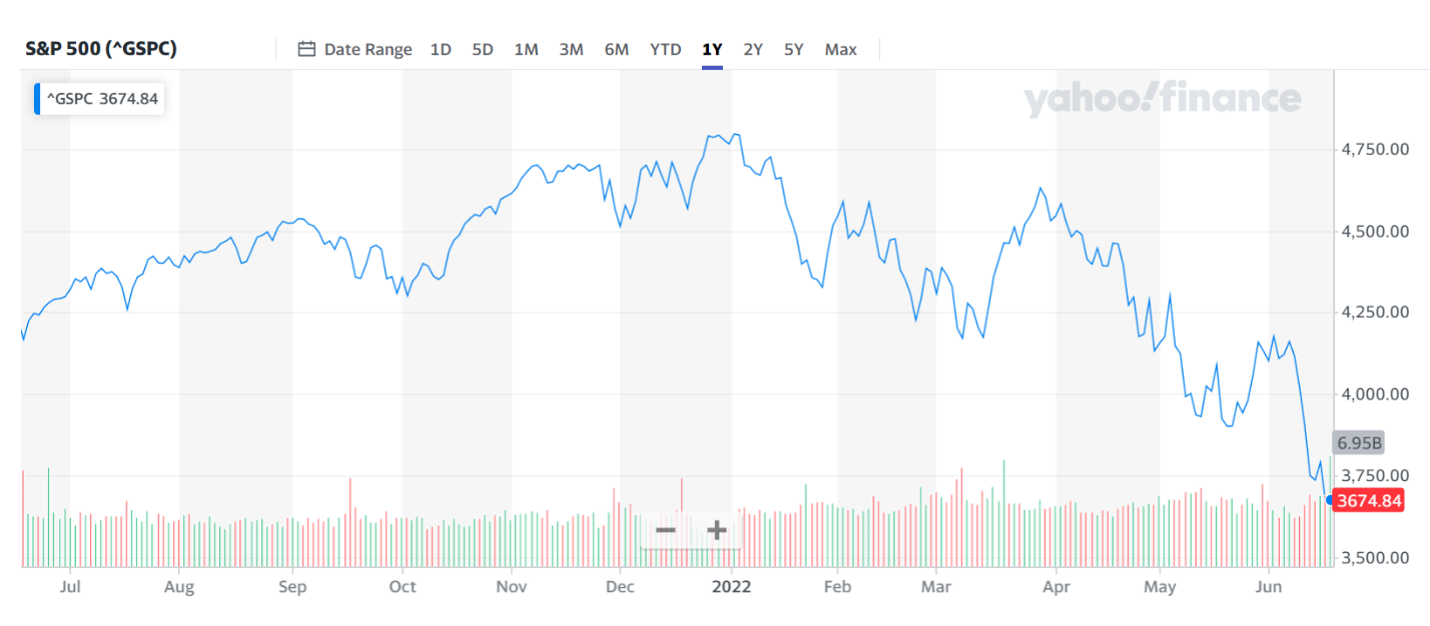
It may be a cliché, but the phrase “don’t fight the Fed” worked well for investors during the long period when the US central bank was suppressing interest rates and seeking to boost asset prices. This year, not so much.
Oil jumped after a reading on US consumer inflation expectations was revised lower, adding optimism to crude’s demand outlook.
The rise of remote work could make the Federal Reserve’s task of taming inflation a bit easier, while saving employers more than $200 billion, according to new research.
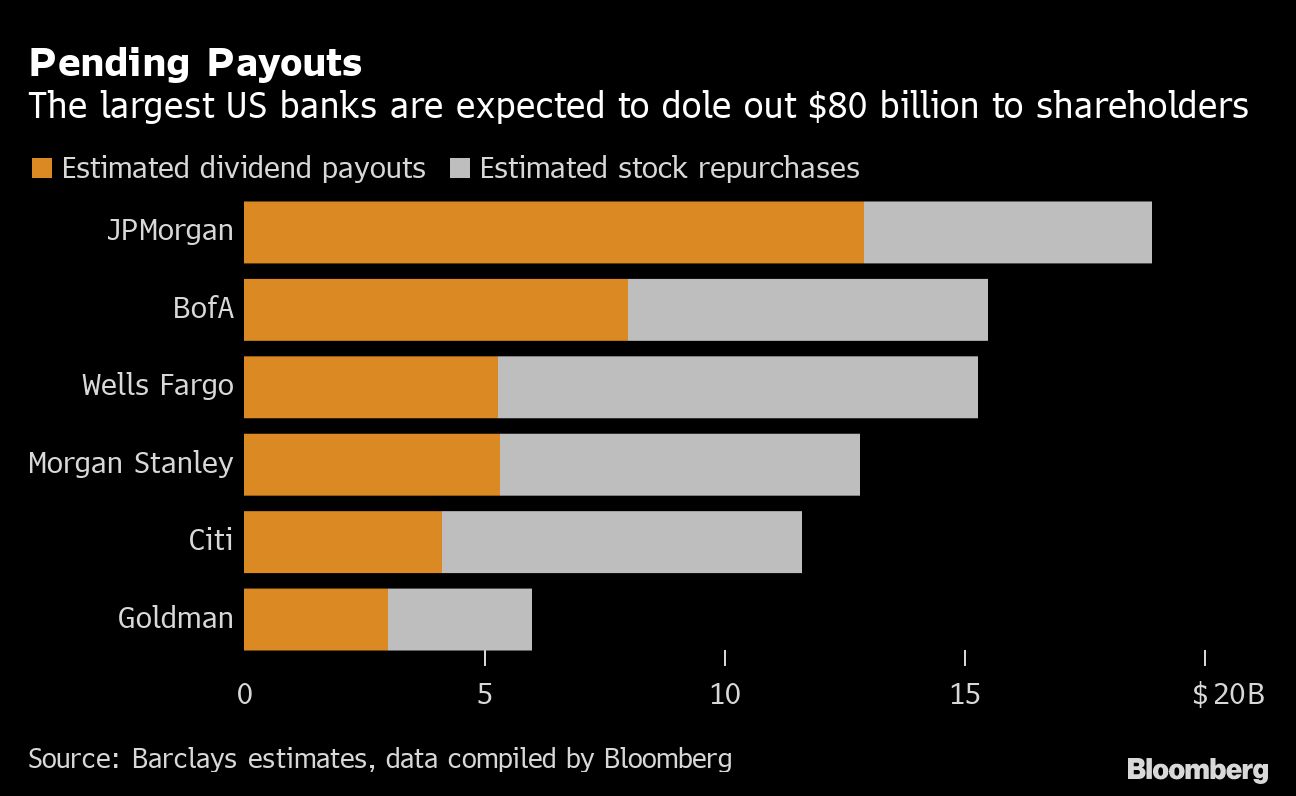
Wall Street’s biggest banks are set to return tens of billions of dollars to investors after all the lenders passed the Federal Reserve’s annual test of their ability to withstand market turmoil.
Sales of new US homes jumped in May, reflecting gains in the West and South and interrupting a months-long skid as the residential real estate market adjusts to rising borrowing costs and still-elevated prices.
Commodities will get intense scrutiny for the rest of 2022 after a first-half dominated by the supply turmoil and inflationary shocks unleashed by Russia’s attack on Ukraine. Here, we look at what the rest of the year holds for raw materials from crude oil and natural gas to grains, gold, and iron ore.
If finance could be distilled into one idea, it likely would be that there should be a tradeoff between risk and reward: an investment with low risk should have a low expected return, while one that could make you rich should also be one that could lose you a lot of money. The Overnight Effect flies in the face of this core tenet.
When Putin started the war, he tried to shift the blame to NATO, calling it the instigator. He argued that Russia had no choice but to defensively launch the war to prevent NATO from surrounding Russia from all sides. A few days ago, Putin finally lifted his veil of pretense: this is a war of conquest.
Ken Griffin just set a new standard for Wall Street firms looking to make the move south.
Free consulting is when you provide information and education to prove you know your stuff.
Federal Reserve Governor Michelle Bowman said she supports raising interest rates by 75 basis points again in July and following that with a few more half-point hikes.
President Joe Biden and his allies in Congress are rightly concerned about surging prices.
What was once a virtuous circle of locked-up tokens yielding interest that would be reinvested ad infinitum is now a vicious one, as margin calls and liquidations take place at algorithmic speed.
Investment bankers in the US and Europe are bracing for potentially billions of dollars in total losses on big-ticket leveraged buyouts as they struggle to offload risky corporate debt that’s plunging in value amid a sweeping market selloff.
West Texas Intermediate crude oil futures fell below $102 a barrel Wednesday, which represents a 22% drop over the past two weeks and meeting the technical definition of a bear market.
Bonds have been whispering in the ears of stock investors all year. Now they’re starting to shout.