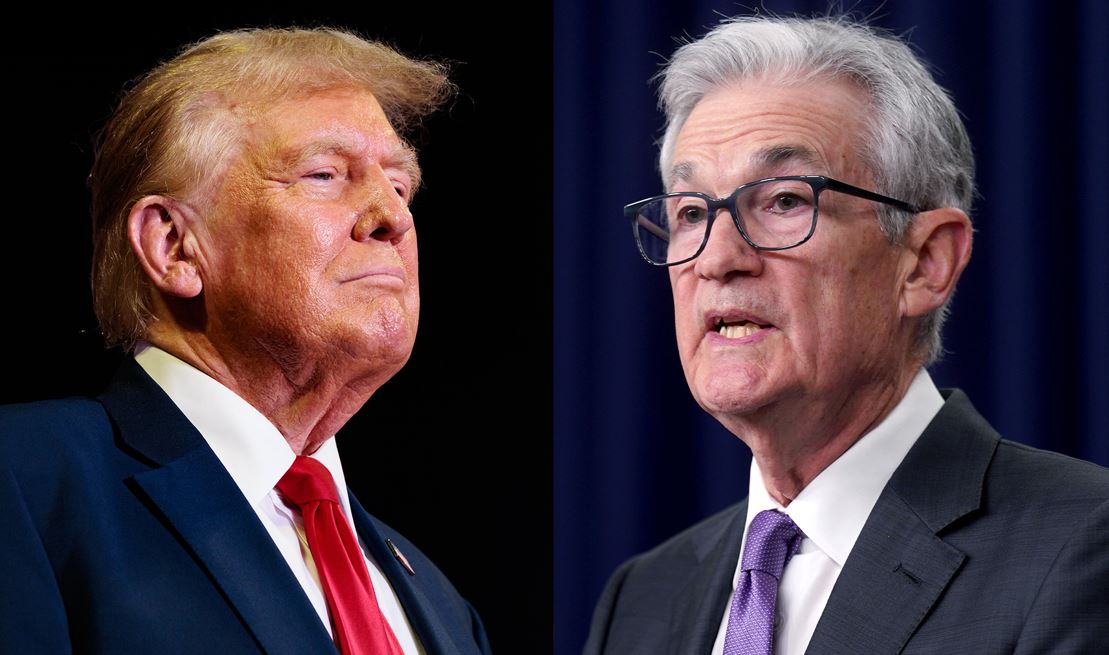
President-elect Donald Trump vowed additional tariffs on Mexico, Canada and China, shaking markets with his first specific threats to the US’s top trading partners since his election win three weeks ago.
News broke this week that the US Department of Justice wants to force Alphabet Inc.’s Google to sell Chrome, its dominant web browser. That has led to much head scratching in the tech industry.
While space startup Rocket Lab USA Inc. prepares to test-launch its new medium-sized rocket next year, its shares have already blasted into orbit.
Where I teach, there is a program designed for people who get into management roles but have never been given the skills to manage effectively. It’s common across industries.
Advisors that ignore – or are unable – to conduct bottom-up financial analysis will continue to mistakenly base their valuation assertions on dated charts and calendars with predictably flawed results.
What are the key drivers of the gold market? Let’s delve into it.
The headlines regarding Trump's proposed tariffs and their inflationary consequences are undoubtedly worrying, but will they prove correct?
MicroStrategy Inc. bought a record $5.4 billion in Bitcoin, the third major purchase announced this month by the crypto hedge fund proxy.
High-tech manufacturing in China over the past year has often felt like watching a looking-glass parody of the US.
The US bond market is finally showing signs of steadying after a two-month selloff, with investors starting to swoop in whenever yields test new peaks.
The dollar fell and US government bonds rallied after Donald Trump picked Scott Bessent to run the Treasury, a Wall Street veteran who investors expect will take the sting out of the administration’s more aggressive trade and economic policy proposals.
Gold tumbled as traders digested Donald Trump’s pick of Scott Bessent as Treasury Secretary and looked toward the Federal Reserve’s next interest-rate decision.
Donald Trump’s presidency is set to bring a fresh bout of volatility to markets, supercharging an options boom driven by retail traders.
Amid a red-hot run in the shares of MicroStrategy Inc. last month, Matt Tuttle got some bad news from the prime brokers for his booming leveraged ETF linked to the shares of the crypto-centric company.
The world’s biggest private credit managers are turning to an obscure investment product to help raise billions from deep-pocketed insurance companies, testing the limits of industry safeguards meant to curb risk.
The second coming of Donald Trump is unquestionably bad news for Germany.
Charles Schwab Corp.’s incoming chief executive officer, Rick Wurster, said the firm is looking to offer spot cryptocurrency trading once US regulations make doing so easier — something that’s more likely once President-elect Donald Trump takes office.
Snowflake Inc. shares surged by the most in more than four years after the company issued a sales outlook that surpassed investors’ expectations, suggesting new products are attracting strong demand.
Most important advances in technology occur when someone combines a variety of innovations in different fields in a commercially successful way.
“Overheated” is how short-sellers Citron Research described MicroStrategy Inc. on Thursday.
Blackstone Inc.’s main private credit fund stormed the investment-grade bond market to raise a combined $1.5 billion in a single day, adding to the rush of direct lenders trying to lock in cheaper financing costs.
The post-election stock market is already giving investors a wild ride. Big individual stock selloffs, massive rallies, and a dizzying array of market narratives built on Wall Street’s best attempts to read President-elect Donald Trump’s mind.
Fidelity Investments is expanding its reach in the competitive world of systematic strategies for the masses, with the launch of five new active ETFs.
Sirion Skulpone of Goldman Sachs Asset Management talks through the risks of being concentrated in individual stocks.
US banks enjoyed a sharp stock price jump on Donald Trump’s election victory; two weeks later, they’ve held onto those gains. There’s one good reason for this — and several poor ones, all to do with regulation.
Berkshire Hathaway Inc. reported its stock holdings last week — a widely anticipated quarterly update of Warren Buffett’s latest trades. There were some notable ones, including the addition of Domino’s Pizza Inc. to Berkshire’s portfolio and more trimming of its stake in Apple Inc.
Bitcoin approached the historic $100,000 level, fueled by optimism that President-elect Donald Trump’s support for crypto heralds a boom as the US pivots to friendly regulations in place of a crackdown.
Canada’s University Health Network said its Toronto Western Hospital would be the first non-US site of a trial for a device created by Neuralink Corp., Elon Musk’s brain-implant company.
Nvidia Corp. assured investors that its new product lineup can maintain the company’s artificial intelligence-fueled growth run, though the rush to get the chips out the door is proving more costly than expected.
Bitcoin climbed to a record high for a second consecutive day, with MicroStrategy Inc. accelerating the pace of its massive purchases of the cryptocurrency.
Nouriel Roubini is seizing on Donald Trump’s inflation-threatening policy agenda to make a case for an alternative haven trade to Treasuries in a world of elevated volatility.
In the months before Donald Trump entered the White House the first time around, speculation mounted that he would release mortgage giants Fannie Mae and Freddie Mac from the federal conservatorship they’d operated under since being bailed out during the global financial crisis.
The multi-trillion-dollar artificial intelligence boom was built on certainty that generative models would keep getting exponentially better. Spoiler alert: they aren’t.
Top financial professionals have a clear understanding of their unique strengths and are able to convey them to clients. To set yourself up for success, distinguish yourself in the market through specialized expertise and tailored client services.
Gen Z and millennials are widely considered to be the most diverse and socially conscious generations yet. They are vocal about their interest in driving social impact. And their values and priorities dictate their actions, all of which are actively shaping the future.
You might not be able to do all of what’s needed to bring together strong teams and help your employees succeed, but even if you focus on just doing one thing differently and better, it can help improve outcomes.
I think I have all the information I need to provide a view that others can confidently rely on, whether personal or professional advice. There’s just one problem: I’m often wrong. Why is that?
Bitcoin set another all-time high, supported by a series of developments highlighting the deepening embrace of the digital-asset industry in the US under crypto cheerleader Donald Trump.
Don’t wait for financial symptoms to show up. Annual financial checkups can help maintain your current financial fitness and support your long-term financial wellbeing.
Here are four key questions to help pinpoint where the break in your sales process might be occurring
Most Americans, from both parties, say the government needs to increase the supply of affordable housing. For President-elect Donald Trump, that should offer a good opportunity to summon his instincts for development — and self-promotion — to get America building again. Call it the “Trump Building Boom.”
Nvidia Corp., the chipmaker at the center of a boom in artificial intelligence use, is teaming up with Alphabet Inc.’s Google to pursue another technology once relegated to science fiction: quantum computing.
Federal Reserve Chair Jerome Powell says he wants to wait and see what policies the incoming Trump administration will implement before the central bank forecasts what it means for the economy.
The era of explosive growth in multistrategy hedge funds is over, according to billionaire Ken Griffin, who runs one of the biggest such firms.
Alphabet Inc.’s Chrome browser could fetch as much as $20 billion if a judge agrees to a Justice Department proposal to sell the business, in what would be a historic crackdown on one of the world’s biggest tech companies.
Reengineering processes through automation, streamlining, and delegation enables financial advisors to provide greater value while spending more quality time with clients.
Market prognosticators and the financial media will often point to a particular piece of anecdotal evidence as bullish or bearish. Quite often, the evidence is intuitively appealing as a contrarian indicator.
Our model, How America Spends, has been tracking the purchasing behavior of 135 million U.S. households since 2014. This model is not a black box – it is a data file representing the spending of 135 million households on goods and services since 2014.
The MACD is one of my favored technical indicators to help forecast prices and manage risk. Accordingly, let's learn more about the MACD to see how it detects trends and potential trend changes, and assesses momentum.
The S&P 500 index has had a spectacular run from its October 2022 trough to its present all-time peak, which has some (me included) wondering when the bull market will end. I approach this question in three steps.