Search Results
Beware of the Fed’s Contrived Consensus

After absorbing the US Federal Reserve's repeated assurances that a “fundamentally healthy” economy gave it ample time to decide on when to cut interest rates, the market was caught by surprise when new data suggested otherwise. Such is the danger of signaling a consensus where none exists.
High Interest Rates Finally Bite

The US Federal Reserve appears to have finally brought about the recession that it engineers whenever unemployment is low and the president is a Democrat. If it costs the party the White House in November, may its leaders use their time out of power to reflect on the unwisdom of their decades-old bargain with Wall Street.
Why Are Stocks, Gold, and the Dollar Surging?

While gold prices rise due to heightened geopolitical uncertainty, the US stock market is breaking records, and global demand for the dollar remains robust. This can be attributed to growing confidence in the US economy, which continues to surprise on the upside.

The Fed Should Not Cut Interest Rates Yet

Investors are betting on interest-rate cuts by the US Federal Reserve in September, and potentially even in late July. But the outlook for inflation and the labor market in the United States does not indicate that policymakers should begin lowering rates in the next two months.
Are Americans Ready for the US-China Trade War?

The China trade shock of the 1990s and 2000s is widely blamed for hollowing out the US manufacturing sector. But anyone who thinks that unwinding trade with China will not result in price increases and significant political backlash is in for a rude awakening.
The Economics of Philanthropy

Philanthropy is not a substitute for government action in areas like health, education, and the distribution of income and wealth, but it can advance public goods and improve human well-being. The key is to design institutions that deliver the reputational benefits that donors crave.
Encouraging Work Is the Right Policy Response to AI

Father Gregory Boyle developed the world’s largest gang intervention and rehabilitation program based on the belief that jobs stop bullets. Following his lead, US policymakers must learn to appreciate the broader meaning of work as they navigate uncertain economic waters, particularly the looming artificial-intelligence revolution.
The Growth Agenda for the United Kingdom

After years of insufficient investment and sagging productivity in the UK, the Labour Party recognizes that achieving high-quality growth will require a comprehensive policy approach that builds on many intermediate objectives. But devising a strategy is only the first step; the real challenge lies in implementation.
The Defining Economic Issue of the US Election

Americans remain pessimistic about the state of the economy largely because the big jump in prices overwhelmingly outweighs the drop in inflation. Unfortunately, the current state of US politics means that more attention will be paid to assigning blame, rather than debating solutions, ahead of November’s presidential election.
America’s Debt Is Both Sustainable and a Problem

Readers of the IMF’s latest annual review of the US economy will be startled to learn that, in the Fund’s estimation, US government debt is on a sustainable path. That assessment makes sense – but it is only as good as the assumptions that underpin it.
Central Banks’ New-Old Inflationary Bias

While rules-based monetary policy thrived when globalization put downward pressure on inflation, the COVID-19 pandemic has revived central bankers’ long-dormant preference for inflationary policies. This shift may help central banks maintain their independence, but it also increases the likelihood of another surge of price growth.
The Dangerous Incoherence of US Trade Policy

America’s political leaders have resorted to playing the blame game to convince voters that they are fixing the country’s trade deficit. But by going after China, they are ignoring the root of the problem – the American government’s unchecked spending – while increasing the risk of a full-blown superpower conflict.
Crunch Time for the Power Sector

Making the power sector fit for the twenty-first century requires a “banker” that finances and coordinates relevant long-term investments, and an “architect” that guides the development of a complex, interconnected smart-grid system. National governments need to fill both roles.
What the AI Pessimists Are Missing

The current debate about generative AI focuses disproportionately on the disruption it might unleash. While it is true technological advances always disrupt legacy industries and existing systems and processes, one must not ignore the opportunities they can create or the risks they can mitigate.
America’s Frustrating Search for a Soft Economic Landing

The first-quarter GDP report supports the view that the US economy has not landed. While some economists are concerned about stagflation, the real worry is that taming price pressures may require a mild downturn, given strong consumer spending and inadequately restrictive monetary policy.
The End of Magical Debt Thinking

Until recently, any suggestion of fiscal prudence was quickly dismissed as “austerity” by economists on the left. But with higher interest rates fast becoming the new normal, the idea that any economic problem can be solved with more government borrowing has become untenable.
Navigating Major Transitions in an Uncertain Economy

Following yet another release of US macroeconomic data that lies outside the range that anyone had predicted, the only certainty is that forecasters' jobs are not getting any easier. But while the global outlook is growing murkier, it has not become inscrutable.

The World Is Still on Fire

For the last several years, world leaders have made big promises and laid out bold plans to mitigate the climate crisis and help the neediest countries adapt. At this year's World Bank/IMF Spring Meetings, they must demonstrate that they can fulfill these promises, rather than simply touting new ones.
Can Europe’s Economy Exceed Expectations in 2024?

Germany’s ongoing economic weakness suggests that the European Union’s long-term economic slump is not likely to end anytime soon. But with traditional laggards like Italy and France showing signs of recovery, and Central and East European members performing well, the bloc’s economic outlook could still take a turn for the better.
The Struggle for Currency Supremacy

The question of whether the US dollar will be dethroned by a cryptocurrency, a stablecoin, or some other digital asset or payments system ultimately misses the point. What really matters is the mix of possible alternatives that today's evolving financial landscape will offer to governments pursuing a geopolitical advantage.
China Confronts the Middle-Income Trap

While China obviously needs to boost private-sector confidence and revive growth with a more sustainable economic model, it is not clear that Chinese leaders fully appreciate the challenges they face. The shift back to state capitalism over the last decade is plainly incompatible with President Xi Jinping’s development goals.
The Indian Giant Has Arrived

With India's development continuing to gain steam, one of the biggest challenges will be to avoid the mistake that others have made when they failed to recognize their newly acquired global systemic influence and adapt accordingly. Both China and Big Tech show that it is never too early to start managing one's own rise.
A Big Defeat for Big Tech

Tech companies know that if there is an open, democratic debate about data security, consumers’ concerns about digital safeguards will win out. And while the industry's lobbyists tried to ensure that no such debate could ever occur, one of their more cynical moves has now been exposed and thwarted.
What Soft Landing?

The economic outlook in the United States is unusually murky, with different sets of indicators telling different stories. But it is entirely possible that inflation will get stuck at a level inconsistent with the US Federal Reserve’s target, reducing – perhaps even to zero – the number of interest-rate cuts this year.
Trump and the Global Economic Risk Picture
Although the world is beset by wars, rising great-power tensions, and other geopolitical risks, most of these factors have not radically affected the outlook for economies and markets in the near term. But that could change if the United States returns to an aggressive "America First" posture.
What’s Behind the US Stock-Market Disconnect?
Buoyed by the artificial-intelligence boom, the US stock market is breaking records with no apparent end in sight. But given the significant challenges and uncertainties facing the American economy regardless of who occupies the White House in 2025, there is little reason to believe that the current rally can last.
Will the US Economy Drive Global Growth this Year?
Despite rosy forecasts, the US economy faces powerful headwinds that call into question its ability to serve as the world’s main growth driver. These challenges are compounded by domestic and geopolitical uncertainties that have not been reflected in market valuations and economic assessments.
The Middle Truth in the Inflation Muddle
Critics of the Federal Reserve argue that the acceleration of US inflation in early 2021, and the rapid disinflation of recent months, had nothing to do with monetary policy, because the sources of above-target price growth were all on the supply side. This view is both right and too simple.
Artificial Intelligence vs. Human Stupidity

There is no shortage of hope – and hype – about what artificial intelligence could do for productivity and economic growth in the future. But we must bear in mind that our politics have proven too dysfunctional, and our policies too misguided, to manage even the most obvious threats to our future.
Don’t Count on a Soft Landing for the Global Economy

Despite analysts’ increasingly optimistic forecasts for the coming year, the risks to global growth are still tilted to the downside. In fact, recent developments in China, Europe, and the United States suggest that the world economy’s biggest challenges may lie ahead.
Reform Antitrust and Patent Laws Now

Despite its original stated goal, US antitrust policy has always been used merely to ensure the free entry of competitors into all markets, rather than to address the problem of market power. But in the age of Big Tech, this approach has become woefully inadequate.
Don’t Extrapolate Last Year’s Trends for the Global Economy

The unexpected resilience of the global economy in 2023 has led many analysts to adopt an optimistic outlook for the upcoming year. But given the escalating crisis in the Middle East and persistent market volatility, the chances of a robust worldwide economic recovery appear slim.
In Defense of Billionaires

American progressives, together with populists and nationalists on the right, argue that “every billionaire is a policy failure” and propose applying special taxes to them. But bashing the ultra-wealthy is based on flawed ideas about income inequality and sends the message that success is a dirty word.
Where Will the Global Economy Land in 2024?

Heading into 2024, most economists and market analysts have adopted a baseline scenario in which most major economies avoid both a recession and renewed inflation – the much-desired "soft landing." But the current encouraging consensus could still be derailed by any number of factors, not least geopolitics.
The Global Economy Is Not Out of the Woods
As geopolitical tensions spike and interest rates remain elevated, 2024 is poised to be yet another tumultuous year for the world economy. This is especially true for emerging markets, which managed to avert a crisis in 2023 but could struggle to do so again if global growth fails to meet expectations.
The Growing Risk of Global Disorder

Contrary to many Western analysts’ expectations, the shift from a unipolar to a multipolar world economy will not lead to a China-led alternative order but to global instability. Amid deepening economic fragmentation, leaders must forestall a rapid descent into chaos by strengthening the existing multilateral architecture.
Higher Interest Rates Are Here to Stay
The long-standing economic consensus that interest rates would remain low indefinitely, making debt cost-free, is no longer tenable. Even if inflation declines, soaring debt levels, deglobalization, and populist pressures will keep rates higher for the next decade than they were in the decade following the 2008 financial crisis.
Will High Interest Rates Trigger a Debt Disaster?
Once again, larger deficits and higher debt-to-GDP ratios in rich countries have become fodder for fiscal hawks and bond vigilantes to warn of a looming crisis that will demand a return to austerity. But the case for such pessimism has no logical or historical basis.
Beware the New Consensus on the Global Economy
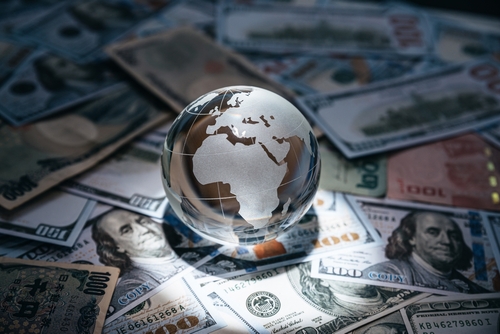
Despite an increasingly challenging economic and geopolitical environment, the global economy performed better than expected over the past year. But although analysts’ projections for 2023 were too pessimistic, it appears that consensus forecasts for the coming year may have have swung too far in the opposite direction.
A Victory Lap for the Transitory Inflation Team
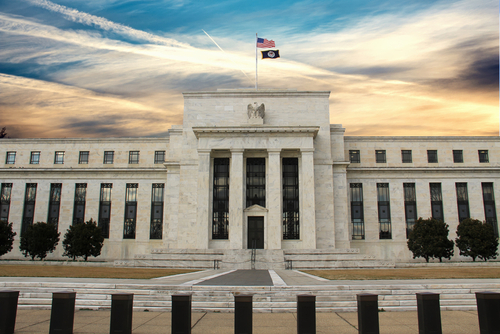
More than two years after economists divided into opposing camps over the nature of the post-pandemic inflation, we now know which side was right. Disinflation has confirmed that the earlier price increases were “transitory,” driven largely by supply disruptions and sectoral shifts in demand.
The Stunning Resilience of Emerging Markets

Contrary to many analysts’ expectations, emerging markets have not spiraled into a debt crisis. This can be partly attributed to central banks’ decision to reject populist policy proposals in favor of a modern iteration of macroeconomic orthodoxy.
The Bank of Japan’s Seductive Widow-Maker Trade

After having maintained near-zero interest rates for decades, the Japanese central bank may be forced to hike rates if inflation remains persistently high. But Japan’s enormous government debt and vulnerable banking sector mean that doing so could trigger a systemic financial crisis.
What Climate Finance Needs

To prevent catastrophic climate change and accelerate the global transition to a net-zero economy, policymakers and asset owners urgently need to rethink how we channel capital at scale. The key is to develop new financial instruments that are profitable, liquid, and easily accessible to savers and investors globally.
Down on the Biden Economy

Whatever stories Americans are told about the strength of the economy under President Joe Biden, they are not going to be persuaded to look past the issue of their own living standards. For most Americans, these have declined somewhat as price increases have outpaced wage growth.
The Debt Supercycle Comes to China

While some economists may argue that secular stagnation is to blame for China’s economic slowdown, concerns about sustained slower growth are overblown. If the country falls into a recession, it would constitute the next turn of the debt supercycle that began in the US in 2008 and moved to Europe in 2010.
Simplifying a Complicated Global Economy
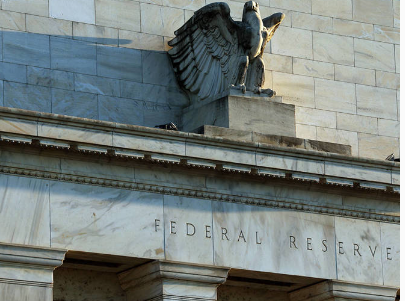
With so many moving pieces, and under such unconventional conditions, navigating today’s global economic landscape would be challenging for anyone. But even if we cannot anticipate every contingency, we can understand quite a lot by assessing the US Federal Reserve’s prospects for engineering a soft economic landing in the near term.
Europe Must Lead Ukraine’s Reconstruction

After 17 months of intense fighting, the costs of rebuilding Ukraine will most likely be far higher than previously expected. European countries, which have repeatedly pledged to support Ukraine but have contributed relatively little to its defense thus far, must coordinate and facilitate this effort.