Firms often consider launching multiple niches rather than focusing on just one. Though sometimes successful, this approach can dissipate your marketing efforts. This article offers guidelines to determine whether having multiple niches is for you.
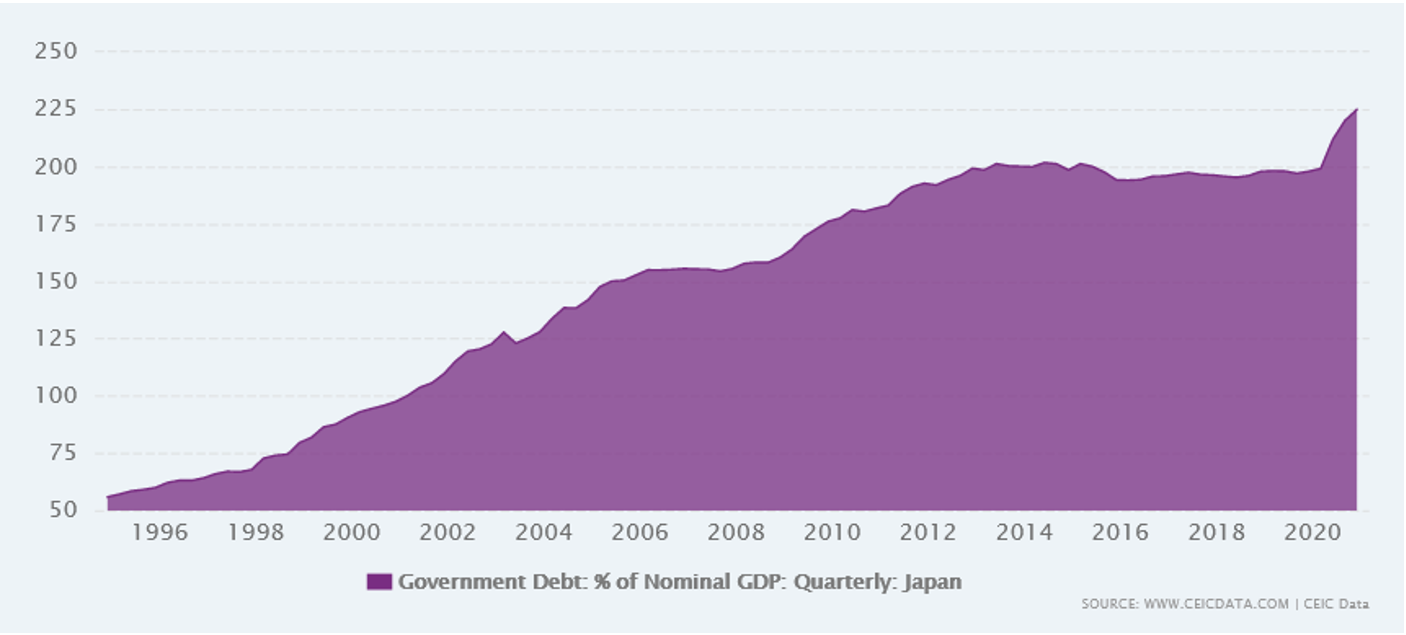
In propping up Japan's economy and financial markets, its central bank indirectly provided liquidity to the world's financial markets. But the BOJ could unleash a liquidity vacuum felt around the world.
Adding family to your advisory business can be a rewarding experience when done right, or the worst experience of your professional career when entered with the wrong intentions or expectations.
ICYMI: In this roundup, we’re highlighting the five most popular pieces of content from the previous week.
Few corners of the financial universe have been surrounded by as much marketing froth as ESG, which by some estimates represents more than $40 trillion in assets. According to Morningstar, genuine ESG funds held about $2.7 trillion in managed assets at the end of the fourth quarter.
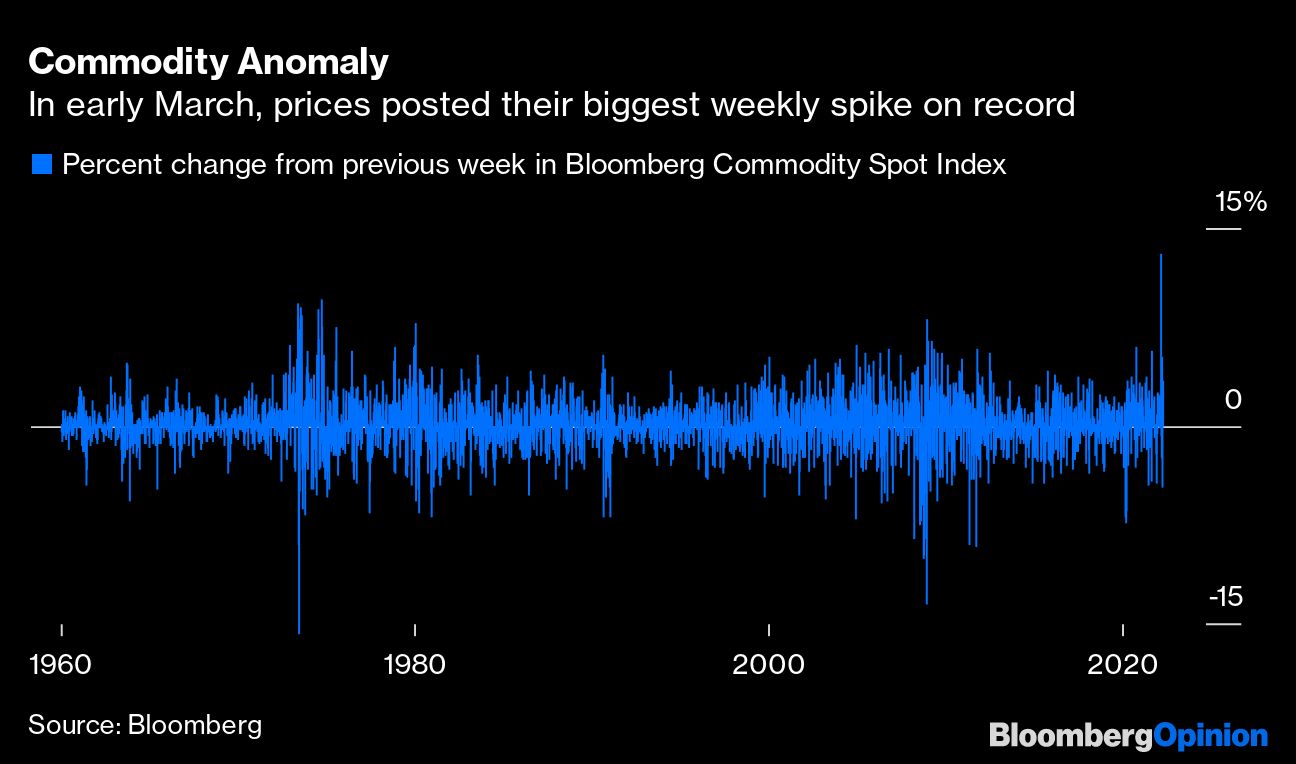
Oil climbed as Chinese central bank assurances of economic support eased fears that a new round of virus lockdowns will crimp crude demand. Diesel markets also spiked amid a global clamor for supplies.
Bookings for durable goods -- items meant to last at least three years -- increased 0.8% in March after a revised 1.7% decline a month earlier, Commerce Department figures showed Tuesday. The figures aren’t adjusted for inflation.
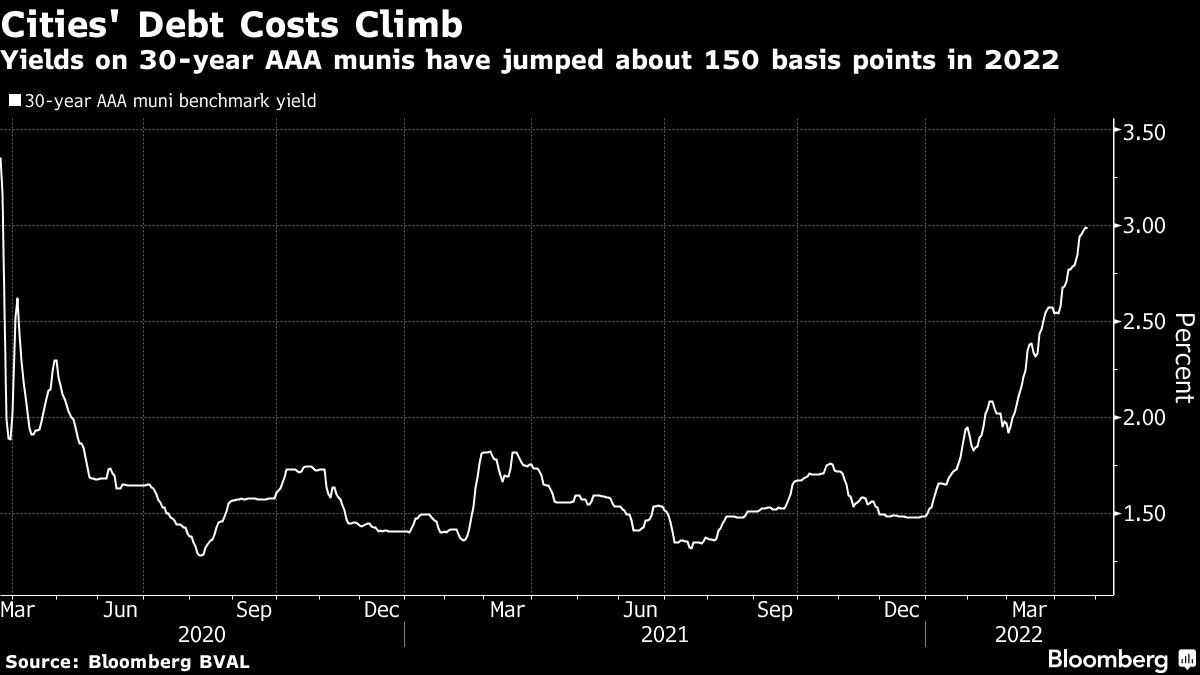
U.S. cities and states are paying up to get muni deals off the ground as buyers gain more bargaining power -- a marked departure from the anything-goes market for sellers in the easy-money era.
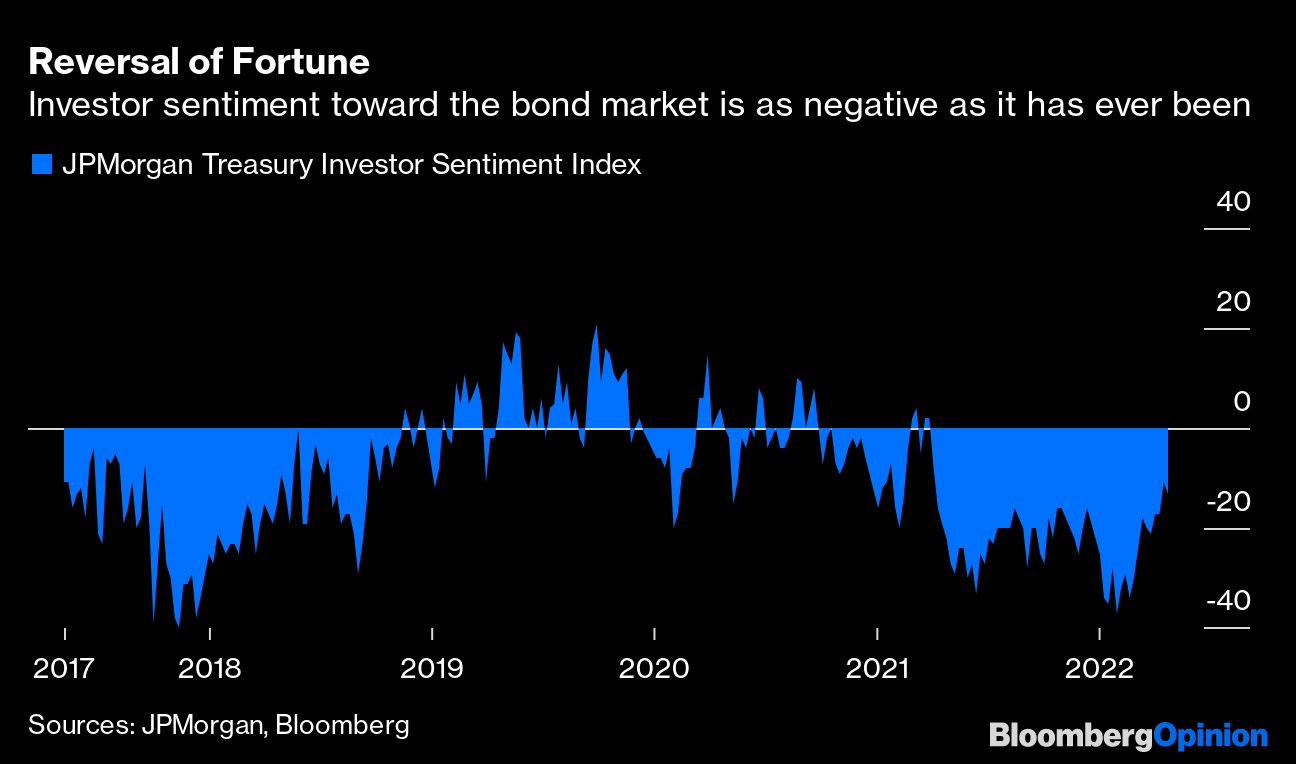
We are panicking over interest rates. Estimates of how high the Federal Reserve will raise its main rate to get inflation under control seem to increase daily. The yield on the benchmark 10-year U.S. Treasury note has surged 1.25 percentage points this year, inflicting historic losses on bondholders.
Digital finance is booming, with the value of cryptocurrencies outstanding reaching more than $2 trillion from almost nothing a decade ago – almost entirely without regulatory oversight to protect investors and the broader financial system. This is not likely to end well, unless officials intervene in a thoughtful way.
We were planning on an in-person event, but some of our team members were exposed to people who tested negative. How are firms solving for this issue now that we are not really back and still getting sick?
You’re often asked for your opinion on matters within and outside your core competence. It’s tempting to respond with confidence and authority. But doing so reflects an absence of what I call the “H factor.”
I will present several studies that explain the broad increase in online video usage, along with “how-to” instructions.
U.S. Securities and Exchange Commission Chair Gary Gensler wants to slash the amount of time that traders have to report many bond transactions as part of a bid to increase visibility into fixed-income markets.
Many advisors would greatly benefit from scale yet are hamstrung by the very temperament that led to their success in the first place.
As if all that’s going on in the world wasn’t enough to worry about, Bloomberg News reports that young people are seeking mental health treatment to break all-consuming cycles of cryptocurrency trading. Those profiled complained that frantic trading in the hopes of scoring quick riches in a rapidly growing, $2 trillion asset class led them to neglect ordinary life and destroyed their peace of mind.
I want to draw your attention to a mistake that is most commonly made by tax preparers, but trips up financial advisors as well: doing tax planning one year at a time.
Here are five ways to win new business and clients for life by creating urgency, so your prospects want to create a financial plan now with you.
Many companies stack the deck in ways that often help their executives get big annual bonuses no matter how the business performs, Bloomberg Tax research shows. They “adjust” and boost the earnings numbers they use, or lower their own performance goals—making it more likely they’ll hit the targets that trigger bonus awards.
As chief architect of the finance industry’s biggest climate coalition, Mark Carney said banks and asset managers are doing a better job at steering capital away from fossil fuels than is implied by what he described as “clickbait” headlines.
The world’s richest person proved the naysayers, including himself, wrong Monday when he clinched a deal to buy Twitter Inc. for about $44 billion, using one of the biggest leveraged buyout deals in history to take private a 16-year-old social networking platform that has become a hub of public discourse and a flashpoint in the debate over online free speech.
Bank CEOs kicked off earnings season with a consistent message that household finances and demand are in solid shape. Procter & Gamble Co., which counts Tide, Bounty and Pampers among its brands, has seen consumers reaching for premium-brand products. Bank of America Corp. and credit-card giant American Express Co. noted solid travel demand.
Only 5% to 6% of people 50 and older include charitable giving in their wills.
Inflation is often viewed as an economic phenomenon, with mostly economic effects. Policy makers today worry about what inflation will do to the housing market; they express concern about government borrowing costs.
This is a hard time to retire. The market is down 7% from last year and the rate of inflation has risen to 8.5%. Both are brutal to your bottom line when you're on a fixed income. But buck up! As bad as things seem, odds are you are in better shape than your parents or grandparents. And if they got through retirement comfortably, so will you.
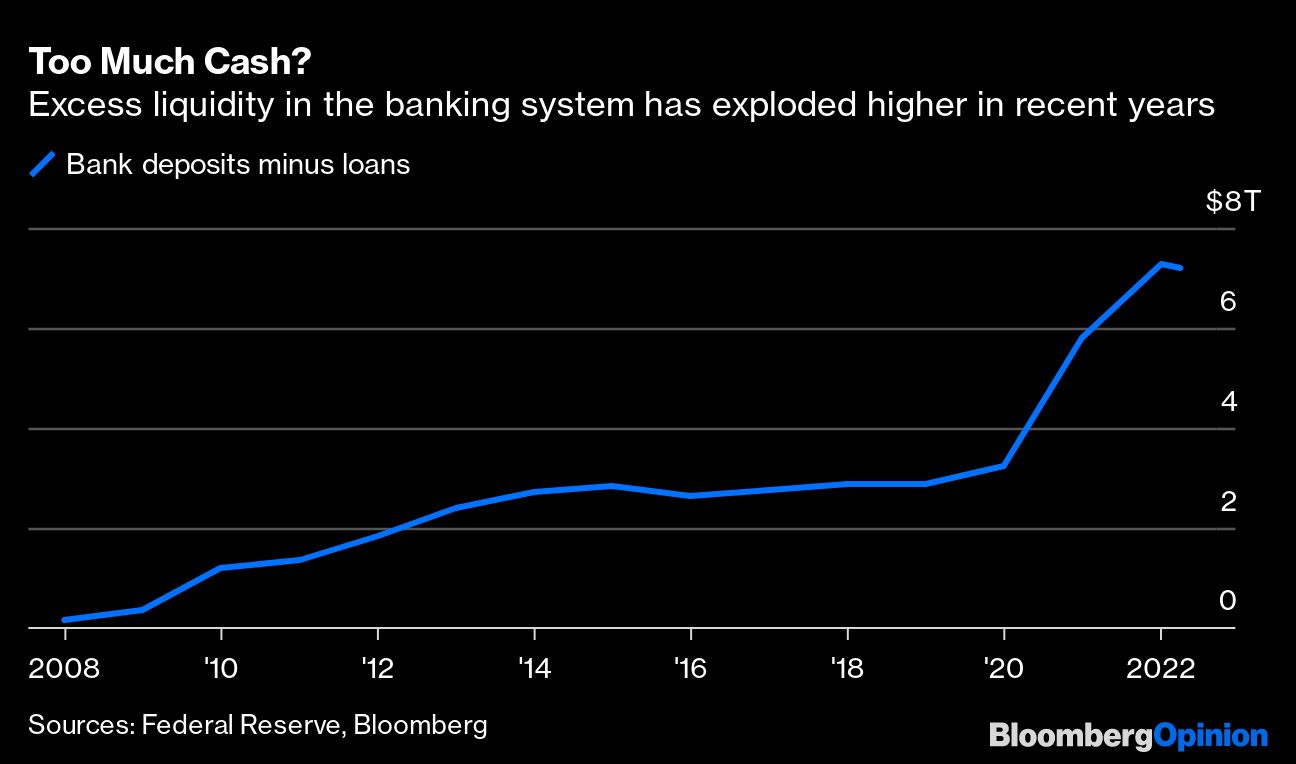
Savers are about to learn one painful and one surprising lesson about interest rates and banks. First, just because the Federal Reserve is raising rates doesn’t mean the rate investors earn on their cash will rise as much — if at all. In fact, the financial repression in the form of zero rates suffered for more than a dozen years by those who are ultra conservative with their savings isn’t going away soon.
Each April, we are moved by hope – it is financial literacy month. To help close the growing savings gap, we strongly feel financial literacy and better knowledge of retirement and financial planning fundamentals are critical to securing more stable financial futures.
I require clients to send me their most recent tax returns. Here are the insights I learn and how it provides a ton of value to clients.
After a multi-decade pause, the winds of inflation have picked up. Only TIPS have been an effective hedge against inflation. Other asset classes have failed to varying degrees.
We know the Covid-19 pandemic has changed the U.S. workforce forever. What we don’t know for sure is how the changes will play out. Some are accelerations of trends that began around the time of the financial crisis in 2008 or earlier, while others were directly inspired by the pandemic. Still others were temporary dislocations that will revert. But it’s anyone’s guess which changes are which.
The successive financial bailouts of the past few decades, necessary as they were, have created a growing expectation: Whenever there’s distress in markets, central banks must step in. Once focused narrowly on traditional banks, they’ve provided emergency lending to prop up markets ranging from Treasuries to high-yield corporate debt.
“Banks are forever going to be trying to play catchup,” said Michael Moro, CEO of digital currency prime brokerage Genesis. “Crypto is going to move way faster than banks can. We have every bank in the world pretty much having some sort of crypto, blockchain working group.”
Your firm’s digital messaging and visual expression must all align with your ideal clients’ needs, goals and objectives. Here is how four top advisors achieved that goal.
Does a risk-free bond with 7% yield interest you? If so, read about the red-headed stepchild of the bond world that is finally attracting investors.
Hire before you need help. You’ll win no awards for all the extra work you’re doing.
The surging popularity of direct indexing has led to confusion. Some believe it is barely indistinguishable from indexed investing, while others claim it is active management “in drag.”
How bullish are we feeling? If the American Association of Individual Investors’ weekly survey is anything to go by, not very. It has been carried out for decades and is much followed as a measure of sentiment. Retail investors are simply asked if they’re feeling bullish, bearish, or neither.
Jerome Powell wants to quell inflation without sinking the labor market. Success or failure will be a defining part of the Federal Reserve chair’s legacy and the pro-employment policy he’s championed.
Twitter Inc., which is trying to defend itself against Elon Musk’s $43 billion takeover bid, has a poison pill in place, so the next obvious move on the hostile M&A to-do list is likely already being contemplated: a white knight.
A couple dollars more a month normally isn’t enough to move the needle, but when Americans are facing the fastest inflation in 40 years, something has got to give. And for 600,000 people in the U.S. and Canada, that something was their subscription to Netflix Inc.
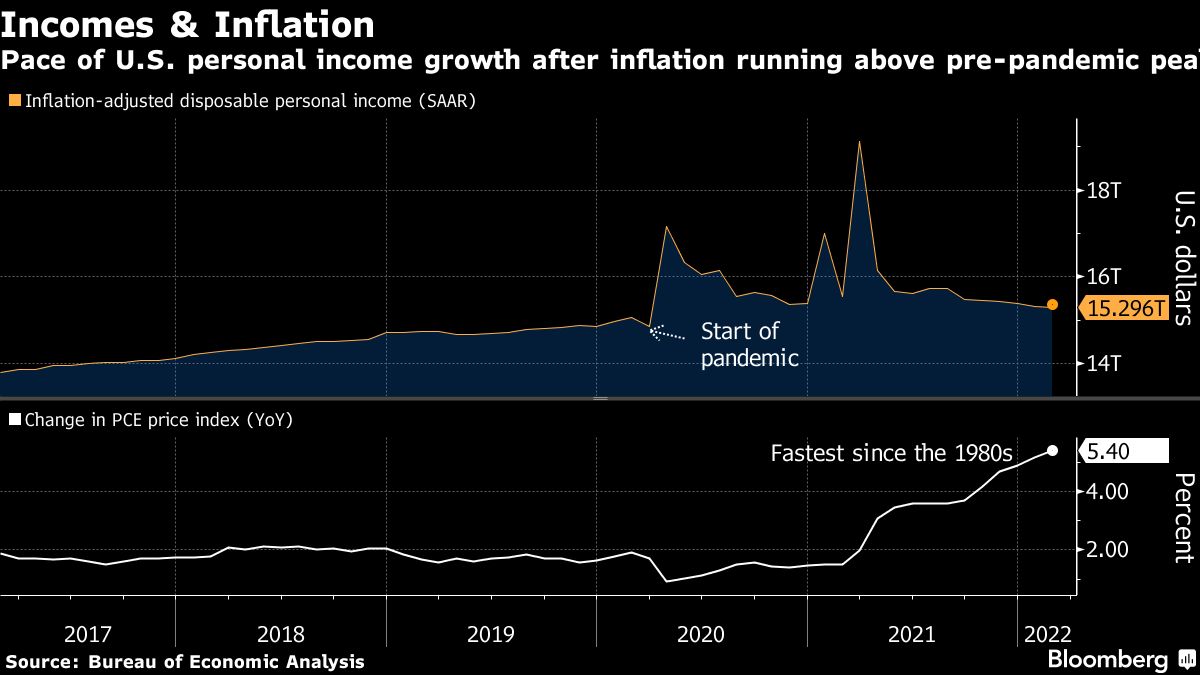
By most measures, the U.S. economy is doing well — but not when it comes to inflation. Consumer prices rose 8.5% in the year to March. Wages are rising too, though not fast enough to keep up. That means financial stress for many families, especially those on fixed incomes or with meager savings. With midterm elections approaching, President Joe Biden’s administration is likely to be judged on how it deals with this problem.
Contract closings decreased 2.7% in March from the prior month to an annualized 5.77 million, figures from the National Association of Realtors showed Wednesday. The figure was in line with estimates in a Bloomberg survey of economists.
Our words help us dress up or dress down for the occasion.
An outdated website will tarnish your brand and cause you to miss opportunities to grow your reputation, reach, and revenue.
A few weeks ago, I wrote an article on strategies to become more time efficient. Since that time, I have been inundated with advisors asking questions such as…
Many of you are struggling to decide whether you should breakaway and form your own RIA. I confronted the same decision many years ago. Here’s my story.
Depending upon the annuity that is being recommended and its purpose, your discovery process should include these questions. This article is written for clients and can be forwarded to them using our Premium Membership Service.
The Federal Reserve’s most hawkish official cracked open the door to discussing the first 75 basis-point interest-rate hike since 1994, a move economists say would be a last resort in case inflation further spirals out of control.
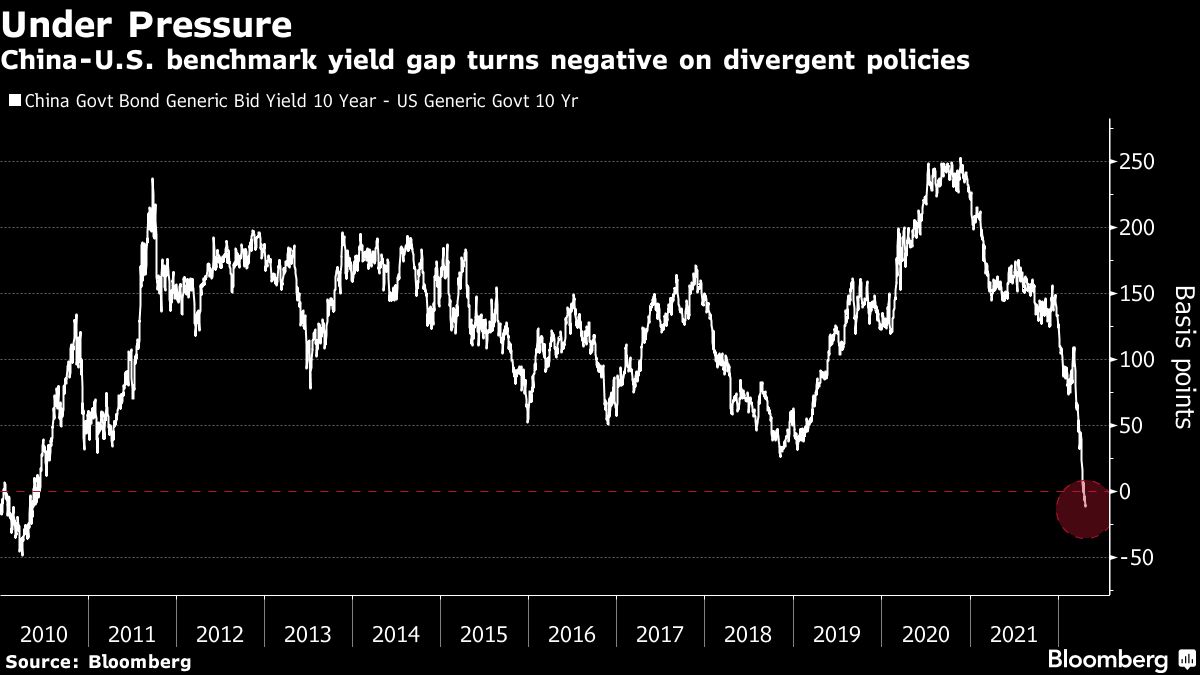
Asia’s two biggest central banks are having to grapple with the fallout from the Federal Reserve’s hawkish pivot.