Two weeks ago, I opened this letter by noting the election uncertainty, once over, would give way to a different uncertainty about what comes next. That’s where we are now.
One of the core principles of a long-term dividend portfolio is to invest in companies that are integral to society and will be for many years to come. Transportation falls into that category.
I went to bed “early” on election night, around 10:30 pm. We are in the five months of the year where Puerto Rico is one hour ahead of Eastern time, and nothing I was seeing made me think it would be an early night. And by that I meant 3 or 4 am.
Anyone else ready for the election to be over? This uncertainty is exhausting, no matter how you want it to end. But sadly, it won’t really end. We will just transition to a different uncertainty over what will happen next. I will offer my thoughts on the election at the end of this letter, after setting the stage.
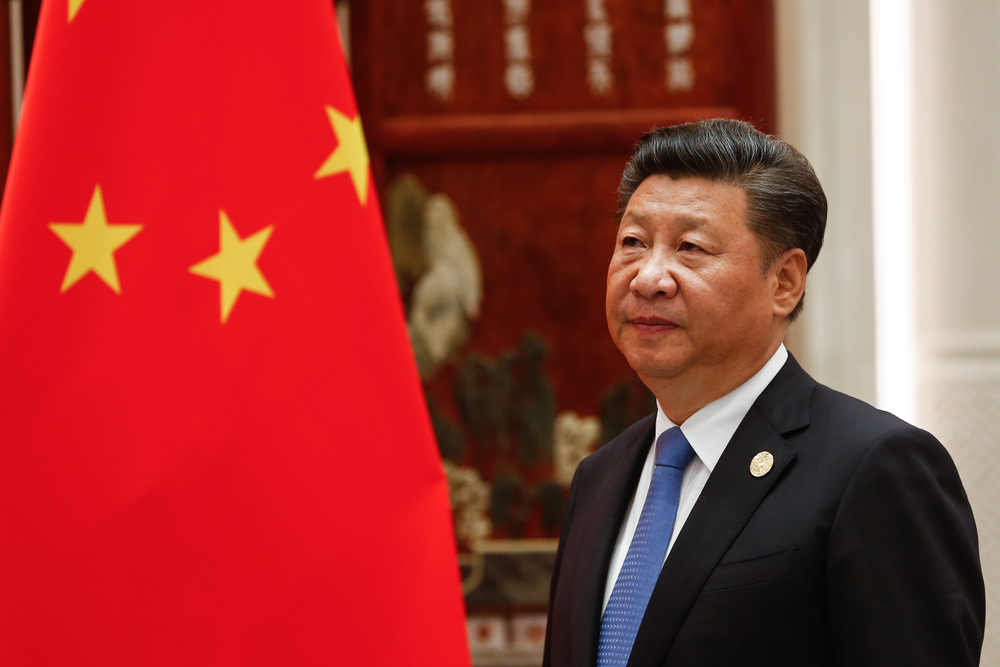
We don’t talk about China enough. I suspect this is for several reasons. First, because the country is so incomprehensibly big and populous. Second, it has been an economic miracle. Many Chinese enthusiasts just see a straight line projection of their growth. To the moon, Alice!
Housing prices matter to everyone, even if you aren’t trying to buy, sell, or rent a home. They are the key to inflation, which drives Fed policy and interest rates, which drive financial markets. We’re all part of this, like it or not. Today we’ll review what is happening.
The markets saw a fifth straight week of gains last week. The S&P 500 closed above 5,800 for the first time, the Dow hit a new record high, and the Nasdaq came within 2% of its all-time high.
Everything I’ve learned and experienced in 50+ years of watching the economy tells me not to expect a soft landing. But maybe that’s because I’ve never actually seen one.
Earnings season usually lasts around six weeks, so this wave of data will take us almost to Thanksgiving.
It’s my birthday week and I have guests and family gathering in the next room, so this will hopefully be a quick letter as well as ending with what will likely be controversial food for thought.
Two weeks ago, I began reviewing Martin Gurri’s important book, The Revolt of the Public. Rather than try to do a general review, I am going to liberally quote from Gurri’s book and interviews, trying to let him explain himself in his own words.
I’m moving up a letter I was planning to share with you on my birthday weekend in two weeks. The story about sandpiles and the financial system may be the most popular letter I’ve written in the last 25 years. It is one we should all re-read every few years to remind us how change happens slowly, then suddenly.
In my cycles book I’m reviewing the forecasts of Neil Howe, Peter Turchin, George Friedman, and Ray Dalio. For different historical reasons and patterns, all see a crisis culminating at the end of this decade. Some readers have legitimately pushed back, saying no one knows the future.
We are entering a time I think will include a deep crisis. We are going to need each other. We really do need to “find our tribe.”
I asked my great friend and business partner David Bahnsen, who is about as politically wired as anyone and one of the truly great economic and investment minds, to reflect on the intersection of politics and markets. It is a quick, balanced, and reasonable read...
Many recent studies have been done on the economics of different generations. Researchers want to know if Millennials and Gen Z are in fact worse off than their Boomer and Gen X parents. There are quite a few ways to look at this data.
This week we take a not-so-random walk through the data, trying to simplify what is actually a fairly complex subject. I think it is quite fun, but also important. Let's dive in.
Head fake is a trading term, too. Some bit of information convinces investors a market is going to move a certain way. They reposition their portfolios accordingly… just in time to find out the information was wrong. Oof.
As much as my two-pronged dividend strategy works in all markets, we still need to acknowledge that politics influences the market. Sometimes it’s a tangible impact like big swings in the price of oil. Other times it’s just investor sentiment moving the market.
I can't let this month pass without noting a significant anniversary: This is the 25th year I’ve been writing Thoughts from the Frontline. You can visit the archive and see every issue since January 2001.
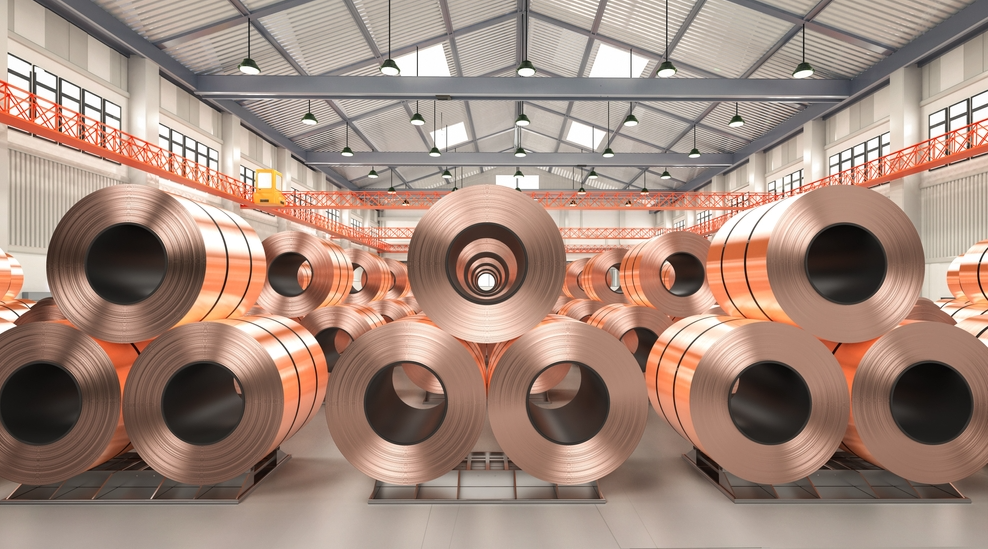
Copper prices have pulled back since peaking in May at $5.12, but the long-term bull case for copper remains strong.
The Federal Reserve is between the Rock of Gibraltar and the Rocky Mountains. The data they use to explain their policy choices is in apparent transition. A self-aware analyst, seeing the conflicting data, knows that the right policy choice will only be understood in hindsight.
We have been talking about resiliency-driven inflation for the past several weeks. As the US and its Western allies realign supply chains to strengthen economic resiliency, the cost of certain goods and commodities will go up.
Progress toward a goal usually isn’t linear. The first 50% isn’t too bad, the next 40% is harder, and the last 10% consumes most of the effort and resources. Business strategists call this the “last mile” problem… and it applies to inflation, too.
I almost exclusively talk about stocks here in Dividend Digest because dividends are at the root of my strategy. But most income investing includes some level of exposure to debt.
The appetite for nuclear energy is growing fast. Here in the US, most adults now favor expanding our nuclear power capabilities because it’s a great alternative to fossil fuels. Unlike wind or solar, nuclear provides energy around the clock. So, why haven’t we built more nuclear power plants?
Writers who want to describe sweeping global change often quote the W.B. Yeats poem, titled "The Second Coming."
The inflation picture is getting better but we still have too much of it. Inflation is going but not gone, and probably won’t be gone anytime soon. Today I’ll tell you why.
It’s earnings season yet again. And I think this one is going to be more down-to-earth than the ones we’ve had over the past year.
In seasoned investment circles, nearly everyone reads the memos from Howard Marks, the co-chairman of Oaktree Capital Management, which he’s been writing for his clients since 1990. The most widely read of these memos, “Something of Value,” is foundational reading for anyone serious, or anyone who wants to get serious, about investing.
We are in the time of year when Americans pack transatlantic airliners for their European vacations. I had actually hoped to be one of them. That didn’t work out but we can still talk about events in Europe. And we probably should, because potentially major changes are happening.
No investor wants to miss the wave of a massive, transformational technology. Spot these big shifts early, and you have a chance at Nvidia-like returns.
Last week we had our quarterly live call for Yield Shark subscribers. We had some great conversations over the course of the hour. One of the major topics that came up was what will happen through the end of the year. Will we see a correction or a rotation? If so, when will this happen? And most important, how can we prepare?
Long-time readers know I have not been a fan of the Chevron deference. I think it was one of the worst decisions of the last century. I've been aware of it because I'm in a regulated business.
The giant federal debt we’ve been talking about isn’t just borrowed money. It is also lent money. Loans are two-party transactions. One side receives temporary use of cash which it agrees to repay with interest. The other gives up the current use of that cash in exchange for receiving interest. Ideally, it works out for both… but not always.
Investors often ignore geopolitics, usually to their benefit. Now might be one of those times when we should pay attention. In the past few weeks, hostilities between East and West have accelerated. It’s a worrisome trend.
The old saw about doing the same thing and expecting a different result is less simple than it seems. Sometimes you need a few attempts to get it right.
You know I’m highly concerned about government debt in the developed world, particularly the US. I’ve said for years a crisis is coming. We’ve blown right past all our chances to avoid it. Now all we can do is imagine what the crisis will look like… and how much it will hurt.
I was a landlord once and it didn’t turn out how I expected. I think it mattered that I didn’t set out to be a landlord. I had bought a house in Baltimore City that I expected to live in for many years.
Defending my love of dividends consumes a lot of my time. Sometimes I’ll pull out my track record. Other times I explain how owning boring and stable dividend stocks means I spend less time watching and worrying about them.
I’m writing you from Cape Town, South Africa, where I’ve been warmly welcomed and reminded how much I enjoy international travel (well, except for jet lag!). Our world has so many wonders most people never get to experience. Of course, “there’s no place like home,” but seeing other places makes me happy, too.
Data is important but not everything. Perceptions matter, too. Today we’ll look at how people feel inflation and what it may mean in the years to come.
The price of oil is hovering around $76 per barrel, 38% off its 5-year high. With so much geopolitical tension, why isn’t it higher?
When new inventions turn into market frenzies, the contrarian part of me wants to be skeptical. But the optimistic part of me wants it to be true, especially when the idea promises to change life for the better. Reality is usually somewhere in between.
Some of the biggest names in tech started paying dividends this year. This includes Alphabet (GOOG), Meta Platforms (META), Salesforce (CRM), and Booking Holdings (BKNG).
Copper prices have exploded higher, up 33% year to date.
Sometimes two seemingly opposite things can be true at the same time. Right now, we can correctly say inflation is both a) better than it was and b) higher than it should be.
The path to the US’s energy future is becoming obvious. Over time, nuclear will become one of, if not the primary, sources of energy feeding our ever-growing demand for electricity. China and India are far ahead of the US on this, with hundreds of new reactors slated for construction.
Any way you care to measure it, the United States has the world’s largest economy. It is not, however, the fastest-growing economy. And growth rates matter because, other things being equal, a faster-growing economy might eventually challenge US leadership.
So much happened in the spring of 2020 that it’s easy to forget we were on track for a recession just before COVID hit. QI Research founder Danielle DiMartino Booth mentioned this during her presentation with Lacy Hunt at our Strategic Investment Conference.