Copper is having a moment. It may be a long one. The metal has hit record highs in 2026 and is currently up 15% since the start of the year, trading above $14,300 a ton on the London Metal Exchange.
Convertible bond investors chasing exposure to the artificial intelligence boom are giving up some of the protection they would normally demand, pushing the market toward levels of risk-taking last seen during the pandemic.
A chorus of investors is urging Federal Reserve Chairman Kevin Warsh to express a strong determination to deal with high inflation to boost the long end of the Treasury market.
Most residents of rich, Western countries have relatively high earnings, but many also feel they can’t afford a reasonable lifestyle. Americans, for example, are getting richer but also more unhappy. Meanwhile Eastern Europeans, not generally known for their cheery disposition, are most satisfied with their comparatively lower income.
Kevin Warsh’s inauspicious start as chairman of the Federal Reserve has guaranteed that his speech on Friday at the central bank’s annual Jackson Hole conference will command rapt attention. He might wish it were otherwise: Investors demanding clear answers to their many questions are almost certain to come away disappointed.
High indebtedness has prompted a call for France to cancel part of its public liabilities. Ideas spread, so expect similarly unorthodox demands elsewhere as governments grapple with high debt, while political disruptors air increasingly unconventional policies. All those roads, however, lead to more inflation and the debauchment of financial assets.
Investors are no longer choosing between gold and Bitcoin as hedges against fiscal anxiety. They’re buying both.
A blockbuster outlook from chip darling Nvidia Corp. is providing a boost to tech stocks and lifting key equity indexes Thursday morning, adding to investor optimism about the AI cycle.
The US Army is planning to deploy small reactors to power five bases across the country, investing $2.2 billion to accelerate the Trump Administration’s efforts to boost America’s nuclear industry.
The irony is that the advisors who most need to delegate are the ones who find it hardest. You need to stop being the hero of every story. There are four reasons why, and every one of them is a story you tell yourself.
I was recently asked how to instill accountability and urgency in this next generation. Set expectations and offer guidance. Remember, this is a generation that largely grew up not speaking to other people and definitely not calling anyone.
When a typical business finds its supply chain costs have risen, it will absorb the increase to keep its customers happy. Nvidia isn’t a typical business. It enjoys gross profit margins of 75% and commands between 70% and 90% of the global market for artificial-intelligence chips.
The US economy expanded at an unrevised 1.5% pace in the second quarter, though underlying details showed stronger consumer spending and business investment than initially reported.
Vanguard, known mostly for its low-fee index funds, will add Altruist’s wealth technology and custody platform, the firm said in a statement Wednesday. It didn’t disclose terms.
The future of geothermal energy, a renewable source that has charged up conservatives and liberals alike, is being charted in a scrubby patch of sagebrush, halfway between Las Vegas and Salt Lake City.
Recent Kitces’ research found no meaningful difference in wellness between advisors who worked in a traditional office versus at home or elsewhere. What did matter was alignment: Advisors thrived when they had the flexibility to work in an environment that matched their personal preferences.
When the Electronic Numerical Integrator and Computer, or Eniac, was first built by the University of Pennsylvania for the US Army in 1946, it weighed about 30 tons and had 18,000 vacuum tubes that filled an expansive room.
Today, many clients expect their financial advisor to be involved in the estate planning process — and they’re willing to switch advisors to find one who offers this expertise, according to a July report by digital estate planning platform Trust & Will.
I wrote several years ago that the only thing you can count on the stock market to do is fluctuate, and that the wisest response is usually to do nothing. Looking less often will not change your return. It will make you far less likely to damage the return you already have.
The WealthTech market has a serious AI-washing problem. The term borrows directly from a parallel wealth management executives already understand. Just as greenwashing described investment managers who marketed ESG commitments they could not substantiate, AI washing describes technology vendors who relabel rules-based automation as artificial intelligence.
Kevin Warsh’s first major speech as chairman of the Federal Reserve has become an unexpected trial of his slimmed-down communications style.
US stocks advanced on Tuesday as technology names rallied and investors continued to prepare for Nvidia Corp. earnings and the Jackson Hole Symposium.
Treasuries gained as a decline in crude oil eased inflation concerns and the pressure on Treasury Secretary Scott Bessent, who has been moving to halt a months-long selloff that pushed the longest-dated yields to the highest in almost two decades.
The artificial intelligence trade is booming, and so is the hunt for new ways to diversify AI exposure. Traders can buy power futures, track the technology’s beneficiaries and back data-center real estate projects, alongside buying the usual haul of chipmaker shares.
Yields on 30-year US bonds broke 5% last week, a level not seen since before the Great Financial Crisis. The Treasury Department bought bonds in an attempt to lower yields. It worked — for a day, then bond yields went back up. Meanwhile, in a not-exactly-unrelated development, the US national debt just passed $40 trillion.
When portfolios become standardized, investor experience becomes standardized right along with them, even though almost nothing else about those investors is standard. Their goals, tax exposure, risk tolerances, and individual spending needs are too individualized to be captured by many models that purport to be customized.
While it is useful to analyze holdings by asset class, a portfolio-wide view can provide additional insights. Typically, the bond sleeve and the equity sleeve are seen as entirely separate. However, they usually hold unnoticed concentrations in different companies.
Amazon.com Inc.’s Andy Jassy has begun making an audacious boast during conference calls this year. Though his company remains a top Nvidia Corp. customer, it’s also one of the world’s largest makers of data center chips in its own right.
US stocks traded lower before the bell on Monday as investors prepared for a busy week of economic data and important earnings from Nvidia Corp.
The question facing advisors is no longer whether clients can hold digital assets, because many already do. It is whether the firm can explain, in writing, how each position was sized, why a particular product was chosen, and where that decision is recorded. Most firms cannot, and that gap is the exposure.
The Treasury Department could opt to draw down some of its cash pile to fund expanded buybacks of higher-yielding, older securities, CNBC reported Monday, citing two senior Treasury officials.
No doubt, AI can be an unnerving tool. But it isn’t magic, malevolent, or secretly sentient. With some reasonable rules in place, policymakers should be able to keep the bots in line, and unleash the benefits for everyone else.
On the first few trading days of every month, America’s paychecks hit the stock market. Most 401(k) contributions now default into index-tracking funds, which buy the same stocks in the same proportions whatever the price.
Gold climbed to the highest in three months as the US Treasury’s bold intervention to try to stem a damaging increase in borrowing costs revived investor fears about its fiscal burden.
Market exuberance returned to cryptocurrencies when US Treasury Secretary Scott Bessent announced Wednesday the department would at least double the size of its long-dated bond buybacks, triggering an upswing that forced traders to liquidate billions in short positions.
Goldman Sachs Group Inc. and JPMorgan Chase & Co. strategists are among the most optimistic about European stocks on the back of a robust corporate earnings outlook, a Bloomberg survey shows.
A brisk rally in industrial stocks this year has defied higher oil prices, rising bond yields and restrictive trade policies, as investors bet on big gains from the artificial intelligence boom. Now signs are emerging the optimism may have gone too far.
US stocks rose in early trading Friday, putting the Nasdaq 100 on track to end a five-day losing streak as bond yields stabilize and Bitcoin soars.
It’s easy to make the case that the US equity market is in bubble territory. After all, the major metrics point in the same direction.
Shares of Meta Platforms Inc. have been under pressure all year due to questions about its spending on artificial intelligence. But a trial accusing its social media platforms of targeting children goes beyond that, raising existential questions about the future of its core business.
Alibaba Group Holding Ltd.’s profit plunged more than 75% after the Chinese company ratcheted up quarterly capital spending to almost $10 billion, aiming to safeguard its position in a fiercely competitive global AI arena.
With a slew of unexpected maneuvers this year, Scott Bessent has emerged as the most interventionist Treasury secretary in financial markets in decades — putting his credibility on the line in an effort to quell a potentially damaging rise in US borrowing costs.
The nation’s affordable-housing shortage is fueling a fast-growing corner of the municipal bond market, as lenders securitize portfolios of multifamily mortgages to free up capital for new loans.
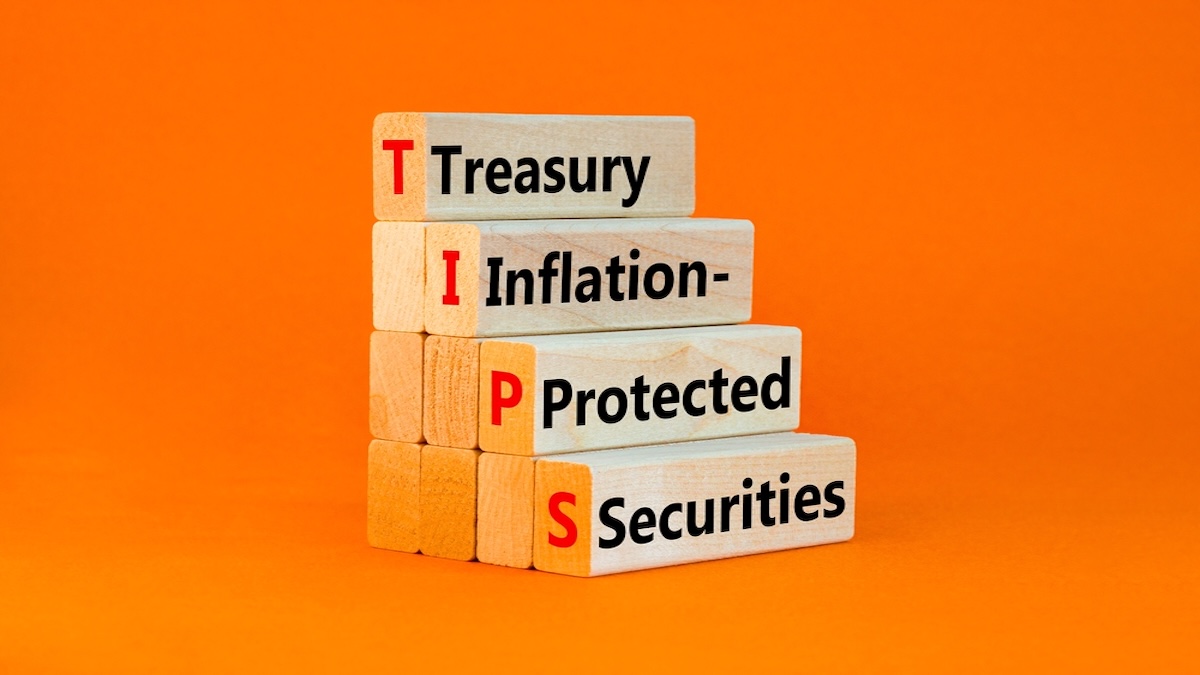
Would you consider investing in a bond that earns more than 3% after accounting for inflation? What if that security has zero chance of default? Such an opportunity exists today in U.S. Treasury Inflation-Protected Securities (TIPS).
Agentic AI won't scale until it owns the meeting cycle—not by replacing advisors or acting without oversight, but by maintaining operational continuity: assembling context, preserving memory, and driving approved actions through to completion.
I’m always asked for scripts. You don’t want a script. You want to be natural and approach clients in a manner that fits you. Practice, practice, practice until it seems natural and comfortable. Authentic is always best.
Treat launch costs as initial investments, not expenses to minimize. Strategic firms often discover that the most valuable investments are the ones that protect their clients, preserve flexibility, and create enduring enterprise value.
The deal follows similar moves elsewhere in the Gulf, including oil and gas pipeline transactions by Abu Dhabi National Oil Co. and Saudi Aramco, as governments seek to bring in external capital without losing control of key assets. In these cases, investors obtained bridge financing from banks that were later refinanced by bonds.
The US Treasury unexpectedly announced it’s ramping up buybacks of long-dated government debt, taking the action in the wake of yields on such securities hitting the highest levels in years.
Marvell Technology Inc. and Alphabet Inc.’s Google announced an expanded chip-development partnership, including a warrant from Marvell allowing the search giant to buy as much as $12.2 billion in shares.