The S&P 500 closed at 6,740 on Friday, its lowest level since mid-December, as technical deterioration, collapsing payrolls, and $100 oil converged on the charts. Every major moving average has broken. Here’s what comes next.
One of the most common questions investors ask is simple: “How’s the market?” After more than 50 years in the investment industry, this is a question that comes up constantly. But the truth is, the question itself is somewhat misleading.
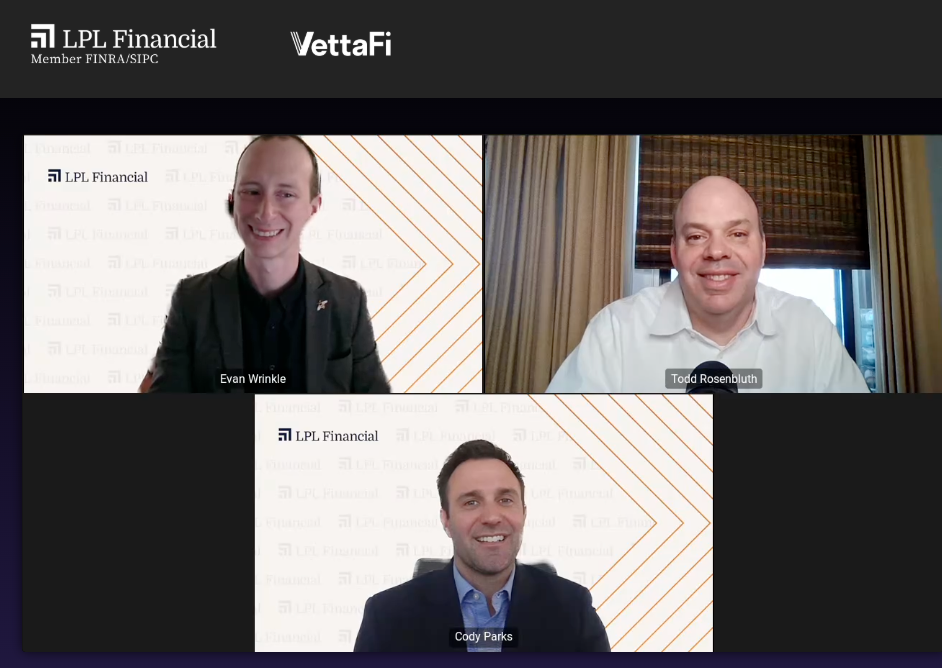
In this week's episode, Todd Rosenbluth (Head of Research at VettaFi) joins Chuck Jaffe to break down the SPDR SSGA US Large Cap Low Volatility Index ETF (LGLV).With geopolitical turmoil in the Middle East causing market jitters, many investors are looking for a way to maintain equity exposure without the "stomach-churning" swings of the broader market.
Stocks and currencies have seen steep losses, with the MSCI equity index posting its biggest weekly drop in six years, and bond yields have jumped.
Netflix Inc.’s stock price is staging a dramatic reversal triggered by management’s decision to walk away from its proposed acquisition of Warner Bros. Discovery Inc. late last month.
Iran’s strategy in its war with the US and Israel is by now clear: Impose an intolerable economic cost on President Donald Trump, forcing him to abandon his “war of choice” as American gasoline prices surge. Is there any way the Islamic Republic’s blueprint for survival can fail?
While senior military officials on both sides have signaled that the campaign may intensify in the near term, keeping headline risks elevated, we outline below why we believe the conflict is likely to be short-lived, and what that could mean for the economy, the Federal Reserve and financial markets in the weeks ahead.
Thematic exchange traded fund assets in the U.S. have surged from $22 billion in 2015 to over $193 billion today, but not all thematic funds deliver on their promises, according to a new FactSet analysis.
As investors navigate an increasingly complex market, the demand for sophisticated, outcome-oriented ETF strategies has reached a significant inflection point. Goldman Sachs Asset Management is seeing strong success in this space, evolving its suite of derivative-based ETFs to meet the diverse needs of modern portfolios.
Improving after tax returns is rarely as simple as boosting pretax returns or reducing tax expenses. It’s actually quite a bit more involved than that. As we see it, maximizing after-tax performance requires an “all of the above” approach, applying a range of techniques in a holistic way.
Managed futures strategies, also known as Commodity Trading Advisors (CTAs) or trend-followers, are designed for environments where macro shifts drive persistent price trends across equity, bond, commodity, and currency markets. As geopolitical risk has spiked due to the conflict with Iran, the current backdrop will present a unique test for investment strategies.
With “energy dominance” comes great turbulence. President Donald Trump’s open-ended war against Iran reflects a US seemingly unconstrained by energy needs and ready to wield its own fossil fuels as instruments of power.
With one month left in the quarter, M&A is running a little light compared to the record-breaking close of 2025. According to Wall Street Horizon’s coverage universe of 11,000 global equities, there have been 59 M&A announcements and 78 closes as of March 2.
As the market continues to move deeper into the first quarter of 2026, the fixed income landscape calls for more stability.
In a recent episode of the Money Metals Midweek Memo, host Mike Maharrey discussed volatility in the gold and silver markets amid escalating geopolitical tensions and broader financial market turmoil. Maharrey opened by criticizing mainstream financial media coverage of a recent selloff that occurred as markets reacted to a conflict involving Iran.
Amid perceived artificial intelligence (AI) threats, cybersecurity stocks are enduring quite a rough patch. However, there are alternative viewpoints.
Bond investors, who have been focused on inflation since the Iran war began, say a surprise in the monthly US jobs report has the potential to upend their expectations for Federal Reserve interest-rate cuts.
Artificial intelligence has become one of the defining investment themes of this cycle. Yes, we may be hearing about the AI pullback as a valuation reset. However, that doesn’t change the underlying scale of adoption for this theme. And that’s evident even “under the hood” of ETFs.
February data shows investors abandoning growth strategies for cyclical sectors as value funds attract $15 billion in new assets.
Credit investors are unwinding long positions worth tens of billions of dollars and jumping into hedging trades.
A great financial economist once tried to convince me that retail investors should not be allowed to buy individual stocks. I strenuously disagreed: Wasn’t this America, the country that encourages risk-taking? Why shut regular investors out of the chance to get rich?
For over a decade, the narrative surrounding emerging market (EM) debt has been dominated by a single, overpowering force: the United States Dollar. As the greenback surged from the mid-2010s through the early 2020s, investors seeking yield in emerging markets largely sought shelter in "hard currency" debt—bonds issued by emerging nations but denominated in U.S. dollars.
Relying on the kindness of strangers has never been a good business or investment strategy, but it doesn’t mean that people don’t wish that it worked. The main issue with this hope is that it’s foolish to believe that other people’s grace and money will always be there.
After years of trailing their large-cap peers, small-cap stocks have tested the patience of even seasoned investors. But we believe a dramatic improvement in earnings growth driven by lasting change in the US economy is creating sustainable recovery potential for small companies of all types.
Notwithstanding developments in the Iran conflict, there are important leadership shifts still at play within the equity market, which emphasize the importance of diversification.
February saw more than 50 new ETF launches according to ETF Database data, with some standout offerings to note.
It’s been a busy start to the year for investors, as shifting geopolitical risks and rising economic uncertainty led to choppy returns for stocks. Concerns about AI spending and profitability hit technology stocks especially hard. However, other sectors like financials and consumer discretionary have also seen losses to start the year.
The war in Iran is forcing investors to reevaluate one of their most profitable stock strategies, leading some to conclude that the “Sell America, Buy Asia” trade has reached an inflection point.
The US Securities and Exchange Commission asked leveraged-ETF issuers not to move forward with a new wave of planned funds, using a rare group call Monday to renew its push against increasingly aggressive fund structures.
Intercontinental Exchange Inc. is acquiring a stake in OKX in a deal that values the cryptocurrency exchange operator at $25 billion.
It turns out, the biggest financial victim of President Donald Trump’s decision to strike Iran is not the S&P 500, but equity markets across North Asia.
Recessions are a regular part of the economic cycle, which means planning ahead is essential. You can't control the economy, but you can take steps to help protect your savings, manage debt, and keep your goals on track. Here are some smart ways to prepare when the economy shifts.
Energy is among the smallest sectors in the S&P 500, representing only about 3.5% of the benchmark’s sector allocations, and yet, it’s energy that’s capturing investor attention this year. A big part of the story centers on oil and natural gas, now in sharp focus due to an ongoing conflict in the Middle East.
As industry experts convened at SFVegas 2026, the world’s largest structured-finance conference, insurers showed up in large numbers, underscoring growing exposure to securitized assets and private credit in portfolios. We also attended the event and returned with a few key takeaways.
The AI narrative often centers on the limitless potential of software. However, the real-world trajectory of the technology is increasingly dictated by rigid physical limitations: copper wiring and data center temperature control.
March came in like a lion. Stock market futures plunged last Sunday night following U.S. and Israeli attacks on Iran. WTI and Brent crude oil had surged 7% by the following morning, along with big gains in gold.
A guide to helping HNW investors align tax efficiency with philanthropy, retirement strategy, and multi-generational wealth transfer planning.
Kirsten Chang, Senior Industry Analyst at VettaFi, unpacks controversial filings for prediction market ETFs and examines the increasingly blurred line between gambling and investing. Chris Marangi, Co-Chief Investment Officer of Value at Gabelli Funds, highlights the recently launched Gabelli Opportunities in Live and Sports ETF (GOLS) and explores the broader investment opportunities across live media, entertainment, and sports.
From real estate to multi-generational planning, learn the key strategies high-net-worth individuals use to maximize wealth and legacy.
Transforming a practice built on guardrails and restrictions into a strategic enabler might seem contradictory. But the conditions for this shift have been building, and they're finally converging.
The last time an armed conflict upended the global energy economy, crude spiked past $100 and shares in oil and gas producers rallied for months. A similar trajectory might be unfolding as war rages in the Middle East.
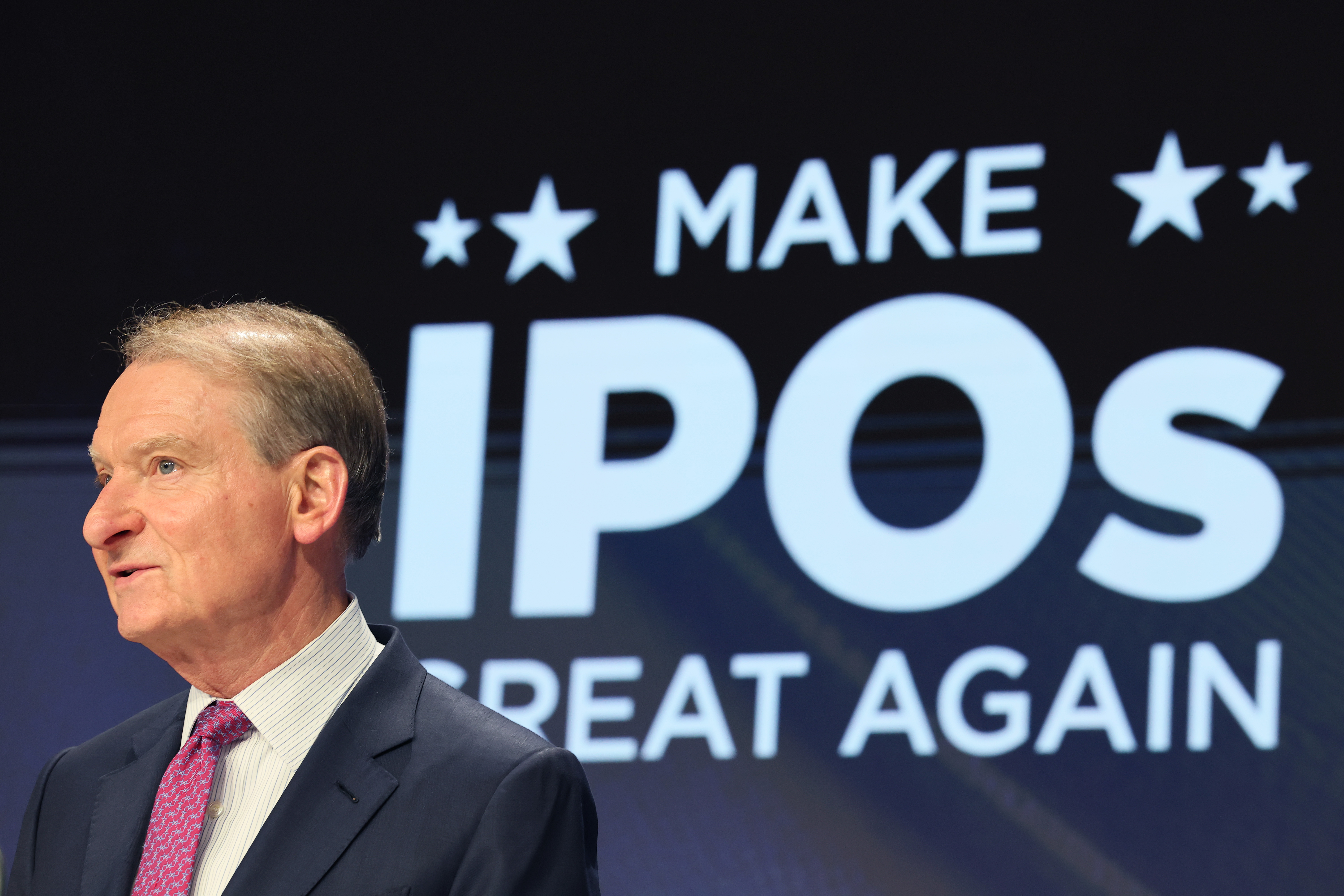
Decades of “regulatory creep” and onerous disclosure requirements have discouraged companies from going public, say leaders of the Securities and Exchange Commission. To revitalize American markets, they plan to pare back those demands, especially for smaller firms. “We need a reset,” Chairman Paul Atkins recently declared.
Most investors, from grandma to the mightiest sovereign wealth funds, own bonds to help steady their portfolio and provide a ready reserve for spending. So, it’s notable when prominent voices start questioning their safety.
If the SaaSpocalypse narrative proves to be more panic than prophecy, the critical task becomes identifying which companies will emerge stronger.
Stocks were choppier in January, but most areas of the market showed gains. The one laggard was large-cap growth, which was strong in recent years and for most of 2025, but trailed other stock indices.
Is quality broken? This has been a recurring question in our recent conversations with investors as quality has meaningfully underperformed over the past several quarters.
The U.S. ETF market has reached a tipping point. With nearly 5,000 funds now trading—officially outnumbering listed stocks — the industry is flooded with complexity.
International value stocks outpaced US equities in 2025. See the five catalysts fueling the shift—and why investors still have time to act.
The public loves to hate short sellers, the investors who profit from declining securities’ values. Their bad reputation is mostly undeserved. In reality, many provide a valuable service, taking the other side of frauds and bubbles, and generally helping drive prices toward a semblance of fair value.
Join Chairman and Portfolio Manager Chris Davis as he shares his perspective on the market, how active ETFs can help investors, and the importance of investor behavior.