Senior discounts aren't just about age; they're about a lifetime of work and contributions and a way of giving back to you. They also allow you to stretch your income and enjoy more experiences. You’ve earned the right to enjoy them.
With the right tech in place, advisors can access reliable, high-quality models that can be used repeatedly across their book of business.
In my recent piece, “Japan's Lost Decades,” I examined why Japan's GDP is smaller than it was in 1995 and why it took 35 years for its stock market to set its recent record high.
A string of disappointing inflation data has forced the Federal Reserve to reset the clock on its first interest-rate cut and re-evaluate the trajectory of price growth.
Investors should use any swings in Indian stocks during the weekslong election as an opportunity to buy, according to JPMorgan Chase & Co.’s private banking unit.
US Treasury Secretary Janet Yellen acknowledged the concerns of Japan and South Korea over sharp declines in their currencies during a trilateral meeting of finance chiefs that may offer Tokyo and Seoul more scope to defend the yen and the won.
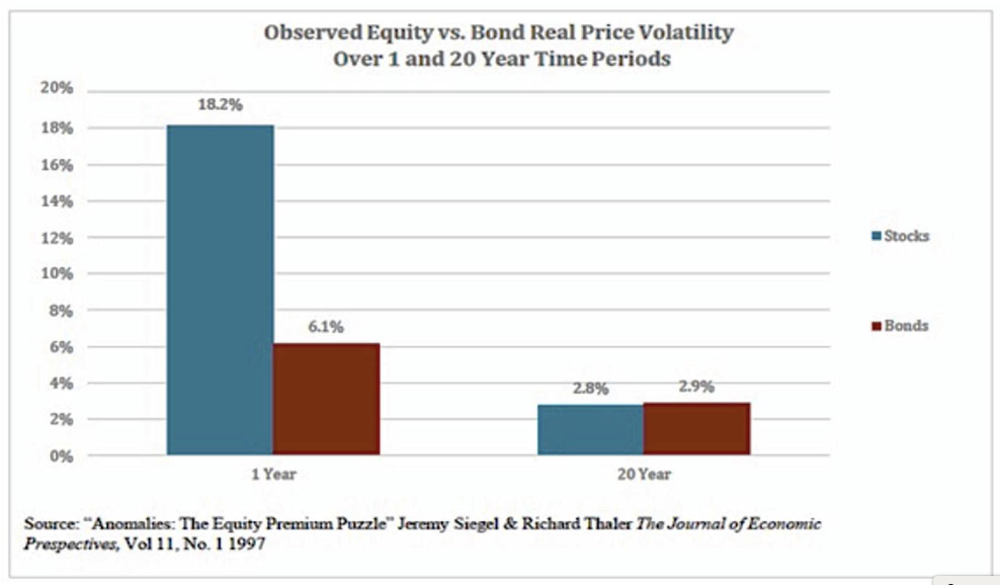
Ben Graham, the value investor and Warren Buffett mentor, famously said the market is like a voting machine in the short run, but “in the long run it becomes a weighing machine.”
US markets are doing much better than markets everywhere else, but no one seems to know why. Yes, there are theories: Perhaps it’s the promise of AI, although it remains to be seen how AI will play out and who will profit.
JPMorgan Chase & Co. Chief Executive Officer Jamie Dimon makes no secret that his firm is all-in on artificial intelligence. Now, the head of the world’s biggest bank is laying out his vision for the future of money in an AI world.
When does a strong dollar become too strong? “Right now” would be the cry of most emerging-market currencies, not to mention policymakers in Japan. Even the European Central Bank says it’s paying attention to the foreign exchange market.
With energy stocks trading near all-time highs and oil climbing as well, hedge funds think they’ve found a trade to capitalize: Sell the shares and pour the profits into buying more crude.
Banks have found another way to fight back after private lenders have grabbed ever larger pieces of the lucrative business of financing leveraged buyouts.
The highest US yields since November are beginning to attract some opportunistic buyers, even as negative sentiment remains firmly entrenched throughout the Treasury bond market.
Federal Reserve Chair Jerome Powell is making life tougher for his peers around the world as the prospect of higher-for-longer US interest rates reduces room for easier policy elsewhere.
US mortgage rates climbed to a four-month high last week, potentially signaling a bumpier recovery for the residential real estate market.
With Taiwan Semiconductor Manufacturing Co. still trading at pedestrian valuations even after surging to a record high, there is potential for its upcoming results to drive the stock even higher.
Last July, the House Financial Services Committee approved two major pieces of legislation aimed at creating a regulatory framework for the cryptocurrency industry, the Financial Innovation and Technology for the 21st Century Act and the Clarity for Payment Stablecoins Act.
With the end of great inflation scare in sight, it's time the central bank hive mind contemplated what it might learn from the failure of its economic models.
There are rules to follow if you set up a 529 college plan. If you don’t follow the rules, then the IRS will get involved, which is something you want to avoid.
Our profession is being transformed by powerful, AI-based technologies that will replace human-based financial advice. They will drive down costs, reduce valuations, and deflate the multiples paid in M&A transactions.
The journey toward digital transformation is not just about reaching the go-live date but about sustaining progress and innovation every step of the way.
Here are the top 10 questions (and answers) about advisor marketing for 2024.
I just completed a coaching call with an advisor I have worked with for many years. In his honor, I will profile a bit of the journey we’ve had together to illustrate how every advisor (yes, every single one) can learn how to sell effectively and do so in a comfortable manner.
Using a scheduling tool eliminates back-and-forth communication, streamlines operations, and can unlock a range of valuable benefits you might not have considered.
Are you creating videos, yet? Many financial advisors are.
As we mark the tenth anniversary of the Statement on Standards in Personal Financial Planning Services, it's clear that this milestone was more than a mere regulatory update — it was a foundational moment for the financial planning profession.
In the competitive financial advisory landscape and ongoing quest for new clients, advisors often miss an obvious opportunity – the children and grandchildren lying within their existing clientele.
While these tax-advantaged accounts are effective tools for meeting future education needs, a 2023 analysis found that overfunding a 529 plan can result in a large tax bill if money remains in the account after the beneficiary has graduated.
As the US economy hums along month after month, minting hundreds of thousands of new jobs and confounding experts who had warned of an imminent downturn, some on Wall Street are starting to entertain a fringe economic theory.
New home construction in the US slowed last month as a leveling off in interest rates has given way to a lull in housing demand and caution among builders.
Policymakers around the world are struggling to confront a surging greenback and lofty US interest rates, according to Mohamed El-Erian.
To keep your clients, do more than just your job – you need to keep them engaged. There’s a place for old-school engagement techniques like birthday cards and regular client meetings, but we can do better.
Advisors often get overexcited and overwhelm clients when discussing Roth conversions. Here’s how to dial back and effectively communicate this tax-saving strategy.
As he announced his latest round of student loan forgiveness last week — the previous one was just last month — President Joe Biden was greeted with an unpleasant reminder of why his policy is not only ill-considered but also ill-timed.
Would you consider an evolution with your advisory practice? Whether as part of an initial transition to the RIA model or an improvement to your existing practice.
Fixed-income markets are back in a tizzy over inflation, thanks to the combination of rising risks for energy prices and strong retail sales data — both of which come on the heels of a higher-than-expected consumer price index last week.
Dispensing advice presale allows prospects to “try” you with no strings attached — and with no compensation for your time, turning advice itself into a commodity.
Most US Treasury yields climbed to new year-to-date highs, with the 2-year note’s approaching 5%, after hot retail sales data further eroded investor confidence that the Federal Reserve will start cutting interest rate cuts this year.
A group of US regional banks is ratcheting up lending to oil, gas and coal clients, grabbing market share as bigger European rivals back away.
Advisor Perspectives, a leading publisher also ranked as the No. 1 eNewsletter for financial advisors by the Erdos & Morgan “FAMOUS” Study (2019-2023), has announced its Venerated Voices™ awards for commentaries published in Q1 2024.
China’s overall manufacturing overcapacity has peaked as global demand picks up in consumer sectors, the Economist Intelligence Unit said, predicting trade tensions will persist due to Chinese companies’ rising competitiveness.
Don’t bank on an upbeat corporate earnings season to drive equities higher as much of the optimism is already priced in following the record-breaking rally this year, according to JPMorgan Chase & Co. strategists.
Graham Ambrose has never felt stronger. He can barbell back squat 145kg (320 lbs) for four sets of six repetitions and bench-press more than 100kg for a single rep. His friends and colleagues notice that his clothes fit tighter and he’s fond of posting mirror selfies on Instagram.
With the interest-rate peak being the highest in 15 years, now is the opportunity to lock in near-peak lifetime income payments while avoiding future stock market losses.
With an understanding of reversion to the mean, it is possible to contextualize market volatility for investors in a way that helps them view it more constructively.
The First Eagle Credit Opportunities Fund (FECRX) just reached its three-year anniversary. The fund offers advisors and their clients access to private credit and syndicated loans through an interval fund structure.
Rob Copeland’s marvelously readable and well-researched book, The Fund: Ray Dalio, Bridgewater Associates, and the Unraveling of a Wall Street Legend, details a detachment from reality borne on the absolute power deployed by Dalio at Bridgewater.
Everyone says that mergers and acquisitions mostly fail. Now Bain & Co. brings a challenge to the received wisdom.
Cathie Wood’s Ark Investment Management has announced that it holds a stake in Silicon Valley artificial intelligence darling OpenAI, a bet that the nascent AI industry will remake the tech landscape.
Back when the electric vehicles revolution appeared unshakable and Tesla Inc. was valued at more than $1 trillion, few of us gave much thought to hybrids. But amid consumer wariness about EVs’ driving range and insufficient public recharging infrastructure, vehicles that combine a combustion engine and electric motor are back in fashion, at least for now.