Two big things have happened in the crypto world this month: a public validation and a semi-private snub. Both of them bode poorly for its future.
This week, Microsoft joined the $3 trillion club — which so far has only two members, the other being Apple Inc., which first hit the milestone two years ago.
China’s authorities are stepping up efforts to stabilize the stock market after a massive selloff. The collapse in valuations since a peak in 2021 makes them the world’s “best value proposition,” according to at least one market veteran.
Wall Street is turning to its biggest brains as the battle for supremacy in the world of private assets heats up.
When the Treasury Department previews its note and bond auction sizes for the next three months on Jan. 31, some of the projected sizes are likely to be the biggest investors have ever seen.
After months of talks, lawmakers have reached a bipartisan agreement on changes to the tax code. They’re now struggling to get it passed in time for the new tax-filing season.
The Federal Reserve’s asset purchase program, known as quantitative easing, has twice helped save the US economy — first during the financial crisis and then again with the Covid-19 pandemic.
The US 30-year yield climbed to its highest level so far this year Wednesday after poor demand for an auction of five-year notes, a week before the Treasury is expected to announce a heavier borrowing schedule for the February-to-April period.
JPMorgan & Chase Co. said US corporate bond spreads are at risk of widening next month, and that February is often a difficult month for the debt.
Nomura Asset Management’s Richard Hodges began the year by buying credit default swaps, worried that rate-cut bets were becoming too aggressive. He reduced the hedge when the cost of protection increased, and now stands ready to dip in again.
The euro celebrates 25 years of virtual existence this month, with its digital creation in 1999 followed by the introduction of physical notes and coins in 2002. It's embedded successfully as the domestic means of exchange within the 20-nation euro zone.
In the rapidly evolving outlook for interest rates, some things are still sacrosanct. The pace of price increases has slowed significantly, and the argument is now how much — rather than when — borrowing costs will be lowered this year.
Applications for home-purchase mortgages in the US rose to the highest level since April, signaling housing demand is picking up as borrowing costs hold below 7%.
China’s mutual fund houses are trying to tamp down investors’ enthusiasm for US stocks, putting new restrictions on buying into their products as demand soars.
No matter which way markets go, Goldman Sachs Group Inc. says some traders are modeled to sell stocks over the next week.
As the year starts off in full force, I am already getting multiple requests to work with managers and help them develop their leadership skills.
Forecasters who follow the US economy found themselves in a familiar place after a recent retail sales report: revising up their estimates for GDP.
One powerful and underutilized marketing strategy is client testimonials and reviews.
Financial advisors new to a niche can position themselves as experts in their chosen area before fully recognizing themselves as such by using these six strategies.
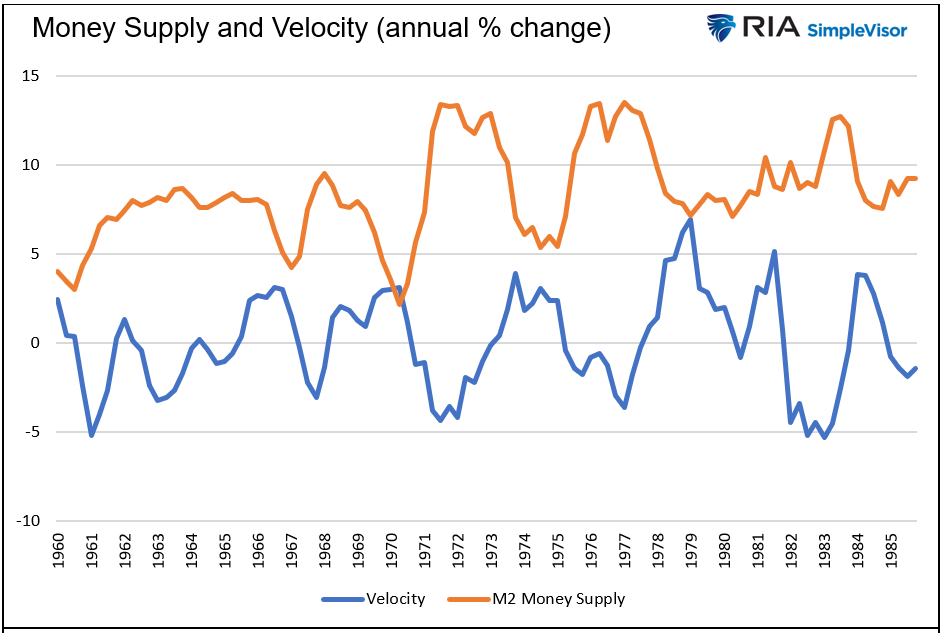
The Fed may have set the inflation fire, but the same Fed under Paul Volcker also helped extinguish it. I will examine the change in mindset at the Fed in the mid- to late 1970s.
Here are five takeaways for advisors that will make your website truly great.
When will the world have its first trillionaire? A recent report from Oxfam International predicts one within a decade, noting that the five wealthiest men in the world are 114% richer today than they were in 2020.
It’s a seller’s market for infrastructure asset managers. Conventional and alternative investment firms are falling over themselves to expand in this lucrative area, and M&A is the easiest way for them to leapfrog the competition.
The value of China’s stock market has never been this far behind that of the US, as the losses continue to pile up in a seemingly relentless equity rout.
First-time encounters make a huge difference in how consumers view our profession.
Options traders are betting on more gains in the S&P 500 Index after it hit a record high on Friday.
This year is already shaping up to be a tough one for investors to navigate, with heightened debate over central bank moves, prospects for economic slowdowns and crucial elections around the world all weighing on fund managers’ minds.
The world watched Iowa Republicans – the party of Lincoln – give a big boost to Donald Trump Monday night, January 15.
Here are the 10 steps to take before termination.
Here is how to make lasting changes in your practice so you can reach your goals instead of wasting your time and burning out.
Your prospects aren’t looking for a new friendship to hire you.
With Americans living longer and deferring retirement for lots of reasons, the retirement planning landscape is changing. Employers are not offering pensions, and the age to maximize Social Security benefits is increasing. All these factors make planning for retirement income crucial. I explore this in depth with Matt DiGangi.
We’ve had almost a year now to assess whether Microsoft Corp.’s plan to add ChatGPT to its Bing search engine made any difference in the great battle against Google. It will come as no surprise to learn that it didn’t — Bing’s market share in online search has barely moved.
While many things are getting back to normal, the pandemic profoundly changed American life — sometimes just by speeding up prevailing trends. The technology already existed to allow many Americans to work from home, for example, but the pandemic normalized it.
After years of regulatory tinkering, Washington is now forcing through the most rigorous overhaul of the world’s biggest bond market in decades.
The latest warning for investors unleashing dovish monetary wagers across the board: Two thirds of Bloomberg Markets Live Pulse respondents said that betting on early monetary easing is the “most foolish” among popular trades heading into 2024.
The never-ending rise in technology megacaps is driving stock-picking pros to do something they don’t want to do: give up on beating the benchmark.
To properly assess whether a repeat of 1970s-era inflation is likely, we must first understand why inflation was rampant during that period.
Inflation is not over. The next wave will be torturous and will last a long time.
As the profession steers away from the traditional transaction-based approach to a paradigm more focused on deep personal relationships and comprehensive planning and advice, keep in mind the following considerations to provide exponential value in 2024.
One topic that hasn’t been discussed enough is that the loss of welfare from underspending is likely much higher than from choosing a fee method.
An emerging-market money manager who is outperforming 99% of his peers says equity investors can make money in 2024 whether the Federal Reserve cuts interest rates or not, by focusing on countries undergoing economic transformations.
Chinese stocks just capped another dismal week, with a gauge of mainland firms listed in Hong Kong languishing at the bottom of global equity index rankings for the year so far.
A sense of torpor that’s descended on Wall Street’s chief fear gauge since the fall is starting to disappear.
The stocks that led the rally in 2023 are again traders’ top picks, defying broader outflows, according to Bank of America Corp. strategists.
A product has just gone up in price by 90% in 12 months. It now costs more than it has in 16 years. Most people would think twice about diving into a market like that.
Corporate America has greeted 2024 with a run of job-cut announcements. The reductions, though modest, seem puzzling at a time when the stock market is flirting with all-time highs and real gross domestic product growth continues to be healthy.
Citigroup Inc.’s option volume was light on a recent Wednesday, until the session’s last 90 minutes when a wave of trades hit. These weren’t bets on the shares moving — rather, they were part of a long-dormant strategy that’s back in vogue thanks to the Federal Reserve’s interest rate hikes.
Bond traders are growing convinced that US Treasury yields are on the brink of returning to the way they’ve traded for most of their existence — it’s the how, why and when of the normalization that keeps financial markets bouncing around.
Time is tight for the Federal Reserve’s effort to redraw US bank capital rules, but they shouldn’t rush the job.