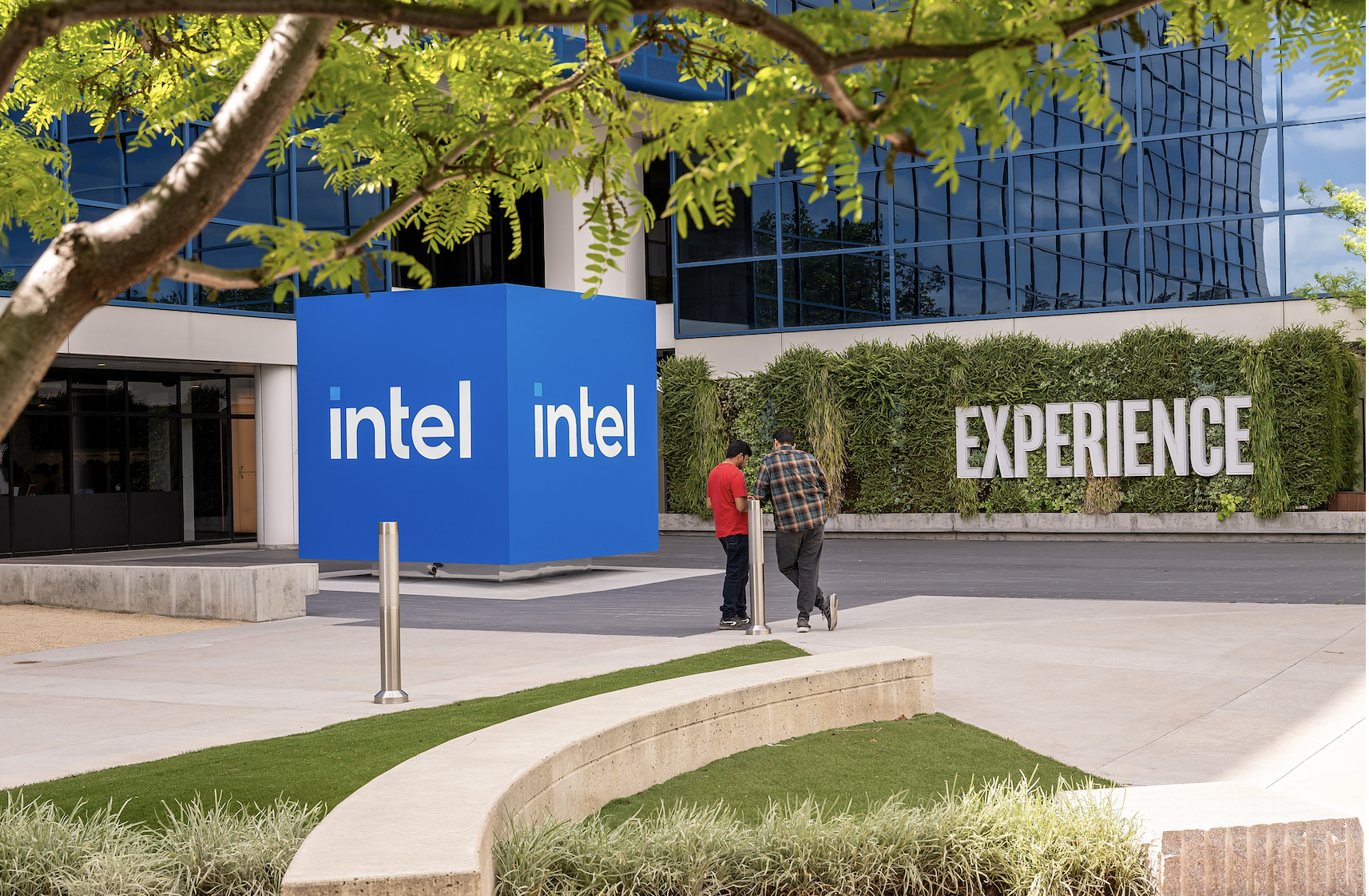
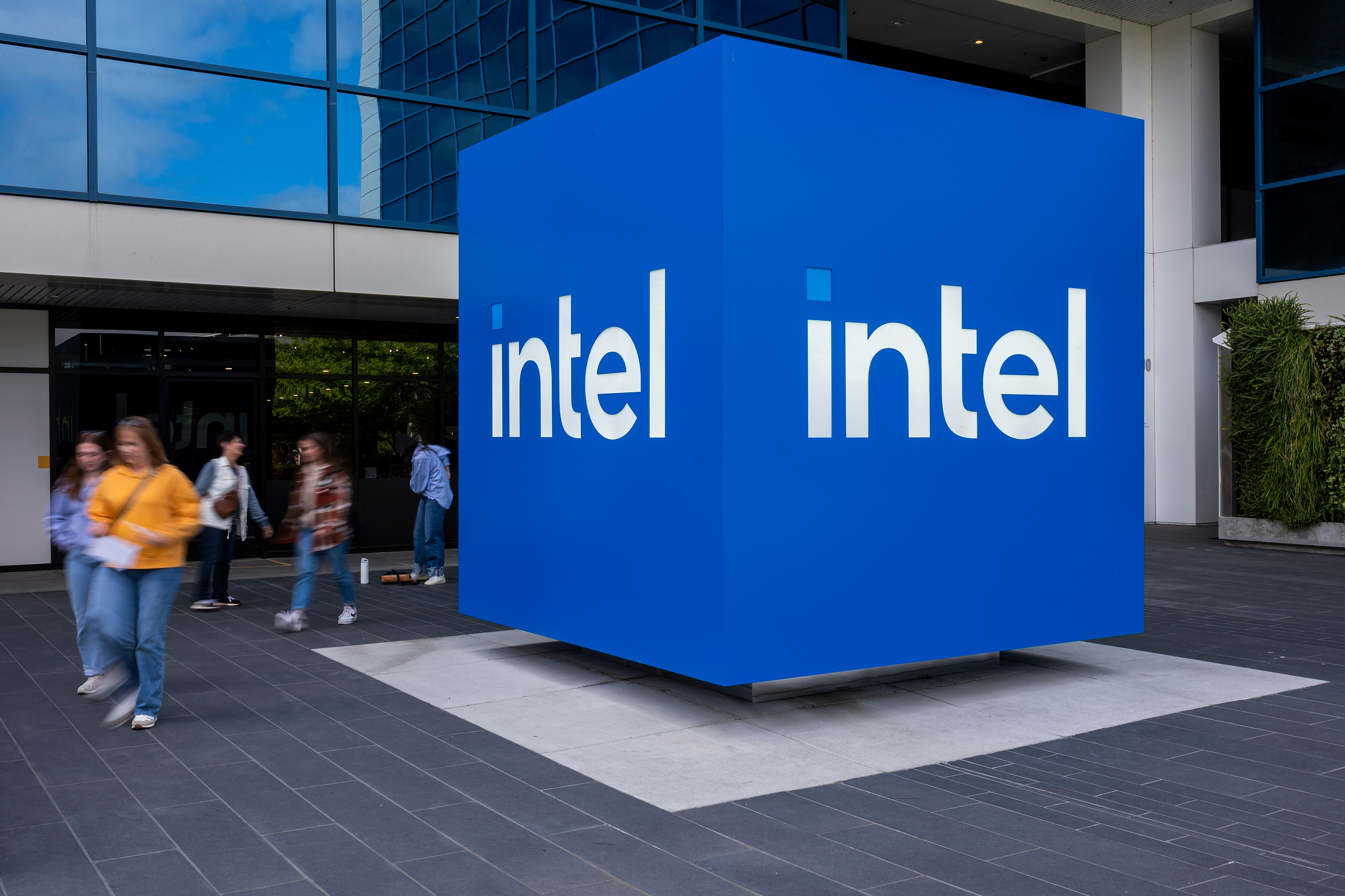
After positive earnings releases from peer semiconductors like Texas Instruments, Taiwan Semiconductor, and ASML, it was Intel’s turn to further support the notion that the semiconductor industry is doing just fine amid the recent volatility.
The primary contagion risk is sector concentration. Software and tech-enabled services represent roughly 15-20% of direct lending portfolios. A meaningful portion of these loans also resides in the Broadly Syndicated Loan (BSL) market – the bedrock of CLO ETFs – leading to a software weighting of 12–18% in typical CLO collateral pools.
There’s no shortage these days of stories, posts and videos warning of the robot armies readying to vacuum up white-collar jobs in technology, finance, marketing, you name it. And there’s no doubt that artificial intelligence is rapidly changing how we live and work. Amid all this, though, a relative calm has descended on the labor market and should persist for the rest of this year, at least.
The index is on the verge of doubling for the first time in this bull market – currently up ~99% – a move that would take just under 3.5 years, slightly faster than the historical average of 3.9 years. While all sectors are in positive territory over this period, leadership has been narrow with only three – technology, communication services and industrials – posting gains above 100%.
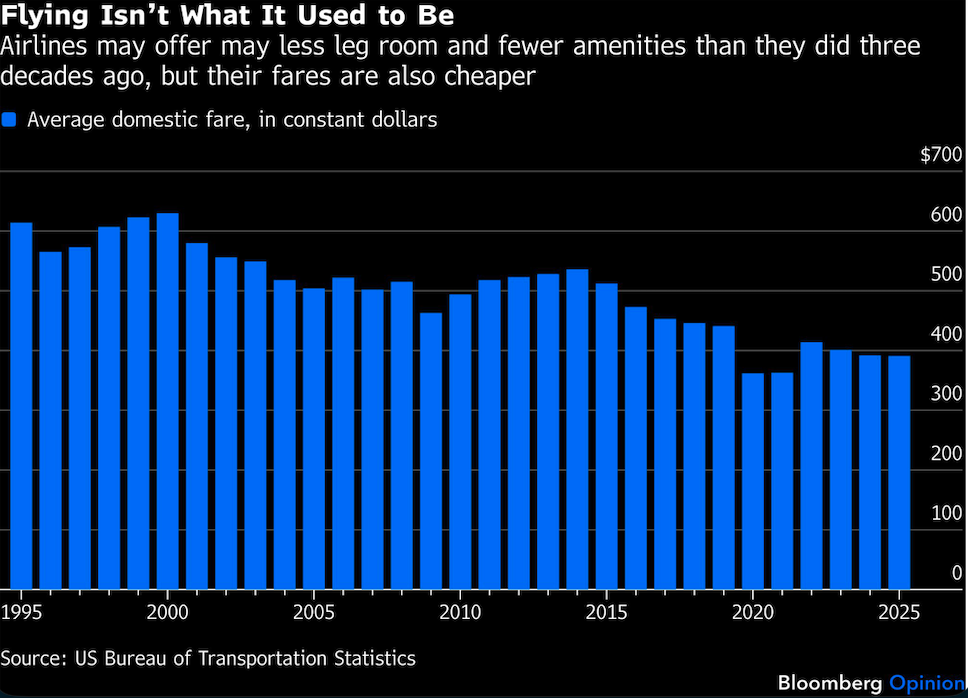
Budget airlines are going broke. Spirit Airlines may go under or get a government bailout, and JetBlue is just barely avoiding bankruptcy this year. It didn’t need to be this way. They tried to merge in 2024, but the merger was blocked because President Joe Biden’s administration was concerned that greater consolidation would lead to higher prices.
The bigger the vacuum becomes, the longer it will take to refill those inventories whenever whatever passes for normality finally arrives. Oil prices along the curve would need to rise accordingly to encourage excess production — or, conversely, achieve the same outcome by destroying demand.
Clients may love the relative safety of cash, but many advisors know those assets could do more. A multisector bond approach for example, offers plenty of rewards for those willing to dive in. The right ETF can give tax efficient exposure to the space, providing both yield and total return.
Even before the first active dual share class fund from Dimensional launched, active mutual funds and ETFs were already roommates rather than existing in separate silos. Ben Johnson, head of client solutions at Morningstar, revealed in a LinkedIn post that active managers are increasingly using ETFs as essential tools for building portfolios.
Elon Musk’s SpaceX is no stranger to the stratosphere, and neither is its coming initial public offering.
As a more than $20 billion borrowing frenzy to build out data centers descended on the junk-bond market this year, some issuers offered up a rare sweetener: an early cash payback.
X-Energy Inc., a nuclear energy firm that counts Amazon.com Inc. as a backer, raised $1.02 billion in an upsized US initial public offering that priced above the marketed range.
Global bond markets are heading for their worst week in a month as investors grow increasingly uneasy about a stalemate between the US and Iran.
Intel Corp. shares are on track to hit their highest level ever after the chipmaker delivered a sales forecast that shattered Wall Street expectations.
The spring edition of our Investment Directions takes on a new look. As the weather heats up, our “summer body” of work embraces a slimmed down word count, Q&A format, and visualfirst approach – better for consuming on the go, or preferably, outdoors.
With policy changes creating more access to retirement savings plans, more workers are saving for the future. According to the Investment Company Institute, nearly 75% of households own some form of tax-advantaged retirement account such as a 401(k) or IRA.
Investors often view commercial real estate (CRE) through the narrow lens of the office sector. We think this office-only focus understates how broad the asset class is and its potential. Offices may face well-documented headwinds, but many other CRE segments appear more resilient.
Kevin Warsh's bid to become the next chair of the Federal Open Market Committee (FOMC) unfolded amid sharp political tension, legal uncertainty, and pointed questions about his independence from President Trunp. During a combative Senate confirmation hearing, Warsh sought to reassure lawmakers that he would not allow political pressure to dictate monetary policy, even as unresolved Justice Department investigation into current Chair Jerome Powell threatens to delay his confirmation and underscores broader concerns about the politicization of the central bank.
Markets are being pulled in multiple directions. Geopolitical tensions, questions around Federal Reserve policy and the rapid rise of artificial intelligence are all competing for investor attention.
Markets have long struggled to price geopolitical risk. Part of the issue is that each flare-up tends to be viewed as a one-off volatility jolt to be weathered and then faded once there is resolution.
During and after World War II, Allied forces established airbases across remote Pacific Islands, bringing with them food, medicine, tools, and machinery that the indigenous people had never encountered before.
For ultra-high-net-worth individuals and families, wealth brings opportunity, but also extraordinary complexity. Multi-generational estate planning, concentrated equity positions, private investments, tax-efficient strategies, philanthropic structures, and family governance decisions all intersect in ways that demand thoughtful oversight.
Higher oil prices have both positive and negative effects on the municipal bond market. Investors may want to evaluate their concentration risk.
At this point, investors of all ages are well aware just how much inflation can cut into one’s spending power, whether it be for everyday expenses or big-time purchases.
Stocks have been on a bit of a rollercoaster over the past two months. If your nature is to tune out the noise and check in occasionally, you might have missed it. After a 9 percent sell-off earlier in the year, markets quickly rebounded and have recently traded at all-time highs.
The sheer complexity of exchange-traded funds (ETFs) using derivative-based strategies could have investors turning the other away. Instead, investors have been running towards them. The capital markets witnessed a surge in demand for these tactical ETF tools during the first quarter of 2026, making it a topical theme at the most recent Nasdaq-sponsored Asset Allocation Summit.
Join the experts at Victory Capital for an educational webcast that explores how FCF analysis can identify resilient companies with the potential to weather market volatility and help your clients stay invested.
Volatility, tighter margins, and rising client expectations are prompting many Advisors to reassess whether their current broker-dealer or firm is still the best long-term fit. If you’re considering a transition, in this article we will discuss 10 essential questions to help guide your decision.
After years weighing how to dive deeper into private credit, JPMorgan Chase & Co.’s $4.3 trillion asset manager is committing to a strategy that will plow tens of billions of dollars into loans sourced by the firm’s commercial bankers.
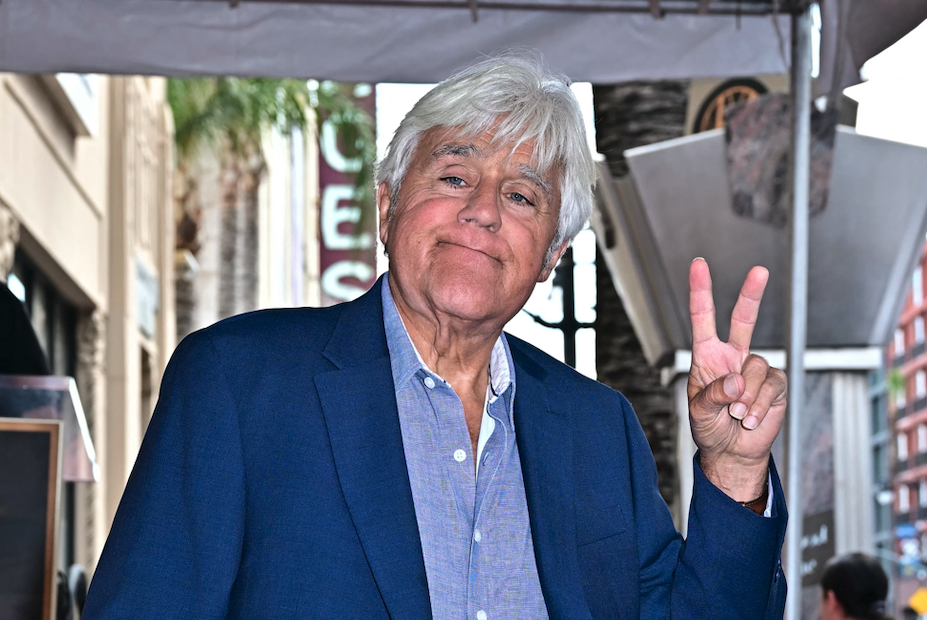
Jay Leno’s latest hosting gig involves a classic car, an airport construction site and municipal bonds.
Nearly two months into the conflict in Iran, global stock markets are staging a defiant rally. From the US to Taiwan and South Korea, a disconnect has emerged: while the geopolitical tensions remain high, equities are charging back toward all-time highs.
Intel Corp. has been one of the hottest stocks in the market over the past 12 months, soaring more than 240% to the highest price since the dot-com bubble. But the rally is facing a potential roadblock in the company’s first-quarter earnings report due after the close Thursday.
American Airlines Group Inc. lowered its full-year earnings target, saying it may end 2026 with a loss as the carrier absorbs $4 billion in additional fuel costs from the war in Iran.
Concerns about the sustainability of U.S. fiscal policy have moved back into the investment spotlight. Over the past week, both multilateral institutions and prominent policymakers have raised warnings about the potential implications of America’s expanding debt burden for Treasury markets.
New Federal Reserve (Fed) chairs don’t come along often. Since 1980, only five individuals have led the Fed: Jerome Powell is currently in his second term, Janet Yellen served one term and Alan Greenspan famously held the role for more than 18 years.
Each spring, the International Monetary Fund (IMF) releases its World Economic Outlook (WEO), a review of global growth, and the key challenges confronting the world economy. This year’s edition followed the Fund’s usual structure, but the circumstances underneath it had shifted. ]
GMO has posted a new Valuation Metrics in Emerging Debt: 1Q26
It’s a busy macro stretch as company earnings reports come in fast and furious. A focus on real data and earnings may be a welcome development for investors wary of geopolitical headlines. The team at Wall Street Horizon will keep you up to speed with the latest trends, and you can access our industry-leading forward-looking corporate event data to stay ahead of markets.
Apple Inc. (AAPL) announced Monday that Tim Cook will transition to executive chairman, while John Ternus will become CEO effective September 1. Ternus has served as senior vice president of hardware engineering since 2021. He will lead the company after 25 years focused on product development across iPhone, Mac, iPad, AirPods and Apple Watch.
Not only has infrastructure been devastated in key energy production zones, but other critical commodities like fertilizer have become much more expensive as well. It’s important for investors to respond, especially those at or near retirement. The right type of income ETFs can be that response.
Even in the event that the Middle East conflict eases and shipping resumes as usual through the Strait of Hormuz, it would likely take time for the global economy to normalize after one of the largest oil supply disruptions in decades.
When advisors and investors hear the terms “high yield” or “junk” as it relates to bonds, they understandably have some apprehension. After all, junk bonds carry elevated credit risk relative to their investment-grade peers. Hence the higher yields, which act as added compensation for the extra risk.
Fixed-income market sentiment was dominated by geopolitical headlines, particularly the conflict in the Middle East following disruptions to the Strait of Hormuz and rising oil prices, which contributed to renewed inflation concerns.
Since the Federal Reserve announced the resumption of quantitative easing (QE) in December, the central bank has expanded its balance sheet by over $200 billion.
The U.S. market story this year has been a tug-of-war between sticky inflation, slower growth, and resilient risk appetite. For fixed-income investors, that mix has produced more narrative movement than the 10-year Treasury itself.
Amid rising college costs and mounting student debt, parents are looking for more ways to lessen the financial burden of higher education. Luckily, 529 college savings plans can help. These unique savings vehicles offer several tax breaks for parents as they save for their children’s future education.
Stacey Morris, head of energy research at VettaFi, joined Nate Geraci on this week’s ETF Prime to discuss energy ETFs amid the Iran conflict. Geopolitics currently dominates oil prices and energy stocks, though the sector posted strong gains before the war began, according to Morris.
While we are currently in a particularly grueling climb (including the war in Iran – a situation in which we will provide an update at the end of this piece), we cannot lose our long-term perspective. We want to take this piece as a summit in the middle of our hike; one where we can see a path through the trees and hills and clearly see four potential paths from here.
The problem is not digitization itself. Many of these tools deliver real value, from better intake and modeling to clearer client visualization, and for straightforward situations, a DIY approach may be entirely appropriate. The risk arises when convenience begins to substitute for accountable legal judgment in matters that are anything but simple.
Vanguard is boosting its holdings of Treasuries, taking advantage of higher yields following the Middle East conflict to lock in rates and hedge against the risks of a potential growth slowdown.
Without a clear owner, even the best marketing plans collect dust, while client work takes priority. But during those times when you're laser-focused on serving clients, the marketing that should be growing your practice isn't happening. Ideal prospects are finding someone else. Referral sources go quiet.