Client demand for tax planning is high, yet many advisors may still fall short of meeting expectations. Direct indexing can offer tax benefits such as the potential for tax-loss harvesting but remains underutilized across the advisor community.
Morgan agreed that the move looks parabolic on a chart. He also cautioned against assuming the rally is just retail euphoria. He pointed out that many physical silver holders have been net sellers even as prices rise, which implies the strongest buying pressure may be coming from larger, more strategic sources.
Active fixed income ETFs stand out amid the broader transition from mutual funds to ETFs, with DSCO a recent switch.
The US Treasury refrained from any major shift in its debt-issuance strategy, meeting dealers’ expectations in the face of speculation that officials might take steps to bring down longer-term borrowing costs.
In an industry numb to eye-watering AI bets, it takes a lot to make a chief executive hesitate. So Nvidia’s Jensen Huang blinking at one such commitment to OpenAI is worthy of notice.
The start of 2026 has brought no shortage of challenges for advisors, ranging from shifting rate expectations to valuation concerns in a top-heavy market. Nonetheless, ETFs gathered an impressive $165 billion of new money in January, more than the previous three Januaries combined, according to State Street Investment Management.
There’s an ongoing shift in how investors access income through ETFs. No longer is sourcing income a pursuit centered solely on fixed income assets. Today, it increasingly includes the use of derivatives to boost yield and total return, and to capitalize on equity volatility.
So, President Trump has announced his pick for Federal Reserve Chairman, and the markets are not pleased. Everybody seems convinced that Kevin Warsh is a “hawkish” pick, and markets are throwing a temper tantrum because they think he might take the easy money punch bowl away.
Todd Rosenbluth, Head of Research at VettaFi, and host Nate Geraci walk through five of the most noteworthy ETF flow stories so far this year. Chris Getter, Managing Director and Portfolio Manager at Simplify Asset Management, unpacks private credit and the Simplify VettaFi Private Credit Strategy ETF (PCR).
Prediction markets will not replace traditional financial products. That is not their purpose. They do, however, influence client behavior in ways firms cannot ignore.
Precious metals, cryptocurrency, and currency speculation appeal to fear-driven parts of us that want certainty, protection, or a shortcut to wealth. Unfortunately, for most investors, that promise is never fulfilled.
Since ChatGPT burst onto the scene in 2022, artificial intelligence (AI) has moved from science-fiction to reality. For many, AI has become a necessity. The transformation has been swift. Nearly every company now wants to integrate generative AI into their business model, while governments are scrambling to develop sovereign AI infrastructure.
Climatically, Europe has been fortunate: its winter has been moderate so far. But Europe’s need for fuel remains substantial, and the cooling of relations between the U.S. and the European Union (EU) may make it more difficult to keep EU homes and the EU economy warm.
February arrives quickly, and for many high-net-worth individuals and families, tax preparation may still be sitting on the to-do list. If your financial life includes multiple income streams, investment accounts, business interests, trusts, or philanthropic strategies, tax season is not something to rush.
The ETF industry has carried its record-breaking momentum from 2025, surpassing $100 billion in flows before the end of January.
In this episode of ETF of the Week, Chuck Jaffe sits down with Todd Rosenbluth, Head of Research at VettaFi, to break down why this "computer-enhanced" active fund is outperforming its peers and its benchmark by massive margins
In a move that underscores the relentless downward pressure on investment costs, Vanguard announced that it has slashed fees for 84 mutual fund and exchange-traded share classes. These reductions, spanning 53 different funds, represent nearly $250 million in estimated savings for investors in 2026 alone.
The final week of January saw a stark divergence between official policy and the American consumer's outlook. While the Federal Reserve maintained a "solid" view of economic growth, the public’s mood plummeted to a decade-low as sticky amid sticky wholesale inflation.
Top strategists joined VettaFi on January 29 to provide data-backed forecasts on the trajectory of global interest rates, persistent inflationary pressures, and the resilience of corporate earnings. Advisors came away from the event with the tools needed to mitigate risks stemming from sudden regime shifts while capturing alpha in a fragmented market.
A sharp productivity jump shows firms doing more with fewer workers. But the upside surprise also highlights growing risks about how these gains affect the workforce.
For years now, advisors and investors alike have been pouring significant attention — and inflows — into the broad spectrum of fixed income ETFs.
VettaFi recently sat down with Morten Paulsen, head of research for robotics & machinery at CLSA, to discuss the transition of physical AI into a tech-driven industrial up-cycle. Paulsen projects that persistent U.S. labor shortages will drive domestic robot shipments toward a historical high of 40,000 units in 2026.
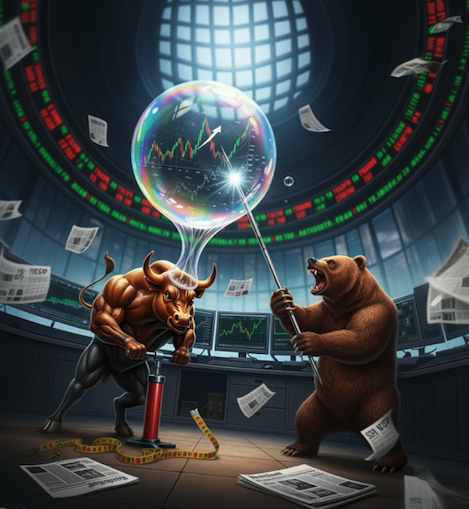
At GMO, we have always defined a bubble as a two-standard deviation divergence of the price of any asset class above its long-term real price trend. The U.S. stock market has now been in bubble territory for a prolonged period. Sooner or later, the bubble will burst and the price will return to its historic level.
Private credit has grown from a small niche market to a major slice of the financial asset pie. Not many people outside of institutional finance talked about it twenty years ago.
As was widely expected, the Federal Open Market Committee decided to pause their rate cuts at the January meeting, keeping the fed funds trading range at 3.50%–3.75%. For those keeping track, the Fed had lowered ‘the funds rate’ by 75 basis points (bps) during the final three FOMC meetings of 2025.
Passive, active, Treasuries, corporates, munis, international, and more — the whole spectrum of fixed income ETFs seemed to come off a strong year in 2025. The year was also marked by a bevy of launches.
Private markets were historically for institutional and ultra-high-net-worth investors. Today, that exclusivity is breaking down, as many retail investors realize the value behind private markets and advisors look for additional diversification tools.
2025 capped off a record year for orbital launches, confirming that the space industry is more than alive and well. This creates a growth opportunity set for the Procure Space ETF (UFO), which can capture ongoing developments in the industry in 2026.
In this article, we look both back and forward, first at the 2025 capital markets to analyze not just what happened but also how it fits in the historical context and what we believe it means for 2026 and beyond. We then pivot to our return expectations for major asset classes in the next decade.
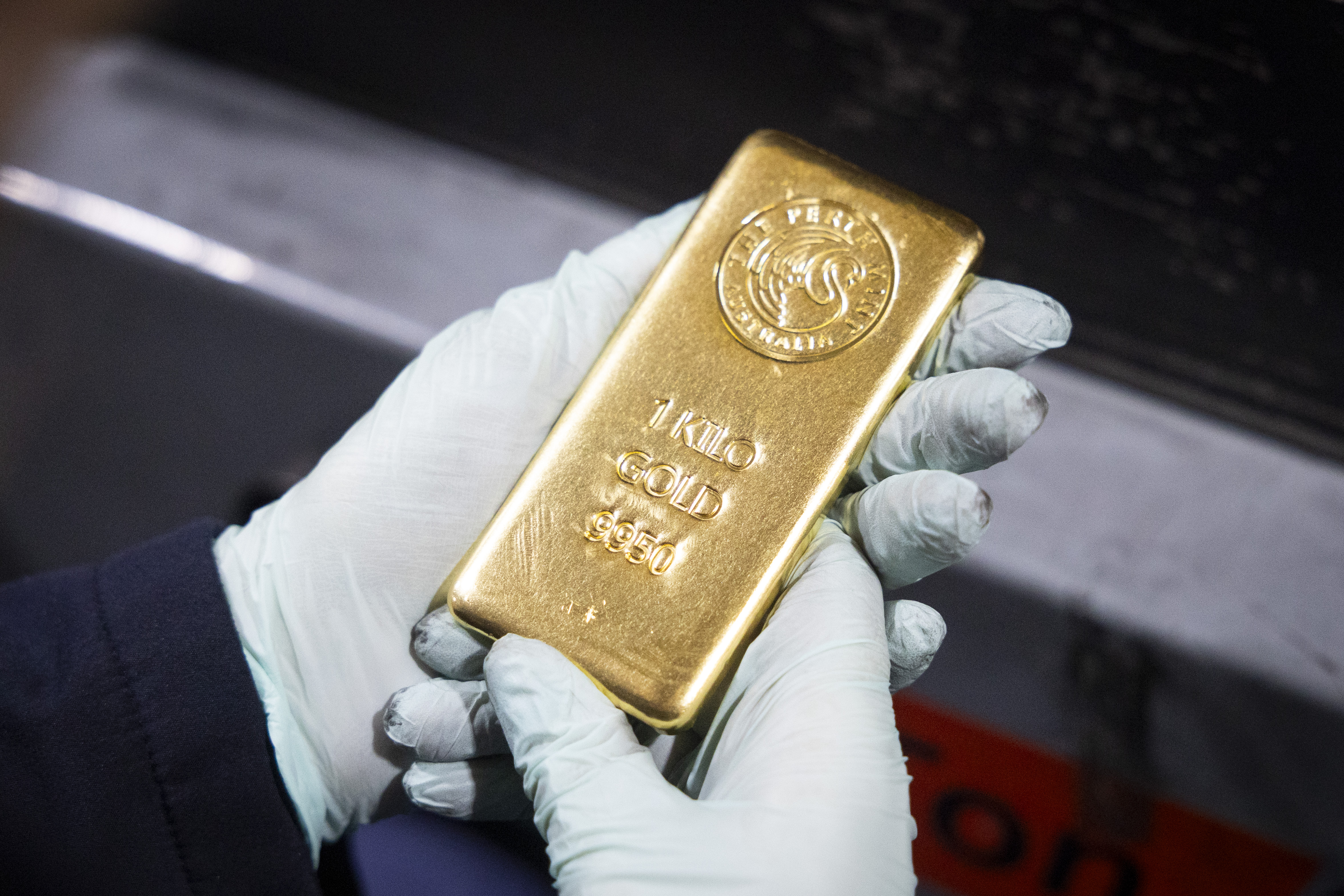
Gold surged to a record above $5,500 an ounce, extending a breakneck rally fueled by a weaker dollar and investor flight from sovereign bonds and currencies to a ninth day.
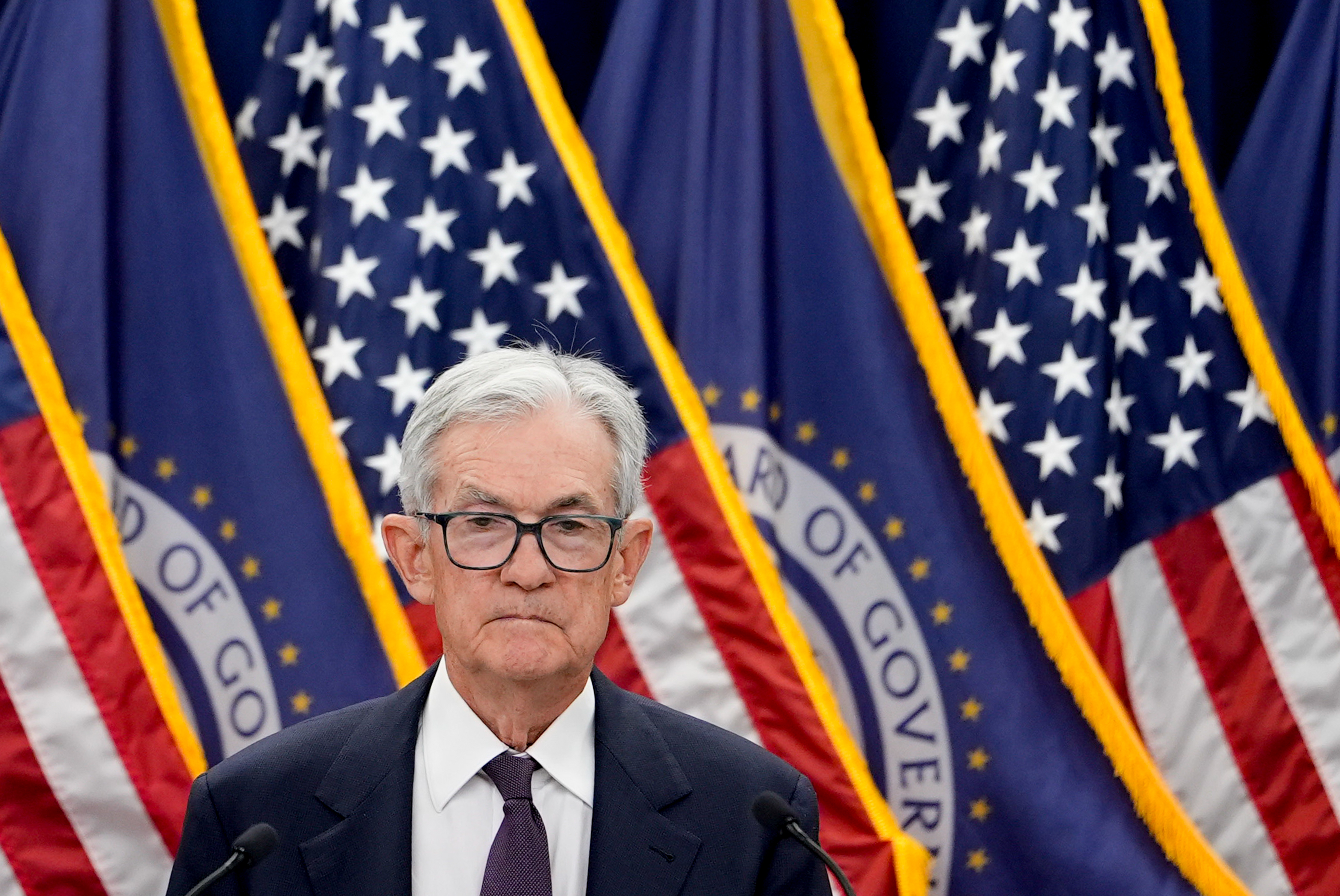
Jerome Powell has two more opportunities to adjust interest rates before his term as Federal Reserve chair ends — and he may not need them.
Apple Inc.’s stock is taking a hit as investors try to assess how much rapidly rising memory prices are eating into its bottom line. Investors will get a peek when the iPhone maker reports its earnings after the close Thursday.
Who could forget those heady days when Microsoft Corp. Chief Executive Officer Satya Nadella looked like the smartest man in tech? When ChatGPT emerged in late 2022, his decision to back OpenAI put Nadella’s company at the forefront of the AI boom.
The near-perfect timing of gold breaking through $5,000 while silver sliced through $100 has grabbed the market’s attention.
Concentration risk is the #1 controllable risk in your portfolio. If one stock goes to zero and it’s your whole bag, you're in trouble. But selling usually means a giant tax bill—until now.
Over the past year, Tether has quietly become one of the biggest players in the global gold market — the embodiment of a meeting of the crypto and gold worlds whose shared distrust of government debt is a major factor behind the surge in prices to never-before-seen highs above $5,200 an ounce.
Theoretically, the two foundational drivers of long‑run economic growth are population growth, which expands the labor force, and productivity, which determines how efficiently that labor can transform inputs into outputs.
Another blockbuster year for bond ETFs is in the books. After two straight years of record net inflows, taxable fixed income ETF assets have nearly doubled since 2020 – crossing the $2 trillion mark. But the big story in 2026 will be rising pressure to move out of money market funds.
By assessing the macro and market drivers that shape each outlook, we can lay out clear, practical tactics to prepare your portfolio for either path. Whether the bullish or bearish case prevails in 2026, your edge will come from disciplined risk management, not from guessing the future.
According to Baiocchi, advisors are reevaluating portfolios and recognizing gaps in exposure to companies driving major market themes.
As geopolitical tensions reshape global trade, capital flows and investor risk appetite, gold is once again surfacing as an important component of asset allocation. Some investors and central banks are arguably viewing gold as a risk hedge, supplanting US Treasuries as a safe-haven asset.
The Federal Reserve is widely expected to halt its interest-rate-cutting cycle this week, as a steadier jobs market restores a degree of consensus at the central bank after months of growing division.
Investing in line with our beliefs, whether about social issues, environmental concerns, or politics, can feel principled and emotionally satisfying. But markets don’t care about our convictions.
Anthropic PBC is finally having its own ChatGPT moment. A powerful new version of its Claude chatbot can now take actions on a computer, and the broad repercussions of that advance are impossible to predict.
Blackstone Inc. is planning to hire more people across Asia to tap growing opportunities in private markets, said Ed Huang, the firm’s head of Asia Pacific private wealth.
Last week in our latest Cyclical Outlook, “Compounding Opportunity,” we argued that beneath the economy’s broad resilience lies a stark divergence. U.S. policy pivots combined with the surge in adoption of AI technology have created winners and losers.
Recently, stock market numbness closes the trading day. No wholesale crash, just a little wobbling for now with positive numbers for half of January. But I have a sense it’s in need of a cane to steady its momentum.
The circular investing phenomenon that is currently occurring among the Magnificent Seven companies is very similar to the Japanese Keiretsu concept. Under this business model, companies with interlocking business relationships and shareholders dominate a country’s economy.
This endless sequence of numbers that form ratios, known as the Fibonacci sequence, provides a technical analysis tool for managing financial securities. Before you assume we've lost our minds —relying on biology or, even worse, mysticism to predict stock prices — let us explain.
An increasingly unstable global geopolitical order has turbocharged stocks of military contractors in recent months. Now, with some of the biggest names in the industry set to report earnings this week, investors are eager for evidence that the rally is rooted in reality.