The dollar climbed against its Group-of-10 counterparts as investors sought shelter in the US currency amid concerns that China may tighten Covid curbs.
Believe it or not, 2022 is almost over. That means it’s time to start thinking about end-of-year tax planning strategies…
With the midterm elections behind us, does the market outlook improve given a now gridlocked Congress? Historically speaking, such is the case.
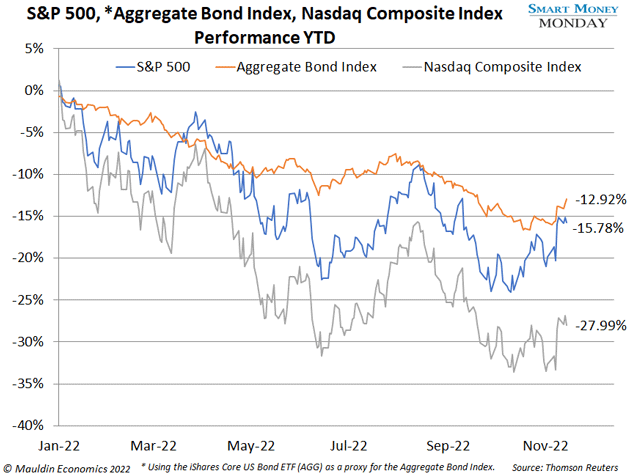
The S&P 500 is down 15% over the past year, so you’d think this would have been a great time to own some protection on your portfolio. Unfortunately, that’s not how things have turned out.
Socially responsible firms pay more for the external audits of their financial statements, thereby lowering risks to investors. But those lower risks also mean lower returns for investors.
In this letter I’d like to explore the impact interest rates will have on the economy and especially the housing market.
Lifetime annuities in concert with allocations to stocks, TIPS, bond ladders and other diversified investments help retirees weather changing conditions regarding inflation and interest rates.
For years leading up to the pandemic, low inflation and stable growth created a favorable environment for investors that supported sustained periods of robust stock and bond returns. With inflation virtually non-existent, economic downturns were met with monetary and fiscal stimulus that provided a backstop for financial markets.
Over more than two decades, Vanguard Advisor's Alpha® has shown how advisors can add value, or alpha, through relationship-based services such as financial planning, discipline, and guidance, rather than by trying to outperform the market. Vanguard’s Investment Advisory Research Center, led by Fran Kinniry, is charged with exploring how advisors provide value to investors.
This year has served as a harsh reminder of why so many investors seek a trusted advisor to navigate their financial journeys. During market declines, investor emotions easily crowd out wisdom and long-term thinking. However, through financial planning and behavioral coaching, advisors can help investors improve their chances of reaching their long-term financial goals.
The German car industry’s bid to wrest the electric-vehicle crown from Tesla Inc. veered off course this week with stumbles for Volkswagen AG and Mercedes-Benz AG.
Elon Musk told a court in Delaware on Wednesday that his reorganization of Twitter Inc. is almost done, and he’ll spend less time on the company by the end of next week.
On the most optimistic corners of Wall Street, promising inflation data over the past week or so suggest the Federal Reserve may accomplish a soft landing after all.
Tech companies are trimming staff and slowing hiring as they face higher interest rates and sluggish consumer spending in the US and a strong dollar abroad.
Being glued to crypto news this week meant missing adventures in regular markets that while lacking the same high drama, made up for it in terms of money at stake.
Despite stubbornly high inflation and recessionary fears, spending by consumers may not slow down as we approach the busy holiday shopping season.
Two aspects of the financial markets operate simultaneously. Emphatically, they do not operate alternately, but simultaneously. One aspect is driven entirely by arithmetic. Every security is a claim to some long-term stream of cash flows that will be delivered to the holder, or series of holders, over time.
Wall Street’s biggest banks agree the Federal Reserve will hike US interest rates further into next year, but are at odds over how high it will take them and whether it will be cutting by the end of 2023.
The amount of time between aircraft as they land at Toronto Pearson International Airport might seem prosaic to the untrained eye, but there’s a lot more going on than pilots negotiating the gentle return to earth of hundreds of tons of metal.
Slumping stock prices and slowing growth has the biggest technology companies — and investors — thinking about what it will take to reverse their fortunes.
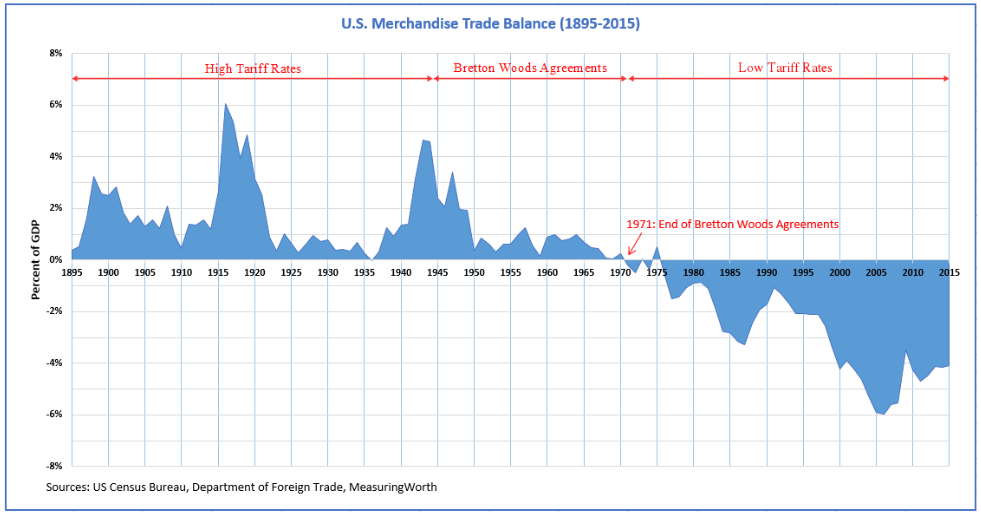
Is globalization truly dead? Stephen Dover, head of Franklin Templeton Institute, explores what drives globalization, whether we are currently in a “de-globalization” wave—and what it means for investors.
Financial crises are really about trust. They tend to occur when people lose trust in assets, institutions, or people they had thought trustworthy. Whether the lost trust was a consequence of the crisis, or its cause is a different question. But they do seem to go together.
Our annual ESG manager survey of active managers assesses the integration of ESG considerations in investment processes among equity, fixed income and private markets managers, and spotlights firmwide policies, use of data, engagement and integration.
A year after the Nasdaq 100 Index last closed at an all-time high, there’s no sign the index is heading back to those heights any time soon.
BMO Investments Inc. is introducing a suite of innovation-focused funds that will be overseen by Cathie Wood’s ARK Investment Management, in a bet that investor appetite for growth-centered products will persist even after this year’s slump.
Many Tesla Inc. investors watched in dismay as Elon Musk plunged into a battle over buying Twitter that pulled his attention away from the electric-car maker.
For the first time in years, rich Americans who cheat on their taxes face a growing threat from the Internal Revenue Service.
If the last few weeks are any guide, the coveted soft landing for the economy may be coming into view.
Review the latest portfolio strategy commentary from Mike Gibbs, managing director of Equity Portfolio and Technical Strategy.
My guest today will discuss how he works with UHNW/HNW individuals and families when it comes to charitable giving and meeting philanthropic needs. We will talk about the issues individuals should consider when making a gift of a business interest to a public charity. We will discuss the benefits for donors in making the decision to give a gift of a business interest to a public charity, the types of business interests that a donor may give to charity and the trends he’s seeing across his client base when it comes to charitable giving strategies such as this one.
The inflationary tremors shaking Wall Street all year are causing big changes to fixed-income capital flows that could ultimately end up disrupting the money-management industry over the long haul.
What do Bill Hwang, the disgraced US investor, and Liz Truss, Britain’s shortest-serving prime minister, have in common?
The dinner rush is on at Suga’s Diner in Stanton, Tennessee, the only restaurant in this town of 452 souls.
Will AI save crypto?
The person responsible for translating the math chapter of my book, Wealth Management, into Japanese told me, “You give me much headache.” Welcome to the math chapter.
There was a time when a large portion of Americans belonged to the “middle class.”
Franklin Mutual Series believes dividend payers can give value investors better total returns over the longer term.
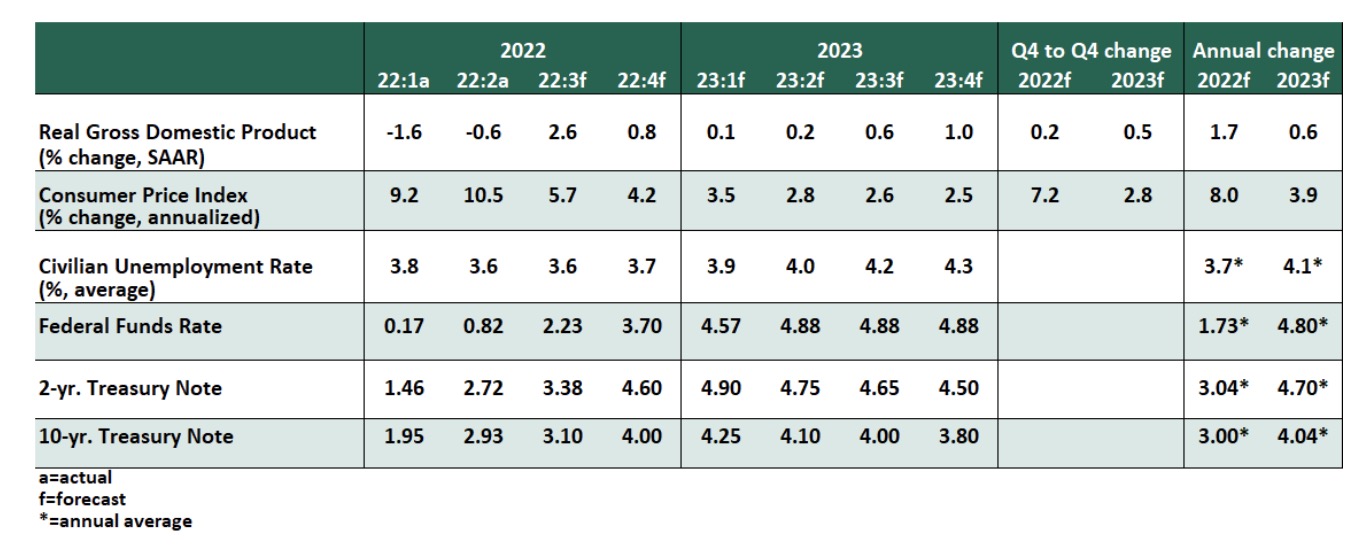
The Northern Trust Economics team shares its outlook for inflation, growth, employment and interest rates.
The recent implosion of FTX is explained and why the inevitable crypto and pension fund collapse was precipitated by Fed policy.
Corporate defined benefit (DB) plan sponsors face two primary risks: equity risk and interest rate risk.
With interest rates higher amid a challenging macro environment, we see a compelling case for bond allocations and are cautious about higher-risk investments.
Xi’s move to ease China’s COVID policy should reduce obstacles to normal life in the country and set the stage for a gradual economic recovery.
To foresee what crisis might be next, it is vital to understand the dollar's role in global finance and economics and the resulting role that the Fed plays in influencing global monetary policy.
Wall Street is struggling to whittle down the roughly $37.5 billion in risky corporate loans stuck on their books -- and the pile of so-called hung debt may be about to swell further as another large buyout financing stumbles.
Why do team members often resist change?
The most crowded trade on Wall Street -- long inflation -- is suddenly getting crushed like never before in the post-lockdown era, sparking a spate of forced deleveraging among a broad cohort of institutional funds.
In the wake of the last housing crash, online lenders came to dominate the mortgage market.
They say a picture is worth 1,000 words and a good chart fulfills a similar function.
Fast-money quants were effectively forced to buy an estimated $225 billion of stocks and bonds over just two trading sessions, as one of Wall Street’s hottest strategies in the great 2022 bear market shows signs of cracking.
A broker who competes against RIAs is about as likely to win as someone who plays one-on-one basketball with one hand tied behind their back.
Elaine Weir’s home doesn’t sit on a volcano. Nor is it surrounded by natural geysers. But that hasn’t stopped the 69-year-old retiree in Scarsdale, New York from heating her house with geothermal energy.